


Article by
Robert Maxvill
Owner of Aquamax Sprinkler Systems, American Sprinkler Repair and Dallas Drainage Systems.
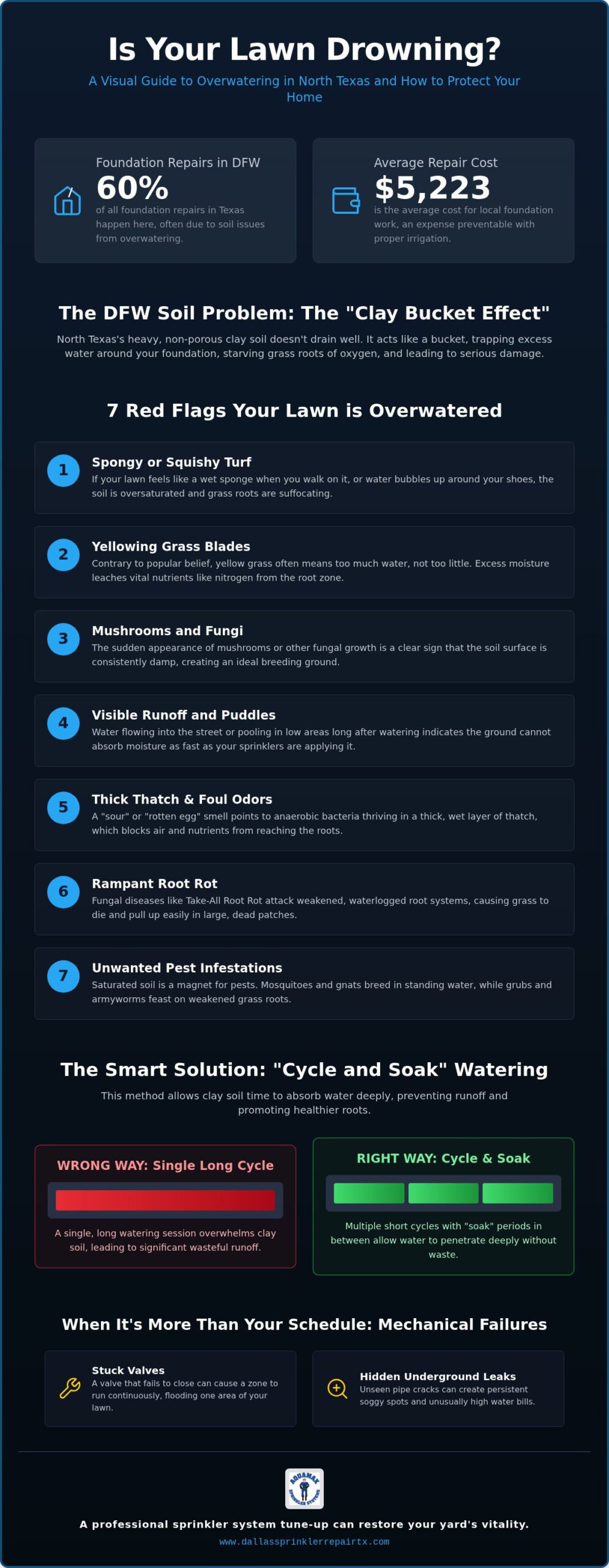
Did you know that 60% of all foundation repairs in Texas occur right here in the Dallas-Fort Worth area? Much of this damage stems from the region’s expansive clay soil, which swells and shifts when it becomes oversaturated. While you might think you’re helping your grass survive the intense summer heat, you could be accidentally drowning it. If you’ve noticed yellowing blades or spongy turf despite frequent watering, you’re likely seeing the common signs of overwatering lawn.
It’s easy to assume that more water equals a healthier landscape, but North Texas lawns require a precise balance to thrive. Excessive moisture doesn’t just lead to unexpectedly high water bills; it creates a breeding ground for fungus and compromises the structural integrity of your property. We understand the pressure of maintaining a beautiful home while following 2026 watering restrictions in cities like Frisco and Celina. You want a lush yard without the fear of foundation shifting or wasted expenses.
This guide will help you spot the subtle warnings of an overwatered lawn before they turn into expensive repairs. We will preview the seven critical indicators of moisture stress and explain how a professional sprinkler system tune-up can restore your yard’s vitality.
Key Takeaways
- Learn to identify the physical signs of overwatering lawn, including spongy turf and yellowing blades, before they lead to permanent damage.
- Understand how the non-porous nature of North Texas clay soil creates a “bucket effect” that threatens your home’s foundation.
- Discover the “Cycle and Soak” method to ensure deep root hydration while eliminating wasteful runoff and soggy spots.
- Identify mechanical irrigation failures like stuck valves and hidden underground leaks that often masquerade as simple overwatering.
- Gain the expertise to adjust your watering schedule seasonally to meet 2026 local restrictions and maintain a lush, healthy landscape.
Table of Contents
The Red Flags: How to Tell if You Are Overwatering Your Lawn
Your lawn should feel firm and resilient underfoot. A healthy landscape provides a stable foundation for your home, but many North Texas homeowners struggle to define What is a lawn that is truly thriving versus one that is simply drowning. Recognizing the early Signs of overwatering lawn can prevent a total landscape collapse. Perform the “squish” test after your irrigation cycle has finished. If walking across your turf feels like stepping on a wet sponge, or if you see water bubbling up around your shoes, your soil is likely oversaturated. This lack of oxygen at the root level eventually suffocates the grass.
Yellowing blades are another deceptive indicator. While many people see yellow grass and assume it needs more water, it’s often the opposite. Excessive moisture leads to nitrogen leaching. This process washes essential nutrients deep into the clay soil where roots can’t reach them. The result is a pale, chlorotic appearance that won’t respond to more irrigation. If you notice mushrooms or other fungi sprouting overnight, take it as a final warning. Fungi thrive in damp, shaded environments; their presence confirms that your soil surface isn’t drying out between cycles.
Visible runoff and puddling suggest your irrigation system is delivering water faster than our heavy North Texas clay can absorb it. Water that flows over the curb and into the street is a waste of money and a violation of local conservation efforts. If you see persistent puddles in low spots hours after the sprinklers have stopped, you likely need a professional Irrigation repair to address poor zoning or broken heads.
The Insect Connection: Pests That Love Wet Lawns
Excessive moisture doesn’t just hurt the plants; it invites unwanted guests. Fungus gnats and mosquitoes are attracted to the standing water and decaying organic matter found in overwatered yards. More importantly, saturated soil creates the perfect environment for Grubs and Armyworms. These pests feed on weakened root systems, quickly turning a lush yard into a brown wasteland. You can differentiate pest damage from water stress by looking for chewed leaf margins or checking for C-shaped larvae just beneath the soil surface. Managing your water output is the first step in a proactive pest defense strategy.
Identifying Root Rot and Thatch Buildup
Overwatering creates a thick layer of thatch between the soil and the grass blades. This organic debris prevents air and nutrients from reaching the roots. When this layer stays wet, it develops a distinct “sour” or “rotten egg” smell, which indicates anaerobic conditions where bacteria are thriving. In North Texas, St. Augustine grass is particularly vulnerable to Take-All Root Rot during wet seasons. This fungal pathogen attacks the root system, causing the grass to pull up easily in large, dead patches. If your lawn has reached this point, you may require professional Drainage systems to prevent future recurrence.
Why North Texas Clay Soil Makes Overwatering More Dangerous
North Texas sits atop the Blackland Prairie, a region defined by heavy, non-porous clay soil. While sandy soils in other parts of the country allow water to filter through quickly, our clay acts more like a ceramic bucket. It holds onto moisture with incredible tenacity. This unique geological factor is why the Signs of overwatering lawn are so common in Dallas, Plano, and Frisco. When you apply too much water, it doesn’t disappear; it sits in the root zone and creates a stagnant environment.
This saturation leads to what specialists call the “Oxygen Gap.” Grass roots require a balance of water and air to perform cellular respiration. When clay soil remains waterlogged, those vital air pockets are replaced by water. Your grass literally begins to drown. Over time, this lack of oxygen weakens the root system, making your lawn susceptible to the diseases and pests we discussed earlier. If your yard feels consistently soft, it’s time to consider a professional Irrigation repair to recalibrate your system’s output.
Compaction is the final blow in this cycle. When saturated clay finally dries out under the Texas sun, it shrinks and hardens into a substance resembling concrete. This “baked” soil becomes nearly impenetrable to future watering sessions, leading to immediate runoff. You end up with a lawn that is simultaneously drowning at the surface and bone-dry just a few inches below. Breaking this cycle requires a precise approach to water management that respects the limits of our local soil.
The Screwdriver Test: A Dallas Homeowner’s Best Friend
You don’t need expensive sensors to check your soil’s health. A simple 6-inch screwdriver is your most reliable tool. Push the screwdriver into the turf in several different zones. If it slides in with moderate resistance, your moisture levels are likely ideal. If the tool meets a “concrete” wall, the soil is too dry. However, if the screwdriver sinks effortlessly and comes out coated in thick mud, you are seeing clear evidence of overwatering. Put the hose away and allow the clay to breathe for several days before the next cycle.
The Science of Evapotranspiration in Dallas
Evapotranspiration, or ET, is the combined process of water evaporating from the soil and transpiring from the grass itself. In Dallas, our high humidity levels significantly impact this rate. When the air is already thick with moisture, water leaves your soil much slower than it would in a dry climate. In North Texas, ET rates dictate that your irrigation controller needs frequent seasonal adjustments to match the actual moisture loss of your specific landscape.
The Hidden Cost: Foundation Damage and Standing Water
While the visual Signs of overwatering lawn are frustrating, the structural consequences are far more severe. In North Texas, your lawn isn’t just an aesthetic feature; it’s a moisture buffer for your home’s foundation. When you saturate the perimeter of your house with excessive irrigation, the expansive clay soil underneath absorbs that water and swells. This pressure leads to foundation upheaval, where the soil literally lifts your home.
Ignoring a soggy yard doesn’t just kill your grass. It turns your property into a permanent drainage nightmare. Persistent standing water creates soft spots that never dry, leading to significant soil erosion. You’ve likely invested heavily in high-quality topsoil and mulch. Overwatering washes these expensive nutrients directly into the storm drain, leaving your plants starving and your landscape depleted. Learn more about our Yard Drainage Solutions in Dallas to protect your foundation from these costly structural shifts.
Managing Standing Water with French Drains
Sometimes, fixing your watering schedule isn’t enough. If your yard has low spots or poor grading, overwatering reveals a fundamental drainage flaw. French drains are a professional solution designed to intercept and redirect excess irrigation away from your home’s foundation. These systems use a perforated pipe buried in a gravel-filled trench to move water to a safe exit point. Without a proper exit, even a perfectly timed sprinkler system can’t prevent a waterlogged lawn. Addressing these drainage issues is essential for long-term property health and peace of mind.
Why Drip Irrigation is the Safer Alternative
Standard spray heads often dump too much water too quickly, especially near the house. This creates a dangerous “soak and dry” cycle that forces your foundation to move constantly. Drip irrigation provides a safer alternative by delivering slow, targeted watering directly to the root zones of your foundation plants. This method maintains a consistent moisture level in the clay, preventing the drastic expansion and contraction that leads to structural failure. For homeowners looking to stabilize their property, read our guide on Professional Drip Irrigation Installation.
How to Fix Your Watering Schedule for 2026
Correcting a waterlogged yard requires more than just turning the dial to “off.” You must implement the “Cycle and Soak” method. This technique is specifically designed for the heavy North Texas clay soil we analyzed earlier. Instead of running a single 20 minute cycle that causes immediate runoff, break your run time into three 7 minute segments with at least one hour of rest in between. This pause gives the non-porous soil enough time to actually absorb the moisture before the next application begins. It’s the most effective way to eliminate the Signs of overwatering lawn while ensuring deep root hydration.
Timing is equally critical for landscape health. Aim for the “Golden Window” between 4 AM and 8 AM. Watering during these early hours ensures your grass stays hydrated through the peak heat of the day without sitting in stagnant water overnight. Moisture that sits on the blades for 10 or 12 hours straight is an open invitation for fungal pathogens. Modern smart controllers can automate these adjustments for you, using local weather data to skip cycles during rainy periods. If your current controller feels like a mystery, a professional Sprinkler system tune-up can ensure your technology is working for your landscape rather than against it.
Signs Your Grass is Actually Recovering
Don’t panic if your grass looks slightly stressed after you reduce the water. A minor amount of wilting in the late afternoon is actually a positive sign; it indicates the plant is beginning to search for deeper moisture. You’ll know the recovery is working when you see new, white, fibrous roots instead of the brown, slimy roots associated with rot. It typically takes two to three weeks of a corrected schedule to see a visible change in the turf’s color and resilience. Be patient with the process as the soil’s oxygen levels return to normal.
Calculating Your Sprinkler’s Output
You can’t manage what you don’t measure. Use the “Tuna Can” test to determine exactly how much water your system delivers. Place several empty cans across a zone and run it for 15 minutes. Measure the depth in each can to find your average output per hour. Rotary heads generally deliver water much slower than traditional spray heads, so they require longer run times to reach the same depth. Remember that following your 2026 local restrictions is a great baseline. For example, Frisco residents with even numbered addresses may water on Tuesdays and Fridays, while Celina homeowners are currently limited to one day per week as of July 2, 2026.
When Overwatering is a Mechanical Failure: The Aquamax Solution
Sometimes the Signs of overwatering lawn aren’t the result of a human programming error. Mechanical failures often masquerade as poor scheduling, making it difficult for homeowners to identify the root cause. When your irrigation hardware fails, even the most conservative watering schedule won’t prevent your yard from becoming a swamp. These issues require professional intervention to stop the waste and protect your property’s structural integrity.
- Stuck Valves: This occurs when debris or a failing diaphragm prevents a valve from closing. Even when the controller is dark, the zone continues to run or weep.
- Underground Leaks: Known as the “silent overwaterer,” these lateral line leaks release water beneath the surface. They create mysterious, permanent soggy spots that never dry out.
- Broken Sprinkler Heads: Cracked or missing heads create “geysers” that waste thousands of gallons. These failures drown specific areas while leaving others completely dry.
Mechanical issues like these can quickly lead to the foundation upheaval we discussed earlier. Identifying a leak early is the difference between a simple repair and a multi-thousand-dollar foundation project. Schedule a Sprinkler System Tune-Up in Dallas to find hidden leaks and ensure your system is operating at peak efficiency.
Restoring the Lawn After Water Damage
Once the mechanical failures are fixed, your soil needs help to breathe again. Core aeration is often necessary to break up the compacted, waterlogged clay and allow oxygen to reach the roots. This process is vital for reversing the “Oxygen Gap” caused by long-term saturation. If the overwatering was severe enough to cause irreversible root rot, you may need to start fresh with new turf. Explore our Dallas Sod Installation services for professional lawn restoration that is specifically chosen for North Texas resilience.
Why Professional Diagnostics Save Money
Experienced technicians use pressure testing to identify leaks that aren’t visible from the surface. We also address “low head drainage,” a common issue where water remaining in the pipes after a cycle drains out through the lowest head. This often looks like a leak but is actually a symptom of poor system design. We calibrate your smart controller for DFW weather patterns, ensuring your landscape receives exactly what it needs based on current evapotranspiration rates.
Take Control of Your North Texas Landscape
Maintaining a healthy yard in the Dallas-Fort Worth area requires a deep understanding of our unique environment. You now know that the Signs of overwatering lawn are more than just a nuisance; they are early warnings of potential foundation shifting and root rot. By implementing the “Cycle and Soak” method and monitoring your soil with the screwdriver test, you can protect your property from the structural risks posed by our heavy Blackland Prairie clay.
Aquamax Sprinkler Systems has served the DFW community since 1998. Our experienced technicians specialize in custom drainage systems and foundation protection, ensuring your irrigation setup works with your soil rather than against it. Whether you need a mechanical repair or a seasonal adjustment, we provide the local expertise needed for a thriving landscape. Stop the soak and save your lawn; schedule your Aquamax Sprinkler Tune-Up today!
Your lawn has the potential to be the most resilient part of your home. With the right irrigation strategy and professional support, you can enjoy a lush, green yard and lower water bills all year long.
Frequently Asked Questions
Will a smart sprinkler controller prevent overwatering automatically?
Smart controllers reduce waste by using real-time weather data, but they cannot stop mechanical failures. A controller won’t know if a valve is stuck open or if a lateral pipe has burst underground. While technology makes scheduling easier, you still need periodic professional inspections to catch these “silent” overwatering problems that a computer simply cannot see from the garage wall.
How much water does a Dallas lawn actually need per week in 2026?
Most DFW lawns need about one inch of water per week, but you must strictly adhere to 2026 municipal restrictions. For example, Celina currently limits residents to one day per week under Stage 2 conservation plans as of July 2026. Frisco residents are permitted to water twice weekly based on their odd or even address. Following these local guidelines is usually enough to keep your grass healthy.
What should I do if I find mushrooms growing in my grass?
Immediately decrease your irrigation frequency and inspect the area for drainage issues. Mushrooms are the reproductive structures of fungi that only thrive when the soil surface remains damp for extended periods. Their presence is a clear signal that your lawn isn’t drying out enough between your scheduled watering cycles. Clearing away the mushrooms won’t fix the problem; you must address the underlying moisture levels.
Why is my grass turning yellow even though I water it every day?
Yellowing is one of the classic Signs of overwatering lawn caused by a process called nitrogen leaching. Excessive water carries vital nutrients deep into the clay soil where grass roots can’t reach them. This creates a nutrient deficiency that makes your grass look hungry and pale. Daily watering also prevents the roots from receiving the oxygen they need to absorb any remaining fertilizers effectively.
Can overwatering my lawn really damage my home’s foundation?
Overwatering is a leading cause of foundation upheaval in the Dallas-Fort Worth area. The expansive clay soil swells as it absorbs water, which can lift and crack your home’s concrete slab over time. Maintaining a consistent, moderate moisture level around your perimeter is much safer for your structure than the extreme “soak and dry” cycles caused by excessive irrigation and poor drainage.
What are the first signs of root rot in St. Augustine grass?
St. Augustine grass shows root rot through thinning patches that pull away from the earth with almost no resistance. Healthy roots are firm and white, but rot turns them brown, slimy, and brittle. This condition usually follows periods of excessive rain or improper irrigation habits that leave the soil anaerobic. If you can lift a section of turf like a piece of carpet, the roots have likely failed.
How do I know if my lawn is overwatered or underwatered?
You can distinguish between these two states by checking the turf’s color and texture. Overwatered grass feels spongy and often exhibits yellowing blades or mushroom growth. Conversely, underwatered grass turns a dull grayish-blue and the blades begin to fold inward to conserve moisture. Use a screwdriver to probe the soil; if it sinks into mud without resistance, you are definitely seeing the physical results of overwatering.
Is it possible to overwater my lawn in the 100-degree Texas heat?
Yes, it’s entirely possible and quite common to overwater during a Texas summer. Our heavy clay soil retains moisture far longer than sandy soils, meaning roots can drown even when air temperatures exceed 100 degrees. When you keep the soil constantly saturated, you’re preventing oxygen from reaching the root system. This suffocation weakens the grass and makes it more susceptible to heat stress and disease.