

Article by
Robert Maxvill
Owner of Aquamax Sprinkler Systems, American Sprinkler Repair and Dallas Drainage Systems.
How many times have you replaced your North Texas lawn only to watch it wither under the canopy of your oak trees? You aren’t just unlucky; you’re likely fighting a biological battle with the wrong tools. Finding the best grass for Dallas shade is about more than just picking a green variety at a local nursery. It requires a professional understanding of how specific sod varieties interact with our unique North Texas clay and limited sunlight.
It’s incredibly frustrating to invest in expensive sod only to see it turn into muddy patches. We understand the fear of overwatering and the constant worry about fungus that often comes with shaded landscapes. This 2026 guide identifies the top shade-tolerant varieties that actually survive our heat and local watering restrictions. You’ll learn the critical “4-hour rule” for sunlight, why sod is the only viable choice for shaded areas, and the irrigation secrets that keep your lawn lush and resilient. We’ll provide a clear plan to transform those bare spots into a vibrant, high-performance landscape.
Key Takeaways
- Learn how to apply the “4-hour rule” to accurately measure sunlight levels and determine if your yard can support shade-tolerant sod.
- Compare the unique benefits of St. Augustine and Zoysia to identify the best grass for Dallas shade based on your specific property needs.
- Master the critical irrigation balance for shaded areas, which typically require 30% to 50% less water than lawns in full sun.
- Discover how custom drainage solutions prevent “soggy bottom” syndrome and protect your new grass from root rot in North Texas clay.
- Understand why professional soil preparation and precision installation are essential for eliminating the air pockets that cause DIY sod to fail.
Table of Contents
Why Most Dallas Grass Fails in the Shade
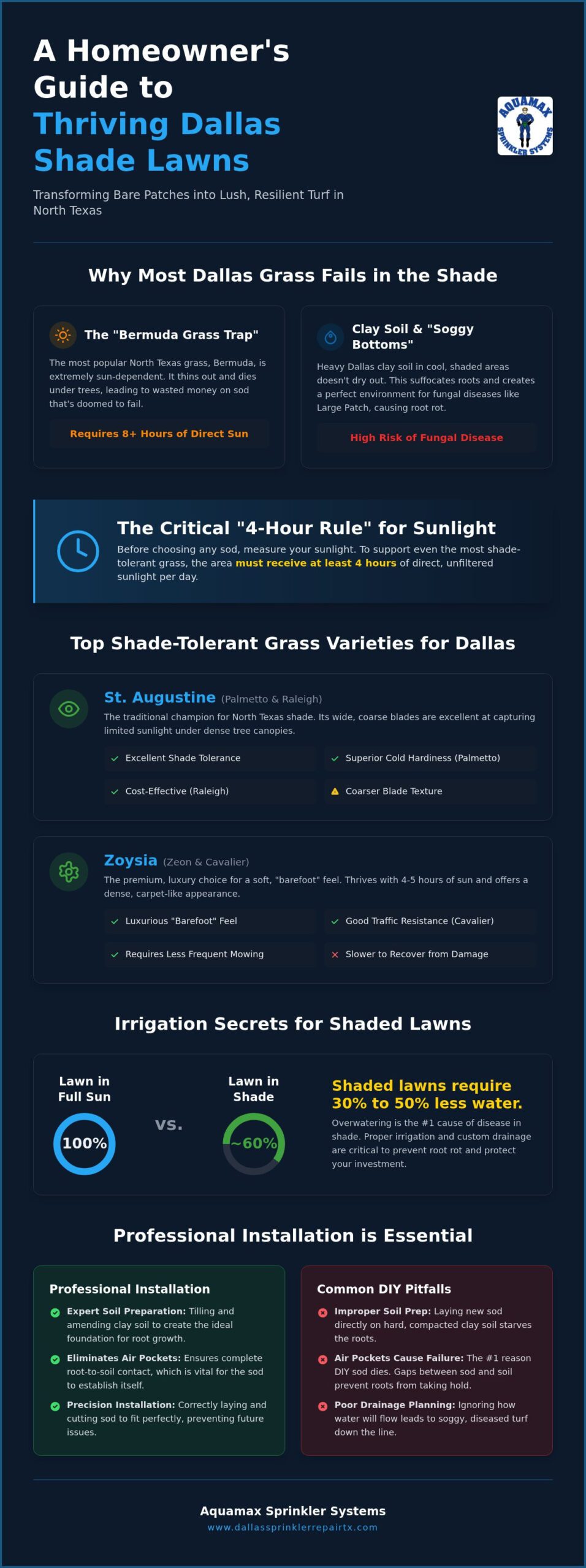
Dallas homeowners often struggle to keep their lawns green once their trees mature. The most common mistake is sticking with Bermuda grass, which is North Texas’s most popular turf but also its most sun-dependent. Bermuda requires at least eight hours of direct, intense sunlight to maintain its density. When it’s shaded by a growing oak or cedar elm, the grass stretches thin, stops producing energy, and eventually gives way to bare dirt or weeds. This “Bermuda trap” leads many to waste money on new sod that is doomed from the day it’s laid.
Choosing the best grass for Dallas shade requires a shift in strategy. You can’t simply plant more of what works in the sunny front yard. Different Sod and grass varieties have vastly different metabolic rates and light requirements. While sun-loving grasses thrive in the intense Texas heat, shaded areas create a cooler microclimate that sounds beneficial but actually traps moisture and limits the energy the plant can produce through photosynthesis. Understanding this balance is the first step in a successful lawn restoration.
To see how specific varieties perform in our region, watch this helpful video:
Dallas Clay Soil and Shady Microclimates
Our heavy clay soil presents a unique challenge in the shade. Because shaded areas stay cooler, the soil doesn’t dry out as quickly as sunny spots. This creates a “soggy bottom” effect where roots literally suffocate from a lack of oxygen. Overwatering in these zones is a leading cause of Large Patch, a devastating fungal disease common in DFW. Compaction also becomes a major issue as tree roots compete for space and nutrients. If your shaded lawn feels like a sponge days after a rain, you likely need a professional Drainage system installation to protect your new sod and ensure the best grass for Dallas shade can actually take root.
The Science of Shade Tolerance
Grass plants adapt to low light by growing wider, thinner blades to catch every available photon. This increased surface area makes the grass more vulnerable to physical damage and heat stress during the peak of summer. Additionally, dense tree canopies block air circulation, which prevents morning dew from evaporating quickly. Shade tolerance is a survival mechanism, not a preference. Without enough light, the grass uses more energy to survive than it can create, leading to a slow, visible decline in turf quality.
Top 3 Shade-Tolerant Grass Varieties for Dallas
Selecting the best grass for Dallas shade requires a balance between environmental limits and your personal aesthetic. While Bermuda is the standard for sunny fields, shaded residential backyards in North Texas demand varieties that can survive on significantly less light. The three primary contenders for our region are St. Augustine, Zoysia, and Fescue. Each offers a different level of resilience against the heavy clay and erratic temperature swings typical of the Dallas-Fort Worth area.
Zoysia (Zeon & Cavalier)
Zoysia is the premium alternative for homeowners who want a luxury look. Zeon Zoysia is famous for its soft, “barefoot” feel and its ability to thrive with as little as four to five hours of direct sunlight. Cavalier Zoysia provides better resistance to foot traffic and common pests, making it a better fit for families with active dogs. Keep in mind that Zoysia grows much slower than St. Augustine. This means it takes longer to recover from physical damage, but it also requires less frequent mowing throughout the growing season.
For homeowners willing to manage a more demanding schedule, Fescue is a unique “cool-season” option. Unlike St. Augustine or Zoysia, Fescue stays green throughout the winter. However, it’s a high-risk choice for Dallas. It often requires a complete overseeding every autumn because the intense July and August heat can kill off large patches. If you aren’t sure which variety fits your specific canopy density, a professional Sod installation
Maintenance needs vary significantly between these types. St. Augustine should be kept taller, usually between 3 and 4 inches, to encourage deeper root growth in the shade. Zoysia performs best when maintained at 1.5 to 2.5 inches. Because shaded grass grows slower, you should reduce fertilizer applications by about 25% compared to sunny areas. This prevents nitrogen buildup and reduces the risk of fungal outbreaks in the damp, cool microclimate under your trees.
St. Augustine (Palmetto & Raleigh)
St. Augustine is the traditional champion of shaded North Texas lawns. Palmetto is particularly favored for its superior cold hardiness, which is essential after the severe winter freezes we’ve experienced in Dallas over the last few years. While both varieties offer excellent Shade tolerance of warm-season grasses, they do have a coarse, wide blade. This texture is highly effective at capturing limited sunlight under a dense canopy, though it feels less soft underfoot than other varieties.
Measuring Your Sunlight: The 4-Hour Rule
You might see bright light at 2 PM and assume your lawn is getting plenty of sun, but grass requires direct, unobstructed rays to fuel photosynthesis. Even the best grass for Dallas shade, such as Palmetto St. Augustine or Zeon Zoysia, requires a minimum of four to five hours of direct sunlight. If you have less than that, no amount of water or fertilizer will keep the turf alive. Before investing in new sod, you must conduct a formal light audit during the peak growing season from May through September.
To get an accurate reading, track the sun’s path at three critical times: 10 AM, 1 PM, and 4 PM. Use a smartphone app like SunSeeker or simply take photos of your yard at these intervals. This allows you to see where shadows from your house, fences, and trees fall throughout the day. According to the Texas A&M AgriLife Extension on shade, even small increases in light can significantly improve turf density. If your audit reveals only two hours of sun, you’ll need to decide between thinning your tree canopy or transitioning that area to a mulch bed or shade-loving groundcover.
Seasonal Sun Shifts in North Texas
The sun’s angle changes dramatically between spring and summer. A spot that looks perfectly sunny in March might be in total darkness by June once the trees fully leaf out and the sun moves higher in the sky. The “Solar Noon” window, typically between 11 AM and 2 PM, is the most valuable time for turf health because the light is at its highest intensity. If your yard is shaded during this specific window, your grass will struggle. Always base your decision for a new Sod installation on summer light levels rather than what you see in the early spring. Accurate measurement ensures you choose the best grass for Dallas shade that matches your yard’s specific reality.
Dappled vs. Deep Shade
Not all shade is created equal. Live Oaks and Mesquite trees often produce “dappled” light, where moving sunspots dance across the grass. This is much easier for shade-tolerant varieties to handle than the “dense” or “deep” shade found under Magnolia trees or heavy cedar elms. If your canopy is too thick, we recommend a “high thinning” technique. This involves removing select lower branches to allow more light to reach the ground without compromising the tree’s health. When light levels remain consistently low despite thinning, pivot your strategy. Forcing grass to grow in deep shade leads to muddy patches and wasted money.
Irrigation and Drainage for Shaded Dallas Lawns
Even the best grass for Dallas shade will fail if it sits in standing water or suffers from irregular irrigation. Shaded areas evaporate moisture much slower than sunny spots because they lack the direct heat of the Texas sun. If you water your shaded St. Augustine or Zoysia at the same rate as your sunny Bermuda, you’re essentially drowning the roots. This leads to “Soggy Bottom” syndrome, where the soil stays saturated, oxygen is cut off from the roots, and the grass eventually thins and dies.
Tree root competition adds another layer of complexity to your maintenance plan. While the turf canopy needs less surface moisture, the large Oak or Cedar Elm providing the shade is a thirsty competitor. These trees have massive root systems that can pull moisture from the same soil level as your grass. Balancing this competition requires precision. A professional Sprinkler system tune-up is essential to ensure your irrigation heads are delivering the right volume to the right zones without creating the damp conditions that invite fungus.
Drainage Solutions for Low-Light Areas
If your shaded backyard stays muddy for days after a rain, your grass won’t survive regardless of the variety you plant. Custom grading and French drains are often necessary to protect your investment. These systems redirect excess water away from the tree’s drip line and prevent root rot. Catch basins are also effective for managing the heavy, sudden downpours common in North Texas. These basins collect surface water quickly and move it through underground pipes to a safe discharge point. If your lawn is currently struggling with poor runoff, consider a professional Drainage system installation to create a stable environment where your new sod can actually thrive.
Adjusting Your Sprinkler Controller
You must isolate your shaded lawn areas into separate zones on your irrigation timer. Shaded grass typically requires 30% to 50% less water than full-sun areas. We recommend using the “Cycle and Soak” method to manage Dallas’s dense clay soil. This involves splitting your watering time into two shorter cycles with a 20 to 30 minute pause in between. This allows the water to penetrate the heavy clay rather than running off into the street. Always schedule your watering for the early morning. Evening watering is a death sentence for shaded turf, as it leaves the blades wet overnight and triggers Large Patch outbreaks.
Professional Sod Installation in Dallas
Selecting the best grass for Dallas shade is only half the battle. The success of your new lawn depends entirely on the first few hours it spends in your soil. Many homeowners assume that laying sod is as simple as rolling out a carpet, but this misconception is why so many DIY attempts fail within the first season. Without professional equipment and local soil knowledge, even the highest quality Palmetto St. Augustine or Zeon Zoysia won’t survive the transition to your backyard.
A critical error in amateur projects is the “air pocket” problem. When sod is laid on uneven or un-prepped soil, tiny gaps of air remain between the grass roots and the earth. These pockets cause the roots to dry out and die before they can establish themselves in the clay. The Aquamax Approach addresses these risks before the first piece of turf hits the ground. We combine decades of local expertise with a rigorous preparation phase that includes a full irrigation check to ensure your system is ready for the intense watering schedule required for new growth. If you’re ready to transform your shaded landscape, request a professional to ensure the job is done right the first time.
Long-Term Shade Lawn Success
Once your sod is installed, the first 14 days are critical. You must keep the soil consistently moist to encourage root anchoring. After the grass is established, you should adjust your maintenance habits for the shade. Always set your mower 0.5 inches higher than you would for a sunny lawn. This extra leaf surface allows the grass to capture more of the limited sunlight available under your trees. Stick to a dedicated Spring and Fall fertilization schedule to keep the turf resilient against seasonal temperature swings. For long-term vitality, Contact Us for a comprehensive system evaluation to ensure your irrigation and drainage continue to support your investment in the best grass for Dallas shade.
The Installation Process
Successful installation begins with the complete removal of old, dead Bermuda grass and persistent weeds. We don’t just clear the surface; we ensure the area is clean so that old varieties don’t compete with your new shade-tolerant turf. Next, we till organic compost directly into the North Texas clay. This improves drainage and provides a nutrient-rich foundation for the roots. After precision laying each piece of sod, we use a heavy sod roller to press the turf firmly into the soil. This eliminates air pockets and guarantees the root-to-soil contact necessary for a healthy lawn.
Transform Your Shaded Landscape Today
Achieving a lush, green backyard under a heavy tree canopy is entirely possible with the right strategy. You now understand that selecting the Best grass for Dallas shade is only the first step. Success requires a commitment to the 4-hour rule, precise irrigation adjustments, and a proactive approach to soil drainage. By balancing these environmental factors, you can stop wasting money on failing turf and finally enjoy the high-performance lawn your property deserves.
Aquamax Sprinkler Systems has served the Dallas-Fort Worth area since 1998. Our experienced technicians specialize in the complex relationship between North Texas clay, customized drainage, and professional sod installation. We don’t just lay grass; we build the infrastructure required to keep it thriving for years to come. Stop settling for muddy patches and thin turf. to restore your home’s curb appeal. You can have a vibrant, healthy lawn even in the deepest shade.
Frequently Asked Questions
Do I need to thin my trees to get grass to grow?
Thinning your trees is often necessary if the canopy is so thick that it prevents sunlight from reaching the ground. A “high thinning” or “crown thinning” removes select branches to allow dappled sunlight to penetrate the canopy. This technique increases the light available for photosynthesis without harming the tree’s health. We often recommend this service as a prerequisite for successful sod installation in heavily wooded yards.
When is the best time to install shade-tolerant sod in Dallas?
The best time to install the best grass for Dallas shade is during the spring or early fall. Late March through May is ideal because it allows the roots to establish before the intense July heat arrives. Alternatively, September and October provide a cooling window that encourages root growth without the stress of extreme summer temperatures, ensuring the sod is anchored before winter dormancy.
Should I water my shaded grass as much as my sunny grass?
No, you should never water shaded grass at the same rate as sunny areas. Shaded turf typically needs 30% to 50% less water because evaporation occurs much slower in the cooler microclimate under trees. Overwatering shaded North Texas clay leads to root rot and fungal outbreaks. You must isolate these areas into separate irrigation zones to maintain the proper moisture balance.
Is there a grass that grows in 2 hours of sunlight?
There are no turfgrass varieties suitable for the Dallas climate that can survive on only two hours of sunlight. Most shade-tolerant sod requires at least double that amount to sustain itself. If your yard is in deep shade for most of the day, we recommend transitioning to shade-loving groundcovers, decorative stone, or mulch beds rather than continuing to invest in failing sod.
Why is my grass dying under my oak trees?
Your grass is likely struggling with a combination of light deprivation and root competition. Large trees like Live Oaks create a dense canopy that blocks essential UV rays while their aggressive root systems steal water and nutrients from the soil. This dual stress weakens the turf. To fix this, you may need to thin the tree canopy and adjust your irrigation to ensure the grass gets enough resources.
How many hours of sun does St. Augustine grass need?
St. Augustine grass needs a minimum of four to five hours of direct sunlight to remain healthy and vibrant. While it is more resilient than other warm-season grasses, it still relies on photosynthesis to produce energy. If your lawn receives less than four hours of light, the grass will grow thin, lose its deep green color, and eventually succumb to weeds or disease.
Can Zoysia grass grow in full shade in North Texas?
No grass variety can survive in total or “full” shade where sunlight never reaches the ground. However, premium Zoysia varieties like Zeon and Cavalier are excellent for partial shade environments. These grasses require at least four to five hours of direct or filtered sunlight. They provide a lush, carpet-like feel but will thin out if the canopy is too dense to meet their minimum light requirements.
What is the most shade-tolerant grass for Dallas, TX?
Palmetto St. Augustine is the most reliable and shade-tolerant variety for the North Texas region. It is widely considered the best grass for Dallas shade because it maintains its density with less light than Bermuda or traditional Raleigh St. Augustine. Additionally, Palmetto offers superior cold hardiness, which is essential for surviving the erratic winter freezes common in the Dallas-Fort Worth area.