

Article by
Robert Maxvill
Owner of Aquamax Sprinkler Systems, American Sprinkler Repair and Dallas Drainage Systems.
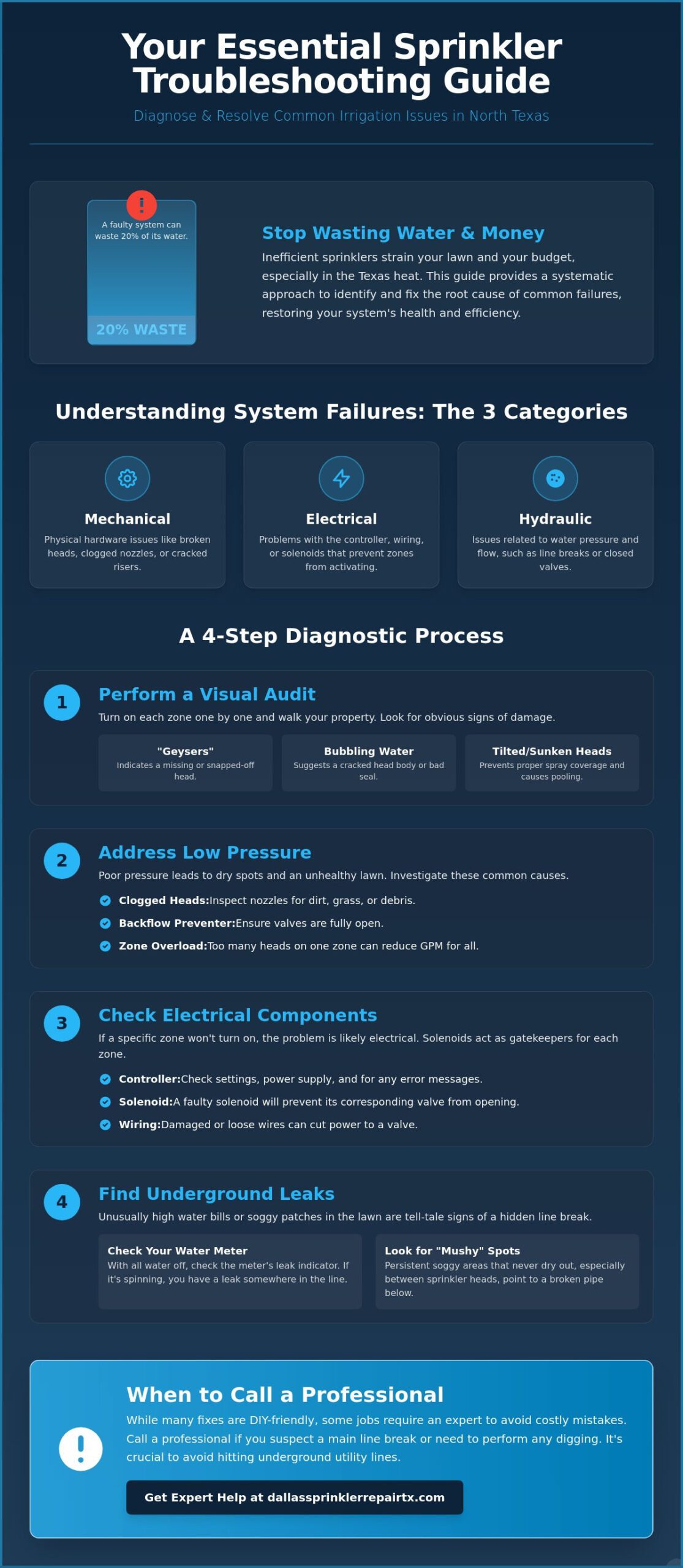
Did you know that a poorly designed or malfunctioning sprinkler system can waste 20% of the water it uses according to data from Garden Style San Antonio? In the intense North Texas heat, that inefficiency is more than a minor nuisance; it’s a direct threat to your landscape and a drain on your finances. Dealing with irrigation system troubleshooting often feels like a race against the clock before the next triple-digit temperature spike arrives.
It’s stressful to watch your lawn struggle while your utility bills rise, especially when the source of the problem is hidden beneath the heavy North Texas clay. This guide provides the professional insight you need to diagnose and resolve the most common sprinkler issues. We’ll help you navigate local watering restrictions and mechanical failures so you can restore your system’s efficiency. We’ll explore how to identify broken heads, detect underground leaks, and optimize your controller settings to ensure your property remains a vibrant, healthy asset for your home.
Key Takeaways
- Master a systematic approach to irrigation system troubleshooting by performing a visual audit of your water, power, and hardware components.
- Identify the causes of poor spray patterns by inspecting individual heads for debris and verifying that your backflow preventer valves are fully open.
- Understand how solenoids act as gatekeepers for your watering zones and how to address electrical failures that prevent specific areas from activating.
- Detect hidden underground line breaks by monitoring your water meter’s leak indicator and checking for persistent mushy spots in your lawn.
- Recognize when to transition from DIY fixes to professional support to avoid the hazards of hitting underground utility lines.
Diagnosing Common Irrigation System Failures
Effective irrigation system troubleshooting requires a methodical approach. You aren’t just looking for a leak; you’re evaluating a complex network of water, power, and hardware. While modern irrigation systems are designed for longevity, the harsh North Texas environment places unique stress on every component. To find the root cause, we categorize failures into three distinct buckets: mechanical, electrical, and hydraulic. Mechanical issues involve the physical hardware like heads and nozzles. Electrical problems stem from the controller, wiring, or solenoids. Hydraulic failures relate to the water pressure and flow within the pipes.
Symptoms often appear before the system fails completely. Identifying these red flags early can prevent costly landscape damage. Watch for these common signs of trouble:
- Brown or dry spots in an otherwise green lawn.
- Unusually high water bills that suggest a hidden leak.
- Soggy, “mushy” areas that persist long after the system has shut off.
- Low pressure where heads barely pop up or spray only a few inches.
The Visual Audit: What to Look For
The first step in any diagnosis is a comprehensive visual audit. Turn on each zone and watch the performance. Look for “geysers” where a head is missing or snapped off. This wastes massive amounts of water and drops the pressure for the rest of the zone. You might also see water “bubbling” at the base of a head, indicating a cracked body or a bad seal. In DFW, our heavy clay soil frequently shifts, leading to tilted or sunken heads. A sunken head can’t clear the grass height, causing water to pool and drown the surrounding turf instead of reaching its target. Straightening these components is a vital part of regular maintenance.
Mapping Your Irrigation Zones
You can’t fix what you can’t find. Use your controller to manually trigger each zone one by one. As you walk the property, create a simple zone map. Document which areas of the yard each station covers and identify the exact sprinkler valve box location. These green lids are often hidden by overgrown grass or mulch, but they house the critical valves that control water flow. Knowing their exact location saves hours of frustration when you need to perform more advanced irrigation system troubleshooting or emergency repairs. A clear map ensures you’re testing the right hardware and helps you track recurring issues over time. This organized record is an essential tool for any homeowner committed to long-term system reliability.
Troubleshooting Low Water Pressure and Spray Patterns
Low water pressure can turn a thriving lawn into a scorched patch of dirt in days. When you start irrigation system troubleshooting for pressure issues, you must distinguish between a localized clog and a systemic failure. Begin by inspecting individual heads for dirt, grass clippings, or debris that physically block the nozzle. If an entire zone is weak, verify that your backflow preventer valves are fully open. Even a partially closed valve can throttle your system’s performance and prevent heads from popping up correctly.
You should also check for a hidden leak between the water meter and the valve box. A main line break often presents as a significant drop in pressure across all zones. If the pressure is consistently low only in a newer zone, assess if too many heads were installed for the available gallons per minute (GPM). Every water meter has a limit. Overburdening a zone leads to “weeping” heads that never fully extend. Finally, don’t overlook the small stuff. Clean or replace the internal filters located inside the base of problematic spray heads to restore full flow. This methodical process is a core part of a professional Irrigation System Maintenance Checklist.
Fixing Clogged or Broken Sprinkler Heads
Clogs are the most frequent cause of uneven coverage. To resolve this, unscrew the nozzle while the system is off and then briefly turn the zone on to flush out any trapped sand or silt. If water still doesn’t spray correctly, look for a cracked riser. A crack in the riser pipe below the head will cause water to pool at the base rather than reaching the nozzle. For more complex mechanical failures, you can find detailed steps in our guide to irrigation repair. Identifying these small breaks early prevents the soil erosion that often follows a neglected leak.
Foundation Drip Line Maintenance
In North Texas, low pressure in drip lines is more than a landscaping issue; it’s a foundation risk. The heavy clay soil around your home must remain consistently moist to prevent shifting and cracking. Check your flower beds for “crimped” lines or emitters clogged by mulch. A failing drip system can lead to soil contraction, which puts immense stress on your concrete slab. Proper sprinkler system repair ensures these lines deliver the precise amount of moisture needed for soil stability. If you’re concerned about your coverage, a professional sprinkler system tune-up can identify these subtle pressure drops before they lead to structural problems.
Solving Controller and Electrical Zone Issues
When your water pressure is sufficient but a specific zone refuses to activate, you have transitioned into the electrical phase of irrigation system troubleshooting. The controller serves as the brain of your landscape, sending 24-volt signals through a network of underground wires. If one area stays dry while the rest of the yard thrives, the communication has likely broken down at the solenoid. This electromagnetic component acts as the gatekeeper for each valve. It receives the electrical pulse and physically lifts the plunger to allow water flow. If the solenoid is damaged, the valve remains locked regardless of the controller’s commands.
North Texas weather plays a significant role in electrical failures. Our intense spring storms often bring lightning and power surges that can scramble smart controller settings or blow internal fuses. If you see a “No AC” display, your controller has lost its primary power source. A “P-Err” or “Station Error” typically signals a short circuit in the wiring or a failure in the master valve circuit. Consulting Rain Bird’s troubleshooting guide can help you interpret specific manufacturer error codes. These digital diagnostics are designed to protect the system’s circuitry by shutting down power before a short can cause permanent hardware damage.
Testing the Solenoid and Wiring
To pinpoint a failure, use a multimeter set to 24V AC to test the terminals at the controller while the zone is active. If the controller shows a proper 24V output but the valve stays shut, the problem exists in the field wiring or the solenoid itself. Listen closely to the valve box; a “burnt” solenoid often produces a faint humming sound or may show visible signs of physical charring. You must replace these components promptly to maintain system integrity. Do not attempt complex electrical repairs or adjustments to high-voltage power sources without proper grounding knowledge. Safety and precision are paramount when dealing with the intersection of water and electricity.
Rain Sensor and Smart Controller Overrides
In many cases, a system that won’t run is simply following orders from a faulty rain sensor. After a light Dallas drizzle, a saturated sensor can keep your system in “bypass” mode for several days, even as the Texas sun begins to bake the turf. You can bypass a suspicious sensor using the manual override switch on your controller to see if the system resumes its schedule. If your current hardware feels outdated or unreliable, a new sprinkler system installation featuring a modern WiFi controller can solve these issues. These advanced units utilize real-time local weather data to make smarter watering decisions, giving you total control through a smartphone app and eliminating the guesswork of physical sensors.
Detecting Underground Leaks and Line Breaks
Underground leaks represent the most destructive phase of irrigation system troubleshooting. Unlike a broken head that announces itself with a geyser, a line break can remain hidden for weeks while it saturates your property. In the Dallas-Fort Worth area, our heavy clay soil is the primary culprit behind these failures. This soil expands when wet and contracts during dry spells, creating immense physical pressure that can snap PVC pipe joints or pull fittings apart. Identifying these subterranean issues requires a keen eye for subtle changes in your landscape’s topography.
Start by walking your property to look for “mushy” spots in the lawn that never seem to dry out, even on days you don’t water. You might also notice “sinkholes” or slight depressions in the grass, particularly near the main line or valve boxes. To confirm a leak without digging, locate your water meter. Ensure all indoor faucets and appliances are off, then check the “leak indicator”—usually a small red or white triangle or a digital icon. If that dial is spinning while the sprinkler system is inactive, you likely have a main line leak that requires immediate attention. Homeowners throughout the region, including those seeking sprinkler repair in McKinney, face these same clay soil challenges and benefit from professional leak detection before minor breaks become major structural problems.
The High Water Bill Warning
A sudden spike in your utility bill is often the first sign of a problem. If you’re concerned about rising costs, review our professional irrigation repair resources to understand how to isolate the source. It’s vital to differentiate between a lateral line leak and a main line leak. A lateral line leak only loses water when a specific zone is running, whereas a main line leak wastes water 24 hours a day. Even a small 1/4 inch crack in a pressurized pipe can waste thousands of gallons of water in a single billing cycle, turning a manageable utility cost into a financial burden.
Soil Movement and Foundation Risks
In North Texas, a sprinkler system leaking underground is a direct threat to your home’s structural integrity. When water pools against a concrete slab foundation, it causes the clay soil to swell unevenly. This localized swelling can lead to foundation heaving, resulting in cracked drywall and misaligned doors. “Pooling” water near the foundation is always a priority repair that shouldn’t be deferred. We specialize in drainage system installation to help manage this excess moisture and protect your property from the risks of soil movement. Addressing these leaks quickly preserves both your landscape’s vitality and your home’s value.
If you suspect an underground break is driving up your bills, contact us today for a professional sprinkler system tune-up to locate and seal the leak before it causes further damage.
When to Call a Professional Irrigation Specialist
While basic irrigation system troubleshooting can resolve surface-level issues, complex failures require specialized equipment and licensed expertise. DIY digging is particularly risky in North Texas. You risk hitting underground gas lines or electrical conduits, which can lead to dangerous situations and expensive utility repairs. Aquamax Sprinkler Systems has been serving the Dallas area since 1998, bringing decades of local experience to every property. We utilize advanced tools like wire tracers to locate buried electrical faults and acoustic leak detectors to pinpoint underground pipe breaks. These tools allow us to find the source of the problem without turning your yard into a construction site.
A professional approach ensures that your system operates at peak efficiency. We don’t just patch leaks; we analyze the entire hydraulic environment. This level of care is essential for maintaining the vitality of your landscape during the peak of the Texas summer. By leveraging professional diagnostics, you avoid the frustration of trial-and-error repairs that fail to address the underlying cause of your system’s malfunction.
The Importance of Licensed Technicians
Texas is one of the few states that requires an irrigation license from the Texas Commission on Environmental Quality (TCEQ). This mandatory certification ensures the technician understands water conservation, backflow prevention, and hydraulic pressure. Hiring a general handyman for these repairs often leads to recurring failures. They typically lack the specialized training to address the root cause of a pressure drop or electrical short. You can learn more about our commitment to professional standards by visiting our why choose us page. Licensed expertise provides the peace of mind that your system is compliant with local regulations and built to last.
Comprehensive System Audits
A professional irrigation repair visit is more than just a quick fix; it’s a comprehensive audit of your landscape’s efficiency. During a professional “Sprinkler System Tune-Up”, we evaluate every zone for pressure balance and coverage. We optimize head placement to eliminate wasteful “overspray” on sidewalks and driveways. This ensures every drop of water reaches your turf or garden. Our technicians also check for “weeping” valves and worn-out seals that a casual observer might miss. This systematic approach reduces your water bills and improves the overall health of your plants. If your system is underperforming, it’s time to stop the guesswork. Contact us today to schedule a diagnostic visit and restore your system’s reliability before the next heatwave.
Protect Your North Texas Property with Expert Care
Mastering the basics of irrigation system troubleshooting is the first step toward a resilient and water-efficient home. By performing regular visual audits and understanding the difference between a clogged nozzle and a systemic electrical failure, you can catch minor issues before they escalate. Remember that maintaining your drip lines and sealing underground leaks isn’t just about a green lawn; it’s a critical measure for protecting your home’s foundation from the shifting North Texas clay.
When mechanical complexities or hidden line breaks exceed a DIY approach, rely on the specialists who understand our local environment. Aquamax Sprinkler Systems has been serving DFW since 1998 with a team of licensed and insured technicians. As A+ rated irrigation specialists, we provide the precision needed to optimize your system’s performance and lower your monthly water bills. Schedule Your Professional Irrigation Diagnostic with Aquamax Today. You don’t have to manage the burden of maintenance alone; professional help is just a click away to keep your yard thriving through every Texas heatwave.
Frequently Asked Questions
Why is one zone of my sprinkler system not turning on?
A single zone failure is typically caused by a faulty solenoid or a break in the electrical wire connecting the controller to that specific valve. The solenoid acts as the switch that opens the valve; if it burns out or loses its connection, the zone won’t activate even if the controller is functioning. Test the wiring terminals at the controller for a 24V output to determine if the issue is in the hardware or the field wiring.
How do I find a hidden underground sprinkler leak in my yard?
Locate hidden leaks by checking for “mushy” soil or unusually lush patches of grass that persist during dry spells. You can confirm an underground break by turning off all indoor water and observing your water meter’s leak indicator dial. If the dial spins while the system is inactive, you have a main line leak. For lateral line leaks, watch for a significant drop in spray pressure when that specific zone is running.
What causes low water pressure in only one part of my irrigation system?
Low pressure localized to one zone often stems from clogged internal filters or debris trapped in the spray nozzles. If the entire zone is weak, check that the manual flow control on the zone valve is fully open. You should also inspect the area for lateral line leaks, as a cracked pipe underground will divert water before it reaches the heads. This is a common step in systematic irrigation system troubleshooting.
Can I replace a broken sprinkler head myself or do I need a pro?
You can often replace a single surface-level spray head yourself by unscrewing the old unit and attaching a matching model. However, professional assistance is recommended if the riser is snapped below the surface or if you need to adjust the zone’s overall pressure balance. Licensed technicians ensure the new head is set at the correct height to prevent mower damage and optimize spray patterns for the specific needs of North Texas soil.
Why does my sprinkler system keep running even when the controller is off?
A zone that won’t shut off is usually caused by a “weeping” valve or a piece of debris stuck in the valve’s internal diaphragm. When rocks or sand prevent the valve from sealing completely, water continues to bypass the gate even after the electrical signal stops. You must disassemble the valve to clean the diaphragm or replace the internal assembly. This issue wastes significant water and requires immediate repair to prevent landscape flooding.
How often should I troubleshoot and tune up my DFW irrigation system?
Perform a comprehensive system tune-up at least twice a year, ideally in the spring before the summer heat and in the fall before the first freeze. In the DFW area, the shifting clay soil can move heads and snap joints over just a few months. Regular irrigation system troubleshooting ensures your controller settings match the current watering restrictions and identifies small leaks before they lead to high utility bills or foundation damage.
What should I do if my sprinkler heads are bubbling water instead of spraying?
Bubbling water usually indicates a missing nozzle or a cracked head body that has lost its internal seal. If the nozzle is missing, water will well up at the base without any projection. Turn off the zone immediately and inspect the head for physical damage or a loose cap. Replacing the nozzle or the entire head assembly will restore the necessary backpressure for the rest of the zone to function correctly.
Is a high water bill always a sign of a sprinkler leak?
While a high water bill can result from indoor plumbing issues, an outdoor leak is the most frequent cause for a sudden spike in DFW. An efficient system can still waste water if the controller is programmed incorrectly or if rain sensors are bypassed during wet weeks. Check your meter’s leak indicator first. If it shows movement while all water is off, you have a physical leak that needs professional detection and repair. Property owners looking for reliable sprinkler repair McKinney specialists can benefit from a professional system audit to pinpoint whether the source is a hidden pipe break or a programming error.