

Article by
Robert Maxvill
Owner of Aquamax Sprinkler Systems, American Sprinkler Repair and Dallas Drainage Systems.
What if the weak spray from your lawn heads isn’t just a minor nuisance but a direct threat to your property’s foundation? In North Texas, where summer demand can exceed 600 million gallons of water a day, a low water pressure sprinkler system is more than an inconvenience. It’s a clear signal that your landscape is losing the battle against the heat. You’ve likely watched your grass turn brittle while your water bill remains high. This frustrating combination suggests your system is working harder but performing worse.
It’s exhausting to manage strict watering restrictions while your turf dies before your eyes. You deserve a system that works efficiently without the guesswork of whether the issue is a city water main or a mechanical failure. We’ll help you identify the root cause of weak spray and show you how to restore full head deployment for uniform coverage. This guide examines common culprits like clogged valves and leaking lines while providing professional solutions to ensure your lawn stays lush and your home stays protected.
Key Takeaways
- Identify visual indicators of low PSI, including sprinkler heads that fail to fully deploy or “weep” water at the base.
- Distinguish between municipal water demand in Dallas suburbs and mechanical issues like obstructed main shut-off valves.
- Perform a “Meter Test” to determine if your low water pressure sprinkler system is being compromised by a silent underground leak.
- Follow a step-by-step diagnostic checklist to inspect backflow assemblies and clear debris from individual sprinkler heads.
- Explore professional solutions like system tune-ups and pressure-regulated heads to achieve uniform coverage and peak efficiency.
What Is Low Water Pressure in a Sprinkler System?
A low water pressure sprinkler system operates below the force required to lift the riser heads and distribute water effectively across your landscape. PSI, or pounds per square inch, is the standard unit of measurement for this internal force. In the Dallas-Fort Worth area, residential irrigation systems are typically engineered to function within a “Goldilocks zone” of 40 to 60 PSI. When the pressure falls below this range, the system lacks the energy to overcome the tension of the internal springs, leaving your lawn vulnerable to the intense North Texas heat.
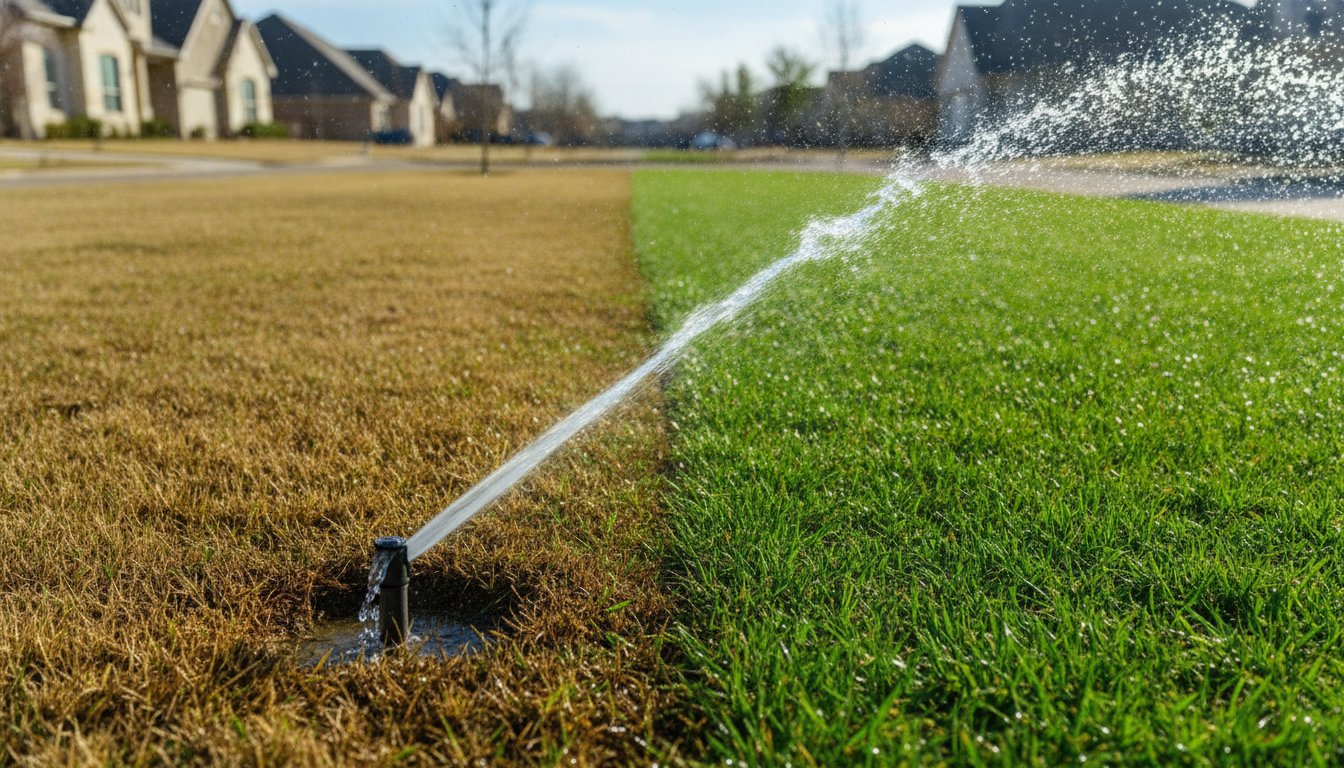
You can often diagnose pressure issues just by looking at your zones while they run. One of the most common visual signs is “weeping” at the base of the sprinkler head. This occurs when there isn’t enough force to fully seat the riser, causing water to bubble out at the ground level instead of spraying through the nozzle. You may also notice the “Donut Effect” on your turf. This happens when the spray lacks the velocity to reach its intended radius, creating a green circle of grass immediately around the head while leaving a brown, thirsty ring further out. If your heads aren’t popping up at all, the pressure has likely dropped below the critical threshold needed for operation.
The Difference Between Pressure and Flow
It’s a common mistake to assume that seeing water means you have adequate pressure. Flow refers to the volume of water moving through your pipes, while pressure is the energy that pushes that volume. You might have a high volume of water available, but if the pipe diameter is too small or the distance is too great, the energy dissipates before reaching the furthest zone. To understand your system, you must distinguish between static pressure, which is the force when the water is off, and dynamic pressure, which is the force measured while the system is actively running. While a low-pressure irrigation method like drip is perfect for foundation plantings, your turf rotors require consistent dynamic pressure to throw water effectively.
Signs Your System Is Underperforming
Underperformance often shows up in your spray patterns before the grass completely dies. Instead of a crisp, uniform fan of water, you might see heavy droplets dripping directly in front of the head. In high-visibility neighborhoods in Frisco or Plano, these inefficiencies quickly lead to patchy, dry spots that compromise your curb appeal. Pay attention to audible cues from your valve box as well. A struggling system often produces a distinct whistling or hissing sound, which frequently indicates a restriction in the line or a valve that isn’t opening fully. If you encounter these symptoms, a professional irrigation repair is necessary to restore the vitality of your landscape and prevent long-term damage to your sod.
The Most Common Causes of Weak Sprinkler Spray in Dallas
Identifying why your system has lost its punch requires a systematic look at both your property and the local environment. In the DFW suburbs, municipal demand plays a massive role. During the peak of summer, daily water usage in Dallas often exceeds 600 million gallons. This surge in community wide consumption can cause a temporary low water pressure sprinkler system if your watering window aligns with high demand periods. Before assuming your hardware is broken, check if your pressure improves during the city’s permitted off-peak hours. If the problem persists, the issue is likely mechanical or related to your specific plumbing configuration.
Mechanical failures frequently begin at the main shut-off valve. It is surprisingly common for these valves to be bumped or partially closed during other home repairs, restricting the volume of water entering your irrigation lines. Additionally, North Texas water often carries fine sediment that accumulates in the small filters located under each nozzle. Over time, this grit acts as a choke point. You should also examine your backflow preventer. Dallas City Code requires these assemblies to be tested regularly, as a malfunctioning internal spring or fouled check valve can severely restrict flow and create a noticeable impact of low water pressure across every zone in your yard.
Soil Movement and Underground Pipe Damage
The expansive clay soil unique to North Texas is a notorious “silent pressure killer” for irrigation systems. As the clay undergoes intense shrink-swell cycles, it exerts immense pressure on buried PVC lines. This movement can pinch a pipe without actually cracking it. A pinched line restricts water flow like a kinked garden hose, causing a drop in dynamic pressure without showing the surface pooling typical of a leak. In established neighborhoods like Highland Park, mature tree roots pose a similar threat. Large oak and pecan roots can slowly crush older pipes or grow into fittings, creating a physical obstruction that’s impossible to clear without excavation. A quick professional inspection can often pinpoint these hidden mechanical failures before they lead to total turf loss.
Valve and Controller Malfunctions
Your system relies on electrical solenoids to pull the internal valve diaphragms open. If a solenoid is weak or the diaphragm is torn, the valve may only open halfway. This partial opening creates a bottleneck that starves your sprinkler heads of the energy they need to pop up. This is especially critical if your system utilizes a master valve, which acts as a gatekeeper for the entire layout. If the master valve fails to fully retract, you’ll experience a uniform pressure drop across all zones simultaneously. When basic troubleshooting fails to resolve these issues, it is best to schedule irrigation repair services to diagnose complex electrical and hydraulic failures safely.
Troubleshooting Your System: A Homeowner’s Diagnostic Checklist
Restoring a low water pressure sprinkler system begins with a methodical inspection of your hardware. You don’t need specialized tools to identify the most common bottlenecks. Start at the main water supply and ensure the shut-off valves are fully open. If your system has a backflow preventer, verify that both ball valve handles are parallel to the pipe. A handle at a right angle indicates the water is partially or completely cut off. When diagnosing water pressure issues, these simple manual checks often resolve the problem without further intervention.
If the main valves are clear, move to the individual zones. Test one zone at a time to determine if the pressure loss is localized or system-wide. If only one zone is struggling, the issue is likely a clogged valve or a break in that specific lateral line. While the zone is running, walk the perimeter and look for “bubbling” water or unusually soggy spots in the turf. These visual cues suggest an underground leak is siphoning off the energy needed to pop up the heads. If you cannot find the source of the drop, you may need to learn how to find a sprinkler valve box to inspect the internal diaphragms for debris.
Cleaning and Replacing Sprinkler Nozzles
Sediment often collects in the fine mesh filters located directly beneath your sprinkler nozzles. To clean them, gently pull up the riser and unscrew the nozzle counter-clockwise. Be careful not to let the riser slip back into the body, as this can drop dirt into the line. Use an old toothbrush or a blast of compressed air to clear away grit from the filter and the nozzle orifice. If the nozzle is physically damaged or cracked, replace it immediately. A single broken head can drop the pressure for the entire zone, leaving other heads unable to reach their full spray radius.
Testing the Backflow Preventer
Your backflow preventer is a critical safety component that also serves as a primary gatekeeper for water volume. Perform a “quarter-turn” test on the ball valves to ensure they move freely and aren’t stuck in a semi-closed position. However, you should never fully close the small test cocks located on the side of the device. These are used by licensed technicians for annual certification and tampering with them can lead to air locks or internal damage. For a deeper look at maintaining these units, refer to our irrigation backflow preventer repair Dallas guide to ensure your system remains compliant with local regulations.

Low Pressure vs. Underground Leaks: How to Tell the Difference
Distinguishing between a simple drop in force and a catastrophic volume loss is essential for protecting your property. While a low water pressure sprinkler system might be caused by a municipal issue, a silent underground leak is a far more destructive culprit. A leak siphons off the volume required to maintain PSI, causing heads to fail even if the supply at the street is perfect. If you notice a sudden spike in your monthly water bill without an increase in your watering schedule, you should suspect a major pipe break. In Dallas, the stakes are higher because of our expansive clay soil. A persistent leak near your home can lead to foundation heaving, making it much more dangerous than a simple mechanical failure.
The “Meter Test” is your most reliable diagnostic tool for identifying hidden leaks. To perform this, ensure all water is turned off inside and outside your home. Locate your water meter and check the leak indicator, which is usually a small triangular dial or a digital readout. If that indicator moves while everything is off, water is escaping somewhere in your plumbing. If the meter only spins when a specific irrigation zone is active, the leak is located on the lateral line of that zone. If your meter is spinning while your system is off, you need to schedule a sprinkler system repair immediately to prevent foundation damage.
Identifying the “Wet Spot” Phenomenon
Water rarely surfaces directly above the site of a pipe break. In North Texas, water follows the path of least resistance, often traveling along the trench line or through soil fissures before pooling in a low spot. You can use a thin metal soil probe to feel for pockets of underground saturation that don’t yet show on the surface. It is also important to differentiate between a zone line leak and a constant pressure line leak. A zone line leak only affects pressure when that specific area is watering, whereas a constant pressure line leak, located between the meter and your valves, will kill pressure across the entire system and run 24 hours a day.
When Low Pressure Is Actually a Design Flaw
Sometimes the issue isn’t a break, but bad math. An “over-taxed” system occurs when too many heads are installed on a single zone, exceeding the available GPM (gallons per minute) of your meter. You may also see pressure loss due to elevation changes. Heads located at the top of a slope will naturally lose pressure as the water fights gravity to reach them. If your system was poorly designed from the start, you may need to reorganize your zones or install water efficient sprinkler systems that utilize high-efficiency nozzles to maximize the energy you have available.
Professional Solutions to Restore System Vitality
When DIY troubleshooting fails to resolve a low water pressure sprinkler system, professional intervention becomes necessary to protect your landscape investment. A comprehensive sprinkler system tune up Dallas goes beyond basic cleaning. It involves a systematic audit of your system’s hydraulics to ensure every component works in harmony. For homeowners in the DFW Metroplex, these professional adjustments are vital for maintaining turf health during the grueling summer months when municipal pressure often fluctuates. Aquamax Sprinkler Systems brings over 25 years of specialized Dallas experience to every repair, ensuring we address the unique environmental challenges of North Texas.
Advanced Diagnostics: Pressure Gauges and Ultrasonic Detection
Licensed professionals utilize specialized tools to see what the naked eye cannot. We use pitot tubes and specialized pressure gauges to measure the exact dynamic pressure at the individual head. This data allows us to identify precisely where energy is being lost in the line, whether it’s a faulty valve or a crushed pipe. For hidden issues, we utilize ultrasonic leak detection technology. This equipment identifies the specific sound frequency of escaping water deep underground. This precision allows us to pinpoint breaks without unnecessary digging, saving your lawn from extensive excavation. Contact Aquamax Sprinkler Systems for a professional pressure analysis to identify your system’s hidden bottlenecks.
Long-Term Maintenance for DFW Lawns
Sustainable irrigation requires more than a one-time fix. Seasonal adjustments are necessary to account for shifts in municipal water demand and the changing water needs of your plants. A licensed technician provides a “system design” perspective, identifying if your current layout needs re-zoning to accommodate mature landscaping that may now be blocking spray patterns. Regular maintenance ensures your backflow assembly remains compliant and your controller is optimized for the “cycle-and-soak” method required for North Texas soil. Before the summer heat peaks, homeowners should review the 2026 efficiency standards outlined in our Dallas sprinkler system tune-up guide to ensure every zone is performing at its best. Schedule your sprinkler tune-up to protect your landscape and ensure your system is ready for the heat of 2026.
Secure Your Landscape’s Future and Vitality
Ignoring a low water pressure sprinkler system is a risk your North Texas landscape cannot afford. Weak spray patterns are often the first sign of underlying issues like pinched lines in shifting clay soil or failing backflow assemblies. By identifying these bottlenecks early through systematic troubleshooting and the “Meter Test,” you prevent the costly consequences of total turf loss and foundation stress. Whether the cause is a simple clogged nozzle or a complex hydraulic design flaw, taking decisive action ensures your lawn remains a lush, thriving asset rather than a maintenance burden.
Our team has been serving the DFW Metroplex since 1998. As licensed and insured irrigation specialists, we possess the expertise and advanced tools required for complex pressure diagnostics. We don’t just patch symptoms; we restore the functional excellence of your entire system. Restore your lawn’s vitality with a professional sprinkler repair in Dallas and gain the peace of mind that comes with a perfectly tuned irrigation system. Your property deserves the care of seasoned professionals who understand the specific environmental needs of our region. Let’s get your system back to peak performance today.
Frequently Asked Questions
Why is only one zone of my sprinkler system experiencing low pressure?
A localized pressure drop usually indicates an issue within that specific lateral line or zone valve. This could be caused by a torn diaphragm in the valve, a crushed PVC pipe, or an underground leak that only siphons water when that specific zone is active. If other zones operate correctly, your main supply and backflow preventer are likely functioning as intended.
Can a dirty filter cause low water pressure in my sprinklers?
How do I know if my low pressure is caused by a municipal water issue?
You can identify a municipal issue by testing your system during off-peak hours when city wide demand is lower. If your low water pressure sprinkler system performs better at 4 a.m. than during the evening, the problem is likely related to high summer demand on Dallas water utilities. You should also check your indoor faucets; if pressure is low inside, the issue is with the main supply.
Is it possible to increase sprinkler pressure without a pump?
You can often increase effective pressure by reducing the demand on each individual zone. This is achieved by splitting over taxed zones into smaller sections or replacing standard nozzles with high efficiency rotary models that require less volume to operate. Ensuring your main shut off and backflow valves are fully open also maximizes the available PSI without the need for expensive mechanical boosters.
What is the ideal PSI for a residential sprinkler system in Dallas?
The ideal operating pressure for most residential systems in North Texas is between 40 and 60 PSI. This range provides enough energy to lift the heads and achieve uniform coverage without causing “misting,” which wastes water through evaporation. If your pressure exceeds 60 PSI, you should consider installing pressure regulated heads to prevent long term damage to your system’s internal components.
Will a smart sprinkler controller help with low water pressure?
A smart controller won’t physically increase the pressure in your pipes, but it can manage your watering schedule more effectively. These devices allow you to program cycles during off peak hours when municipal demand is lowest. By using “cycle and soak” settings, the controller ensures that even with lower pressure, the water has time to penetrate the clay soil instead of running off.
Can I mix different types of sprinkler heads on the same zone?
You should avoid mixing different types of heads, such as rotors and fixed sprays, on a single zone. Rotors and sprays have different precipitation rates, meaning they deliver water at different speeds. Mixing them leads to uneven pressure distribution and creates dry spots in your lawn. For a low water pressure sprinkler system, keeping head types consistent ensures the available energy is used efficiently.
How much does it typically cost to fix low water pressure issues?
The cost of restoring pressure varies significantly depending on the underlying cause of the failure. Simple fixes like cleaning nozzle filters or adjusting a partially closed valve are relatively minor repairs. More complex issues, such as repairing a crushed main line or replacing a faulty backflow preventer, require a detailed professional diagnosis. A licensed technician can provide an accurate assessment after inspecting your system’s specific hydraulic conditions.