

Article by
Robert Maxvill
Owner of Aquamax Sprinkler Systems, American Sprinkler Repair and Dallas Drainage Systems.
In Dallas, the best time to plant flowers isn’t just a recommendation; it’s a high-stakes race against the first 100-degree day. You have likely felt the frustration of watching a vibrant bed of annuals wither because a sudden May heatwave or a lingering March frost caught you off guard. North Texas weather is notoriously erratic, and the high cost of replacing dead plants makes timing your garden a financial priority as much as an aesthetic one.
We understand the unique challenges of the DFW Metroplex, from the heavy clay soil to the 74% drought conditions currently affecting the state as of early 2026. This article provides the precise windows you need to ensure your garden thrives despite our unpredictable environment. You will discover exactly when to get your plants in the ground before the summer heat window closes, how to navigate the city’s twice-weekly watering schedule, and the best ways to prepare your soil for long-term vitality. By following these local expert strategies, you can maintain a resilient landscape that stands up to the Texas sun and remains a point of pride for your property.
Key Takeaways
- Identify the mid-March to late April window as the primary season for establishing healthy root systems in the North Texas climate.
- Discover the best time to plant flowers by balancing the average last frost date with the impending triple-digit heat window.
- Learn how to amend heavy “Black Gumbo” clay to improve drainage and prevent root rot in your new flower beds.
- Understand the necessity of a professional sprinkler system tune-up to protect your landscaping investment during peak drought conditions.
- Master the specific temperature requirements for warm-season annuals to avoid the high cost of replacing frost-damaged plants.
Understanding the North Texas Planting Windows
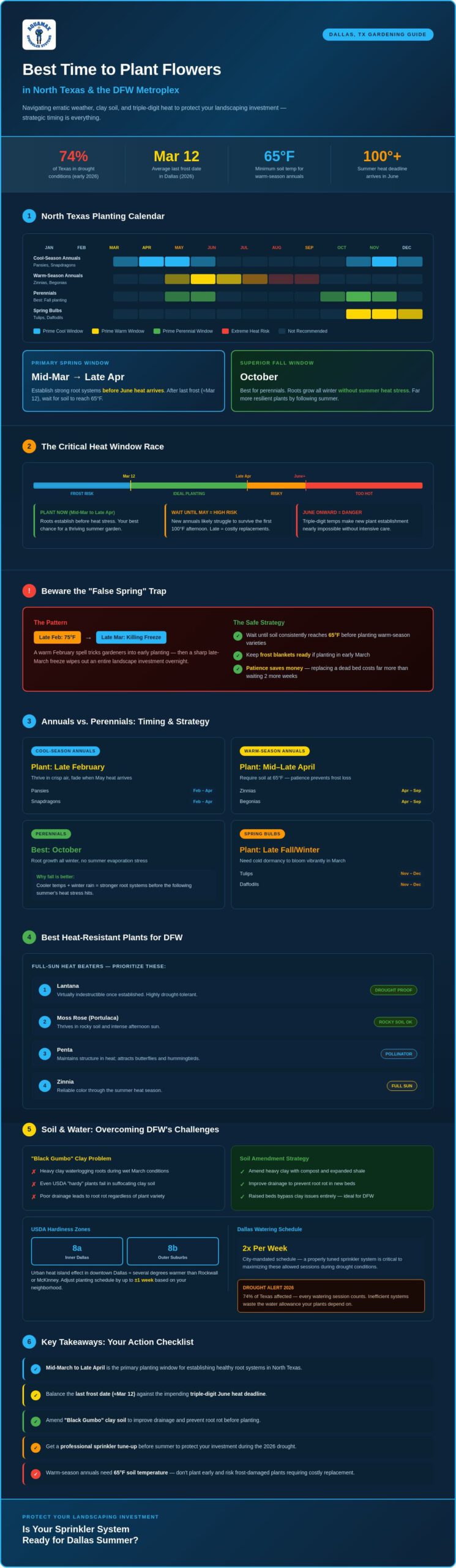
Timing is everything in North Texas. The best time to plant flowers in the DFW Metroplex is typically between mid-March and late April. While many gardeners fixate on the average last frost date, which falls around March 12 to March 15 in 2026, this date is merely a baseline. Success requires looking ahead at the 2026 weather outlook. With 74% of the state already experiencing drought conditions as of February, an early spring start is tempting but carries significant risks if the weather shifts suddenly.
To better understand how to plan your garden beyond simple dates, watch this helpful video:
The spring window is a race. You must establish strong root systems before the intense heat arrives in June. If you wait until May, your new annuals will likely struggle to survive the first 100-degree afternoon. While spring is popular, experienced locals know that October is often the superior window for perennials. Planting in the fall allows roots to grow through the winter without the stress of surface evaporation and scorching sun. This head start ensures a much more resilient plant when the following summer hits.
Decoding USDA Zone 8a and 8b
Most of the Dallas area sits within USDA plant hardiness zones 8a and 8b. These ratings tell you which plants can survive our winter lows, but they don’t account for our heavy “Black Gumbo” clay soil. Even a “hardy” plant will fail if its roots suffocate in waterlogged clay during a wet March. Location matters too. A flower bed in downtown Dallas experiences an urban heat island effect, staying several degrees warmer than a garden in Rockwall or McKinney. This means your planting schedule might shift by a week depending on your specific neighborhood.
The ‘False Spring’ Trap
Don’t let a week of 75-degree weather in late February fool you. North Texas is famous for the “false spring,” a temporary warm spell followed by a sharp, killing freeze in late March. Patience saves money. If you must plant early, keep frost blankets ready to protect early bloomers. If the temperature dips, your investment depends on these protective measures. Waiting until the soil consistently reaches 65°F is a safer strategy for long-term growth. This professional restraint prevents the high cost of replacing an entire landscape after a single cold night.
When to Plant Annuals vs. Perennials in Dallas
Choosing the best time to plant flowers depends entirely on whether you are seeking a seasonal splash of color or a permanent landscape fixture. For annuals, the gardening calendar is split into two distinct phases. Cool-season varieties like pansies and snapdragons should go into the ground in late February. These hardy bloomers thrive in the crisp air but will fade quickly once the May heat arrives. Conversely, warm-season annuals like zinnias and begonias require patience. You must wait until the soil temperature consistently hits 65°F, which usually occurs in mid-to-late April. Consulting the USDA Plant Hardiness Zone Map ensures you select varieties compatible with our specific region.
Perennials require a different strategy. While spring planting is possible, the fall months are actually the prime window for establishing root systems in McKinney and Garland. Planting in October allows these long-term residents to settle in without fighting the extreme evaporation rates of a North Texas summer. Spring flowering bulbs, such as tulips and daffodils, must be planted in late fall or early winter. They require a period of cold dormancy to produce the vibrant displays Dallas homeowners expect in March. Understanding these cycles is the key to identifying the best time to plant flowers for maximum visual impact.
Best Annuals for DFW Sun and Shade
Survival in the DFW Metroplex requires plants that can handle intense UV exposure and high humidity. For full-sun yards, prioritize these five heat-beaters:
- Lantana: Virtually indestructible and highly drought-tolerant once established.
- Moss Rose (Portulaca): Thrives in rocky soil and intense afternoon sun.
- Penta: Maintains its structure while attracting butterflies and hummingbirds.
- Zinnia: Provides reliable height and vivid color through the August peak.
- Vinca: Features glossy leaves that resist common soil-borne diseases.
For shaded areas, impatiens and caladiums remain reliable choices that withstand our humidity. As the season shifts, prepare to swap these for ornamental kale or cabbage in late September to maintain visual interest through the winter months.
Perennials: Planting for Year-Over-Year Success
Native Texas perennials are the backbone of a sustainable garden. Species like Texas Sage or Black-eyed Susans are naturally adapted to our 2026 drought conditions and require significantly less supplemental water. Remember the “Sleep, Creep, Leap” rule: the first year they establish roots (sleep), the second year they show modest growth (creep), and the third year they truly flourish (leap). Success often starts with the ground itself. Scheduling professional sod installation alongside your perennial planting creates a cohesive, healthy environment for new roots to take hold. If your current watering setup seems inadequate for these new additions, a quick irrigation repair can prevent costly plant loss before the summer peak.
The Critical ‘Heat Window’: Why Spring Planting Has a Deadline
In the DFW Metroplex, the best time to plant flowers is defined as much by the thermometer as the calendar. June 1st represents a hard deadline for most gardeners. Beyond this date, the intense Texas sun creates a “heat window” that is often fatal for new additions. While an established perennial has deep roots to tap into subsoil moisture, a plant introduced in late May lacks the structural foundation to survive triple-digit temperatures. This creates a direct correlation between your planting date and summer survival rates. If you miss the April window, your plants will require twice the water and significantly more shade management just to stay alive through July.
Success requires a proactive approach. Following a professional North Texas gardening checklist can help you stay ahead of these shifting weather patterns. When you plant early, you give the root system a head start before the soil surface begins to bake. By the time the August drought hits, an early-spring flower has already acclimated to the local environment. Conversely, a late-spring planting is a rescue mission from day one. It is a race against time that most young plants lose without constant intervention.
Monitoring Soil Temperature
Roots prioritize soil temperature over air temperature. In communities like Wylie and Murphy, the heavy clay can remain deceptively cool while the air feels warm, or vice versa. Use a simple soil thermometer to ensure the ground has reached a stable 65°F before planting warm-season varieties. Once they are in the ground, apply a three-inch layer of hardwood mulch. This acts as an insulator, regulating the temperature and preventing the rapid evaporation that characterizes the transition into a North Texas summer. Proper insulation is the most effective mechanical fix for soil that dries out too quickly.
Surviving the First Summer
Nursery-grown plants often experience shock when moved from a greenhouse to a Dallas backyard. Acclimation is vital for vitality. Instead of frequent, shallow misting, focus on deep watering sessions that encourage roots to grow downward. This builds a resilient plant that can withstand the heat. Watch for warning signs of heat stroke, such as leaves that remain wilted even after watering or brown, crispy edges known as leaf scorch. If these symptoms appear, immediate action is required. For properties in need of a more robust watering solution before the heat arrives, a new sprinkler system installation provides the precision needed to keep young plants thriving through their first year.
Preparing Your Garden for Success: Soil and Water
The best time to plant flowers in North Texas is only half the battle; the other half is the environment you create for them. Dallas is famous for its “Black Gumbo” clay. This heavy soil expands when wet and cracks when dry, suffocating delicate roots if left unmanaged. You must amend this clay with organic compost or expanded shale to improve aeration and drainage. Without these amendments, your new plants will likely rot during the spring rains or dehydrate during the summer drought. Preparation is the foundation of a thriving landscape.
Before you place a single seed in the ground, verify that your watering infrastructure is sound. Planting without a functioning sprinkler system is a high-risk gamble. A single broken head or a hidden leak can either starve your flowers of water or create a stagnant pool that kills them within days. Conduct a full system test to ensure every corner of your bed receives uniform coverage. This proactive maintenance ensures your investment doesn’t wither before it has a chance to bloom.
Drip Irrigation for Flower Beds
In our drought-prone climate, drip irrigation system installation is the gold standard for flower bed health. Unlike traditional spray heads, drip lines deliver water directly to the root zone. This minimizes evaporation and keeps foliage dry, which is essential for avoiding fungal issues like powdery mildew. New transplants require a different watering rhythm than established lawns. Set your controller to deliver shorter, more frequent cycles during the first few weeks to keep the root ball moist without saturating the surrounding clay.
Drainage Solutions for Rainy Springs
While we often worry about heat, North Texas springs frequently bring torrential downpours. Heavy April and May rains can quickly turn a garden into a swamp. Standing water is a silent killer for many flower varieties, leading to root rot and nutrient leaching. If you notice water pooling near your beds for more than 24 hours, consider professional yard drainage solutions. Properly installed French drains or catch basins protect your landscaping and your home’s foundation from the erratic DFW weather patterns.
Don’t wait for a heatwave to find out your system is failing. Contact us today for a professional sprinkler system repair to ensure your new garden thrives all season long.
Expert Support for a Thriving Dallas Landscape
Maximizing your garden’s potential in North Texas requires more than just a calendar. While identifying the best time to plant flowers is the first step, sustaining that growth through a scorching July requires professional infrastructure. Aquamax Sprinkler Systems specializes in protecting your landscaping investment by ensuring your irrigation technology matches the demands of your specific flower varieties. A professional sprinkler system tune-up before the spring planting season is the most effective way to prevent plant loss. We identify hidden leaks and pressure issues that could compromise your new blooms before the first heatwave hits.
Custom irrigation design is essential for complex flower beds and foundation plantings. Every yard in the DFW Metroplex has unique microclimates. A bed against a south-facing brick wall requires a different watering volume than a shaded corner in the backyard. Our local expertise in North Texas weather patterns allows us to calibrate your system for maximum vitality. We don’t just fix pipes; we ensure your property remains a lush, environmental asset. By aligning your watering schedule with the best time to plant flowers, you create a resilient landscape that maintains its beauty year after year.
Pre-Planting Irrigation Audit
Before you invest in expensive perennials, a pre-planting irrigation audit is vital. We identify “dry spots” where coverage is insufficient, ensuring every plant receives the hydration it needs to establish deep roots. As your foliage grows, we adjust head heights to prevent blockage, ensuring water reaches the soil rather than just the leaves. This methodical approach prevents the “false security” of a running system that is actually failing to reach its target. Check out our reviews to see how we’ve helped homeowners across North Texas maintain thriving gardens through record-breaking droughts.
Ready to Bloom? Contact Aquamax Today
Whether you are in Plano, Carrollton, or Rowlett, your spring system check-up should be a priority on your gardening checklist. We help homeowners conserve water through precision technology, maintaining a vibrant landscape without violating local watering restrictions or incurring fines. Our licensed specialists understand the 2026 drought conditions and provide the proactive solutions needed for long-term excellence. We handle the technical burden of maintenance so you can focus on the aesthetic joy of your garden. Contact Aquamax for an irrigation consultation today and secure the future of your Dallas garden.
Secure Your North Texas Garden for the Seasons Ahead
Success in a North Texas garden requires a precise strategy that respects the region’s intense environmental shifts. You now know that the best time to plant flowers is the narrow window between the last spring frost and the arrival of the triple-digit June heat. By focusing on early root establishment and proper soil amendments for our heavy clay, you protect your landscaping investment from the inevitable summer drought. Even the most resilient native plants won’t thrive without a reliable and efficient watering system to sustain them through the peak of the season.
Aquamax Sprinkler Systems has provided peace of mind to homeowners throughout the region since 1998. Our licensed and insured technicians serve Dallas, Plano, Frisco, and the wider DFW Metroplex with specialized expertise in water-efficient drip irrigation and system repairs. Don’t let your hard work and expensive new plants wither under the unforgiving Texas sun. Ensure your infrastructure is ready for the peak growing season by securing professional support before the heat arrives. With the right timing and a healthy irrigation system, your garden will be the envy of the neighborhood.
Schedule Your Sprinkler Tune-Up for a Successful Planting Season
Frequently Asked Questions
When is the last frost date in Dallas for 2026?
The average last frost date for Dallas in 2026 is March 12th. While this serves as a general guide, some areas in the wider DFW Metroplex may experience freezing temperatures as late as March 20th. Always monitor the local forecast before planting tender annuals. Waiting until the soil is consistently warm prevents the high cost of replacing plants lost to a late-season cold snap.
Can I plant flowers in North Texas during the summer?
Planting flowers during a North Texas summer is generally discouraged due to the extreme heat and 74% drought conditions currently affecting the state. High evaporation rates make it nearly impossible for young roots to establish themselves in July or August. If you must plant, choose indestructible varieties like Lantana and be prepared to provide temporary shade and significant supplemental hand-watering to ensure survival.
What are the best drought-tolerant flowers for DFW?
Lantana, Texas Sage, and Black-eyed Susans are the top drought-tolerant choices for the Dallas area. These species are naturally adapted to the local environment and require far less water than traditional bedding plants. Zinnias and Moss Rose also perform exceptionally well in full-sun yards. Choosing native plants is a vital contribution to the aesthetic and environmental well-being of your property while reducing maintenance burdens.
How often should I water newly planted flowers in Dallas?
Newly planted flowers typically require daily watering for the first 10 to 14 days to keep the root ball from drying out. Once they show signs of new growth, transition to deeper, less frequent watering sessions that encourage roots to penetrate the clay soil. This strategy builds a resilient plant that can withstand the Texas sun. Always adhere to the City of Dallas twice-weekly watering schedule for automatic sprinkler use.
Is it better to plant flowers in the morning or evening?
It is better to plant flowers in the late afternoon or early evening to protect them from immediate heat stress. This timing allows the plants to recover in cooler temperatures and higher humidity overnight before facing the intense next-day sun. If you plant in the morning, the rising heat can cause rapid wilting and transplant shock. Always water the soil thoroughly immediately after planting to settle the roots.
Why do my flowers keep dying even though I water them every day?
Flowers often die despite daily watering because the heavy “Black Gumbo” clay in Dallas traps water, leading to root rot. Daily shallow watering prevents roots from growing deep and can actually suffocate the plant if the soil doesn’t drain. This creates a failing system where the roots sit in stagnant water. The best time to plant flowers is after you have amended the soil to ensure proper aeration and drainage.
Should I use drip irrigation or spray heads for my flower beds?
Drip irrigation is the superior choice for flower beds because it delivers water directly to the root zone and minimizes evaporation. Spray heads often lose water to wind drift and can cause fungal issues by keeping the leaves constantly wet. Drip systems provide the precision needed for delicate blooms and are generally permitted more frequently under local watering restrictions. This professional resolution ensures your landscape remains lush while conserving water.
What is the best soil amendment for Dallas clay?
The best soil amendment for Dallas clay is a mix of organic compost and expanded shale. Compost provides essential nutrients and improves moisture retention, while expanded shale physically breaks up the dense clay to provide permanent aeration. Incorporating these materials at least six inches deep creates a healthy growing environment. Proper soil preparation is a vital fix that prevents the frustration of watching expensive plants fail in untreated ground.