

Article by
Robert Maxvill
Owner of Aquamax Sprinkler Systems, American Sprinkler Repair and Dallas Drainage Systems.
What if the standing water in your yard is actually a ticking clock for your home’s foundation? In North Texas, where our heavy clay soil swells and shrinks with every storm, pooling water is more than just a breeding ground for mosquitoes or a soggy mess that ruins your weekend plans. It creates intense hydrostatic pressure that can lead to costly structural cracks. Professional catch basin installation serves as a critical surge protector for your property, capturing surface runoff before it can saturate the ground around your concrete slab.
We understand the frustration of a lawn that stays unusable for days after a heavy rain. You deserve a yard that remains dry and a foundation that stays secure, regardless of how much rain May brings to the Dallas area. This 2026 guide explains how catch basins solve your drainage headaches and how they compare to other local solutions. We will walk through the technical requirements for our specific region so you can move forward with the confidence of a permanent, low-maintenance fix. It is time to reclaim your outdoor space and protect your property’s long-term health.
Key Takeaways
- Understand how the “sump” principle traps sediment and debris to keep your discharge pipes clear during heavy North Texas rain events.
- Discover why professional catch basin installation is a vital component of a hybrid drainage strategy designed to protect your foundation from hydrostatic pressure.
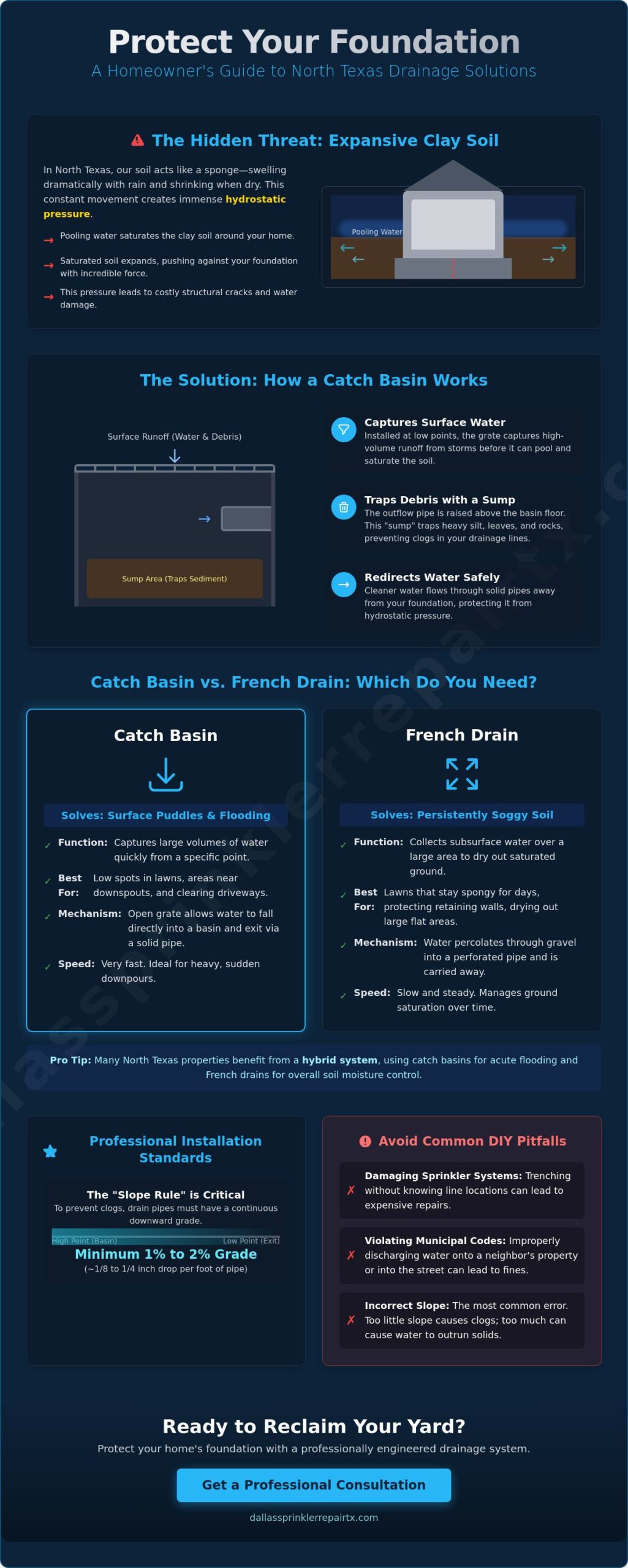
- Learn the essential engineering standards for Dallas properties, including the “Slope Rule” for maintaining a 1% to 2% grade for efficient water flow.
- Identify the functional differences between catch basins and French drains to determine the right combination for your specific yard issues.
- Avoid common DIY pitfalls that can damage existing sprinkler systems or lead to violations of local municipal drainage codes.
Understanding Catch Basin Installation for North Texas Landscapes
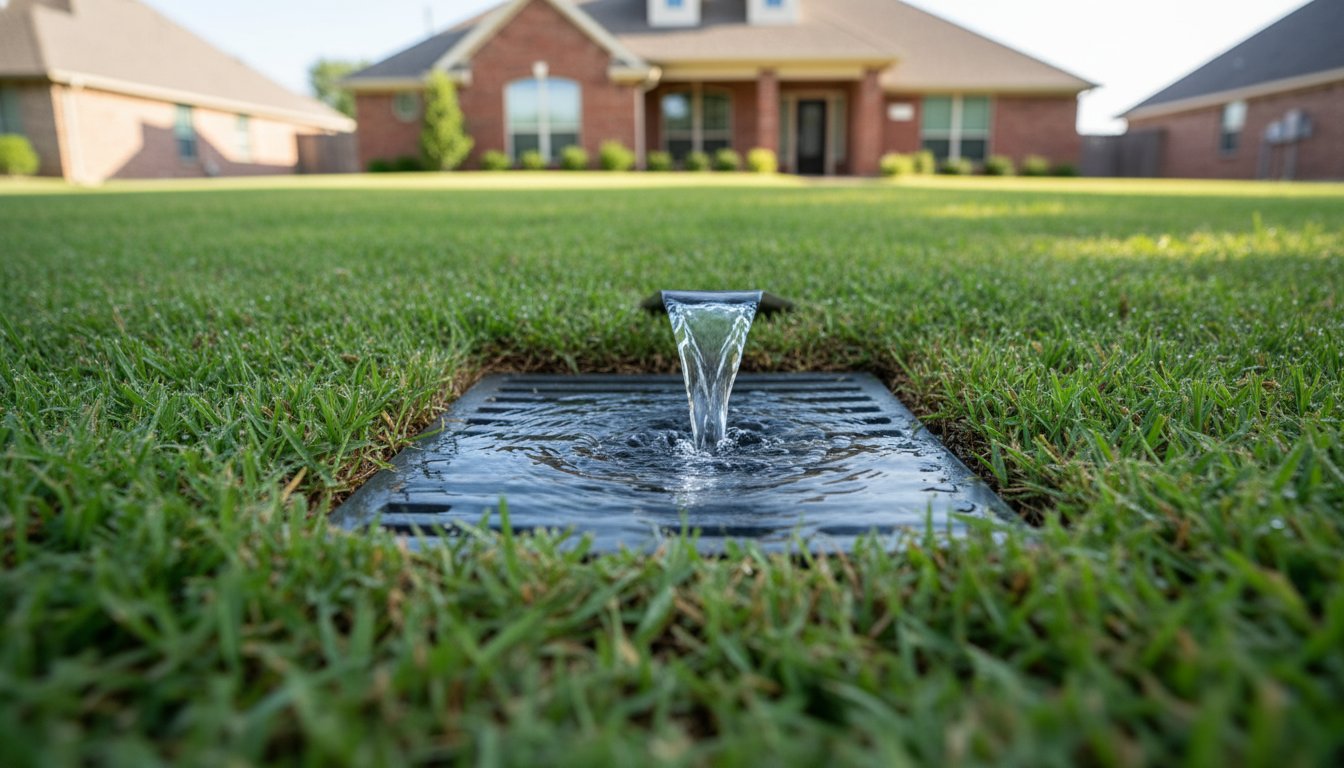
A catch basin is a specialized vertical drainage box installed at low points in your landscape to collect surface water and debris. Unlike a French drain, which manages subsurface saturation, a catch basin targets visible pooling. It acts as a primary entry point for larger Storm drain systems on your property. In the Dallas-Fort Worth area, these systems are essential for managing the sudden, high-volume runoff produced by spring thunderstorms. Without a clear path for this water to exit, your yard quickly becomes a swamp that threatens the integrity of your home.
The mechanical heart of this system is the “sump” principle. The outflow pipe is positioned slightly higher than the bottom of the basin. This design allows the basin to trap heavy sediment, silt, and small rocks at the bottom while allowing cleaner water to flow through the discharge line. Proper catch basin installation ensures that these solids don’t clog your underground pipes, which would otherwise require expensive jetting or excavation to clear. This setup is a cornerstone of effective yard drainage solutions Dallas homeowners rely on to maintain dry, usable outdoor spaces during the wettest months of the year.
The Anatomy of a Modern Catch Basin
A standard residential basin consists of three main parts: the grate, the basin body, and the outlet adapters. Most modern installations use high-density polyethylene (HDPE) because it’s lightweight, durable, and resists the shifting nature of North Texas soil better than traditional concrete. The grate sits flush with the ground and serves as the primary filter. It’s designed to block large debris, such as the thick leaves from North Texas live oaks, from entering the system. Choosing the right grate size and material is a functional decision that prevents long-term maintenance headaches.
Why Foundation Protection Starts with Surface Drainage
Dallas sits on the Blackland Prairie, a region known for expansive clay soil. This soil has a high shrink-swell potential, meaning it expands significantly when wet and contracts when dry. When water pools near your home, it creates hydrostatic pressure, a force that pushes against your foundation. This pressure is the primary cause of structural cracks and basement seepage. By capturing water at the surface before it can saturate the deep clay layers, you mitigate the risk of foundation upheaval. A catch basin acts as the first line of defense against foundation upheaval by redirecting moisture away from your concrete slab.
Catch Basins vs. Alternative Drainage Systems: A Comparative Analysis
Selecting the right hardware for your landscape depends on how water moves across your property during a storm. While many homeowners assume a single drain type solves every issue, North Texas yards often require a more nuanced approach. Catch basins are engineered for high-volume, high-speed water evacuation. They capture runoff at a specific point and move it through solid pipes, making them the most efficient tool for clearing large puddles that form in low-lying areas of your lawn. Professional catch basin installation is the superior choice for managing “point source” flooding, where water gathers quickly and needs an immediate exit.
A common misconception is that one drainage style fits all. In reality, a hybrid system often provides the best protection for Dallas homes. This strategy combines the surface-clearing power of basins with the subsurface drying capabilities of other methods. If you are struggling with a lawn that feels like a sponge days after the rain stops, you might need to combine these basins with a French drain installation Dallas homeowners use for deep-soil saturation. Using multiple tools ensures that both your surface grass and your home’s foundation remain protected from moisture.
Catch Basins vs. French Drains
The primary difference between these systems is the speed of water intake. Basins handle surface “puddles” using an open grate that allows water to fall directly into the system. French drains handle “soggy soil” by allowing water to slowly percolate through gravel and landscape fabric into a perforated pipe. If your primary goal is to stop water from pouring off a roof downspout and pooling near your foundation, a catch basin is the correct tool. It acts much faster during a heavy downpour than a buried gravel line ever could. For those managing a high water table or constant underground dampness, the French drain remains the standard.
When to Use a Channel Drain Instead
Channel drains, also known as trench drains, are the linear cousins of catch basins. While a basin collects water from a single point, a channel drain acts like a long gutter embedded in the ground. These are almost exclusively used along the edges of driveways, patios, or garage entries to intercept “sheet flow” before it enters a building. When planning your catch basin installation, consider the traffic in the area. Basins placed in driveways must be rated for vehicle loads to prevent the body of the basin from collapsing under the weight of a car. If you are unsure which system your yard requires, our team can design a custom drainage system installation that addresses both surface and subsurface issues.
Maintenance is another area where basins shine. There is a persistent myth that open grates clog more easily than buried systems. In truth, cleaning a basin is as simple as lifting the grate and scooping out the sediment trapped in the sump. Buried gravel drains are much harder to service once they become silted over. Following catch basin installation best practices ensures that your system remains easy to maintain and continues to flow freely for decades, even through the most intense North Texas weather cycles.
Engineering Your Drainage: Sizing and Placement for DFW Rain Events
Dallas weather is aggressive. When a spring thunderstorm drops two inches of rain in sixty minutes, your drainage system must be ready to handle the surge immediately. The success of any catch basin installation depends on precise engineering rather than guesswork. While some national retailers suggest that a 6 inch basin is sufficient for most residential yards, this rarely holds true in North Texas. Our storms generate a volume of water that can easily overwhelm small basins, leading to the exact pooling and foundation risks you are trying to avoid. For most residential lots in the DFW area, a 12×12 inch basin is the professional standard for ensuring adequate intake capacity during peak rainfall.
Stability is another major concern due to our local “Black Gumbo” clay. This soil is notoriously unstable; it expands with moisture and shrinks during our hot, dry summers. Without proper backfilling and bedding, a basin can “float” out of the ground or shift, causing the connected pipes to crack or disconnect. Following MnDOT installation best practices ensures that the unit remains anchored. We use a gravel base to provide a stable foundation that resists soil movement. This level of precision required for catch basin installation in expansive clay is what separates a long term solution from a temporary fix.
Calculating Catchment Area and Basin Size
To choose the right basin, you must first estimate the square footage of the area draining into that specific point. A 9×9 inch basin is often suitable for small, isolated landscape beds. However, for major low spots where multiple slopes converge, we typically move to 12×12 or even 18×18 inch units. A common objection from homeowners is the fear that a smaller basin will overflow; however, the basin itself is rarely the bottleneck. The diameter and slope of the outflow pipe are the primary factors that determine how quickly water actually leaves your property.
Strategic Placement for Maximum Efficiency
Placement is a matter of physics. We use a transit or a simple string level to identify the natural low points of your property with absolute certainty. Placing a basin even a few inches away from the true low point will result in standing water. If we are placing basins directly under roof downspouts, we utilize a “debris trap” configuration to prevent shingles and granules from entering the main line. Before any digging begins, it’s vital to contact 811 to mark utility lines. In many Dallas suburbs, fiber optic and gas lines are buried shallowly, making professional oversight essential for a safe drainage system installation. We handle the logistics and the engineering so you don’t have to worry about utility interruptions or system failure.
The Installation Process: From Trenching to Grate Selection
Executing a successful catch basin installation requires more than just digging a hole and dropping a box into the ground. It demands a methodical approach to ensure the system survives the intense pressure of shifting DFW clay. The process begins with precise excavation. We dig a hole deep enough to accommodate the basin plus an additional 2 to 3 inches of gravel bedding. This gravel base is a critical step that many DIY guides omit. It provides a stable foundation and prevents the basin from “floating” or shifting when the surrounding soil becomes fully saturated during a heavy downpour.
Once the basin is set, we focus on the discharge line and watertight connections. Every hub connection must be sealed properly to prevent root intrusion and soil seepage. After the pipes are laid, backfilling and compaction become the priority. We return the soil in layers, compacting each one to prevent the future sinkholes that often plague amateur installations. This attention to detail ensures your lawn remains level and safe for your family to walk on. If you’re ready to stop the flooding and protect your home, schedule your drainage system installation with our team today.
Choosing the Right Pipe: PVC vs. Corrugated
The materials you choose significantly impact the longevity of your system. Professional installers prefer smooth-wall PVC, such as Schedule 40 or SDR 35, over the cheap corrugated pipe found at big-box stores. Corrugated pipe has ridges that trap sediment and debris, eventually leading to clogs that are nearly impossible to clear without digging up the entire yard. Smooth pipes allow sediment to flush through the system easily, maintaining maximum flow. While material choices are a primary factor in the total yard drainage system cost, the investment in high-quality PVC pays for itself by eliminating the need for frequent repairs or premature replacement.
Finishing Touches: Grates and Sod Restoration
The final stage of catch basin installation involves aesthetics and functional discharge. Selecting the right grate is about both performance and style. We offer plastic grates in various colors to blend into your turf or metal grates for areas that might see heavy foot traffic or lawn equipment. At the end of the line, we install a pop-up emitter. This device remains flush with the grass when dry but pops up to release water once the system engages. To ensure your yard looks as good as it functions, we provide expert sod installation Dallas homeowners trust to seamlessly repair the areas disrupted by trenching. Your landscape will return to its lush, vibrant state, but without the standing water issues that previously held it back.
Why Professional Catch Basin Installation Protects Your Dallas Property
While the mechanics of a drain might seem straightforward, the environment beneath your lawn is a complex network of utilities and irrigation lines. Attempting a DIY project or hiring a general handyman for catch basin installation often leads to what we call the “Irrigation Conflict.” This occurs when trenching for drainage inadvertently severs existing sprinkler pipes or control wires. A professional approach ensures that your new drainage system works in harmony with your existing landscape infrastructure rather than against it. We don’t just dig holes; we engineer water management solutions that respect the existing systems already buried in your yard.
Licensed expertise is also a matter of legal and local compliance. The City of Dallas and surrounding suburbs have specific requirements for how water is discharged from a private property. An improperly installed system that directs water onto a neighbor’s lot or into a protected floodplain can result in municipal fines or even legal disputes. By choosing a specialist, you ensure that your catch basin installation meets all local codes and engineering standards. This level of professional oversight transforms a simple mechanical fix into a vital contribution to your property’s long-term value and structural safety.
Protecting Your Sprinkler Investment
We begin every project by mapping your current irrigation system to identify critical conflict points. This step is essential to prevent costly damage and to ensure that the new drainage slope doesn’t expose buried water lines to the elements or mechanical damage. There is a distinct advantage to having a single contractor manage both sprinkler installation and drainage. We understand how these systems interact and can guarantee that your yard remains both well-watered and well-drained. Our technicians ensure that the placement of catch basins doesn’t interfere with spray patterns or the structural integrity of your sprinkler heads.
The Aquamax Warranty and Local Reliability
Aquamax has served the North Texas community since 1998, providing reliable water management solutions for over 25 years. We understand the specific soil challenges and weather patterns unique to our service areas, including Frisco, Plano, and McKinney. Unlike a “handyman” fix that might use substandard materials or incorrect grading, our engineered solutions are designed for decades of service. We stand behind our work with a commitment to quality that only a local, established specialist can offer. You can rest easy knowing that your drainage project is being handled by licensed and insured technicians who prioritize the health of your landscape and the safety of your foundation. If you’re ready to reclaim your yard, contact Aquamax Sprinkler Systems for a professional drainage evaluation today.
Reclaim Your Landscape and Protect Your Investment
Managing surface water in North Texas requires more than just a quick fix. It demands a system that respects the aggressive nature of our clay soil and the intensity of our seasonal storms. By choosing professional catch basin installation, you aren’t just clearing puddles; you’re actively mitigating the hydrostatic pressure that threatens your home’s foundation. A well-engineered drainage strategy ensures that your lawn remains dry and your soil stays stable. Professional drainage is a vital investment in your property’s longevity.
Don’t leave your property’s safety to chance or amateur handiwork. Aquamax has been serving the DFW area since 1998 with licensed and insured technicians who specialize in 5-star rated custom drainage designs. We understand the local terrain and the complexities of integrated irrigation systems. Take the first step toward a dry, usable yard today. Get a Professional Drainage Evaluation from Aquamax and enjoy the peace of mind that comes with expert water management. Your landscape is ready to thrive again.
Frequently Asked Questions About Catch Basin Installation
How deep should a catch basin be installed?
A catch basin should be installed so the grate sits at the absolute lowest point of the ground surface to ensure maximum water collection. The total depth of the excavation depends on the height of the basin, which is typically 12 to 18 inches, plus an additional 3 inches for a gravel bedding. This gravel layer is essential in Dallas clay to prevent the unit from shifting or “floating” during heavy rain events.
Do catch basins breed mosquitoes?
Water will not sit in the basin long enough to breed mosquitoes if the system is installed with a proper discharge slope. While some basins feature a “sump” area below the outlet pipe to trap sediment, regular maintenance prevents standing water issues. You can also add a small amount of gravel to the sump to displace water while still allowing the basin to catch debris effectively.
Can I connect my gutters directly to a catch basin?
Yes, connecting downspouts to a catch basin is a highly effective way to manage heavy roof runoff. This configuration prevents water from eroding the soil at the base of your downspouts and ensures that moisture is moved immediately away from your foundation. It is a standard practice for professional catch basin installation projects aimed at protecting your home’s structural integrity from hydrostatic pressure.
How often do I need to clean my catch basin?
We recommend checking your basins twice a year: once after the first heavy spring rain and again in late fall. This schedule ensures that you remove leaves, silt, and North Texas live oak debris before they can clog the outflow pipe. Keeping the grate and the bottom of the basin clear is the simplest way to maintain a high-performing drainage system throughout the year.
What is the best grate for a residential yard?
A high-density plastic grate is usually the best choice for residential lawns because it is durable and available in colors like green or tan to blend with your turf. If the basin is located in an area with heavy foot traffic or where a riding lawnmower will pass over it, we recommend a reinforced plastic or decorative metal grate. These materials provide the longevity needed for high-stress areas.
Will a catch basin work if my yard is flat?
Catch basins rely on gravity to move water, but they can still function in relatively flat yards. When planning a catch basin installation for a flat lot, we install the discharge pipe at a steeper internal slope to ensure the water flows toward the exit point. If your property has no natural exit, you may need a sump pump system to move the collected water to the street.