
Article by
Robert Maxvill
Owner of Aquamax Sprinkler Systems, American Sprinkler Repair and Dallas Drainage Systems.
What if a single landscaping utility could provide an 86% return on investment while shielding your property from municipal fines and structural failure? In the high-stakes environment of North Texas real estate, professional commercial irrigation installation isn’t just about curb appeal; it’s a vital risk-management strategy. You’re likely tired of battling sky-high water bills and the constant worry that uneven moisture in Dallas clay soil is quietly compromising your building’s structural integrity.
We understand that managing a DFW property means balancing aesthetic excellence with strict municipal compliance and liability concerns like sidewalk runoff or ice patches. This guide will show you how professional commercial irrigation design protects your assets, ensures you meet 2026 Dallas water regulations, and significantly slashes your utility costs. We’ll explore the essential components of a high-performance system, including mandatory rain and freeze sensors and the technical requirements for city-approved irrigation plans that keep your property running efficiently without daily oversight.
Key Takeaways
- Learn why professional commercial irrigation installation acts as a critical line of defense for your property’s foundation against North Texas clay soil.
- Understand the engineering requirements of large-scale systems, including heavy-duty components designed to withstand high-pressure commercial demands.
- Discover how strategic zoning and drip irrigation installation manage Dallas “heat islands” like parking lots and medians while reducing water waste.
- Ensure your property stays compliant with 2026 Dallas water ordinances and mandatory rain/freeze sensor requirements to avoid municipal fines.
- Maximize your return on investment by scheduling regular sprinkler system tune-ups that adapt your water usage to shifting seasonal weather patterns.
The Strategic Role of Commercial Irrigation Installation in DFW
Property management in North Texas has shifted. It’s no longer enough to just keep the grass green. A commercial irrigation installation represents a high-pressure, multi-zone management system designed specifically to handle the unique stressors of the DFW climate. As we look at the 2026 landscape, regional water scarcity is driving utility rates higher across the metroplex. A precision-engineered system isn’t just a utility; it’s a financial shield. High-quality irrigation directly impacts your property’s valuation by maintaining a lush, professional environment that attracts and retains high-value tenants. When a landscape looks neglected, it sends a signal of deferred maintenance to potential lessees and investors alike.
Commercial vs. Residential: Why Scale Matters
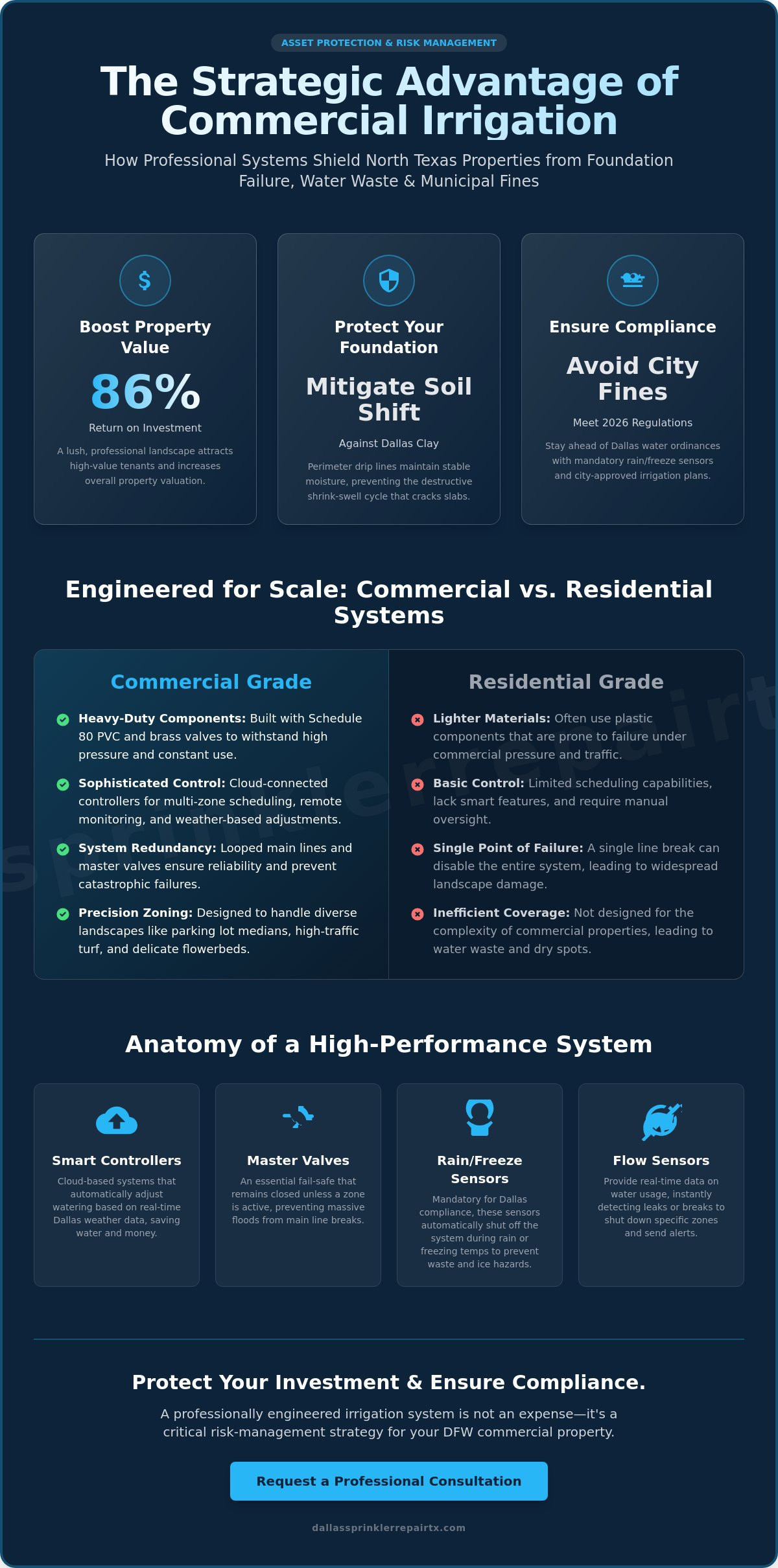
The difference in scale between a private lawn and a sprawling retail center or office park is vast. Commercial systems must distribute massive volumes of water across dozens of distinct zones while maintaining consistent pressure throughout the entire loop. Residential-grade controllers often fail in these environments because they lack the sophisticated scheduling and multi-program capabilities required for complex sites. Components in high-traffic areas also face significantly more abuse from heavy commercial mowers and constant foot traffic. For a deeper look at how these systems have evolved, this overview of irrigation techniques provides a solid foundation. Investing in a robust new sprinkler system installation ensures your hardware is built to industrial standards from day one.
Protecting the Foundation: A North Texas Priority
The expansive clay soil in Dallas is a notorious threat to structural integrity. When the ground dries out and shrinks during our intense summer heat, it pulls away from the concrete. This leads to foundation cracks that can result in catastrophic repair costs. A professional commercial irrigation installation acts as a moisture stabilization barrier. By using specialized perimeter drip lines, we keep the soil at a consistent moisture level year-round. This prevents the destructive cycle of swelling and shrinking that destroys slabs. If your property currently shows signs of “ponding” or poor water travel, a professional drainage system installation is a necessary partner to your irrigation layout. This combined approach ensures water is used where it’s needed and moved away from where it causes structural harm.
Engineering for Scale: Key Components of Commercial-Grade Systems
A professional commercial irrigation installation relies on hardware that can withstand constant use and high water pressure. Unlike residential systems, commercial setups utilize industrial-grade components designed for longevity and resilience. We prioritize high-impact materials like Schedule 80 PVC and brass valves over the lighter plastic alternatives found in home systems. Choosing the right materials from the start drastically reduces the long-term need for frequent irrigation repairs. In 2026, we’re seeing a massive shift toward cloud-connected infrastructure. This technology allows property managers to monitor their entire landscape from a single dashboard, providing real-time alerts and automated adjustments based on local Dallas weather patterns.
System redundancy is another hallmark of commercial engineering. Large-scale layouts often feature looped main lines that maintain consistent pressure across vast distances. This design ensures that a single component failure doesn’t shut down the entire system. By building in these redundancies, we provide a level of reliability that protects your landscape investment even during the most demanding Texas summer months. If you are noticing uneven performance across your property, it’s time for a consultation with a licensed specialist about a new sprinkler system installation built to these higher standards.
Master Valves and Flow Sensors: The First Line of Defense
The master valve is an essential fail-safe for any commercial property. It remains closed until a zone is specifically scheduled to run. This prevents a single main line break from flooding your property for days if a pipe bursts after business hours. When we pair these with flow sensors, the system becomes truly proactive. These sensors detect minute deviations in water flow, identifying hidden leaks and triggering an automatic shutdown instantly. Preventing a weekend-long flood on a retail lot or office park offers an immediate return. It avoids both catastrophic water waste and potential liability from saturated soil or ice patches on sidewalks.
High-Efficiency Nozzles and Pressure Regulation
High water pressure is common in DFW commercial lines, but it’s destructive to standard sprinkler heads. Pressure regulation is a mandatory feature for large commercial loops to prevent misting. Misting occurs when high pressure turns water into a fine fog that evaporates before it ever hits the ground. Following EPA WaterSense Best Management Practices ensures your system delivers water with precision. We utilize high-efficiency rotary nozzles that produce large, wind-resistant droplets. These nozzles ensure even distribution during gusty North Texas days, cutting down on water overhead while keeping your turf lush. A professional sprinkler system tune-up can often identify if your current nozzles are outdated and costing you money.
Zoning and Design for Diverse North Texas Landscapes
Dallas properties aren’t uniform blocks of land. They are collections of distinct micro-climates that demand tailored watering strategies. Large asphalt parking lots act as “heat islands,” radiating warmth long after the sun sets and drying out adjacent soil much faster than shaded areas. A professional commercial irrigation installation accounts for these temperature spikes by separating parking lot islands and medians into their own dedicated zones. We utilize drip irrigation installation for these narrow strips. This method delivers water directly to the root zone, which eliminates wind drift and prevents embarrassing overspray onto tenant vehicles or pedestrian walkways.
Effective design relies on “hydrozoning,” the practice of grouping plants with similar water requirements into the same irrigation zones. This prevents the common mistake of overwatering drought-tolerant native plants just to keep high-traffic turf alive. Following Irrigation Association Best Practices ensures that every drop is used purposefully across your entire layout. Slopes present another significant challenge for property managers. Without precise zoning and specialized nozzles, water quickly runs off onto public sidewalks. This creates a safety liability and wastes your utility budget. We solve this by using pressure-compensating heads that maintain a steady flow, ensuring water stays on your landscape where it belongs.
Managing Blackland Prairie Clay
Dallas is famous for its heavy Blackland Prairie clay. This soil holds water well but absorbs it very slowly. If you apply too much water at once, it simply sheets off the surface and creates “ponding” near your building. We implement the “cycle and soak” method to combat this. The system runs for short bursts, allows the water to penetrate the clay, and then repeats the cycle. This ensures deep root penetration without runoff. We also integrate soil moisture sensors into our designs. These tools prevent oversaturation by pausing the schedule when the earth is already sufficiently damp, protecting both your plants and your foundation.
Landscape-Specific Solutions: From Turf to Native Beds
Zoning must adapt to the specific needs of different landscape features. High-traffic turf areas require frequent, shallow watering to maintain their resilience against heavy foot traffic. In contrast, ornamental beds or areas with North Texas native plants need deeper, less frequent cycles to encourage strong root systems. If you’re managing a new development, professional sod installation provides an immediate, lush appearance, but it requires a specialized irrigation schedule during the first few weeks. Our designs transition seamlessly between these different needs. We ensure that your native beds thrive with minimal intervention while your primary turf remains vibrant and welcoming to your tenants.
Navigating the Installation Process and Local Compliance
A successful commercial irrigation installation requires meticulous coordination between our team and your facility management. We prioritize a streamlined timeline to minimize business downtime and ensure your operations remain uninterrupted. Before a single shovel hits the dirt, we manage the critical task of utility marking through 811 services. Safety in public spaces is our top priority. We clearly mark work zones to protect your tenants and visitors from trip hazards. Using licensed technicians isn’t just a best practice; it’s a non-negotiable requirement for commercial liability insurance. Once the system is live, we conduct a comprehensive final walkthrough. We train your facility managers on the cloud-connected controllers we discussed earlier, ensuring they can manage the system with zero daily oversight.
Permitting and Backflow Compliance in DFW
Navigating municipal requirements is often the most complex part of a project. In Dallas, all irrigation plans must be drawn to scale and submitted in two sets to the Planning & Development Department. These plans must include a legible, dated seal from a licensed irrigator. The city is strict about details; your plans must feature a 1.5-inch diameter seal, a North arrow, a legend, and specific zone flow measurements. We ensure every system includes mandatory rain and freeze sensors to meet local ordinances. A critical legal requirement in North Texas is the use of double-check valve assemblies to prevent water contamination. We handle the mandatory backflow testing in Dallas and surrounding cities to keep your property in good standing. This rigorous approach to permitting for new commercial sprinkler installations prevents costly delays and legal headaches.
The Physical Install: Trenching, Boring, and Piping
We use advanced techniques to protect your existing infrastructure during the physical install. Directional boring allows us to run pipes under parking lots and sidewalks without tearing up expensive concrete or disrupting traffic flow. This preserves the aesthetic of your property while reducing restoration costs. For areas where we do trench, we strictly follow depth requirements to protect piping from the occasional North Texas hard freeze. We construct centralized valve manifolds that allow for multi-zone efficiency and easier access for future maintenance. This organized approach to piping ensures long-term reliability and system stability. If you’re ready to upgrade your property’s water management, contact our team today to schedule a professional consultation for your next project.
Maximizing ROI: Maintenance and Smart Management
The financial return on a high-quality commercial irrigation installation is measured through both immediate utility savings and long-term asset protection. In the Dallas market, a professionally installed system offers an approximate 86% return on investment. This value stems from preventing the catastrophic cost of foundation failure and the recurring expense of replacing dead landscape materials. By utilizing advanced water management strategies, you can reduce your property’s water consumption by 30% to 50%. This creates a significant buffer against rising municipal water rates while ensuring your property remains a premium destination for tenants. The key to capturing this ROI lies in the transition from a “set it and forget it” mentality to active, smart management.
Modern efficiency starts with a professional smart sprinkler controller installation. These units act as the brain of your entire landscape. They make real-time adjustments based on hyper-local weather data, ensuring you never waste money watering during a North Texas rainstorm. If you are currently relying on an older, manual clock, you’re likely overwatering by thousands of gallons every month. Upgrading to a smart system allows for automated water management that requires zero daily oversight from your on-site team, freeing them to focus on other facility priorities.
Remote Management and Predictive Analytics
As of 2026, commercial controllers are more connected than ever. These systems sync with local DFW weather stations to predict evaporation rates and soil moisture needs. This predictive approach ensures your plants receive exactly what they need to thrive in the Texas heat without a drop of waste. One of the greatest advantages for property managers is the ability to receive instant leak alerts on a smartphone or tablet. If a head is damaged by a vehicle or a pipe begins to seep, you’ll know before it impacts your bill or causes property damage. These systems also generate detailed water usage reports. You can use this data for corporate sustainability audits to prove your commitment to environmental stewardship and resource conservation.
Long-Term Partnership: The Value of Expert Support
A high-value commercial system requires a proactive maintenance strategy to maintain its peak efficiency. Scheduling a regular sprinkler system tune-up is the most effective way to catch small issues before they become expensive failures. In the DFW climate, seasonal transitions are particularly hard on hardware. “Winterization” protects your pipes from burst-related damage during hard freezes, while spring start-ups ensure every nozzle is aligned correctly before the summer heat arrives. A maintenance contract provides the peace of mind that your system is being handled by licensed hands. Ready to protect your property and slash your water overhead? Contact us for a professional consultation to see how a modern system can transform your property management experience.
Secure Your Property’s Future with Precision Irrigation
Investing in a modern system is about more than just maintaining curb appeal. It’s about securing your building’s foundation against North Texas clay and ensuring your property remains fully compliant with 2026 Dallas water ordinances. You’ve seen how smart technology and strategic zoning can slash overhead while eliminating the liability of sidewalk runoff or foundation shifting. These systems are vital assets that pay for themselves through reduced utility costs and long-term structural stability.
We specialize in commercial irrigation installation tailored specifically for the unique challenges of DFW landscapes. Licensed and insured since 1998, our team brings award-winning commercial designs and deep expertise in local soil management to every project. We manage the complexities of permitting and backflow testing so you can focus on your tenants. Request a Commercial Irrigation Design Consultation today to see how we can optimize your property’s efficiency. Your landscape is a reflection of your professional standards, and we’re here to help it thrive for years to come.
Commercial Irrigation Frequently Asked Questions
How long does a commercial irrigation installation typically take?
Most projects take between one and three weeks from the initial trenching to the final system walkthrough. The exact timeline depends on the property size, the number of zones, and the complexity of the landscape design. Larger multi-building office parks require more coordination for utility marking and city inspections. We work efficiently to minimize disruption to your tenants and daily business operations during the process.
What are the current water restrictions for commercial properties in Dallas?
Dallas currently enforces a maximum of twice-weekly watering based on your property address. You are prohibited from watering during any form of precipitation or allowing water to run off onto impervious surfaces like sidewalks and driveways. Large properties can apply for a variance through Dallas Water Utilities if they can demonstrate they cannot apply one inch of water within the allotted two days per week.
Do I need a separate water meter for my commercial irrigation system?
Yes, installing a dedicated irrigation meter is a standard practice for most commercial properties in North Texas. This allows the city to track water used specifically for landscaping, which often exempts that volume from sewage and wastewater fees. While it requires an initial investment, the long-term savings on your monthly utility bill are significant for high-volume users.
How much water can I save by switching to a smart commercial controller?
You can expect to reduce your water usage by 30% to 50% after a professional commercial irrigation installation that includes smart technology. These controllers use real-time data from local weather stations to adjust schedules automatically. By eliminating watering during rain or high-wind events, the system ensures you only pay for the moisture your landscape actually needs to survive the Texas heat.
Is a backflow preventer required for all commercial systems in DFW?
Yes, a backflow prevention device is a legal requirement for every commercial irrigation system in the Dallas-Fort Worth area. These devices protect the municipal drinking water supply from potential contamination by fertilizers or pesticides. Dallas requires specific double-check valve assemblies that must be tested annually by a licensed professional to ensure they are functioning correctly and remain in compliance with city codes.
How does commercial irrigation impact my property insurance rates?
A professionally designed system can help lower your liability by preventing water runoff that creates dangerous ice patches on sidewalks during winter. It also protects your property’s structural integrity by maintaining consistent moisture levels around the foundation. Many insurers view this proactive risk management favorably, as it reduces the likelihood of expensive foundation repair claims or slip and fall accidents on your premises.
Can you install irrigation under existing concrete or asphalt parking lots?
Yes, we utilize directional boring to install irrigation lines beneath existing parking lots and sidewalks without disturbing the surface. This technique allows for a clean commercial irrigation installation that preserves your expensive hardscaping. It’s a highly efficient method that avoids the costs and business interruptions associated with cutting and patching concrete or asphalt across your property.
What is the lifespan of a professional commercial sprinkler system in Texas?
A high-quality commercial system typically lasts between 15 and 25 years when it’s properly maintained. The harsh Texas climate and expansive clay soil put significant stress on underground components, so regular tune-ups are essential. Replacing nozzles and controllers every 7 to 10 years ensures your system continues to operate with the latest water-saving technology while the main infrastructure remains solid.