
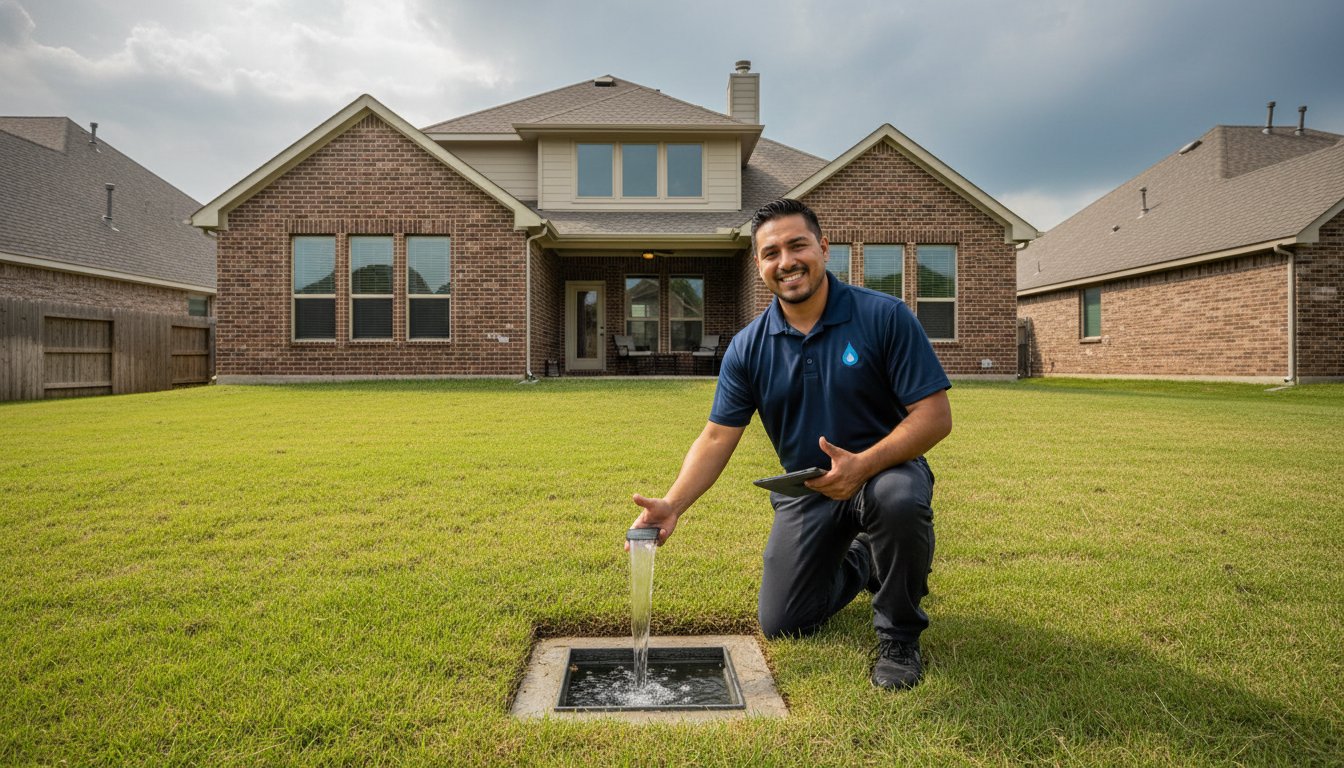

Article by
Robert Maxvill
Owner of Aquamax Sprinkler Systems, American Sprinkler Repair and Dallas Drainage Systems.
In North Texas, a soggy lawn is a structural emergency disguised as a landscaping eyesore. You’ve likely spent days waiting for your backyard to dry out, only to have pets track mud into the house or worry about the steady shift of your foundation. It’s a common frustration for Dallas homeowners who understand that our heavy clay soil doesn’t just absorb water; it traps it. When you’re dealing with poor drainage for standing water in yard spaces, you aren’t just losing your outdoor living area. You’re risking the long-term integrity of your property.
We agree that your home should be a place of stability, not a source of stress every time a storm cloud appears. This resource guide reveals the most effective drainage solutions to eliminate pooling water and protect your foundation. We’ll preview engineered systems like French drains and underground downspouts that address our local climate while staying compliant with City of Dallas lot-to-lot drainage regulations. Discover how a professional approach can provide the permanent relief your landscape requires and restore your peace of mind.
Key Takeaways
- Identify why the Dallas “Blackland Prairie” clay soil makes standing water a direct threat to your home’s foundation.
- Differentiate between surface and subsurface solutions to implement the most effective drainage for standing water in yard spaces.
- Master the engineering basics of slope and “fall” to ensure your system moves water efficiently while following local runoff laws.
- Use a proactive checklist of maintenance tasks to protect your landscape and prevent flooding before heavy rains arrive.
- Discover how custom-engineered drainage designs provide long-term reliability compared to standard, one-size-fits-all retail kits.
Why Standing Water is a Critical Threat to North Texas Homes
Standing water is officially defined as any ponding that persists for more than 24 to 48 hours after a rain event. While a small puddle might seem harmless, it is a ticking clock for your property’s health. In the Dallas area, stagnant water serves as a primary breeding ground for mosquitoes, which can become a public health concern within days. Beyond pests, your turf is at immediate risk. Excess moisture suffocates grass roots, leading to root rot and fungal diseases that can destroy a lawn faster than a summer drought. When you ignore the need for proper drainage for standing water in yard areas, you aren’t just dealing with a muddy mess; you’re allowing the environment to degrade your home’s value.
The Dallas Clay Problem: Why Your Yard Won’t Drain Naturally
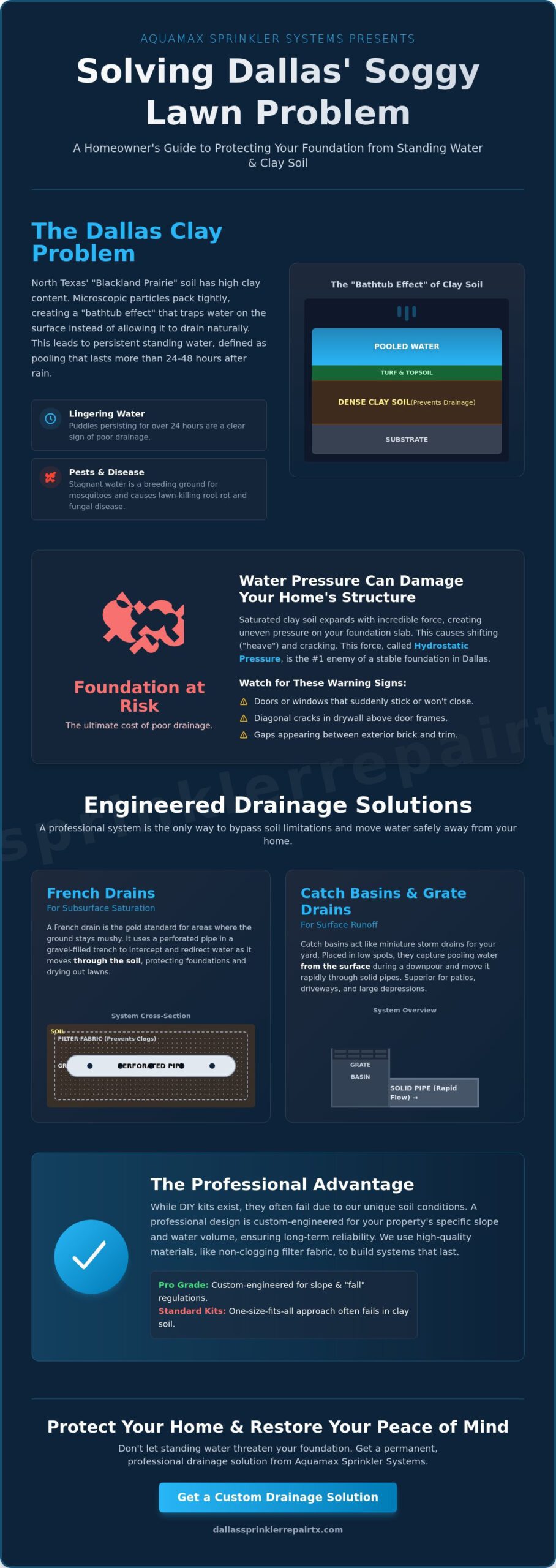
The Dallas “Blackland Prairie” soil is notorious for its high clay content. These clay particles are microscopically small and pack together so tightly that they leave almost no room for water to move. This creates a “bathtub effect” where water sits in low spots with nowhere to go. During our intense North Texas thunderstorms, the sheer volume of rain quickly overwhelms the soil’s limited absorption capacity. Because the ground cannot percolate water downward, the runoff pools on the surface. Professional drainage system installation is often the only way to bypass these soil limitations and move water to a safe exit point.
Foundation Risks: Beyond the Soggy Lawn
Foundation heave is perhaps the most expensive consequence of poor water management. When clay soil absorbs excessive water near your home, it expands with incredible force. This expansion creates uneven pressure against your slab, causing it to shift or “heave” upward. You might notice subtle signs of foundation stress before a major crack appears. Keep a close watch for these indicators:
- Doors or windows that suddenly stick or won’t close properly.
- Small diagonal cracks appearing in the drywall above door frames.
- Gaps between the exterior brick and window or door trim.
- Visible pooling against the concrete perimeter of the home.
Hydrostatic pressure is the specific physical force exerted by stagnant water against your home’s foundation walls, which can lead to moisture seepage and structural shifting. While many homeowners ask, What is a French Drain? to solve these issues, the core objective is always the same. You must redirect that pressure away from the house. If the soil moisture isn’t kept consistent and managed through an engineered system, the cycle of shrinking and swelling will eventually lead to costly structural repairs. Protecting your foundation starts with controlling the water on your lawn. For a deeper look at how these soil dynamics affect local properties, explore our comprehensive guide to yard drainage solutions Dallas homeowners need to protect their home and foundation.
Top Drainage Solutions for Eliminating Standing Water
Managing drainage for standing water in yard zones requires a strategic choice between surface and subsurface water management. Professional drainage systems are essential for property health because they prevent the soil from becoming a saturated marsh. The right hardware depends entirely on your yard’s unique topography and the volume of water you need to move. For large North Texas properties, we often find that a single method isn’t enough; instead, a hybrid approach yields the best results by addressing both visible puddles and hidden soil saturation.
French Drains: Solving Subsurface Saturation
A French drain is the gold standard for areas where the ground stays mushy long after the rain stops. It uses a perforated pipe buried in a trench filled with gravel to intercept water as it moves through the soil. Gravity pulls water into the gravel and then into the pipe, where it is carried away to a safe exit point. These systems are ideal for protecting foundations or drying out low-lying lawn sections where water tends to linger. We always use high-quality filter fabric to wrap the system. This prevents our local clay silt from clogging the pipe, which is a common failure point in DIY installations.
Catch Basins and Grate Drains: Managing Surface Runoff
Sump Pumps: When Gravity Isn’t Enough
Sometimes your yard doesn’t have the natural downward slope required for water to flow away on its own. In these cases, we install an outdoor sump pit. A pump sits in the basin and automatically activates when water reaches a certain level, forcing it through a discharge line to the street or a designated runoff area. This is a vital component for properties with deep low spots that sit below the street level. Given the intensity of North Texas storms, a dedicated power source and a reliable pump are non-negotiable for long-term function. If you’re struggling with a yard that stays wet for days, a professional drainage system installation assessment can identify the exact “fall” needed for success.
Evaluating Your Property: Engineering vs. Guesswork
Solving drainage for standing water in yard areas is a matter of physics, not just aesthetics. Many homeowners believe they can fix a low spot by simply adding more soil, but this often backfires. Adding dirt without a professional plan typically creates a dam that traps water in new areas or pushes it directly toward your home’s foundation. Effective water management requires a calculated “fall”—a slope of at least 1-2%—to ensure gravity moves the liquid away from your slab. Without this precise grading, even the most expensive pipe becomes nothing more than a buried reservoir for stagnant water.
You must also consider the legalities of water runoff. In the Dallas-Fort Worth area, property owners are generally prohibited from diverting water in a way that damages adjacent properties. If your new system causes a neighbor’s yard to flood, you could face city code violations or civil liability. Engineering a solution means balancing your need for a dry lawn with the rights of those around you. For detailed budget planning and insights into professional designs, you can explore our latest resources on the company blog. Addressing drainage for standing water in yard issues requires a bird’s-eye view of how your property interacts with the entire neighborhood.
The Science of Slope and Grading
Identifying the high and low points of your property is the first step in any professional evaluation. We use specialized tools to measure elevation changes that are often invisible to the naked eye. If your yard lacks a natural exit point, you risk creating “dead spots” where water remains trapped against the house. Water always follows the path of least resistance. If that path leads toward your foundation instead of the street, your home’s structural integrity is in constant jeopardy.
Why DIY Drainage Often Fails in Dallas
Actionable Steps to Prevent Yard Flooding
Immediate action can prevent a minor puddle from becoming a structural emergency. While professional engineering provides the permanent fix, consistent maintenance ensures your property is prepared for the next North Texas storm. Effective drainage for standing water in yard areas often begins with managing the water you can control before it ever hits the grass. Once you’ve addressed the primary flow of water, sod installation can provide the necessary root structure to stabilize the ground and prevent your topsoil from washing away during heavy downpours.
Managing Roof Runoff and Downspouts
Your roof is the largest collector of water on your property. A single inch of rain falling on a 3,000-square-foot roof produces nearly 1,900 gallons of runoff. If your downspouts dump this volume directly at the base of your home, you’re creating a localized flood zone that saturates the clay soil and threatens your foundation. We recommend installing downspout extensions to move this water at least five to ten feet away from the house. For a more permanent and aesthetic solution, connect your downspouts directly into an underground solid-pipe drainage system. This bypasses the lawn entirely and carries the “thousands of gallons” of roof water directly to the street or a designated discharge point. Using “bubbler” pots at the end of these lines allows water to crest and flow away safely without leaving an open pipe for debris to enter.
Seasonal Maintenance for Drainage Systems
A drainage system is only as effective as its clear path of travel. In Dallas, autumn leaves and spring blossoms can quickly seal off catch basin grates, rendering the system useless during a storm. Make it a habit to clear these grates of any organic debris before the spring “monsoon” season begins. You should also inspect the discharge outlets at the curb or lawn perimeter. These exits are prime real estate for small animals seeking shelter or for silt buildup that can cause water to back up through the entire pipe network. Performing an annual inspection of your system ensures that when the heavy rains arrive, your investment performs exactly as designed. If you’ve noticed your system is sluggish or failing to clear the lawn, schedule a professional drainage evaluation to identify and clear hidden blockages before they cause property damage.
Professional Drainage Design: The Aquamax Sprinkler Systems Advantage
Generic drainage kits often fail because they ignore the specific hydraulics of your property. Aquamax Sprinkler Systems has provided specialized solutions in the DFW area since 1998, and we understand that effective drainage for standing water in yard areas requires more than just a pipe in the ground. It requires a custom plan that considers your home’s foundation, your existing irrigation, and the final aesthetic of your landscape. Our approach ensures that every component works in harmony to protect your property value and restore your lawn’s vitality.
A significant advantage of professional design is the prevention of foundation heave. While we’ve noted how clay soil expands, a custom-engineered system manages the volume and velocity of water to keep soil moisture levels stable around your slab. This isn’t a one-size-fits-all fix. By integrating your sprinkler installation with a new drainage system, we eliminate the risk of your irrigation contributing to soil saturation. This holistic view is what separates a professional installation from a temporary DIY patch that may fail during the next heavy downpour. To understand the full scope of what a tailored plan involves, review our detailed overview of yard drainage solutions Dallas properties require to stay protected through every storm season.
Why Local DFW Expertise Matters
Dallas municipal codes are strict regarding lot-to-lot drainage. You cannot simply dump your yard’s water onto a neighbor’s lawn without risking fines and legal disputes. Our team is deeply familiar with North Texas weather patterns and the unique behavior of our regional soil. We use this knowledge to design systems that handle the heaviest spring storms while remaining fully compliant with local regulations. Every technician at Aquamax Sprinkler Systems is licensed and insured, providing you with the confidence that your property is in capable, professional hands.
Your Path to a Dry Yard
The process begins with a comprehensive site evaluation where we identify elevation changes and existing utility lines. Once the design is finalized, our crew handles the installation with precision, finishing the project with professional sod restoration to leave your lawn looking better than we found it. We encourage you to read through our customer reviews to see how we’ve helped your neighbors reclaim their outdoor spaces. Don’t let another storm season threaten your home’s integrity. Contact Aquamax Sprinkler Systems for a custom drainage solution and secure the permanent drainage for standing water in yard zones that your property deserves.
Take Action for a Dry, Stable Property
You now understand that persistent puddles are more than a landscaping nuisance; they are a direct threat to your home’s structural integrity. We have explored how specialized systems like French drains and catch basins work together to bypass the limits of North Texas clay. Managing drainage for standing water in yard areas requires this level of engineered precision to ensure your foundation remains stable and your lawn stays usable throughout the year. By addressing these issues now, you avoid the high costs of foundation repair and the loss of outdoor space to erosion.
Aquamax Sprinkler Systems has been a trusted partner for North Texas homeowners since 1998. As licensed and insured specialists, we provide the custom-engineered solutions necessary to navigate the unique challenges of our regional soil and weather patterns. You don’t have to wait for the next heavy forecast to worry about your property’s safety. Our team is ready to design a system that offers both functional excellence and lasting peace of mind.
Get a Professional Yard Drainage Evaluation Today and discover the difference that expert design makes. Contact Aquamax Sprinkler Systems to secure a permanent solution for your landscape and protect your investment for years to come.
Frequently Asked Questions
Is standing water in my yard a serious problem?
Standing water is a serious structural and health risk for North Texas properties. It triggers foundation heave by causing clay soil to expand and provides a breeding ground for mosquitoes within days of a storm. Stagnant moisture also suffocates turf roots, leading to root rot and fungal diseases. Addressing drainage for standing water in yard areas is essential to protect your home’s equity and your family’s health.
How much slope is needed for a yard to drain properly?
A minimum slope of one to two percent is necessary for gravity to move water effectively away from your home. This means the elevation should drop at least one foot for every fifty to one hundred feet of distance. Without this specific “fall,” water will simply sit in your pipes or pool on the surface. Professional grading ensures water follows a controlled path rather than trapping it against your foundation.
What is the difference between a French drain and a catch basin?
French drains manage subsurface water, while catch basins handle immediate surface runoff. A French drain uses a perforated pipe and gravel to dry out soggy ground where the soil is oversaturated. A catch basin acts like a storm drain to quickly clear visible puddles from low spots or patios. Most effective systems in Dallas use a combination of both to manage the high volume of North Texas rain.
Can I just put more dirt in the low spots of my yard?
Adding dirt to low spots usually worsens the problem by creating a “dam effect” that traps water in new areas. This diverted water often finds a path toward your foundation or into your neighbor’s yard, which can lead to legal disputes. Instead of just adding soil, you must create a clear exit route for the water. Effective drainage for standing water in yard spaces focuses on redirecting the flow rather than burying the issue.
How long should water stay in my yard after it rains?
Water should not remain visible in your yard for more than 24 to 48 hours after a rain event. If puddles persist beyond this window, your soil has reached its saturation limit and cannot drain naturally. This is the specific point where stagnant water begins to damage turf and attract pests. If you see ponding after two days, your property requires an engineered drainage solution to prevent long-term damage.
Will a drainage system ruin my existing landscaping or sprinkler system?
A professionally designed system will not ruin your landscape. In fact, it improves your property’s health by preventing erosion and lawn disease. Because we specialize in both drainage and sprinkler system repair, we know exactly how to navigate around existing lines without causing damage. We also provide sod installation to restore any disturbed areas, leaving your lawn in better condition than when the project began.
How much does a professional yard drainage system cost in Dallas?
Do I need a permit to install a drainage system in my yard?
You may need a permit depending on your location and the scope of the project. The City of Dallas requires permits for any earthwork or new structures within a designated 100-year floodplain. Additionally, city regulations require that stormwater runoff does not negatively affect surrounding properties. It is best to consult with a specialist who understands local municipal codes to ensure your system remains compliant with all city standards.