


Article by
Robert Maxvill
Owner of Aquamax Sprinkler Systems, American Sprinkler Repair and Dallas Drainage Systems.
Did you know that the way you water your hydrangeas could be the primary cause of those expensive cracks in your home’s foundation? In North Texas, the relationship between your landscape and your property’s structural integrity is inseparable. Most homeowners struggle with the same cycle: plants that wither in the July heat, skyrocketing water bills, and the constant worry of violating local watering restrictions. It’s a stressful balance to maintain, especially when your current setup seems to create more runoff than actual growth.
Understanding the different types of irrigation for flower beds is about more than just keeping petals bright; it’s a strategic investment in your property. We’ll help you navigate these choices to find a solution that delivers up to 90% water efficiency and automated ease. This guide provides a professional look at modern drip systems, the specialized cycle-and-soak method required for our heavy clay soil, and the maintenance steps that ensure your garden remains a vibrant asset. Protect your home and lower your monthly costs by choosing a system built for the specific demands of the Dallas climate.
Key Takeaways
- Learn why drip irrigation is the gold standard for North Texas, delivering water directly to the roots with up to 90% efficiency.
- Compare the different types of irrigation for flower beds, including micro-sprays and bubblers, to determine which fits your landscape’s specific density.
- Understand the critical link between consistent flower bed moisture and your home’s foundation health in heavy Dallas clay soil.
- Discover how the cycle and soak method and professional backflow testing keep your system compliant and your water bills low.
The 4 Main Types of Irrigation for Flower Beds
Irrigation is more than just a hose and a nozzle. It’s a managed water delivery system designed to sustain plant life while protecting your property’s value. When evaluating different types of irrigation for flower beds, homeowners must choose between precision and convenience. A professional system ensures that every drop serves a purpose, unlike manual watering which often misses the mark. This Overview of irrigation methods highlights how technology has moved toward conservation and targeted delivery.
To better understand how these systems function in a real-world garden, watch this helpful video:
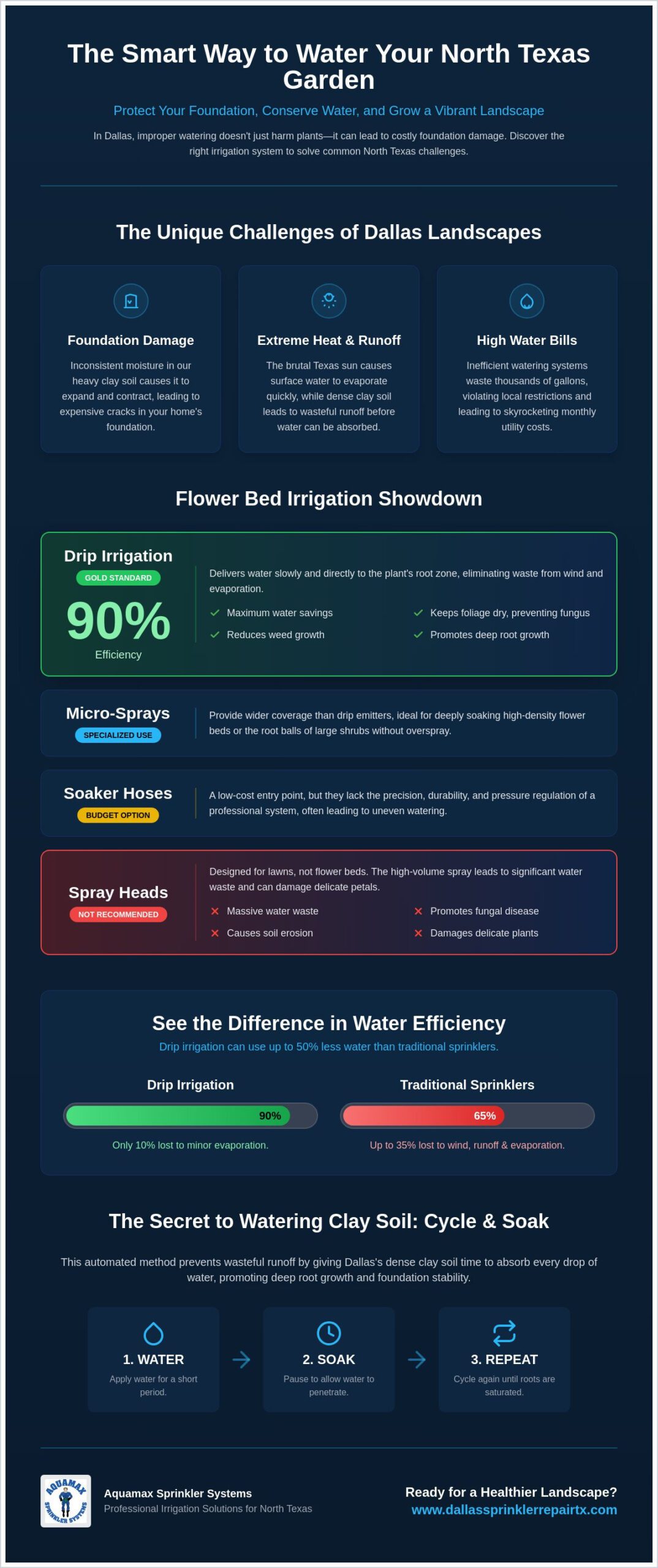
Professional drip irrigation remains the gold standard for North Texas landscapes. It delivers water directly to the root zone, achieving up to 90% efficiency by eliminating wind drift and evaporation. For high-density beds or large focal shrubs, micro-sprays and bubblers provide deep saturation that keeps specific plants thriving without overwatering the entire area. While soaker hoses offer a budget-friendly entry point, they lack the durability and precision found in a professional new sprinkler system installation. Traditional spray heads are usually the wrong choice for flower beds. They often use too much force for delicate petals and lead to significant water waste in our heat.
Surface vs. Subsurface Delivery
The brutal Texas sun is the primary enemy of surface watering. When water sits on top of the soil, much of it evaporates before the plant can ever use it. Subsurface delivery bypasses this issue entirely. By delivering moisture directly to the roots, you keep the soil surface dry. This strategy also discourages weed seeds from germinating, which leaves more nutrients and water for your intended flowers. It’s an efficient way to manage the different types of irrigation for flower beds while maintaining a clean, aesthetic look.
The Limitations of Manual Watering
Many homeowners view hand watering as a relaxing chore, but it’s often the least effective method for long-term plant health. Inconsistency is the primary culprit. Plants thrive on a predictable schedule, and a “when I remember” approach leads to cycles of dehydration and stress. Dallas’s dense clay soil also absorbs water very slowly. A handheld hose often delivers water faster than the ground can take it, resulting in wasteful runoff rather than deep penetration. For those with a busy schedule, the labor of manual watering is a burden that a professional irrigation repair or tune-up can easily eliminate.
Drip Irrigation: The Precision Solution for Flower Beds
Drip irrigation stands out among the different types of irrigation for flower beds because it prioritizes precision over volume. Instead of spraying water through the air, this system utilizes a network of poly-tubing and specialized emitters to deliver moisture directly to the soil. It’s a highly efficient process. While traditional sprinklers often operate at 60-70% efficiency, a professionally installed drip system can reach up to 90% efficiency. This targeted approach allows you to use up to 50% less water while providing your plants with a more consistent moisture level.
Fungal growth is a constant threat during humid North Texas summers. When traditional spray heads soak plant leaves, they create an ideal environment for diseases like powdery mildew. Drip systems keep foliage dry by weeping water at the ground level. This simple change in delivery protects your investment and reduces the need for chemical fungicides. It’s a vital contribution to the long-term vitality of your landscape.
Components of a Professional Drip System
Reliability depends on the quality of the components used during a drip irrigation installation. A pressure regulator is a device that maintains 20-30 PSI for optimal drip performance. Without this component, the high water pressure common in Dallas neighborhoods can cause emitters to blow out or tubing to burst. Filtration is equally important. North Texas water often carries sediment that can clog small emitters over time; therefore, inline filters are essential for maintaining flow. We also carefully calculate emitter spacing. This ensures every plant receives adequate moisture without creating the oversaturated “dead zones” often seen in poorly designed systems.
Hydro-Zoning Your Landscape
Modern irrigation design relies on hydro-zoning, which is the practice of grouping plants with similar water needs. Different types of irrigation for flower beds work best when they aren’t forced to compete with turf grass schedules. For example, succulents and native Texas lantana require far less frequent watering than hydrangeas or roses. By creating separate zones, you can tailor the delivery for each group. Smart controllers make this management effortless. These devices automatically adjust schedules based on local weather data, ensuring your flower beds receive exactly what they need regardless of the temperature. This level of automation provides the peace of mind that your landscape is being handled by a system that is both proactive and precise.
Micro-Sprays and Bubblers for High-Density Planting
While drip lines excel at delivering water to individual plants, some garden layouts require a broader approach. Micro-sprays and bubblers are effective different types of irrigation for flower beds that feature high-density planting or large focal points. Micro-sprays bridge the gap between traditional sprinklers and precision drip. They provide a fine mist over a specific area, which is ideal for beds packed with small perennials or delicate groundcovers where installing individual emitters would be impractical. This method ensures that every inch of the bed receives moisture without the physical impact of heavy spray heads.
One significant advantage of micro-sprays is visual confirmation. Unlike subsurface drip systems that remain hidden, you can see these heads operating. This visibility makes it easier to identify a clogged nozzle or a broken line before your plants show signs of stress. However, management is key. We focus on controlling overspray to ensure water lands on your plants rather than your mulch or sidewalk. This prevents rot in organic mulch layers and keeps your water bills manageable during the peak of summer. It’s a proactive way to maintain a lush garden while respecting local water restrictions.
Micro-Spray Patterns and Coverage
Precision is the hallmark of a professional installation. We utilize full-circle, half-circle, and even quarter-circle spray patterns to fit the unique geometry of your flower beds. This ensures that corners receive adequate moisture without wasting water on hardscapes. Adjustable nozzles are particularly useful for growing landscapes. As your plants increase in size seasonally, these nozzles can be fine-tuned to expand or contract the spray radius. Micro-sprays are also far gentler than heavy rotors. They deliver moisture in a soft pattern that won’t damage delicate blooms or wash away light topsoil.
Bubblers for Foundation and Large Shrub Care
For larger shrubs, ornamental trees, or established rose bushes, bubblers provide the deep saturation necessary for healthy root development. These devices deliver a higher volume of water in a concentrated area, allowing it to soak deep into the Dallas clay. This is especially important for maintaining consistent moisture levels near your home’s foundation. Integrating bubblers into a standard drip irrigation system installation allows for a hybrid approach. You get the efficiency of drip for small flowers and the deep-soaking power of bubblers for your largest landscape assets. This balanced design ensures every part of your property receives the specific care it needs to survive the North Texas heat.
The North Texas Factor: Soil, Heat, and Foundation Health
In Dallas, your irrigation strategy is dictated by the ground beneath your feet. The heavy clay soil common across North Texas acts like a heavy sponge; it expands when wet and contracts aggressively when dry. This physical shift creates immense pressure on your property’s structure. When evaluating different types of irrigation for flower beds, you must consider how the system interacts with this unique soil profile. Because clay absorbs water at a very slow rate, traditional high-volume sprinklers often cause immediate runoff. We recommend the “cycle and soak” method to combat this. By running shorter, repeated cycles with 20-30 minute pauses, you allow the water to penetrate deep into the root zone instead of pooling on the surface.
Efficiency isn’t just about plant health; it’s about regulatory compliance. As of July 2026, Dallas watering restrictions limit automatic sprinkler use to a maximum of twice per week based on your street address. However, drip irrigation and soaker hoses are currently allowed on any day at any time. This flexibility is a massive advantage for maintaining a thriving landscape during a drought. If your current setup is struggling to keep up with these requirements, schedule a professional sprinkler system tune-up to ensure every zone is performing at peak efficiency.
Irrigation as Foundation Maintenance
Combating the Dallas Summer Heat
The 100-degree days in July and August create extreme evapotranspiration rates. This means your plants lose moisture to the atmosphere faster than they can pull it from the ground. Timing is everything. We recommend watering in the early morning hours, typically before 10 a.m., to ensure the moisture reaches the roots before the heat intensifies. While some homeowners prefer evening watering, it can occasionally lead to fungal issues if the foliage stays damp overnight. To maximize your system’s effectiveness, always maintain a thick layer of organic mulch. This acts as vital insulation, keeping the soil cool and preventing the sun from evaporating the water your system just delivered.
Professional Installation and Maintenance in Dallas
The success of the different types of irrigation for flower beds depends entirely on the precision of their execution. While big-box store kits suggest that anyone can install a system in a weekend, these DIY solutions often ignore the technical requirements of North Texas landscapes. Professional design prevents the dry spots and system failures that lead to plant loss. By evaluating your property’s unique topography and the specific water needs of your perennials, we create a system that maximizes every drop. Integrating new flower bed zones into an existing sprinkler installation requires a deep understanding of hydraulics and pressure management to ensure consistent performance across your entire yard.
Compliance with local plumbing codes is another critical factor that DIY guides overlook. In Dallas and surrounding municipalities, backflow preventer testing is a legal requirement to protect the city’s clean water supply. Our licensed technicians ensure your system is fully compliant and operating safely. We also manage the seasonal transitions that define DFW gardening. This includes professional winterization to prevent pipe bursts during hard freezes and thorough spring startups to prepare your landscape for the intense July heat. These proactive steps protect your investment and provide the peace of mind that your property is in capable hands.
The Aquamax Design Process
Maintaining Your System for Peak Performance
Even the best systems require regular attention to stay efficient. Over time, mineral deposits or soil can clog emitters, and landscaping tools can accidentally damage micro-spray heads. We recommend a consistent schedule for the sprinkler system tune up Dallas homeowners need to maintain peak efficiency. During these visits, we adjust controller schedules for the current season and verify that your “cycle and soak” settings are still optimal for your soil. If you’ve noticed a spike in your water bill or see signs of stress in your garden, don’t wait for the damage to spread. Contact Aquamax Sprinkler Systems for a professional evaluation to restore your system’s vitality and protect your home’s foundation.
Invest in a Thriving, Sustainable North Texas Landscape
Choosing between the different types of irrigation for flower beds is a decision that impacts your garden’s beauty and your home’s structural safety. We’ve explored how precision drip systems and micro-sprays provide the targeted moisture necessary to survive the brutal Dallas summer. By implementing the cycle and soak method, you ensure that your heavy clay soil remains hydrated without the risk of wasteful runoff or foundation shifting. A well-designed system translates to lower water bills and a more resilient property that maintains its value over time.
Don’t leave your property’s health to chance or generic DIY kits. Our team has served as licensed and insured technicians since 1998, specializing in custom-engineered drainage and irrigation solutions tailored for North Texas. We understand the specific demands of our regional soil and provide the expert foundation care your home requires. Get a Professional Irrigation Quote for Your Flower Beds today to secure a vibrant, worry-free landscape. You can trust our decades of local experience to keep your North Texas garden thriving through every season.
Frequently Asked Questions
Is drip irrigation better than sprinklers for flower beds?
Drip irrigation is superior for flower beds because it delivers water directly to the root zone with up to 90% efficiency. Unlike traditional spray heads, drip systems keep foliage dry. This prevents the fungal diseases that often plague DFW gardens during humid summers. It’s one of the most effective different types of irrigation for flower beds because it eliminates water waste from wind drift and evaporation.
How long should I run drip irrigation for flower beds in Dallas?
Most drip systems in Dallas should run for 30 to 60 minutes depending on the specific emitter flow rate and current temperatures. Because our clay soil absorbs moisture slowly, you should use a cycle-and-soak schedule. This involves running the system in shorter bursts with breaks in between to ensure deep penetration without causing surface runoff.
Can I add a drip zone to my existing sprinkler system?
You can definitely integrate a drip zone into your current setup. Professionals often convert an existing high-pressure spray zone by installing a pressure regulator and a filter. This allows you to manage different types of irrigation for flower beds alongside your turf grass zones. It’s a common upgrade that significantly improves the health of your perennials and simplifies your maintenance routine.
How much does it cost to install drip irrigation for flower beds?
The investment for a drip system depends on the total square footage of your beds and the complexity of the landscape design. Factors such as the number of zones required and the type of controller you choose will influence the final project scope. Homeowners often find that the long-term savings on water bills and plant replacement costs justify the initial professional installation.
Do drip irrigation lines get clogged by Dallas clay soil?
Drip lines won’t clog if they’re installed with proper filtration and high-quality emitters. Dallas water can carry sediment, so we install inline filters to keep the poly-tubing clear. Professional installation also ensures emitters are placed correctly above or within the mulch layer to prevent clay soil from entering the system and obstructing the flow.
Will a flower bed irrigation system help protect my home foundation?
A dedicated irrigation system is a vital tool for foundation protection in North Texas. By keeping the clay soil around your home consistently moist, you prevent the ground from shrinking away from the slab during drought cycles. This stability reduces the risk of structural shifting and expensive foundation repairs by maintaining a constant moisture curtain around your property.
What is the best time of day to water flowers in North Texas?
The best time to water is in the early morning, ideally finishing before 10 a.m. This timing allows the water to soak in before the afternoon sun causes high evaporation rates. It also complies with Dallas watering restrictions, which prohibit the use of automatic systems during the hottest part of the day between April and October.
Do I need a permit for irrigation installation in Plano or Dallas?
Most cities in the DFW area, including Plano and Dallas, require a permit for any new irrigation installation. These regulations ensure that a licensed professional handles the work and that a backflow preventer is installed and tested correctly. This protects your home and the city’s clean water supply from potential contamination.