

Article by
Robert Maxvill
Owner of Aquamax Sprinkler Systems, American Sprinkler Repair and Dallas Drainage Systems.
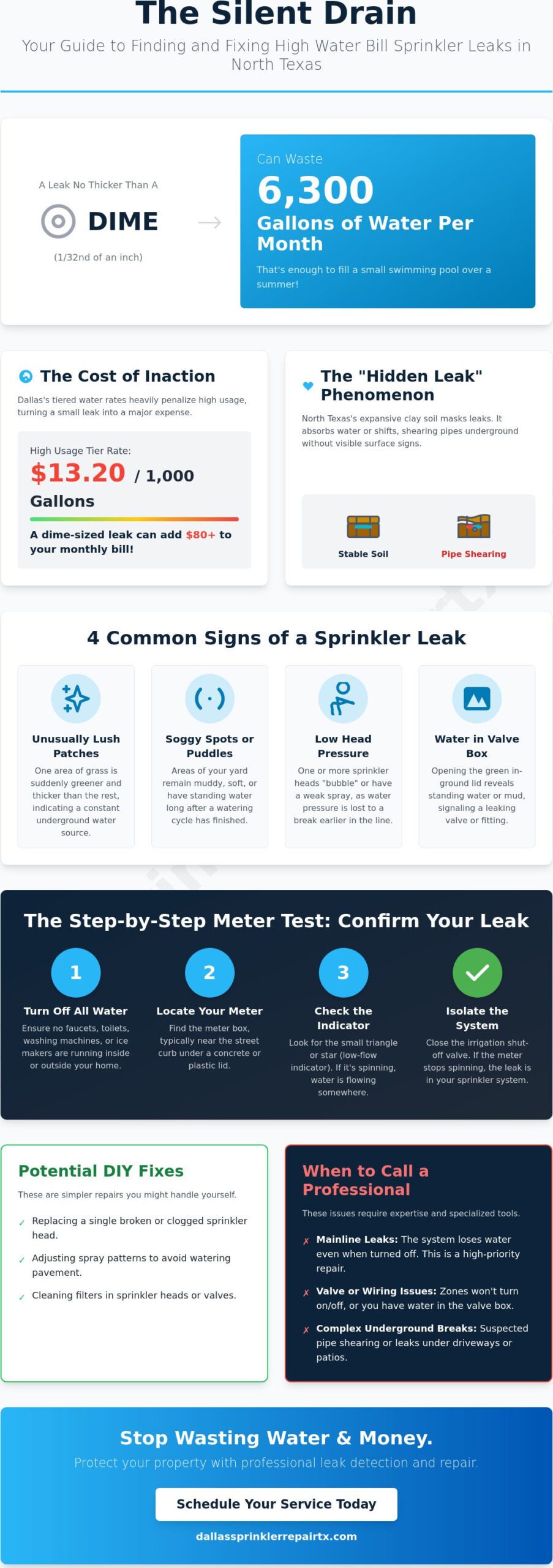
Did you know an irrigation leak no thicker than a dime can waste 6,300 gallons of water in a single month? For many North Texas residents, a high water bill sprinkler leak isn’t just a drain on the bank account; it’s a silent threat to their property. In Dallas, where tiered water rates can climb to $13.20 per 1,000 gallons for high usage, an undetected break in your system turns into an expensive emergency very quickly.
Opening your utility bill to find a massive spike is a frustrating experience that many homeowners face during the peak of the Texas summer. You likely worry about the financial burden or the potential for foundation damage caused by saturated clay soil. We’ll help you stop the sticker shock by providing a systematic guide to finding and fixing these hidden issues. This checklist walks you through isolating the problem zone, deciding when to call a licensed professional, and protecting your home from water intrusion.
Key Takeaways
- Learn how to perform a simple water meter test to confirm if a high water bill sprinkler leak is active before you start digging.
- Identify the “hidden leak” phenomenon caused by North Texas clay soil, which often masks underground pipe breaks until structural damage occurs.
- Follow a systematic visual inspection checklist to spot weeping valves, clogged heads, and low-pressure zones that drive up utility costs.
- Differentiate between simple DIY fixes and complex mainline or wiring repairs that require the expertise of a licensed irrigation specialist.
- Explore how specific irrigation upgrades, like drip systems, can protect your home’s foundation from the seasonal soil shifts common in DFW.
Why Your Dallas Water Bill Spiked: The Irrigation Leak Connection
Opening a utility statement to find a massive surge in charges is a jarring experience. For many North Texas residents, a high water bill sprinkler leak is the primary culprit behind these spikes. Unlike a dripping kitchen faucet, irrigation leaks often remain invisible because of the unique composition of our local environment. Dallas is famous for its expansive clay soil. This dense earth acts as a lid, trapping water underground or allowing it to travel through deep fissures rather than pooling on the surface. You might lose thousands of gallons before a single damp spot appears on your lawn.
The geography of the DFW Metroplex creates specific mechanical challenges. As our clay soil dries and saturates, it shifts with enough force to cause “pipe shearing,” where PVC connections are literally snapped by the moving earth. Understanding how sprinkler systems work helps illustrate the danger. These lines are pressurized, meaning even a microscopic failure leads to constant water loss. The math is sobering. A hole as small as 1/32nd of an inch, about the thickness of a dime, can waste approximately 6,300 gallons of water per month. That is enough to fill a small swimming pool over the course of a summer season.
The Cost of Inaction in North Texas
Dallas Water Utilities (DWU) uses a tiered pricing structure that aggressively penalizes high-volume usage. As of February 2026, residential rates for usage above 30,000 gallons climb to $13.20 per 1,000 gallons. A significant leak can easily push a standard household into this top tier, turning a manageable bill into a financial crisis. Beyond the immediate cost, pressurized water escaping a mainline can erode the support soil beneath your driveway, sidewalk, or pool deck. Waiting until the next season to address these issues often results in foundation instability that requires a professional irrigation repair and expensive structural work.
Signs It’s Your Sprinklers (And Not a Toilet Leak)
Distinguishing between an indoor plumbing issue and an irrigation failure requires a keen eye. Look for these specific indicators in your landscape:
- Unusually Lush Patches: If one area of your grass is vibrant and thick while the rest of the lawn looks heat-stressed, there is likely an underground leak providing constant moisture.
- Soggy Spots: Areas of your yard that remain muddy or soft 24 hours after a watering cycle suggest a weeping valve or a cracked lateral line.
- Low Head Pressure: If one zone has sprinkler heads that barely pop up or “bubble” instead of spraying, the pressure is being lost to a break earlier in the line.
- Valve Box Moisture: Open the green lids in your yard. If the box is filled with water or mud, your valves are failing to seal.
The Step-by-Step Meter Test: Isolate Your Sprinkler Leak
Identifying the source of a mystery spike requires a process of elimination. Your water meter is the most reliable tool for this task. In Dallas and the surrounding suburbs, you’ll typically find your meter box near the street curb under a heavy concrete or plastic lid. Before you begin The Step-by-Step Meter Test, you must ensure the house is completely silent regarding water usage. Turn off all indoor faucets, the washing machine, and the dishwasher. Even a running ice maker can skew your results; verify that every appliance is inactive before proceeding.
Understanding Your Water Meter Dial
Most modern meters in the DFW area include a low-flow indicator. This is usually a small, brightly colored star or triangle that spins even when a tiny amount of water passes through the meter. If this indicator is moving while your house is shut down, water is escaping somewhere. Perform a 30-minute static test by recording the numbers on the display and leaving the property undisturbed. If the numbers increase during this window, you’ve confirmed a leak. If the movement stops only when you close the dedicated irrigation isolation valve, you know for certain you’re dealing with a high water bill sprinkler leak rather than an indoor plumbing issue.
Isolating the Mainline vs. Zone Leaks
Once you confirm the leak is in the irrigation system, you need to determine if it’s constant or intermittent. Keep the sprinkler controller in the “off” position. If the meter continues to spin, the leak is located in your mainline. This is the pipe that stays under constant pressure from the meter to your valve boxes. This is a high-priority repair because it wastes water 24 hours a day, regardless of your watering schedule. If the meter only moves when the system is running, the leak is in a lateral line or a specific zone.
Test each zone individually by running a manual cycle for two minutes. Watch the meter for each zone; the one that causes the dial to spin the fastest is where your primary break is located. Pinpointing the exact zone helps you decide if you can handle a simple head replacement or if you need a professional irrigation repair to fix a deep pipe failure or a wiring fault. This methodical approach saves time and prevents unnecessary digging in your landscape.
Common Culprits: Identifying Broken Heads, Valves, and Mainlines
Identifying the exact source of a high water bill sprinkler leak requires a systematic look at the hardware. Most homeowners assume a leak will always present itself as a geyser shooting into the air. While broken or clogged sprinkler heads are the most common cause of visible waste, they are often the easiest to fix. A head sheared off by a lawnmower or cracked by shifting Dallas clay can lose a staggering amount of water in a single fifteen-minute cycle. However, the most expensive leaks are those that happen out of sight, beneath the turf or inside the valve boxes. Homeowners throughout the region, from Dallas proper to those seeking sprinkler repair in McKinney, face these same hidden failure points in their irrigation systems.
The ‘Valve Weeping’ Problem
A “weeping” valve occurs when the internal diaphragm fails to seal completely. This is often caused by tiny grains of sand or debris getting trapped in the valve, or by the rubber seal wearing out over time. In North Texas, our extreme temperature swings play a major role. After a hard Dallas freeze, the plastic components in a valve can develop hairline fractures. If you notice a specific zone has a perpetually soggy spot around the lowest sprinkler head, your valve isn’t shutting off. This constant flow, even when the controller is off, is a primary driver of utility spikes. It essentially turns your irrigation system into a slow-running faucet that never stops.
Lateral vs. Mainline Pipe Damage
Understanding the difference between your pipes is vital for prioritizing repairs. Your mainline is the pipe under constant pressure that runs from the water meter to your valves. If this pipe cracks, you are losing water 24 hours a day. This is the scenario that drives bills into the thousands of dollars. Lateral lines, on the other hand, only hold water when a specific zone is active. While a lateral leak is less constant, it still contributes significantly to waste. The EPA provides startling data on how much water a small leak can waste, noting that minor household leaks can account for nearly 1 trillion gallons of wasted water annually across the country.
Finding a sprinkler system leaking underground often requires specialized probe tools or acoustic equipment. In our dense clay soil, water often follows the path of least resistance along the pipe rather than rising to the surface. You might not see a puddle until a small sinkhole forms or your sidewalk begins to crack. If you’ve performed the meter test and confirmed the leak is in the irrigation system, inspecting your valve boxes for standing mud is the next logical step. Proactive maintenance and a quick response to these common culprits are the only ways to ensure your landscape thrives without draining your bank account.
The DFW Homeowner’s Sprinkler Leak Troubleshooting Checklist
Walking your property during an active watering cycle is the most effective way to diagnose a high water bill sprinkler leak. You must move through each zone systematically to identify failures that aren’t apparent from a distance. Because North Texas soil is prone to shifting, internal components can become misaligned or damaged without warning. Use this professional order of operations to audit your system’s performance and logical programming. For a broader look at resolving common system failures, our irrigation system troubleshooting guide for DFW homeowners covers everything from broken heads to controller optimization.
Zone-by-Zone Visual Audit
Activate each zone manually and observe the spray patterns. Look for “volcanoes,” which occur when a sprinkler head has been mowed off or the body has cracked, allowing a massive volume of water to bubble up at the base. Tilted heads are another common efficiency drain; these often spray water directly into the ground or a fence rather than the turf. If you notice brown patches in an area that should be receiving water, it often indicates a lateral line break. This break robs the rest of the zone of pressure, preventing the heads from popping up fully or rotating correctly.
While the system is running, perform a soil probe test near your main lines. Take a long screwdriver and push it into the turf. If it slides in with zero resistance in one specific area while the rest of the yard is firm, you’ve found an underground saturated zone. You should also inspect your backflow preventer, usually located in a separate box or above ground near the house. Look for constant dripping or hairline cracks in the brass body, which are frequent after a Dallas winter freeze event.
Controller and Program Review
Mechanical failures aren’t the only cause of a high water bill. Your controller logic might be working against you. Many DFW homeowners use the “Cycle and Soak” method to manage our dense clay soil, which involves running zones for short bursts to prevent runoff. However, ensure you haven’t accidentally programmed multiple start times that cause the entire cycle to repeat three or four times a night. This effectively quadruples your water usage without you ever seeing a “leak.”
Check your rain sensor to ensure it isn’t bypassed. If it’s old or the batteries are dead, your system might be running during a North Texas thunderstorm. Finally, verify that your smart controller is actually receiving local weather data. If the connection is lost, many systems revert to a default high-usage schedule. If these checks reveal issues beyond a simple head replacement, it is time to secure professional sprinkler repair services to restore your system’s integrity and protect your utility budget.
Open the green lids of your valve boxes and look inside. If the box is filled with mud or standing water even when the system is off, your valves are failing to seal. This “weeping” is a silent thief that can waste hundreds of gallons every day. Addressing these physical and digital checkpoints ensures you aren’t just treating the symptoms of a high bill but resolving the root cause.
Professional Repair vs. DIY: Restoring Efficiency and Protecting Your Foundation
Deciding between a weekend DIY project and professional intervention is often a matter of long-term property health. While a homeowner can usually swap out a visible broken head, a persistent high water bill sprinkler leak often stems from pressurized mainline failures or complex valve wiring issues. These scenarios demand the specialized tools and experience of a sprinkler repair Dallas specialist. We utilize advanced diagnostics, such as ultrasonic leak detection, to locate underground breaks with surgical precision. This technology saves you from the labor and expense of trenching through your entire lawn just to find a single cracked fitting.
Foundation Protection: The DFW Priority
In the Dallas-Fort Worth area, irrigation is a structural necessity rather than a luxury. Our heavy clay soils expand when wet and contract when dry; this movement puts immense pressure on residential slab foundations. A leak located too close to your home can cause the soil to heave, resulting in costly structural cracks and interior damage. To prevent this, many homeowners opt for a drip irrigation system installation around the perimeter. This setup provides the slow, consistent moisture required to keep the soil stable without the risk of high-pressure runoff or foundation saturation.
The ROI of Professional Irrigation Service
Investing in professional diagnostics offers a clear financial advantage. The water savings alone from fixing a mid-sized leak can cover the cost of the repair within just a few billing cycles. Additionally, professional-grade parts outlast standard retail components, significantly reducing the frequency of future failures. Scheduling a regular sprinkler system tune-up keeps your system running at peak efficiency and ensures you stay within the legal limits of local North Texas watering restrictions. This methodical maintenance protects your investment, your foundation, and your peace of mind.
Don’t let a high water bill sprinkler leak drain your budget or threaten your home’s structural integrity. Professional repairs provide more than just a mechanical fix; they offer a vital contribution to the aesthetic and environmental well-being of your property. By choosing high-quality parts and expert installation, you ensure your landscape remains lush and your foundation stays secure for years to come.
Restore Your System’s Efficiency and Protect Your Property
Finding the source of a high water bill sprinkler leak shouldn’t be a guessing game. By using the meter test and visual checklist provided, you’ve already taken the first step toward stopping unnecessary waste. Remember that in North Texas, an underground break is more than a financial drain; it’s a direct threat to your home’s foundation. Consistent soil moisture management is the key to preventing structural shifts in our challenging clay environment.
Our team has served the Metroplex as licensed and insured technicians since 1998. We specialize in DFW clay soil and foundation protection, ensuring your repairs are built for local conditions. We provide comprehensive system diagnostics to pinpoint issues without destroying your landscape. Don’t let a hidden leak compromise your home’s stability or your monthly budget.
Stop the water waste—schedule your professional leak detection with Aquamax today!
Take the burden off your shoulders and let an expert handle the technical details. You’ll enjoy a lush, thriving yard and the peace of mind that comes with a perfectly calibrated irrigation system.
Frequently Asked Questions
How much can a small sprinkler leak actually increase my water bill?
A leak as small as 1/32nd of an inch can waste 6,300 gallons of water per month. In Dallas, where top-tier residential water rates reach $13.20 per 1,000 gallons for high usage, this single break can add over $80 to your monthly statement. If multiple leaks exist or if your usage pushes you into higher tiers, the financial impact scales very quickly.
Can a sprinkler leak cause foundation problems in North Texas?
Yes, irrigation leaks are a primary cause of foundation instability in the DFW Metroplex. The expansive clay soil in our region swells significantly when it becomes oversaturated. This localized swelling causes the home’s slab to heave and crack, leading to expensive structural repairs. Maintaining consistent, controlled moisture levels is vital for your home’s integrity.
What should I do first if I suspect a sprinkler leak but don’t see water?
Your first step should be a water meter isolation test to confirm water is moving through the system. Turn off every water-using appliance inside your home and observe the meter’s low-flow indicator near the street. If the dial or star is spinning while the house is silent, you have confirmed an active leak that requires immediate attention.
Is it possible for my water meter to be wrong instead of a leak?
While possible, it is extremely rare for a water meter to record more water than is actually being used. As mechanical meters age, their internal parts typically wear down and record less water, not more. If you’ve ruled out all possible leaks, you can contact your local municipal water department to request a meter accuracy test.
How do I find a sprinkler leak underground without digging up my yard?
Professionals use ultrasonic leak detection and ground microphones to pinpoint the specific sound of pressurized water escaping a pipe. This non-invasive method allows us to find a high water bill sprinkler leak without trenching through your turf. Homeowners can also use a soil probe to feel for unusually soft or saturated earth along the main lines.
Will a rain sensor stop my bill from being high if I have a leak?
No, a rain sensor will not stop a high water bill sprinkler leak. These devices are designed only to prevent the controller from starting a scheduled cycle during a rain event. If you have a mainline leak or a weeping valve, the water will continue to escape 24 hours a day regardless of whether the sensor is active.
Why is my sprinkler zone still running even when the controller is off?
This issue is typically caused by a failing valve diaphragm or debris trapped inside the valve body. If the valve cannot create a watertight seal, the zone will “weep” or run continuously even when the controller is powered down. This requires a technician to clean the valve or replace the internal rubber assembly to restore a proper seal.
Does insurance cover high water bills caused by sprinkler leaks?
Standard homeowners insurance policies rarely cover the cost of the wasted water itself. While a policy might provide coverage for the resulting structural damage to the home’s foundation, the utility bill remains the homeowner’s responsibility. You should review your specific policy for any “service line” endorsements that might offer additional protection for utility spikes.