
Article by
Robert Maxvill
Owner of Aquamax Sprinkler Systems, American Sprinkler Repair and Dallas Drainage Systems.
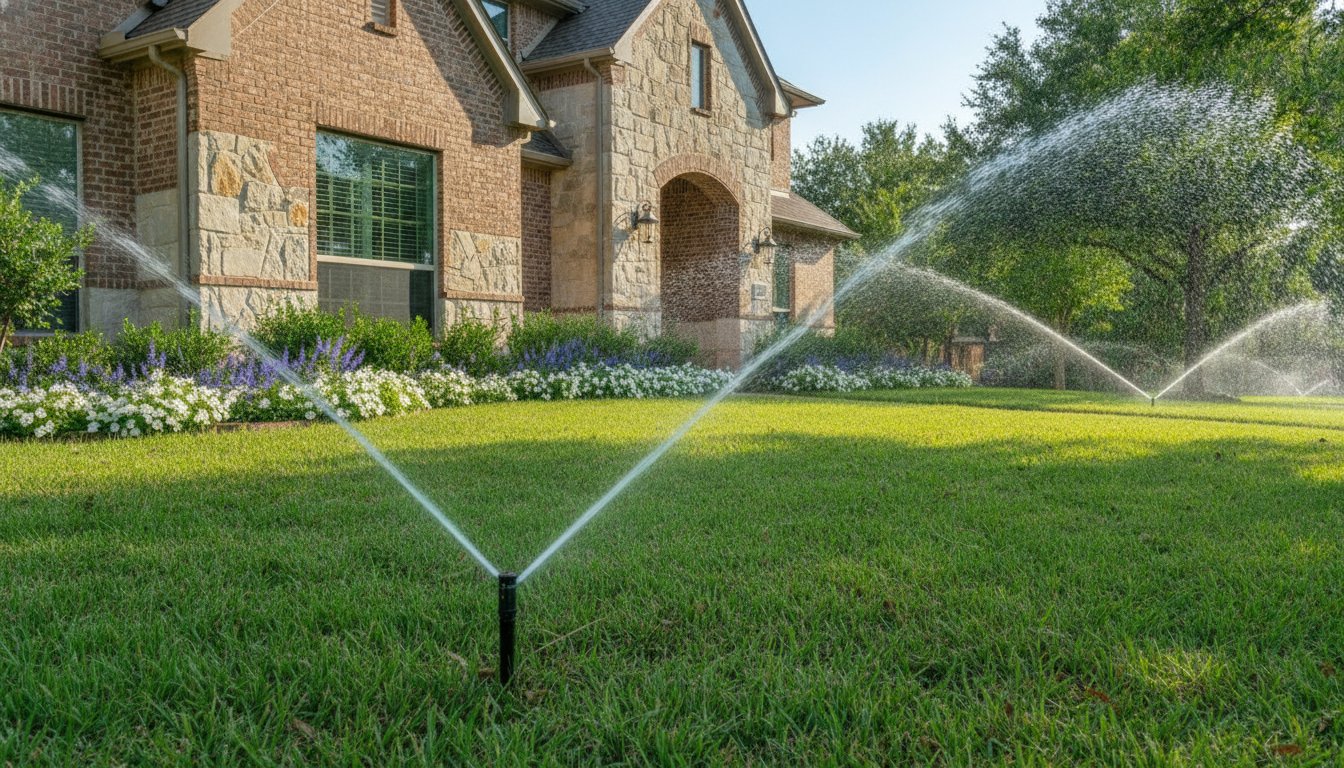
Did you know that in North Texas, your sprinkler system is the most critical defense against a five-figure foundation repair? While many homeowners view watering as a simple way to keep the grass green, a professional irrigation system installation in Dallas and Plano is primarily a tool for soil stability. The expansive clay soil in our region shrinks and swells with the seasons. If you aren’t maintaining consistent moisture levels around your home’s perimeter, you’re risking structural cracks that no amount of curb appeal can fix.
We know the stress of opening a water bill in August only to see costs skyrocket while your lawn still looks scorched. It’s a difficult balance to follow twice-weekly DFW watering restrictions while trying to keep your property healthy. This guide will show you how to achieve a lush landscape and automated foundation protection without wasting water. You’ll learn about the latest water-efficient technologies, including required rain and freeze sensors, and how a properly designed system can provide an 86% return on your investment while keeping you in full compliance with local city ordinances.
Key Takeaways
- Understand how custom-engineered systems address the unique challenges of DFW’s “Blackland Prairie” clay soil to ensure long-term system reliability.
- Discover how hydro-zoning and high-efficiency spray nozzles can significantly reduce water waste while keeping your landscape vibrant during summer heat.
- Learn why a professional irrigation system installation is your first line of defense against foundation settling and costly structural damage.
- Explore the critical steps of the installation timeline, including hydraulic pressure testing and securing mandatory municipal permits and backflow tests.
- Recognize the importance of hiring a licensed Dallas specialist to avoid the common pitfalls and hidden costs associated with uncertified “handyman” work.
The Essentials of Professional Irrigation System Installation in Dallas
Professional irrigation system installation is far more than just burying plastic pipes. It is the creation of a custom-engineered hydraulic network designed to deliver precise volumes of water to specific zones. For a comprehensive overview of irrigation and its technical foundations, one can see how these systems have evolved into high-precision tools. In Dallas and Plano, this precision is mandatory because of our “Blackland Prairie” clay soil.
This local soil is notorious for its high-expansion properties. It swells when wet and shrinks during dry spells, creating deep fissures. A standard installation that ignores these soil dynamics will likely result in broken lines and wasted water within a few seasons. Managed irrigation differs from simple “watering” because it accounts for these soil movements. It ensures the infrastructure remains intact while soil moisture levels stay consistent enough to prevent foundation shifting.
Efficiency relies on “head-to-head” coverage. This principle ensures the spray from one sprinkler head reaches the base of the next. It eliminates the “brown spots” that plague many North Texas lawns and prevents the over-saturation of other areas. This balanced approach is the hallmark of a professional system.
Why North Texas Lawns Require Custom Design
The Dallas climate presents a land of extremes. We face 100-degree summers and sudden winter freezes that can drop into the single digits. These swings cause significant thermal expansion and contraction in pipe materials. Retail kits often use thin-walled tubing that cannot withstand these cycles or the high pressure required for a full-scale property. Professional irrigation system installation uses heavy-duty materials designed for longevity. We also factor in local evapotranspiration (ET) rates. These rates measure how much water is lost to the atmosphere through soil evaporation and plant transpiration. Without calculating ET, you are simply guessing how much water your lawn needs.
The ROI of a Permanent Underground System
A permanent system is a strategic investment in your property’s future. Beyond the immediate convenience, a professionally installed system offers a high return on investment by increasing curb appeal and resale value. It protects your high-value assets, such as mature oak trees and ornamental landscaping, which are expensive to replace. Precision delivery ensures you aren’t paying for water that runs off into the street. By maintaining stable moisture, you also safeguard your home’s foundation, potentially saving thousands in structural repairs. This proactive approach to property maintenance provides peace of mind that your landscape will thrive regardless of the Texas heat.
Designing for Efficiency: Zones, Heads, and Smart Controllers
A high-performance irrigation system installation relies on the strategic division of your property into hydro-zones. Not every part of your landscape has the same thirst. Your St. Augustine turf requires a different volume and frequency of water than the drought-tolerant shrubs in your flower beds. By grouping plants with similar water needs into dedicated zones, we eliminate the common mistake of overwatering the garden just to keep the lawn green. This targeted approach is essential for staying within the City of Dallas’s twice-weekly watering limits without sacrificing the health of your plants.
The “brain” of a modern system is the smart controller. Unlike the basic timers of the past, these Wi-Fi enabled devices pull real-time data from local weather stations. If the forecast calls for a thunderstorm in Plano, the system automatically delays the cycle. Integrating these water-efficient practices ensures that every drop counts. In Dallas, all automatic systems must have rain and freeze sensors installed by law. These sensors act as a fail-safe, preventing the system from running during a downpour or when temperatures drop low enough to create hazardous ice on your sidewalks.
While the controller provides the logic, the valves and manifolds provide the strength. These heavy-duty components act as the gatekeepers of your water supply. We use professional-grade hardware to ensure tight seals and prevent the slow, underground leaks that often go unnoticed until you receive a staggering water bill. If you’re concerned about your current water usage, a professional irrigation system installation can modernize your property’s efficiency overnight.
Smart Controllers and Weather Sensing
Modern controllers give you total control through mobile app integration. You can adjust your zones from your phone while at work or on vacation. This technology doesn’t just offer convenience; it offers precision. By using local evapotranspiration data, the system calculates exactly how much moisture your soil has lost and replaces only that amount. This prevents the “set it and forget it” mentality that leads to massive water waste during the North Texas summer.
Selecting the Right Sprinkler Heads for Your Terrain
Choosing the right hardware for delivery is just as important as the controller. We utilize various head types to match your landscape’s specific layout:
- Rotary Nozzles: These are ideal for large turf areas. They deliver water in slow, rotating streams that resist wind drift and allow the heavy clay soil time to absorb the moisture.
- Pop-up Sprays: Best for smaller, defined spaces or flower beds where precision is more important than distance.
- Pressure-Regulating Stems: These prevent “misting,” where water turns into a fine fog that blows away before hitting the ground. Maintaining a steady PSI ensures larger, heavier droplets that reach the roots.

Protecting Your Investment: Foundation Drip and Drainage Integration
In the Dallas-Fort Worth area, an irrigation system installation serves a purpose far beyond aesthetics. It acts as a life-support system for your home’s concrete slab. The expansive clay soil in our region is like a giant sponge. It expands when saturated and contracts when dry. During a typical North Texas summer, the soil can pull away from your foundation, leading to settling, wall cracks, and expensive structural repairs. Professional irrigation design addresses this by maintaining consistent moisture levels year-round.
We use a specialized approach to create a “moisture curtain” around your property. This doesn’t mean soaking the ground until it’s muddy. Instead, it involves the precise application of water to keep the soil volume stable. By integrating foundation-specific zones into your larger irrigation system installation, you automate the protection of your most valuable asset. This proactive strategy is significantly more effective than manual watering with a soaker hose, which often leads to uneven saturation and wasted water.
The Role of Foundation Drip Lines
Foundation drip lines are the gold standard for structural protection. We position these specialized lines 12 to 18 inches from the edge of the slab. This placement ensures that water reaches the soil where it matters most without directly saturating the concrete itself. By delivering water slowly and directly into the earth, we prevent the soil from shrinking and pulling away during intense heat waves. For more technical details on how this technology works, you can explore our guide on drip irrigation system installation.
Why Drainage and Irrigation Must Work Together
Hydration is only half of the equation. If your property doesn’t handle runoff correctly, the same water intended to protect your foundation can become a liability. Excess water that pools near the house can lead to wood rot, mosquito breeding grounds, and hydrostatic pressure that damages basement walls or crawl spaces. While local conditions vary, the principles of professional drain maintenance remain universal; experts like SOS Plombiers highlight how critical it is to keep drainage lines clear to prevent structural water damage. We look at the entire property’s grade to ensure that irrigation and drainage work in harmony.
Common solutions like French drains and catch basins are often installed alongside new sprinklers. These systems capture heavy rainfall or irrigation runoff and direct it safely away from the structure. Balancing these two forces is critical for a stable landscape. If you’re dealing with standing water or soggy spots, it’s time to look at yard drainage solutions Dallas homeowners trust to keep their properties dry and secure.
The Installation Timeline: What DFW Homeowners Should Expect
A professional irrigation system installation follows a methodical, multi-step process designed for long-term reliability. We don’t simply arrive and start digging. The process begins with a comprehensive site mapping and hydraulic pressure test. We measure your property’s water pressure (PSI) and flow rate (GPM) to ensure the design can support the necessary number of zones. Without these initial metrics, a system might suffer from low-pressure “dead spots” or excessive wear on the valves.
Once the design is finalized, the physical installation moves through several purposeful phases:
- Permitting and Compliance: We secure necessary municipal permits and coordinate utility marking through 811 to locate underground lines.
- Precision Trenching: We use specialized vibratory plows or trenchers to create narrow paths for the lateral and main lines, specifically chosen to minimize damage to your existing sod.
- Assembly and Wiring: Our team installs the valves, manifolds, and high-efficiency heads, followed by the low-voltage wiring that connects back to the smart controller.
- System Calibration: Before burying the lines, we flush the system to remove debris. We then adjust each head for proper “head-to-head” coverage and program the controller for your specific landscape needs.
The final step is a thorough walkthrough. We’ll train you on how to use your new controller and explain the manual overrides. If you’re ready to upgrade your property, schedule your irrigation system installation today to ensure your lawn is prepared for the next heat wave.
Permits and Backflow Prevention in Dallas
Texas law is strict regarding water safety. Every new system must include a Double Check Valve Assembly (DCVA) or a similar approved backflow prevention device. This component ensures that irrigation water, which may contain fertilizers or lawn chemicals, never flows back into your home’s clean drinking water supply. In Dallas and Plano, a licensed irrigator must sign off on these plans. These professionals are required by the Texas Commission on Environmental Quality (TCEQ) to complete 40 hours of specialized training and pass a rigorous state exam. Most DFW municipalities also require annual testing of these backflow devices to maintain compliance and protect the public water system.
Minimizing Landscape Disruption
We understand that homeowners worry about the state of their lawn after a major project. Our goal is to make the installation nearly invisible within two weeks. By using vibratory plowing, we can often pull pipe underground without removing large sections of turf. When trenching is necessary, we carefully remove the sod in “plugs” and replace it once the lines are set. We compact the soil in every trench to prevent the “sinking line” effect that occurs when loose dirt settles over time. Your only job post-installation is to follow a specific watering schedule for the first seven days to help the disturbed sod re-establish its roots.
Choosing a Licensed Dallas Irrigation Specialist
Selecting the right contractor for your irrigation system installation is the most important decision you’ll make for your property’s long-term health. It’s a common mistake to hire a general handyman to save on initial costs. However, uncertified work often leads to hydraulic imbalances and uneven coverage. In Texas, irrigation is a regulated profession. Anyone who designs, sells, or installs these systems must be licensed by the Texas Commission on Environmental Quality (TCEQ). This is a legal requirement designed to protect the municipal water supply and your personal property from cross-contamination.
A licensed irrigator must complete a mandatory 40-hour training course and pass a rigorous state exam. They also have to earn 24 hours of continuing education every three years to maintain their credentials. At Aquamax Sprinkler Systems, we’ve been serving North Texas since 1998. We understand the specific municipal codes of Dallas and Plano, from permit acquisition to the mandatory backflow testing requirements. Our decades of local experience mean we’ve solved every possible landscape challenge this region offers. We don’t just install pipes; we build reliable systems that last.
The Aquamax Difference: Quality and Longevity
We refuse to use “big box” retail parts that fail after a single season. Our installations exclusively feature professional-grade components from industry leaders like Rain Bird and Hunter. These parts are engineered to withstand the high water pressure and extreme thermal expansion common in DFW. Because we stand behind our labor and materials, we provide comprehensive warranties that protect your investment for years. You can see the results of our commitment to excellence by reading local reviews from your neighbors in Dallas and Plano.
Next Steps: Getting Your Custom Quote
Preparing for your initial consultation is a straightforward process. Have a copy of your property survey ready if possible, and identify any specific “trouble spots” where water currently pools or grass refuses to grow. During our visit, a technician will perform a professional site assessment to check your PSI and flow rate. We’ll then provide a custom design plan that clearly outlines your zones and head placement. To secure your property’s future, Contact Aquamax to schedule your professional site assessment and receive a detailed estimate.
Secure Your Home’s Future with a Precision Irrigation Strategy
Investing in a professional irrigation system installation is the most effective way to balance a thriving landscape with long-term structural security. By managing the moisture levels in our volatile North Texas clay, you prevent the foundation shifting that leads to expensive structural repairs. Modern smart controllers and precision hydro-zoning ensure you stay compliant with local watering restrictions while significantly reducing monthly utility costs. It’s an investment that pays for itself through water savings and increased property value.
Since 1998, Aquamax Sprinkler Systems has served over 30,000 satisfied local customers across the DFW area. Our licensed and insured TCEQ technicians bring decades of expertise to every project, ensuring your system meets the highest standards of efficiency and durability. We handle the technical complexities so you don’t have to worry about local codes or seasonal adjustments. Get Your Professional Irrigation Installation Quote today to start your journey toward a more resilient property. We look forward to helping your landscape reach its full potential.
Frequently Asked Questions
How much does a new sprinkler system cost in Dallas for 2026?
Total costs depend on your property’s square footage, the number of zones required, and the complexity of your landscape. Factors like the type of soil and the inclusion of foundation drip lines will influence the final estimate. Every irrigation system installation requires a custom site assessment to provide an accurate quote based on your specific hydraulic needs.
How long does a professional irrigation installation take?
Most residential projects are completed within two to three business days. This timeframe covers the entire process from initial trenching and pipe laying to component assembly and final zone calibration. Larger estates or properties requiring extensive drainage integration may take longer to ensure the site is fully restored and the system is tested.
Do I need a permit to install a sprinkler system in Frisco or Plano?
Yes, all North Texas municipalities require a permit for new sprinkler systems. Cities like Plano, Frisco, and Dallas have specific codes regarding backflow prevention and water conservation. A licensed irrigator must submit scaled design plans to the city for approval before work begins. We manage this entire permitting process for our clients.
Will an irrigation system really protect my home foundation?
A properly designed system is the most effective tool for preventing foundation damage in North Texas. By using dedicated foundation drip zones, you maintain consistent moisture levels in the clay soil surrounding your slab. This prevents the soil from shrinking during heat waves, which is the leading cause of structural settling and cracking in the region.
Can I install my own sprinkler system to save money?
While DIY is possible, it often leads to higher long-term costs due to inefficient water use and frequent repairs. Texas law requires a licensed professional to install and test backflow prevention devices to protect the public water supply. Professional irrigation system installation ensures proper head-to-head coverage and hydraulic balance that retail kits simply cannot match.
What is the best time of year to install a new irrigation system in Texas?
Fall and early spring are the best seasons for installation because the milder weather helps your lawn recover faster from trenching. However, we install systems year-round. Installing a system before the peak summer heat is often the best strategy to ensure your landscape and foundation are protected before temperatures reach triple digits.
How often should I have my new system tuned up?
You should schedule a professional tune-up at least twice a year. A spring inspection ensures your heads are aligned and your controller is programmed for the growing season. A fall checkup identifies any leaks or damage that occurred during the summer and prepares the system for potential winter freezes.
What is a backflow preventer and why is it mandatory?
A backflow preventer is a mechanical device that ensures water only flows in one direction: from the city main into your sprinklers. It prevents stagnant water, fertilizers, and lawn chemicals from siphoning back into your home’s drinking water. Because this is a critical public health issue, Texas law mandates these devices for every automatic irrigation system.