

Article by
Robert Maxvill
Owner of Aquamax Sprinkler Systems, American Sprinkler Repair and Dallas Drainage Systems.
What if those stubborn brown patches in your lawn aren’t actually caused by the Texas heat, but by the very water you’re using to try and save them? Many Dallas homeowners find themselves dumping extra water on “dry” spots, only to realize later that they’ve accidentally created the perfect breeding ground for pests. If you want to know how to avoid grass damaging insects, the first step is recognizing that over-saturated soil is just as dangerous as a drought. It’s frustrating to watch your expensive sod decline while you are strictly following the City of Dallas twice-weekly watering schedule.
The secret to a healthy lawn isn’t just more water; it’s about precision and balance. You can protect your property by focusing on professional irrigation repairs, proper drainage, and strategic turf management. We’ll explore why your sprinkler system is the most important tool in pest prevention. This article provides actionable steps to stop armyworms and other North Texas pests from taking over your yard, ensuring your landscape remains a vibrant and healthy asset to your home.
Key Takeaways
- Learn how to avoid grass damaging insects by identifying the environmental stressors, such as uneven watering and poor drainage, that attract pests to your yard.
- Understand the specific warning signs of North Texas pests like white grubs and chinch bugs before they cause irreversible damage to your turf.
- Discover why a precision-tuned sprinkler system is your most effective defense against infestations by maintaining deep, resilient root structures.
- Gain actionable tips on mowing heights and aeration techniques that transform your lawn into a naturally pest-resistant environment.
- Recognize when it’s time for professional intervention, from system repairs to full sod installation, to restore a failing landscape.
Understanding Why Insects Target Your Lawn
Insects are opportunistic creatures. They don’t attack a lawn simply because it’s there; they target it because it’s vulnerable. When turfgrass struggles, it releases chemical signals and displays physical changes that act as an invitation to pests. Learning how to avoid grass damaging insects starts with understanding that a thick, vigorous lawn is its own best defense. Healthy grass can often host a small population of insects without showing any visible signs of damage, as the plant’s natural growth outpaces the pests’ ability to consume it.
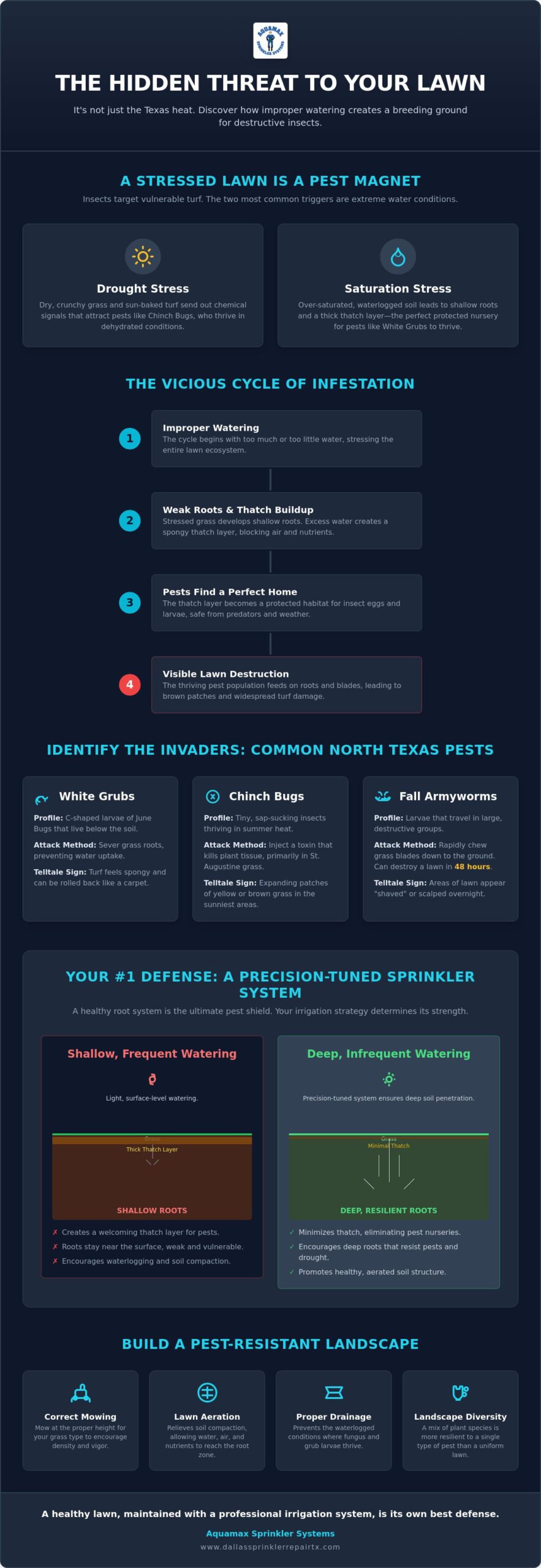
Environmental stressors like drought and over-saturation are the two most common triggers for an infestation. While dry, crunchy grass is an obvious sign of trouble, a waterlogged lawn is equally dangerous. Excess moisture often leads to a thick layer of thatch, which is the spongy organic material sitting between the green blades and the soil surface. This layer provides a protected nursery where insect eggs and larvae can thrive, shielded from natural predators and temperature swings. Eliminating this habitat is a critical step in long-term pest control.
To better understand how underlying lawn health impacts pest vulnerability, watch this helpful video:
The Stress-Pest Connection
Poorly managed watering schedules often lead to weakened root systems that are easily destroyed by subterranean pests. When a sprinkler system isn’t functioning correctly, certain areas of the yard become hotspots for activity. For example, chinch bugs actively seek out sun-baked, dehydrated turf during the peak of a Dallas summer. Conversely, white grubs thrive in soil where roots are already shallow or struggling due to poor drainage system installation. Soil compaction also plays a major role; hard, packed earth prevents water from reaching the root zone, leaving the grass in a permanent state of stress that insects are quick to exploit.
Defining a Pest-Resistant Landscape
A pest-resistant lawn is a landscape where cultural maintenance practices consistently exceed the biological requirements of common insects. This proactive approach is a core part of Integrated Pest Management, focusing on prevention rather than just reactive chemical treatments. By encouraging deep root growth through a professional irrigation repair or tune-up, you make it harder for underground larvae to cause visible damage. A diverse landscape with varied plant species further protects your property, as it’s much more difficult for a single pest species to destroy a complex ecosystem than a uniform monoculture of stressed turf. How to avoid grass damaging insects is ultimately a matter of creating an environment where the grass has every advantage over the bugs.
Identifying Common North Texas Lawn Pests
Identifying the specific threat to your landscape is the first step in protecting your investment. In Dallas, brown patches are often misdiagnosed as heat stress when they’re actually the result of active feeding. White grubs are perhaps the most well-known culprits. These are the creamy-white, C-shaped larvae of June bugs. They live beneath the soil surface and sever grass roots during late summer, leaving the turf unable to take up water. Chinch bugs are equally destructive but much smaller. These tiny, sap-sucking insects thrive in the intense heat of July, specifically targeting St. Augustine grass by injecting a toxin that kills the plant tissue.
Other pests move with incredible speed. Fall armyworms earned their name because they march across a landscape in massive groups, stripping a lawn of its green blades in as little as 48 hours. In June 2026, North Texas saw a significant increase in armyworm activity, particularly in Bermuda grass lawns. Sod webworms are another common issue; these larvae of small moths tunnel through the thatch layer, feeding on the grass at night. Understanding how to avoid grass damaging insects requires a keen eye for these specific invaders before their populations explode.
The ‘Tug Test’ and Other DIY Detection Methods
You don’t need a degree in entomology to find these pests. The ‘tug test’ is the most reliable way to check for grubs. Grab a handful of brown grass and pull upward. If the turf lifts away from the soil like a piece of loose carpet, grubs have likely eaten the root system. To find chinch bugs, use the ‘coffee can’ method. Cut both ends off a large metal can, push it several inches into the soil at the edge of a yellowing patch, and fill it with water. Within minutes, chinch bugs will float to the surface. You should also watch for increased bird activity or notched grass blades, which are clear signs that larvae are present. For more detailed identification, this Texas A&M guide to turfgrass insects is an excellent resource.
Seasonal Pest Timing in Dallas-Fort Worth
Timing is everything in the DFW climate. Chinch bugs are most active during the scorching days of June and July when the grass is already under heat stress. Grubs typically begin their most damaging feeding cycle in late summer following the June bug hatch. However, mild Texas winters can cause these cycles to begin weeks earlier than usual. If your lawn has already suffered significant loss, a professional sod installation can help you start fresh with a healthy, pest-resistant foundation.
How Proper Irrigation and Drainage Deter Infestations
Many homeowners view their sprinkler system as a luxury for aesthetics, but it’s actually your primary defense against infestation. A healthy lawn is a byproduct of precise water management. By maintaining consistent, deep watering cycles, you encourage your grass to grow deep, resilient roots. These robust root systems are much harder for grubs to destroy than the shallow, weak roots found in poorly irrigated yards. Following EPA’s IPM Principles, you can create an environment that’s naturally inhospitable to invaders. How to avoid grass damaging insects starts with the infrastructure beneath your feet.
Precision is vital because pests are highly sensitive to moisture gradients. Chinch bugs don’t just appear randomly. They specifically cluster in dry spots where a broken sprinkler head or a clogged nozzle has left the turf dehydrated. Conversely, boggy, over-saturated areas attract armyworms and fungus gnats. Smart irrigation controllers help you maintain the perfect balance. They ensure your soil remains oxygenated and healthy, preventing the anaerobic conditions that invite rot and pests alike. When your system is optimized, you remove the environmental stressors that signal to insects that your lawn is an easy target.
The Role of Sprinkler Maintenance
Routine maintenance is the most cost-effective way to prevent pest problems. A professional sprinkler system tune-up identifies coverage gaps before they turn into pest-attracting stress zones. We often find that simple fixes, like replacing a clogged nozzle or adjusting a zone run time, can completely eliminate localized infestations. In the heavy clay soil of North Texas, water needs to be applied slowly to prevent runoff. Ensuring uniform distribution keeps every square inch of your lawn vigorous and protected.
Why Drainage is a Pest Prevention Tool
While most focus on watering, drainage is the other half of the equation. Standing water creates a breeding ground for pests and rot-inducing fungi that weaken the grass. Implementing yard drainage solutions, such as French drains, keeps the root zone from becoming waterlogged. Excessive moisture often creates a spongy turf layer that grubs find irresistible. By keeping the soil moist but not saturated, you deprive these insects of the habitat they need to survive. Effective drainage is a proactive step in how to avoid grass damaging insects and ensuring the longevity of your landscape.
Cultural Practices to Build a Pest-Resistant Landscape
Maintaining a beautiful lawn in Dallas requires more than just water; it requires a strategy. Cultural practices are the daily and seasonal habits that dictate whether your grass is a fortress or a target. If you’re wondering how to avoid grass damaging insects, start by adjusting your mower. A lawn that’s cut too short is a stressed lawn. Shorter blades expose the soil to direct sunlight, which speeds up evaporation and creates the heat-stressed environment that chinch bugs love. By keeping your grass at the higher end of its recommended range, you shade the root zone and keep soil temperatures stable.
Mowing Heights for North Texas Grass
Different grass types have different needs. For St. Augustine, keep your mower set between 3 and 4 inches. This height protects the stolons, which are the horizontal stems that allow the grass to spread and recover from minor damage. Bermuda grass thrives when maintained at a dense 1.5 to 2 inches. This creates a thick canopy that crowds out weeds and makes it harder for pests to reach the soil. Always follow the one-third rule: never remove more than one-third of the leaf blade during a single mow. Cutting more than that shocks the plant and invites opportunistic invaders.
Fertilization is another area where balance is critical. While it’s tempting to use high-nitrogen fertilizers for that instant green look, excessive nitrogen creates “lush” but weak growth. This tender new tissue is highly attractive to sap-sucking insects and armyworms. Focus on slow-release formulas that provide steady nutrition without causing a pest-attracting growth spike.
Aeration and Thatch Management
Core aeration is a vital service for Dallas properties. Because of our heavy clay soil, compaction is a constant threat. Spring is the best time for aeration, as it allows water and nutrients to reach the roots more effectively. This process also helps manage the thatch layer. Thatch is the accumulation of organic debris between the grass and the soil. While a little thatch is healthy, anything over half an inch acts as a nursery for sod webworms and chinch bugs. Regular irrigation repair ensures that your water is distributed evenly, preventing the localized over-growth that leads to excessive thatch buildup. If your system is failing, your cultural practices won’t be enough to save your turf. Contact us today for a professional irrigation repair to keep your landscape resilient and pest-free.
Professional Sod and System Maintenance: Your Final Defense
While preventative cultural practices are essential, there are moments when the scale of damage moves beyond simple recovery. If an infestation was caught too late, the root systems may be completely severed, leaving the turf unable to regenerate. In these cases, your focus must shift toward a complete landscape restoration. Understanding how to avoid grass damaging insects in the long term often requires starting with a clean, professionally installed foundation. This ensures that you aren’t just trying to save dying grass, but are instead building a robust environment that can withstand future pest pressure.
When to Consider Professional Sod Installation
Identifying the point of no return is critical for your budget and your home’s curb appeal. If more than 50% of your lawn is dead or has been replaced by opportunistic weeds following a grub or armyworm attack, recovery through seeding or plugging is rarely successful. This is when professional sod installation becomes the most effective choice. We provide high-quality, pest-free turf that is specifically selected for the North Texas environment. Proper soil preparation is the most vital part of this process. We remove the old thatch and debris that housed the previous pests, ensuring the new roots have direct contact with healthy, prepped soil.
The Value of an Irrigation Specialist
New sod is an investment that requires precise support. It must be supported by a perfectly functioning irrigation system to take root properly. A DIY approach often overlooks complex pressure issues or small leaks that can lead to uneven watering. Licensed technicians bring the technical expertise needed to customize your system for the extreme North Texas climate. We adjust your zones to ensure that every square inch of new grass receives the exact amount of moisture it needs without creating the boggy spots that attract new pests. This technical precision is a fundamental step in how to avoid grass damaging insects and protecting your property value.
Regular professional inspections are your final line of defense. We identify mechanical failures and coverage gaps before they cause visible lawn death. Aquamax provides the specialized knowledge required to keep your landscape healthy and hostile to common lawn pests. Don’t wait for brown spots to reappear before taking action. Contact Aquamax Sprinkler Systems for a full system audit today to ensure your lawn remains a vibrant, pest-resistant asset for years to come.
Secure Your Landscape for the Seasons Ahead
Protecting your Dallas property requires a shift from reactive treatments to proactive environmental management. You’ve learned that insects target stressed turf, making precision irrigation and proper drainage your most effective defense against localized infestations. By combining correct mowing heights with a perfectly calibrated sprinkler system, you remove the specific stressors that invite pests like grubs and chinch bugs. How to avoid grass damaging insects is not a mystery; it’s a matter of technical balance and deep-rooted local expertise.
Serving the DFW area since 1998, we understand the unique challenges posed by North Texas clay soil. Our licensed and insured technicians specialize in the mechanical fixes and system optimizations that keep your lawn vital and resilient throughout the hottest months. Don’t let a failing sprinkler head or poor drainage compromise your expensive sod. Schedule a Sprinkler System Tune-Up to Protect Your Lawn and gain the peace of mind that comes with professional care. Your lush, green oasis is within reach when you have a dedicated partner managing the health of your landscape.
Frequently Asked Questions
Can overwatering my lawn cause more insect problems?
Yes, excessive moisture is a primary trigger for many pest infestations. When you over-irrigate, you create a dense thatch layer that serves as a nursery for eggs and larvae. It also leads to shallow root systems that are easily destroyed by subterranean feeders. Maintaining a balanced moisture level through precision irrigation is a fundamental step in how to avoid grass damaging insects and rot-inducing fungi.
What are the first signs of grub damage in North Texas?
The first sign of grub damage is often a spongy feel when you walk across your lawn. As the larvae sever the root system, you’ll notice irregular brown patches that don’t respond to extra watering. Perform a “tug test” by pulling on the affected grass; if it lifts away from the soil with zero resistance, grubs are likely present and feeding just below the surface.
How do I know if brown spots are from bugs or just lack of water?
You can distinguish between the two by checking the leaf blades and soil moisture. Water-stressed grass usually takes on a dull, bluish-gray tint and the blades will fold or curl to conserve moisture. If the grass is brown but the soil beneath is damp, insects are likely the cause. Use the coffee can method to confirm the presence of chinch bugs or other surface-dwellers.
Is there a specific grass type in Dallas that is more resistant to insects?
Bermuda and Zoysia varieties are generally more resilient to common North Texas pests than St. Augustine grass. While no grass is completely immune, St. Augustine is the preferred target for chinch bugs, which can devastate a lawn quickly in the summer heat. Bermuda’s dense growth habit makes it harder for some larvae to penetrate, though it remains susceptible to fall armyworms during peak activity months.
Will a sprinkler tune-up really help avoid pests?
A sprinkler tune-up is one of your most effective preventative tools. By ensuring uniform coverage, you eliminate the “hot spots” of dehydrated turf that attract chinch bugs and the “boggy spots” that draw in armyworms. A professional audit identifies mechanical failures that lead to the environmental stress insects exploit. This proactive maintenance is a core strategy for how to avoid grass damaging insects before they take hold.
How often should I check my lawn for damaging insects?
You should perform a visual inspection of your lawn at least once a week during the peak growing season from March through October. Pay close attention after periods of heavy rainfall or sudden temperature spikes, as these weather shifts often trigger pest cycles. Early detection is vital because populations of pests like armyworms can grow exponentially and cause visible destruction in just a few days.
Can poor drainage attract mosquitoes and other lawn pests?
Standing water is a major attractant for mosquitoes, fungus gnats, and crane flies. When water pools in low areas of your yard, it creates an anaerobic environment that weakens grass roots and encourages rot. This weakened state makes the surrounding turf a prime target for opportunistic pests. Installing a proper drainage system prevents these saturated zones and protects your property from water-loving insects.
What should I do if I find armyworms in my yard?
If you find armyworms, you must act immediately to prevent total lawn loss. These pests move in large groups and can strip your grass to the soil in 48 hours. Start by mowing the lawn to reduce hiding spots and removing any excessive thatch. Because of their rapid life cycle and destructive potential, most homeowners in the Dallas area benefit from professional intervention to halt the march before damage becomes irreversible.