
Article by
Robert Maxvill
Owner of Aquamax Sprinkler Systems, American Sprinkler Repair and Dallas Drainage Systems.
Is saving a few cents per square foot worth risking a total lawn failure during a North Texas July? While the lower entry price of hydro mulch is tempting, the reality of the Dallas climate often turns a budget choice into a costly headache. When weighing the pros and cons of Sod vs Hydro Mulch, you aren’t just choosing a planting method; you’re deciding how much risk you can tolerate. You want a lush, green yard that won’t wash away during a spring thunderstorm or turn into a dust bowl by August.
We agree that the burden of lawn maintenance shouldn’t feel like a second job. This guide will show you how to choose the most resilient, cost-effective solution for our region’s specific clay soil and heat. You’ll learn exactly how each option stands up to the City of Dallas twice-weekly watering schedule and which one provides the immediate erosion control your property needs. We’ll compare the establishment phases and maintenance requirements so you can secure the peace of mind that comes with a healthy, vibrant landscape.
Key Takeaways
- Learn the core functional differences in the Sod vs Hydro Mulch debate to choose the right foundation for your Dallas landscape.
- Discover why sod acts as a protective layer for your soil, preventing the baking and cracking common in our heavy clay ground.
- Identify the risks of seed washout during intense DFW spring storms and how to mitigate erosion on sloped areas.
- Compare the long-term ROI of each method by looking at establishment timelines and the precision required for local watering schedules.
- Master the “Residential Rule” to ensure your new lawn survives the transition from installation to a thriving, established ecosystem.
Defining the Contenders: What Are Sod and Hydro Mulch?
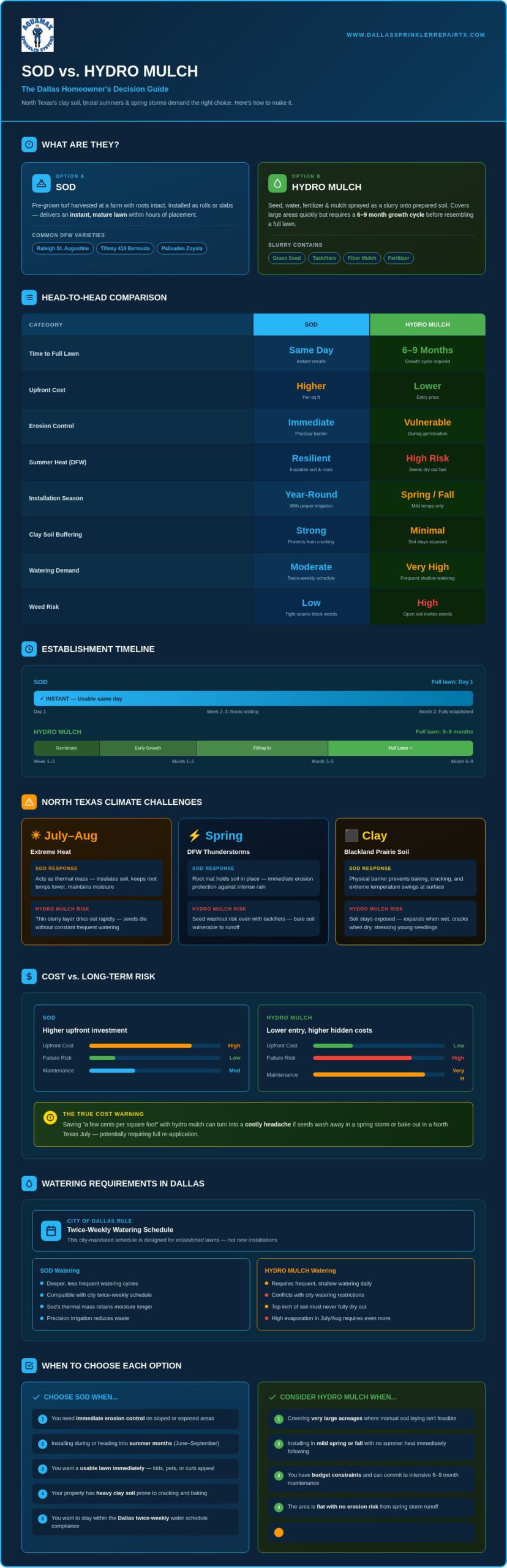
Sod is pre-grown turf. It’s harvested at a specialized farm with a thin layer of soil and the root system intact. This method provides an immediate, mature lawn. It’s the standard for residential properties in North Texas that need instant results. Within hours, a muddy construction site transforms into a lush green space. This “instant lawn” factor is the primary reason homeowners choose this route over seeding, especially when they need to stop erosion immediately.
Hydroseeding, or hydro mulching, is a different process. It involves mixing grass seed with water, fertilizer, and protective mulch to create a slurry. This mixture is sprayed onto prepared soil using a high-pressure hose and mechanical equipment. While it’s faster to apply over large acreages, it requires a 6 to 9 month growth cycle before it resembles a full lawn. You’re essentially starting from scratch with seeds rather than mature plants.
To better understand the visual differences between these two methods, watch this helpful video:
When weighing the pros of Sod vs Hydro Mulch, you’re looking at two very different application styles. Professional sod installation involves manually laying heavy rolls or slabs, ensuring tight seams to prevent weed growth. Hydro mulching is a mechanical process that covers ground quickly but leaves the bare soil vulnerable until the seeds germinate. When comparing Sod vs Hydro Mulch, the application method determines your maintenance schedule for the next year.
The Anatomy of a Sod Pallet
A standard pallet in the Dallas-Fort Worth area usually covers 400 to 500 square feet. We typically work with heat-hardy varieties like Raleigh St. Augustine, Tifway 419 Bermuda, or Palisades Zoysia. These are chosen for their ability to thrive in our specific climate and clay soil. The thickness of the root zone is vital. You need excellent soil-to-soil contact for the roots to knit into your yard’s base. If the sod is cut too thin or the ground isn’t prepped correctly, it will dry out before it can establish.
What Exactly Is in Hydro Mulch Slurry?
The slurry isn’t just wet seed. It includes “tackifiers,” which are glue-like bonding agents that help the mix stick to the ground. This is critical for preventing the seed from washing away during heavy DFW spring thunderstorms. High-quality fiber mulch, made from wood or paper, acts as a protective blanket. It retains moisture and regulates soil temperature during the vulnerable germination phase. We often customize these mixes with specific soil amendments to help the young seedlings survive the aggressive North Texas summer heat.
Performance in the North Texas Climate
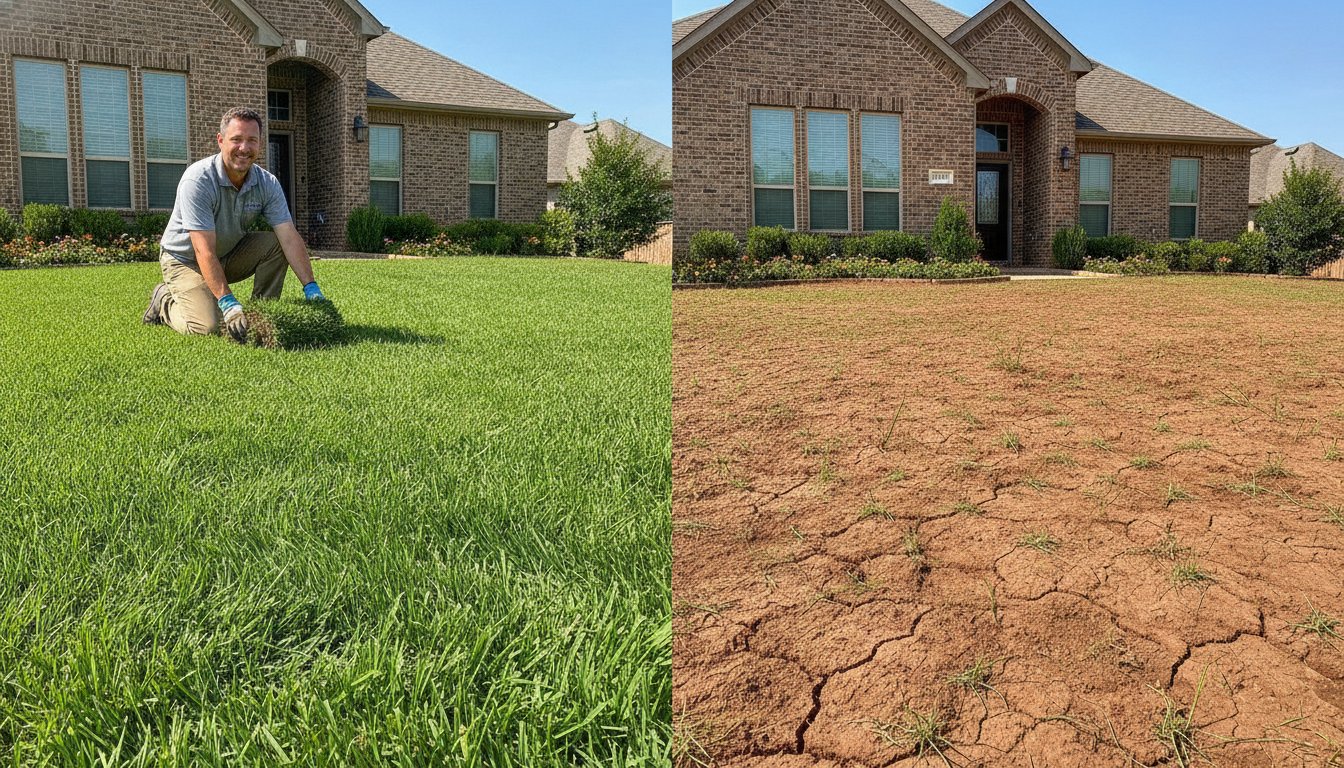
The Dallas-Fort Worth environment presents a unique set of challenges for any new landscape. Our region is famous for “Blackland Prairie” soil, a heavy clay that expands when saturated and develops deep cracks during dry spells. This volatile ground requires a lawn solution that can buffer the soil from extreme temperature swings. When evaluating Sod vs Hydro Mulch, you must consider how each method interacts with this clay base. Sod provides an immediate physical barrier that protects the soil surface, while hydro mulch leaves the ground relatively exposed during the long germination period.
Surviving the Dallas Summer Heat
July and August in North Texas are unforgiving. During these months, evaporation rates skyrocket, often sucking moisture out of the top inch of soil faster than a standard watering cycle can replenish it. Hydro mulch is particularly vulnerable here. Because it’s a thin layer of slurry, it requires frequent, shallow watering to keep the seeds from drying out and dying. In contrast, sod acts as a thermal mass. It functions as an insulator for the underlying soil, keeping root temperatures lower and moisture levels more consistent. While the best establishment windows for hydro mulch are limited to the milder spring and fall, professional sod installation can be successful nearly year-round if supported by a robust irrigation schedule.
Erosion and Runoff Challenges
DFW spring thunderstorms often dump several inches of rain in a matter of hours. This intensity creates a massive “washout” risk for hydro mulch. Without a mature root system to hold the slurry in place, a single downpour can send your investment down the storm drain. Sod offers immediate stability. It’s often the most effective way to resolve existing issues with drainage systems by armoring the soil against moving water. For those looking for a comprehensive guide to lawn establishment, the consensus is clear: immediate ground cover is the best defense against North Texas weather. Sod is the preferred choice for sloped DFW properties because it creates an instant living mat that prevents heavy rains from depositing silt against your home’s foundation.
Managing these climate factors requires precision. If you’re concerned about how your current watering setup will handle a new lawn, a quick irrigation system check can ensure your property is ready for the transition. Both methods handle winter dormancy similarly, with Bermuda and Zoysia varieties turning golden as temperatures drop, but the structural integrity provided by sod during the growing season remains its biggest climate advantage.
Cost vs. Time: The Real ROI of Your New Lawn
Calculating the true return on investment for your lawn requires looking past the initial invoice. Many homeowners fall into the trap of comparing only the material cost of Sod vs Hydro Mulch without accounting for the “establishment tax.” While hydro mulch is often cheaper per square foot at the start, the six-month journey to a functional lawn carries hidden expenses in water, time, and potential failure. You must decide if you want to pay for a finished product now or a project that requires your constant attention for the next two seasons.
Upfront Costs vs. Long-Term Value
For residential lots under 5,000 square feet, professional sod installation often delivers better value. Hydro mulch contractors typically have minimum project fees to cover the cost of mobilizing a tank and specialized spray equipment. On a small suburban yard in Plano or Dallas, these fees can make the price gap surprisingly narrow. Sod provides an immediate boost to property value. If you plan to sell your home soon, the instant curb appeal of a mature lawn far outweighs the wait for seeds to germinate. Hydro mulch only becomes the logical financial choice for large, multi-acre properties where the sheer volume of material makes sod cost-prohibitive.
Maintenance Labor During Establishment
The labor doesn’t end once the grass is on the ground. Sod has a natural defense mechanism. It is a dense, living mat that shades the soil, which prevents weed seeds from reaching the light. Hydro mulch leaves the soil exposed. In fertile North Texas ground, weeds will compete with your grass seeds for every drop of water. This often results in a patchy lawn that requires expensive herbicide treatments later.
Consider the “nursing” phase. Hydro mulch requires a daily commitment. You must keep the slurry damp. This often means manual watering if your sprinkler system isn’t programmed for multiple short bursts. Sod is more forgiving. Once the roots knit into the soil, you can transition to a standard deep-watering schedule. You can typically walk on and mow a sodded lawn within two to three weeks. With hydro mulch, you may be waiting months before the turf is strong enough to handle the weight of a mower. If a heavy storm washes the mulch away, the cost of re-seeding and re-grading can quickly exceed the price of a one-time sod installation. For a reliable assessment of your property’s needs, a professional site evaluation is the best way to avoid these hidden costs.
The Irrigation Connection: Watering for Success
Your irrigation system is the single most important factor in the success of a new lawn. Whether you choose Sod vs Hydro Mulch, your water delivery method must be flawless. The first 14 days represent a critical window where a single missed watering cycle can lead to total failure. Before you invest in materials, scheduling a professional irrigation repair is mandatory. A clogged nozzle or a misaligned head that was a minor nuisance for established grass will become a fatal flaw for a developing root system.
Uniformity is non-negotiable. In hydro mulch applications, “dry spots” lead to uneven germination that looks like a checkerboard. With sod, poor coverage causes the edges of individual pallets to shrink and brown, leaving gaps that invite weed growth. Modern smart controllers are essential tools here. They allow you to program the precise, high-frequency schedules required for establishment without the risk of over-saturating the heavy Dallas clay. These systems can adjust for local humidity and wind, ensuring your new investment stays hydrated without wasting water.
Sprinkler Requirements for New Sod
New sod requires deep soaking to encourage the roots to dive into the native soil. Surface misting is insufficient because the water must penetrate the sod layer and move into the ground below. You must ensure 100% overlap between sprinkler heads, often called head-to-head coverage. This ensures that the seams of the pallets, which dry out the fastest, remain hydrated. A comprehensive sprinkler system tune up Dallas is a prerequisite to ensure your zones are optimized for this heavy initial demand.
Watering Strategies for Hydro Mulch
Hydro mulch demands a “keep it damp” approach. Unlike the deep soak required for sod, seeds need consistent surface moisture to trigger and sustain germination. We recommend multiple short cycles throughout the day rather than one long soak. Excessive water is dangerous here because it can create puddles that physically displace the seed slurry. To maximize germination in DFW clay soils, use “cycle and soak” settings, which involve running a zone for 4 to 6 minutes and then waiting an hour before repeating to allow the water to penetrate the dense earth without causing runoff. This strategy keeps the seed bed moist while preventing the erosion of the mulch layer.
Don’t leave your investment to chance; contact us today for a full system diagnostic to ensure your irrigation is ready for your new lawn.
Making the Choice: When to Hire a Dallas Sod Professional
Successful installation begins long before the first pallet arrives. Proper site preparation is a grueling, technical process that involves more than just clearing weeds. We focus on tilling the compacted clay, removing buried debris, and executing precise grading to ensure water moves away from your home’s foundation. This foundational work prevents the pooling and soft spots that plague DIY attempts. By choosing a professional sod installation, you ensure that these critical steps are handled with industrial-grade equipment and local expertise.
The Aquamax advantage lies in our holistic approach to your landscape. We don’t just lay grass; we integrate it with your existing drainage systems and irrigation zones. This ensures your new turf has the infrastructure it needs to survive the transition from the farm to your backyard. We identify potential issues, such as low spots or broken sprinkler heads, before the sod goes down, saving you from expensive repairs later.
Signs You Should Choose Sod
- Active Households: If you have pets or children who need a safe, clean place to play within weeks, sod is the only option that provides a durable surface quickly.
- Erosion Risks: Yards with significant slopes require the immediate structural integrity of a root mat to prevent soil loss during spring rains.
- Summer Projects: If you are installing grass during the peak of the Texas summer, the thermal protection of sod is necessary to keep the root zone from baking.
The Importance of Professional Installation
Achieving a level, seamless lawn requires specific techniques that go beyond simple placement. We use a “butt-jointing” method, where pallet seams are pressed tightly together without overlapping. This prevents air pockets from drying out the roots and creates a smooth surface for mowing. After the layout is complete, rolling the sod is a mandatory step. This process uses a heavy, water-filled drum to press the turf into the prepared soil, ensuring the 100% root-to-soil contact necessary for survival. The final decision in the Sod vs Hydro Mulch debate often comes down to the quality of the finished product. Don’t leave your property’s value to chance. Contact Aquamax for a professional sod and irrigation evaluation to start your project with confidence.
Secure Your North Texas Landscape Today
We have served the DFW area since 1998 as licensed and insured irrigation specialists. Our team provides custom drainage and sod solutions that integrate perfectly with your landscape’s specific needs. Don’t leave your curb appeal to chance with unproven seeding methods. Get a Free Estimate for Professional Sod Installation in Dallas and let our experts handle the heavy lifting. You’re just weeks away from the lush, resilient lawn your home deserves.
Frequently Asked Questions
Is hydro mulch cheaper than sod in Dallas?
Hydro mulch has a lower initial material cost per square foot, but it often carries higher long-term expenses. For small residential properties, mobilization fees for the spray equipment can make the price difference negligible. When you account for the water, fertilizer, and potential re-seeding costs if the slurry washes away, professional sod installation frequently provides a more predictable return on investment for DFW homeowners.
How long does it take for hydro mulch to look like a real lawn?
It generally takes 6 to 9 months of careful maintenance for a hydro-mulched area to achieve the density of a mature lawn. While you may see green sprouts within 7 to 21 days, the turf requires several growing seasons to fill in completely. In the Sod vs Hydro Mulch comparison, sod is the only way to achieve an “instant” aesthetic that is ready for use within weeks rather than months.
Can I walk on hydro mulch right after it is sprayed?
Stay off the treated area for at least 3 to 4 weeks to allow the seeds to germinate undisturbed. Foot traffic can compress the slurry and damage the fragile new root systems as they attempt to knit into the soil. Even after the initial month, keep traffic light until the grass has been mowed at least three times. This patience ensures the seed bed remains uniform and productive.
What is the best month to install sod in North Texas?
April, May, September, and October are the ideal months for installation in the Dallas-Fort Worth region. These windows offer milder temperatures that reduce transplant shock and allow roots to establish before the extreme heat of July or the freezes of January. However, because sod is a mature product, it can be installed successfully year-round if your irrigation system is properly calibrated to handle the seasonal weather demands.
Does hydro mulch wash away in heavy rain?
Heavy rain is a significant threat to hydro mulch, especially on sloped properties. A single North Texas thunderstorm can displace the seed slurry before it has a chance to bond with the soil. This often results in patchy germination and requires expensive touch-up applications. Sod provides immediate erosion control because the heavy pallets act as a physical barrier that keeps your topsoil and foundation silt in place.
Do I need a special sprinkler system for hydroseeding?
You don’t need a specialized system, but your current equipment must be in perfect working order. The controller needs to support “cycle and soak” settings to keep the surface damp without causing runoff. Before starting any project involving Sod vs Hydro Mulch, ensure your system has 100% head-to-head coverage. Any dry spots in your zones will lead to immediate failure in those areas of the lawn.
Which grass type is best for sod in the DFW area?
Bermuda, St. Augustine, and Zoysia varieties are the most resilient choices for our local climate. TifTuf Bermuda is excellent for high-traffic areas in full sun, while Raleigh St. Augustine remains a favorite for yards with moderate shade. Palisades Zoysia is a premium option that offers superior drought tolerance and a lush feel underfoot. Match the variety to your specific sunlight levels and maintenance capabilities for the best results.
How much water does new sod actually need?
New sod requires deep, frequent soaking for the first 10 to 14 days to prevent the roots from drying out. Plan to water 2 to 3 times per day during this initial window, ensuring the moisture penetrates through the sod slab and into the native clay. Once the roots have knitted into the ground, you can gradually transition to the City of Dallas twice-weekly watering schedule. Always monitor for browning at the seams, which indicates a need for more coverage.