
Article by
Robert Maxvill
Owner of Aquamax Sprinkler Systems, American Sprinkler Repair and Dallas Drainage Systems.
Your sprinkler controller is the brain of your landscape, but in the harsh North Texas heat, a single “No AC” error or a skipped cycle can lead to hundreds of dollars in lost sod. Most homeowners feel a mix of confusion and dread when faced with complex wiring or unresponsive screens. You aren’t alone if you’ve spent an afternoon staring at a timer, fearing that a small mistake might lead to a massive water bill or a total system replacement. Effective sprinkler controller troubleshooting Murphy residents can trust starts with understanding how our local climate and clay soil impact these sensitive electronics.
We understand that maintaining a lush lawn while adhering to Murphy’s twice-a-week watering restrictions is a delicate balance. This guide will show you how to identify common irrigation timer failures and resolve them before your plants suffer. We’ll cover everything from simple power resets to sensor bypasses, giving you the confidence to manage your system or know exactly when it’s time to call in a licensed professional. By the end of this article, you’ll have a clear path to restoring your system’s vitality and ensuring your property remains a thriving oasis.
Key Takeaways
- Understand why precise controller timing is critical for Murphy’s heavy clay soils to prevent wasteful water runoff.
- Master basic sprinkler controller troubleshooting Murphy techniques to identify power failures and blown fuses before your landscape suffers.
- Discover how extreme North Texas heat and seasonal lightning storms specifically target and damage irrigation circuit boards.
- Learn to distinguish between simple programming resets and complex wiring issues that require a licensed professional for safety.
- Explore how upgrading to a smart irrigation controller can significantly reduce your water bill while maintaining a lush, healthy lawn.
Why Your Sprinkler Controller is the Brain of Your Murphy Landscape
The irrigation controller acts as the brain of your irrigation system, sending precise electrical signals to valves that release water to specific zones. In Murphy, this device is far more than a simple convenience. It’s a critical tool for managing our region’s heavy clay soil, which requires a specific “cycle and soak” approach to prevent immediate runoff. When the controller fails, the results are often visible within days. You might see pooling water near your foundation or brittle, brown patches in your fescue. Effective sprinkler controller troubleshooting Murphy homeowners can perform begins with recognizing that this box dictates the health and safety of your entire property.
A malfunctioning “brain” doesn’t just waste water; it puts your home’s structural integrity at risk. Because our local soil expands and contracts so aggressively, inconsistent watering can lead to foundation shifts that cost thousands to repair. While older systems relied on mechanical dials that were prone to sticking, modern Murphy homes are increasingly moving toward Wi-Fi-enabled systems. These smart controllers offer better reliability, but they also introduce new complexities like firmware updates and signal interference. If your system isn’t responding, the problem could be a fried circuit board or a simple programming error.
To better understand how these systems function and how to identify common faults, watch this helpful video:
Controller vs. Timer: Understanding the Difference
While many people use the terms interchangeably, there’s a distinct difference between a basic timer and a modern controller. A basic timer simply opens and closes valves at set times regardless of the weather. Advanced controllers use local weather data to skip cycles during rain or high winds. Many of these units also manage a “master valve,” which acts as a fail-safe for the entire system. If you’re dealing with persistent issues, you might need a professional irrigation repair to determine if the logic board is failing to communicate with these critical components.
The Impact of Murphy Watering Restrictions
Your controller is your best ally in staying compliant with local laws. As of July 2026, Murphy residents are limited to watering twice a week, and outdoor irrigation is prohibited between 10:00 a.m. and 6:00 p.m. daily. A properly programmed controller ensures you don’t face municipal fines for watering on the wrong day. Most modern units include a “seasonal adjust” feature. This allows you to scale your watering back during the cooler spring months without reprograming every zone. If your timer loses its memory after a power flicker, you risk violating these local codes. This makes sprinkler controller troubleshooting Murphy a priority for every responsible property owner.
Common Controller Failures Unique to North Texas Environments
Murphy’s climate creates a high-stress environment for irrigation electronics that most household appliances never face. While your refrigerator sits in a climate-controlled kitchen, your irrigation controller is often relegated to a hot garage or an exposed exterior wall. This exposure makes sprinkler controller troubleshooting Murphy a unique challenge. You aren’t just dealing with mechanical wear; you’re fighting the elements. From radical temperature shifts to intense electrical activity, the North Texas environment is designed to test the limits of your system’s “brain.”
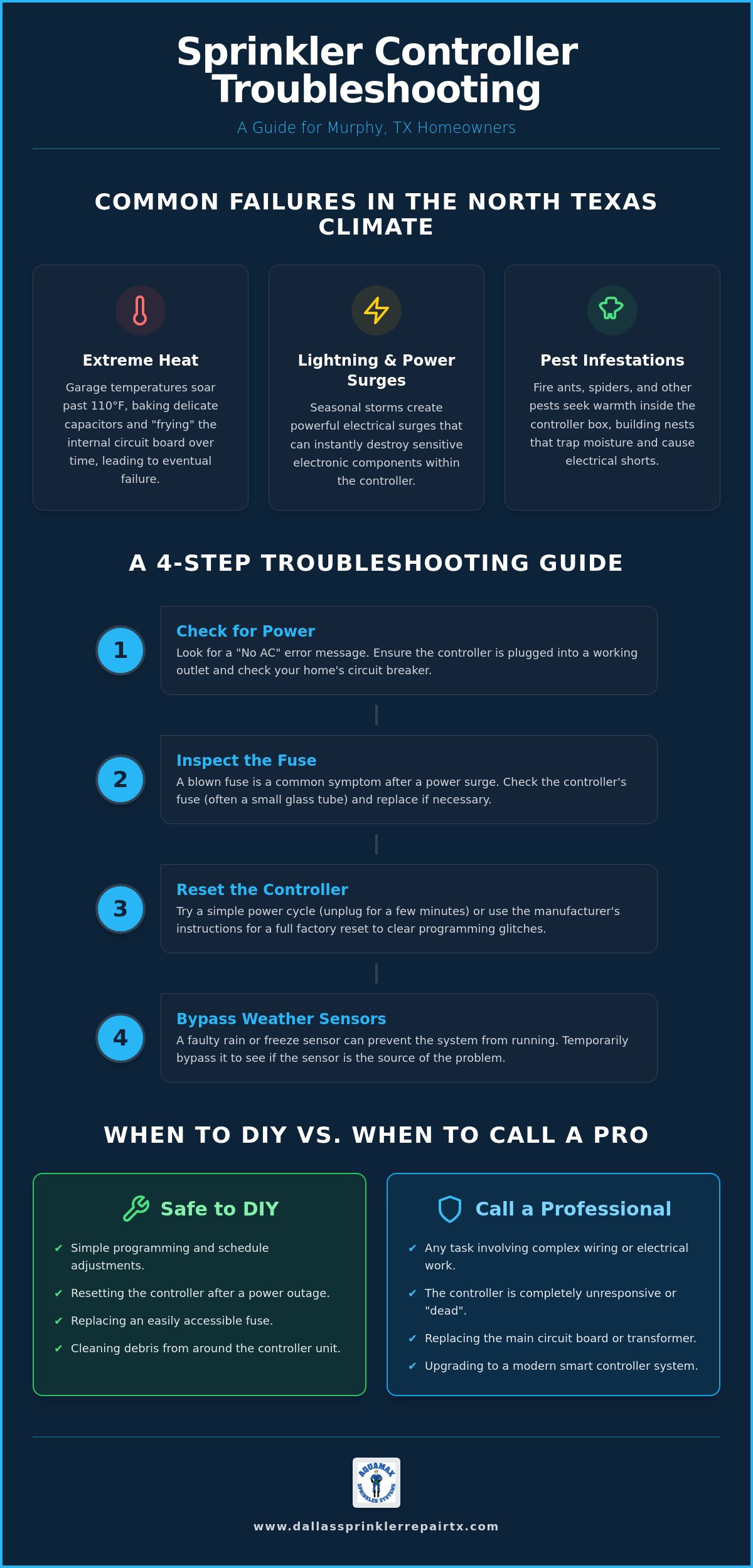
Extreme heat is perhaps the most persistent threat. During a typical Texas summer, garage temperatures can easily soar past 110 degrees. This heat bakes the delicate capacitors on the circuit board, leading to “frying” or component failure over time. Beyond the temperature, local pests like fire ants and spiders are frequently attracted to the residual warmth of the transformer. They build nests inside the housing, which can lead to moisture buildup and eventual electrical shorts. If your unit is over a decade old, these environmental stressors have likely taken their toll, making a replacement more cost-effective than constant small fixes.
The ‘Silent Killer’: Power Surges
Spring storms in Murphy bring significant lightning activity that can disable a controller in an instant. A direct hit isn’t necessary to cause damage. A nearby strike can send a massive voltage spike through the power lines or even through the copper wiring buried in your yard. These surges often scramble the internal memory of the unit. Common signs of a fried board include a completely blank display, erratic zone firing, or a “No AC” warning even when the outlet has power. While modern WaterSense labeled controllers offer superior water management, they still benefit from dedicated surge protection to safeguard their sophisticated circuitry.
Moisture and Corrosion Issues
Humidity and condensation are often overlooked in our region. High moisture levels can lead to “green” corrosion on the wiring terminals and the backplane of the unit. This oxidation prevents the low-voltage signal from reaching the valves in your yard, causing specific zones to fail while others work perfectly. It’s essential to use outdoor-rated enclosures for any unit mounted outside to prevent this degradation. If you suspect your terminals are failing, a professional irrigation repair diagnostic can confirm if the issue is in the controller or the underground wiring. Identifying these failures early prevents your landscape from suffering during the peak of the heat.
A Step-by-Step Troubleshooting Guide for Murphy Homeowners
Systematic diagnosis is the fastest way to save your landscape from dehydration. While environmental factors like heat and lightning often cause failure, many issues stem from simple power interruptions or software glitches. Following a logical order of operations for sprinkler controller troubleshooting Murphy ensures you don’t waste time on complex repairs when a simple reset is all that’s required. Before you consider a full replacement, take ten minutes to spruce up your irrigation system by verifying these basic settings and power connections.
Checking Power and Display Issues
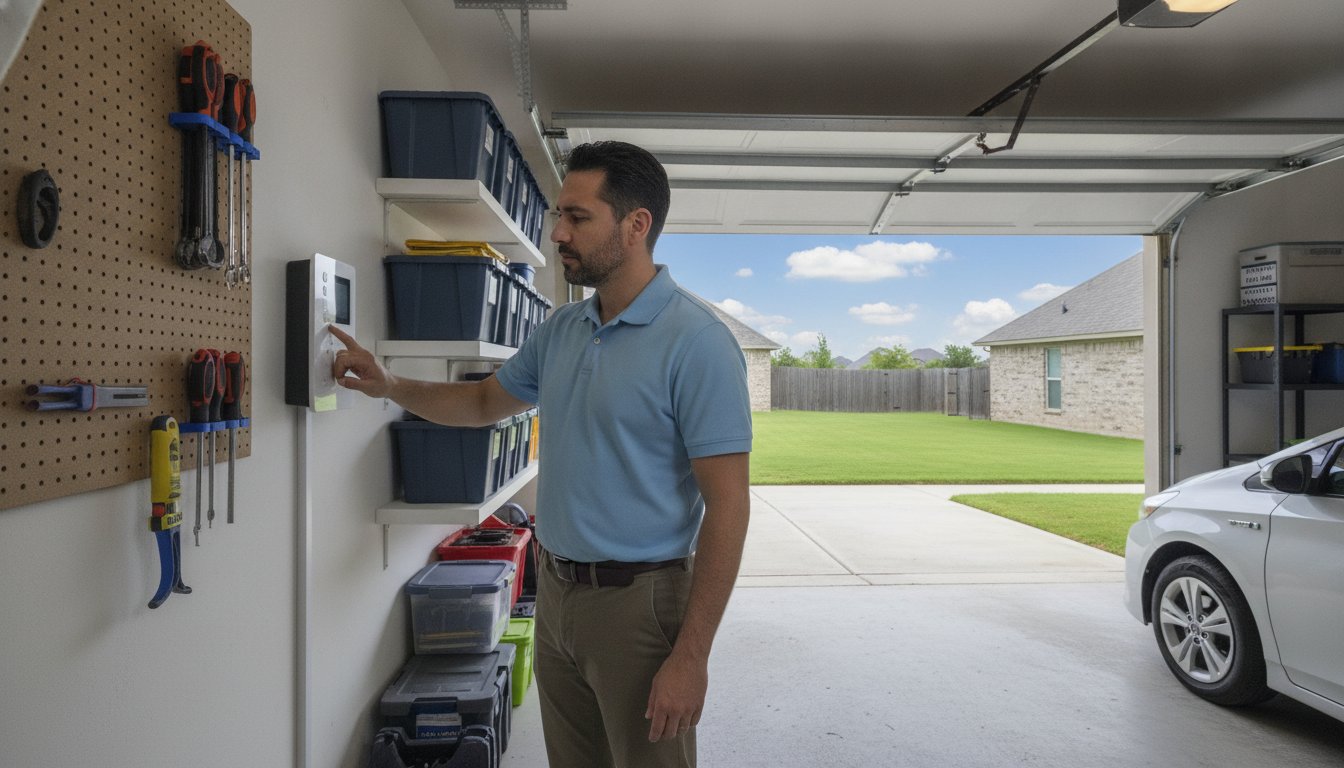
A blank or flickering screen usually points to a power supply problem rather than a dead controller. In Murphy, most irrigation units are plugged into GFI outlets in the garage. These outlets are highly sensitive and frequently trip during the heavy thunderstorms common in North Texas. Press the “Reset” button on the outlet before moving further. If the screen remains blank, check the internal fuse or small circuit breaker located behind the controller’s front panel. You can also use a basic multimeter to test the transformer’s output. A healthy transformer should read between 24V and 28V AC. If you’re getting zero volts at the terminal strip, the transformer has likely failed and needs professional replacement.
If the screen is active but frozen, perform a “hard reset” to clear temporary logic errors. This typically involves removing the backup battery and disconnecting the main power for thirty seconds. Reconnect the power and check if the interface responds. Keep in mind that a hard reset may wipe your custom schedules. Always verify that your backup battery is fresh so your programs persist through the brief power flickers that often strike our local grid. For those looking to eliminate the stress of outages entirely, visit Texas Engineered Solar LLC to learn about standby generator solutions that keep your home’s technology protected.
Isolating Zone Failures
When one specific area of your yard stays dry while others thrive, the sprinkler controller troubleshooting Murphy process involves isolating the “brain” from the “body.” Use the “Manual Run” or “Test” feature to bypass the scheduled program. If the zone fires manually, your problem is likely a programming error or a faulty rain sensor that’s incorrectly halting the cycle. However, if the zone fails to activate even during a manual test, look for error codes on the display. Modern digital units will often flash “Fault,” “Fuse,” or “No AC” for specific terminals.
These codes indicate a short circuit or an open wire in the line leading to that specific zone valve. This is a common occurrence in Murphy’s shifting clay soil, which can pinch or sever underground wires. If you see these errors, the issue is often beyond a simple software fix and may require a professional irrigation repair to trace the electrical fault. Isolate these issues early to prevent widespread landscape stress during our peak summer months.
When to DIY vs. When to Call a Licensed Murphy Irrigator
The communication between your controller and the solenoids in your yard is a delicate electrical loop. If you have a short circuit in the underground wiring, installing a brand-new controller won’t solve the problem. A shorted valve can immediately fry the circuit board of a new unit the moment it tries to fire that zone. This leads to an expensive cycle of replacing parts without fixing the root cause. Professionals use diagnostic tools like volt-ohm meters to verify the integrity of the field wires before connecting a new “brain” to the system. This step protects your investment from instant failure.
Red Flags Requiring Professional Intervention
Immediate action is necessary if you notice burning smells or visible scorch marks inside the controller housing. These are clear indicators of a catastrophic electrical failure that could lead to a fire. If multiple zones fail simultaneously despite a working display, the issue likely resides in the common wire or the backplane of the unit. Additionally, if error codes like “Zone Fault” persist even after a factory reset, the problem is usually a hardware failure or a severed wire in the yard. These scenarios require the precision of a licensed specialist to resolve safely.
Why Licensing Matters in Murphy
In the state of Texas, anyone who repairs or maintains an irrigation system for a fee must be licensed by the TCEQ. This isn’t just a legal formality; it’s a safety requirement. A licensed irrigator understands the critical role of backflow prevention, ensuring that irrigation water never contaminates your home’s clean drinking supply. While a general handyman might offer a lower price, they often lack the diagnostic expertise to identify underlying valve issues, leading to more expensive repairs later. You can see how our expert team handles these complex diagnostics by reading our Aquamax Reviews from your neighbors in Murphy.
If your troubleshooting efforts haven’t restored your system’s function, don’t risk damaging your lawn or your new hardware. Contact us today for a professional sprinkler system repair to ensure your irrigation “brain” is functioning at peak efficiency.
Professional Controller Upgrades and Repairs by Aquamax
Aquamax has been the trusted authority for Murphy irrigation since 1998. When basic sprinkler controller troubleshooting Murphy fails to yield results, our licensed technicians provide the expert intervention needed to save your landscape. We don’t believe in the “part-swapping” approach used by less experienced contractors. Instead, we use precision diagnostic equipment to trace electrical faults back to their source. This involves testing solenoid resistance and checking for voltage drops across the backplane to ensure the “brain” of your system is communicating perfectly with every valve. Our goal is a permanent resolution that restores your peace of mind and the health of your lawn.
Modernizing your system is one of the most effective ways to combat rising water costs and North Texas weather volatility. Research shows that poorly built or managed irrigation systems can waste 20% of the water they use. By upgrading to a “smart” weather-based controller, you transition from a rigid schedule to a dynamic one that responds to real-time conditions. We ensure these systems are fully integrated with high-quality rain and freeze sensors. These sensors act as a critical fail-safe. They prevent your sprinklers from running during a downpour or creating dangerous ice patches on your driveway during a sudden winter snap.
The Benefits of Smart Irrigation Technology
Smart controllers offer total control from your smartphone, allowing you to adjust your schedule from the office or while on vacation. Predictive watering technology uses real-world weather data to determine if your soil actually needs moisture. If a storm is forecasted for Murphy, the system skips the cycle before the first drop falls. This proactive management keeps you in perfect alignment with local watering restrictions while promoting deeper root growth in our heavy clay soil. Explore our Irrigation Repair Services to see which upgrade options best fit your property’s specific needs.
Ensuring Long-Term Reliability
A controller is only as reliable as the system it manages. We recommend a regular Sprinkler System Tune-Up to ensure all zones are firing correctly and heads are adjusted for maximum efficiency. Our team prioritizes clean, professional wiring and weather-tight installations. This prevents the corrosion and pest intrusion issues that frequently plague DIY setups. This methodical approach to installation and maintenance is why we’ve remained a leader in the region for over two decades. Contact Aquamax Sprinkler Systems today for a full system evaluation to ensure your landscape remains a thriving, vital asset.
Restore Your System’s Vitality and Efficiency
Managing a healthy landscape in North Texas means staying ahead of environmental stress. You now have the tools to identify power failures, navigate local watering restrictions, and perform basic sprinkler controller troubleshooting Murphy homeowners can use to save water. Whether you’re dealing with a fried circuit board from a spring storm or simply need to modernize your system with smart technology, the right intervention prevents minor glitches from becoming major landscape losses. Understanding when to DIY and when to call a specialist ensures your property remains a thriving oasis.
Reliability is the foundation of a thriving property. Since 1998, Aquamax has provided Murphy and the wider DFW area with licensed and insured technicians who understand the specific needs of our clay soil. Our specialists possess deep expertise in all major industry brands, including Hunter, Rain Bird, and Rachio. We treat every repair as a vital contribution to your home’s aesthetic and environmental well-being. Don’t wait for brown patches to appear before taking action.
Schedule Your Controller Diagnostic with Aquamax Today to ensure your irrigation system remains precise, compliant, and ready for the heat. We’re here to handle the technical burden so you can enjoy the lush results of a perfectly maintained lawn.
Frequently Asked Questions
How do I reset my sprinkler controller after a power outage?
You can reset most digital controllers by removing the backup battery and disconnecting the main power for thirty seconds. This clears the internal logic and allows the system to reboot. Once reconnected, check your programmed days to ensure they still align with Murphy’s current watering restrictions. If the screen remains frozen or unresponsive after this hard reset, the internal circuit board may have suffered permanent damage from a recent power surge.
Why is my sprinkler controller display blank but the outlet has power?
A blank display usually indicates a blown internal fuse or a failed transformer. Even if your garage outlet has power, the controller cannot function if its internal power converter is dead. Use a multimeter to check for 24V AC at the terminal strip. If you get a zero reading, the transformer is the culprit. This is a common part of sprinkler controller troubleshooting Murphy technicians perform after intense North Texas lightning activity.
Can I replace my old mechanical sprinkler timer with a new smart controller?
You can certainly replace an outdated mechanical timer with a modern smart controller. This upgrade is one of the most effective ways to manage Murphy’s heavy clay soil and strict municipal watering codes. Smart systems use local weather stations to skip cycles during rain or high winds, preventing wasteful runoff. Our team specializes in these installations, ensuring your new “brain” is perfectly calibrated for your property’s specific zone requirements.
What does a ‘Short’ or ‘Error’ message on my irrigation controller mean?
These messages indicate an electrical short circuit in the wiring or a faulty solenoid on a specific zone valve. The controller identifies the excessive electrical draw and automatically disables that terminal to prevent the entire circuit board from frying. You’ll need to inspect the field wiring for nicks or corrosion. If the message persists across multiple zones, the issue is often a compromised common wire buried somewhere in your landscape.
How often should I replace the backup battery in my sprinkler timer?
You should replace your controller’s backup battery every twelve months. We recommend doing this during your annual spring tune-up to ensure your settings are protected before the storm season begins. While modern units often have non-volatile memory, older models rely entirely on these batteries to save your custom schedules during power flickers. A fresh battery prevents the frustration of reprogramming your entire system after a brief North Texas outage.
Will a smart sprinkler controller really save me money on my Murphy water bill?
Smart controllers can significantly reduce your water bill by eliminating unnecessary irrigation during wet or cool periods. Because these systems adjust based on real-time weather data, they prevent the common mistake of watering while it’s raining. In our region, where outdoor watering accounts for a large portion of residential use, this efficiency translates to direct savings. It also ensures you stay compliant with Murphy’s year-round time-of-day restrictions without manual adjustments.
Why does my controller say it’s watering, but no water is coming out of the heads?
This problem usually stems from a closed main shut-off valve or a failure in the master valve circuit. The controller is sending the correct electrical signal, but the water is physically blocked from entering the system. Check your backflow device to ensure the handles are in the “open” position. If the water supply is active, the solenoid on your master valve may have failed, requiring a professional repair to restore flow to the zones.
Is it safe to troubleshoot my sprinkler controller’s wiring myself?
While handling the 24V low-voltage field wires is generally safe for homeowners, you should never attempt to repair high-voltage internal components. If you notice burning smells, scorch marks, or exposed 120V wiring, stop immediately and call a licensed professional. Improper sprinkler controller troubleshooting Murphy attempts can lead to electrical fires or permanent damage to your irrigation system. For complex wiring diagnostics, it’s always safer to rely on experienced, licensed irrigators.