
Article by
Robert Maxvill
Owner of Aquamax Sprinkler Systems, American Sprinkler Repair and Dallas Drainage Systems.
What if the secret to a green lawn in August isn’t more water, but a smarter foundation? Most homeowners in Dallas-Fort Worth struggle with rock-hard clay soil and skyrocketing water bills that never seem to be enough for a thirsty yard. Finding the best sod for North Texas means more than just picking a green pallet from a local supplier. It requires selecting a variety specifically bred to handle our heavy clay and the strict two-day-per-week watering limits mandated by the North Texas Municipal Water District.
You deserve a durable yard where kids can play and pets can run without creating dust bowls or mud pits. This guide identifies the four most resilient grass varieties for 2026 that actually thrive in our local environment. We will break down which sod types handle heavy foot traffic and which ones can finally survive under the shade of your large oak trees. We provide the professional insight you need to increase your curb appeal while significantly reducing water waste. From drought-hardy Bermuda to shade-tolerant St. Augustine, discover which variety will turn your property into a healthy, vital landscape.
Key Takeaways
- Learn why the “Blackland Prairie” clay soil causes many lawns to fail and how to select grass varieties that thrive in heavy North Texas earth.
- Identify the best sod for North Texas based on your specific sunlight exposure, whether you need full-sun Bermuda or shade-tolerant St. Augustine.
- Compare traffic tolerance levels to ensure your new lawn can withstand the demands of pets and children without thinning or dying.
- Discover how proper yard grading and drainage preparation prevent water pooling and protect your sod investment from root rot.
- Understand the technical advantages of professional installation to ensure seamless soil contact and immediate root establishment during the intense summer heat.
The North Texas Climate: Why Your Sod Choice Matters
North Texas presents a unique challenge for homeowners. We live in a transition zone, a geographic area where the climate is too hot for northern grasses and occasionally too cold for tropical ones. This creates a high-stakes environment for landscaping. Choosing the best sod for North Texas isn’t just about color; it’s about biological compatibility with our harsh summers and unpredictable winters. While many people admire the lush look of warm-season and cool-season grasses found in other regions, cool-season varieties like Fescue or Bluegrass rarely survive a Dallas July without excessive, expensive watering.
Success starts with understanding the 2026 landscape. The North Texas Municipal Water District (NTMWD) now strictly enforces spray irrigation limits to no more than two days per week. Additionally, watering with sprinklers is prohibited between 10 a.m. and 6 p.m. to combat evaporation. If your grass isn’t naturally resilient, it won’t make it through the week on this schedule. You need a variety that balances extreme heat tolerance with the ability to resist fungal issues during our humid spring months.
Soil Composition in Dallas-Fort Worth
The Blackland Prairie soil found across DFW is a heavy, expansive clay. This soil acts like a sponge that holds water too tightly or a brick that repels it entirely. Before starting a sod installation, you must address this compaction. Clay soil requires deep aeration to allow oxygen and nutrients to reach the root zone. Without a proper nutrient-rich topsoil layer, new roots will struggle to penetrate the rock-hard ground during the summer heat. Proper preparation ensures that the best sod for North Texas actually takes root rather than just sitting on the surface.
When water sits on top of compacted clay without draining, the lack of oxygen quickly leads to root rot that can destroy a new lawn in days.
Drought Resilience and Water Conservation
In a Texas context, drought-tolerant means more than just surviving without rain. It means the grass can go dormant during extreme heat and bounce back quickly when water is applied. Modern drainage systems and precision irrigation are vital partners in this process. You need a lawn that works with the 2026 water mandates, not against them. Planning for long-term vitality requires a balance between the right grass species and a professional irrigation strategy that delivers water directly to the roots. This proactive approach ensures your yard remains a vital asset to your property rather than a source of constant maintenance stress.
The Top 4 Sod Varieties for North Texas Lawns
Selecting the best sod for North Texas involves more than just picking the greenest pallet at the nursery. You must match the grass variety to your home’s unique microclimate, specifically focusing on sunlight patterns and soil depth. Local research from the Texas A&M AgriLife Extension confirms that while our region is challenging, specific cultivars have been bred to thrive here. Whether you have a wide-open backyard or a lot shaded by mature oaks, one of these four varieties will provide the foundation for a healthy landscape.
Bermuda: TifTuf and Celebration Cultivars
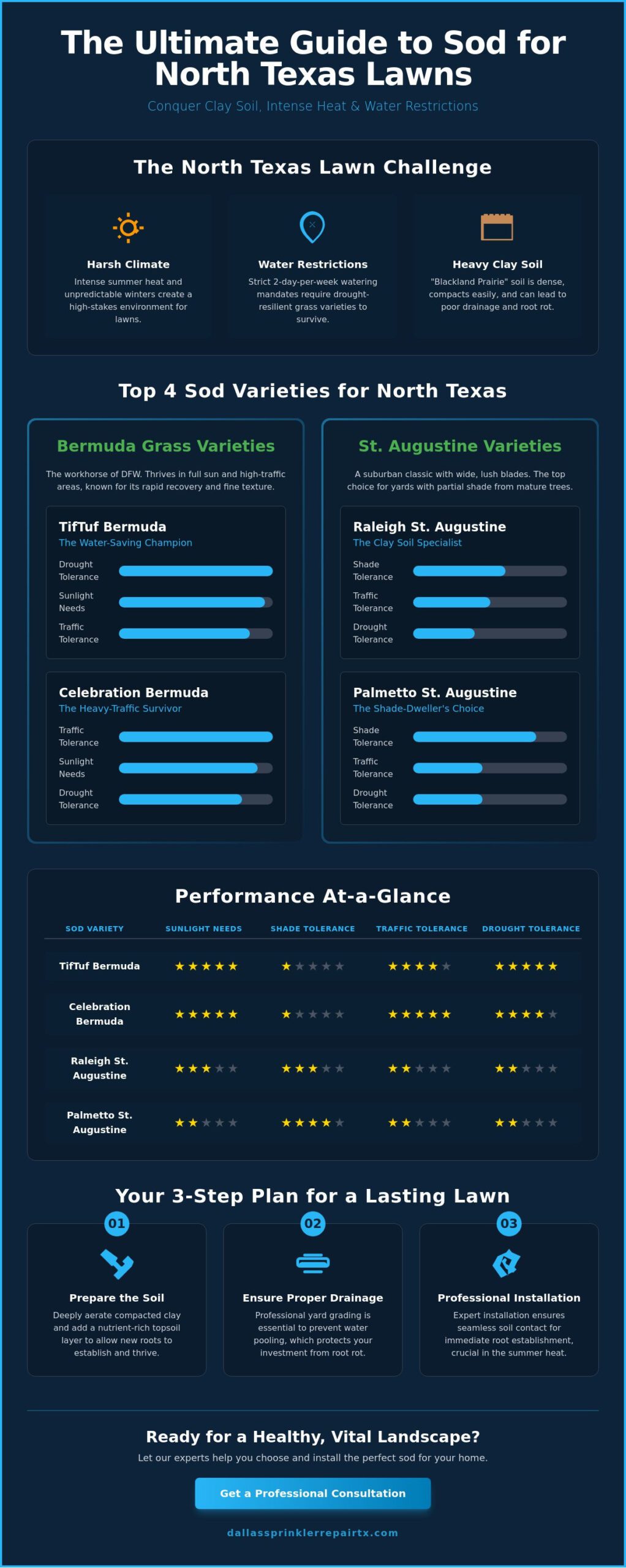
Bermuda grass is the workhorse of the Dallas-Fort Worth area. TifTuf Bermuda is currently the gold standard for water efficiency in 2026. It stays green longer into a drought and recovers faster than almost any other hybrid. If your yard sees heavy action from kids or large dogs, Celebration Bermuda is a superior choice. Its deep root system and aggressive growth habit allow it to repair itself quickly after heavy use. To achieve a manicured, golf-course appearance, you must commit to a short mowing height, typically between 0.5 and 1.5 inches. These varieties require at least 6 to 8 hours of direct, unfiltered sunlight daily.
St. Augustine: Raleigh and Palmetto
St. Augustine is a suburban classic known for its wide blades and deep blue-green hue. Raleigh St. Augustine is the most popular variety in the region because it handles our heavy clay soil well. For homeowners struggling with shade, Palmetto St. Augustine is a better alternative. It offers improved cold hardiness and can thrive with as little as 4 to 6 hours of sunlight. You should be aware that St. Augustine is the thirstiest option on this list. It requires a well-calibrated irrigation system to survive the peak of summer without wilting. If you are planning a new sod installation, ensure your sprinkler coverage is 100 percent uniform to support this variety.
Zoysia: Zeon and Palisades
Zoysia is frequently called the “luxury” grass of Texas. Zeon Zoysia features a fine blade that feels incredibly soft underfoot, making it the ultimate choice for high-end residential lawns. It is highly shade-tolerant and maintains its color well. Palisades Zoysia offers a wider blade and drought tolerance that rivals Bermuda grass. While Zoysia grows more slowly than Bermuda, which means less frequent mowing, it is a significant long-term investment. It creates a dense carpet that naturally chokes out weeds and provides a high-end look that increases property curb appeal.
Buffalograss: The Native Alternative
Buffalograss is the only truly native turfgrass for our region. It is the most low-maintenance option available, requiring very little water once the roots are established. It has a softer, more “prairie” look compared to the dense hybrids. While it is not suitable for high-traffic areas or heavy shade, it is an excellent choice for low-use sections of your property where you want to minimize maintenance and water waste.
Comparing Sod Performance: Sun, Shade, and Traffic
Choosing the best sod for North Texas requires a realistic assessment of your property’s limitations. Sunlight exposure is the primary factor that dictates success or failure. Bermuda varieties require at least 8 hours of direct, unfiltered sun to maintain density. In contrast, certain Zoysia and St. Augustine varieties can survive on 4 to 6 hours of sunlight. According to research data from AggieTurf, these light requirements are non-negotiable. If you plant a high-sun grass in a shaded corner, it will thin out and eventually die. No amount of fertilizer or water can compensate for a lack of photosynthesis.
Your lifestyle also influences this decision. High-traffic lawns with active dogs and children need the resilience of Bermuda grass. It ranks highest for durability and recovery speed. Zoysia sits in the middle; it offers a dense, luxurious carpet that handles moderate traffic but grows much slower. St. Augustine is the most fragile variety underfoot. It should be reserved for low-traffic ornamental areas or side yards. Water demand also varies significantly across these types. Bermuda is the most “thrifty” during a drought, while St. Augustine remains the most “thirsty” and requires a precise sprinkler system tune-up to ensure even coverage.
The Best Grass for Shade in Dallas
No grass variety thrives in 100 percent shade. If an area under a large oak tree never sees the sun, any sod you lay will fail within a single season. Zeon Zoysia and Palmetto St. Augustine are the top contenders for filtered light or partial shade. Zeon offers a finer texture that feels like a premium carpet, while St. Augustine provides a broader, classic blade. To help your new sod thrive, consider thinning your tree canopy. Removing lower limbs or thinning the interior branches allows more sunlight to reach the ground. This simple maintenance step is often the difference between a lush lawn and bare dirt patches.
Durability and Recovery
Bermuda grass is unique because it self-heals through underground rhizomes and surface runners. If a dog digs a hole or heavy foot traffic creates a dirt path, Bermuda aggressively fills in the gaps. Zoysia has a much slower growth rate. While this means you spend less time mowing, it also means that physical damage takes significantly longer to repair. Match your choice to your daily life. If you have large pets or host frequent backyard gatherings, the aggressive growth of Bermuda is essential. For a quiet, high-end yard with minimal traffic, Zoysia remains the best sod for North Texas due to its density and weed resistance.
Preparing Your Yard for Professional Sod Installation
Laying the best sod for North Texas won’t guarantee success if you skip the foundational prep work. Many homeowners assume the grass does all the heavy lifting. In reality, the soil and infrastructure beneath the turf determine its lifespan. You must start by clearing every trace of existing vegetation. If you leave old crabgrass or stubborn weeds behind, they’ll punch through your new pallets within weeks. This stage also requires soil testing and tilling to remediate the dense clay prevalent in our region. Adding organic matter helps break up the “Blackland Prairie” soil, creating a hospitable environment for deep root growth.
A professional approach follows a strict sequence of events:
- Clearance: Remove all debris and old turf using a sod cutter for a clean slate.
- Grading: Level the ground to ensure water moves away from your home’s foundation.
- Tilling: Mix in nutrient-rich topsoil to improve the clay’s texture.
- Audit: Perform a pre-installation irrigation system tune-up.
- Installation: Lay the sod in a staggered pattern to minimize visible seams.
The Critical Role of Drainage
Standing water is the fastest way to destroy a new landscape investment. In North Texas, heavy spring rains saturate the clay, often leading to pooling. If new roots sit in stagnant water for more than 48 hours, they suffocate and rot. You must implement yard drainage solutions Dallas properties require, such as French drains or surface swales, before the first pallet arrives. Proper grading ensures runoff doesn’t collect in low spots. For a complete walkthrough of this process, review our guide on How to Prepare Your Yard for Sod.
Irrigation Prep: Why It Can’t Wait
Your sprinkler system acts as the life support for your new lawn. During the vital “first 14 days” establishment window, you’ll need a watering schedule that keeps the soil consistently moist. Test every sprinkler head for proper coverage to avoid lethal “brown spots” caused by dry zones. If a single head is clogged or misaligned, that section of sod will wither in the afternoon sun. Adjust your controller to run shorter, more frequent cycles during these first two weeks. If you discover leaks or broken pipes during your test, schedule a sprinkler repair Dallas expert to resolve the issues before the grass is delivered.
The establishment phase is a delicate window that requires precision. Don’t risk your investment on a faulty system or poor soil preparation. Contact us to schedule a professional sod installation and ensure your new yard thrives from day one.
Ensuring Longevity: Professional Installation and Care
DIY sodding often fails because homeowners underestimate the speed of dehydration in the Texas sun. When you buy pallets from a big-box retailer, that grass has often sat on hot concrete for days, losing the vital moisture needed for root establishment. Choosing the best sod for North Texas is only half the battle. The other half is the precision of the installation itself. Professional installers source fresh-cut pallets directly from local turf farms and transport them under conditions that preserve root vitality. This ensures the grass arrives in a state of active growth rather than heat-induced shock.
Our approach combines irrigation expertise with specialized sod installation. We don’t just lay grass; we synchronize your watering system to the specific needs of the new variety. This synergy is essential because a newly installed lawn has a high demand for water that must be balanced against the strict two-day-per-week local watering mandates. Smart irrigation controllers are a vital part of this strategy. These EPA WaterSense-certified devices adjust schedules based on local weather data, ensuring your new investment stays hydrated without violating municipal codes or wasting expensive resources.
Why Professional Installation Wins
The technical details of the installation process determine whether your yard looks like a seamless carpet or a patchwork quilt. Professionals use a staggered brick-like pattern to place seams, which prevents erosion and promotes faster knitting. After the pallets are down, a heavy water-filled roller is used to press the sod into the soil. This eliminates air pockets that would otherwise cause the roots to dry out and die. Entrusting this labor to licensed technicians provides the peace of mind that every square foot has been handled with professional-grade care and precision.
Maintaining Your New North Texas Lawn
Long-term success depends on your maintenance habits during the first season. You should perform your first mow approximately 14 to 21 days after installation, but only once the roots have firmly gripped the soil. Set your mower to its highest setting for the first few passes to avoid scalping the young blades. Seasonal adjustments are also critical. As we move from the humid spring into the blistering heat of July, your fertilization and watering schedules must evolve to prevent fungal issues and drought stress. For more information on selecting the right partner for your project, consult our list of Sod Installation Companies in Dallas. Investing in professional oversight ensures that the best sod for North Texas remains a lush, vital asset to your property for years to come.
Transform Your North Texas Landscape for 2026
Achieving a lush lawn in the Dallas-Fort Worth area requires more than just regular watering. It demands a strategic alignment of the right grass variety, precise soil preparation, and a high-performance irrigation system. By selecting the best sod for North Texas based on your yard’s specific sunlight and traffic levels, you ensure your property remains a vital and attractive asset. Proper drainage and professional installation are the final steps to preventing root rot and ensuring long-term vitality in our heavy clay soil.
Since 1998, we’ve served the DFW community as licensed and insured irrigation specialists. We provide custom drainage and sod solutions that address the unique environmental challenges of our region. Don’t leave your landscape’s health to chance or cut corners on the foundation of your home’s curb appeal. Get a Professional Sod Installation & Irrigation Quote Today and take the first step toward a resilient, healthy lawn that thrives even in the peak of summer.
Frequently Asked Questions
What is the best time of year to install sod in North Texas?
The ideal window for installation is during the mid-to-late spring, specifically from late March through May. Early fall is also a successful time for planting before the first frost. These periods offer mild temperatures that allow roots to establish without the extreme stress of the July heat or winter dormancy.
How much does it cost to install new sod in Dallas?
Total project costs vary based on the square footage of your yard and the specific grass variety you select. Factors like the amount of soil remediation required and the complexity of your yard’s grading also influence the final investment. Zoysia varieties typically require a higher initial investment than Bermuda or St. Augustine due to their slower growth rate and premium texture.
Will Zoysia grass grow in the shade of North Texas oak trees?
Zeon Zoysia is one of the most shade-tolerant options and can thrive with as little as 4 to 5 hours of filtered sunlight. It’s often the best sod for North Texas yards with mature tree canopies. However, no grass will survive in 100 percent shade, so you might need to thin lower tree limbs to ensure enough light reaches the ground.
How often should I water new sod during a Texas summer?
New sod requires daily watering for at least the first 14 days to keep the root zone consistently moist. You should run short cycles multiple times a day to prevent runoff while ensuring the soil doesn’t dry out. After this establishment phase, you can transition to a deeper, less frequent schedule that complies with local two-day-a-week watering restrictions.
Can I lay new sod over my existing dead grass?
You must remove all existing dead grass, weeds, and debris before installation. Laying new pallets over old turf creates a barrier that prevents roots from making direct contact with the soil. This mistake leads to rapid dehydration and prevents the lawn from ever becoming fully established.
Is Bermuda grass better than St. Augustine for Dallas yards?
The choice depends entirely on your yard’s sunlight exposure and traffic levels. Bermuda is the best sod for North Texas if you have a wide-open yard with 8 or more hours of sun and active pets. St. Augustine is the better choice for suburban lots with moderate shade where Bermuda would quickly thin out and fail.
What happens if my new sod gets too much water in clay soil?
Excessive water in heavy clay soil leads to root rot and fungal infections that can kill a new lawn in days. Because clay soil holds moisture like a sponge, overwatering suffocates the roots by cutting off their oxygen supply. If you notice a spongy feel or a sour smell, reduce your watering frequency immediately to allow the soil to breathe.
How long does it take for new sod to take root in North Texas?
It typically takes between 14 and 21 days for new sod to firmly knit into the soil under ideal conditions. You can test this by gently lifting a corner of a sod piece; if it resists, the roots have begun to establish. Don’t mow the lawn or allow heavy foot traffic until this initial rooting period is complete.