

Article by
Robert Maxvill
Owner of Aquamax Sprinkler Systems, American Sprinkler Repair and Dallas Drainage Systems.
Planting a tree in the spring might feel like a fresh start, but in North Texas, it’s often a death sentence for your investment. While most homeowners wait for the first signs of green to head to the nursery, the best time to plant trees in Dallas is actually during the dormant season. Many residents lose hundreds of dollars when young saplings fail to survive their first triple-digit July, simply because the roots didn’t have enough time to establish in our stubborn clay soil.
It’s frustrating to follow standard gardening advice only to watch your property value wither under the Texas sun. You want a lush, shaded landscape that thrives without constant intervention or skyrocketing water bills. This guide clarifies the confusion between spring and fall planting by providing the exact windows that ensure long-term vitality. We’ll explore how to work with local soil conditions, leverage reforestation initiatives like the Texas Resilient Landscapes Initiative, and set your landscape up for years of growth. By the end of this article, you’ll know exactly how to give your trees the head start they need to beat the heat.
Key Takeaways
- Identify why mid-October through early March is the critical window for root development while the tree remains dormant.
- Learn why the best time to plant trees in North Texas occurs during the cooler months to avoid the “transpiration trap” of summer heat.
- Understand the specific planting requirements for Texas natives like Live Oaks and Cedar Elms to maximize survival rates.
- Discover why a professional drip irrigation installation is the most effective way to ensure deep root soaking during the first critical year.
- Master the proper planting technique for North Texas clay, focusing on hole width rather than depth to allow for lateral root expansion.
The Optimal Window: Why Fall is the Best Time to Plant Trees in Dallas
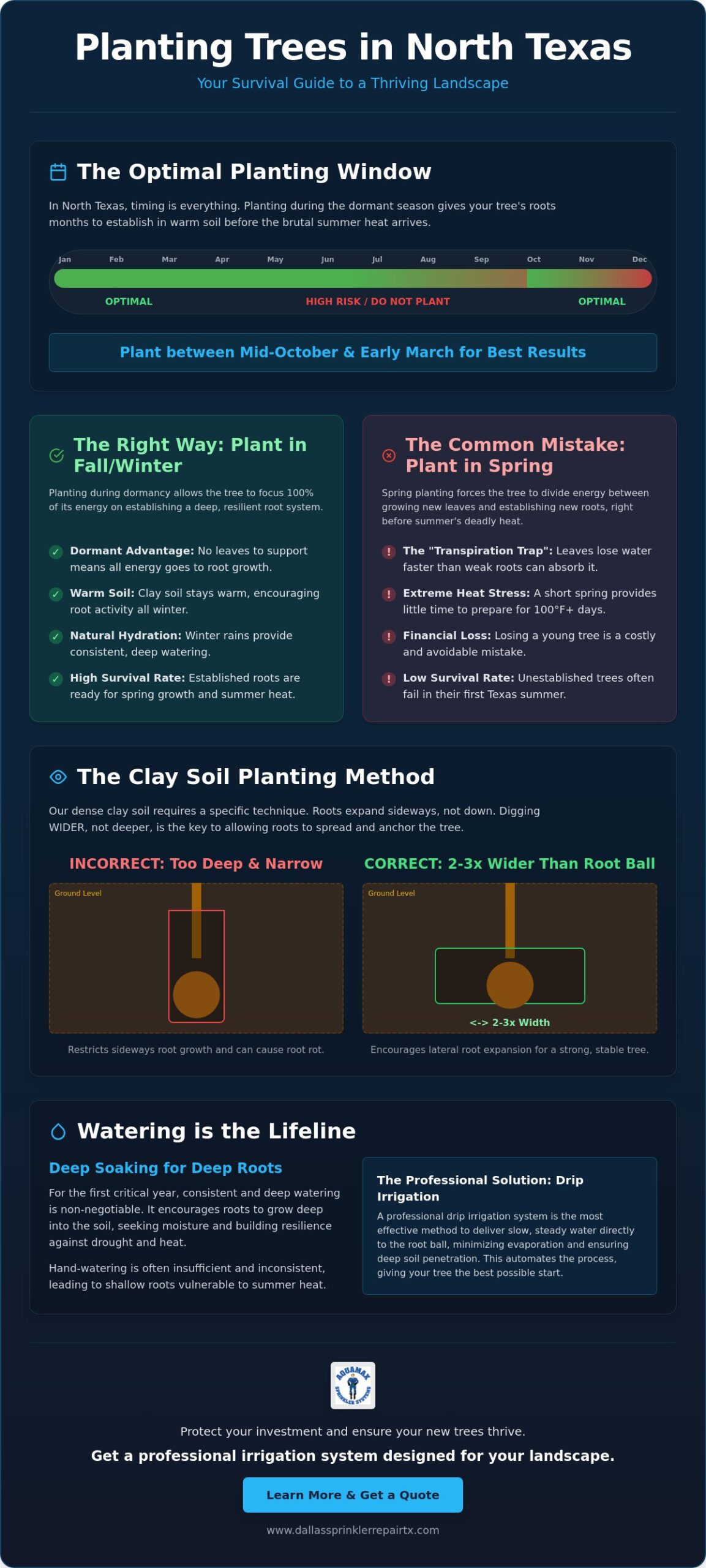
General gardening guides often suggest that spring is the ideal season for new growth, but North Texas operates on a different clock. In our region, the best time to plant trees begins in mid-October and extends through early March. This window isn’t just a suggestion; it’s a strategic necessity for the long-term survival of your landscape. While a tree might look inactive during these cooler months, it’s actually entering a period of intense underground development. By planting during this dormant phase, you allow the root system to settle into the soil without the exhausting demand of supporting new leaves or surviving a July heatwave.
Soil temperature is the hidden factor behind fall planting success. While the air temperature in Dallas drops significantly in November, the heavy clay soil retains heat much longer. This warm subterranean environment keeps roots active even when the canopy is bare. Consequently, a tree planted in November has several months to anchor itself before the first 90-degree day arrives in May. This head start is critical for building the resilience needed to withstand the legendary North Texas summer.
The “Texas Window” vs. the Rest of the Country
Traditional spring planting rules fail in the DFW climate because our “spring” is often remarkably short. A tree planted in April might only have six weeks of mild weather before temperatures spike, leading to immediate stress. In contrast, leveraging the mild North Texas winter provides a massive advantage. You should target a planting weekend following the first significant autumn rain. This moisture softens the dense clay, making the labor easier and ensuring the root ball receives immediate hydration. If you’re planning a larger project, a new sprinkler system installation can be timed perfectly with this window to automate the essential early-stage watering.
The Biological Advantage of Dormant Planting
Dormancy is a tree’s natural defense mechanism, but it’s also a golden opportunity for homeowners. During tree planting in the dormant season, the specimen stops “transpiring,” which is the process of losing water through its foliage. Because the tree isn’t supporting a lush canopy, it can direct 100% of its stored carbohydrates toward root expansion. This biological focus prevents the common issue of transplant shock, where a tree struggles to balance leaf growth with root establishment. Choosing the best time to plant trees ensures that by the time the first spring flush occurs, the root system is already robust enough to pump the necessary water and nutrients to the new buds.
- Fall-planted trees require significantly less supplemental water because evaporation rates are lower in winter.
- Root development continues throughout the winter as long as soil temperatures remain above 40 degrees.
- Winter rains provide consistent, deep hydration that is difficult to replicate with hand-watering during the summer.
Why Summer is the Enemy of New Tree Installations
In Dallas, the transition from a mild spring to a scorching summer happens in the blink of an eye. While many homeowners assume April is the best time to plant trees because of the blooming flowers, they often find themselves caught in the “Transpiration Trap.” This biological crisis occurs when a young tree’s leaves release moisture into the hot air faster than its limited root system can absorb water from the ground. Without the months of root establishment provided by a fall planting, the tree essentially dries out from the inside out. The results are often fatal for the specimen and frustrating for the property owner.
Planting between March and May leaves a dangerously narrow window of roughly 60 days before the first triple-digit temperatures arrive. During this time, the tree is under immense pressure to produce new foliage while simultaneously trying to anchor itself in heavy North Texas clay. If the roots haven’t expanded beyond the original nursery ball before June, the tree faces irreversible cellular damage. This isn’t just a gardening setback; it’s a significant financial risk. With professional tree planting costs often reaching hundreds or even thousands of dollars per specimen, losing a tree to summer heat is an expensive mistake that’s easily avoided with proper timing.
The Impact of the North Texas Heat Index
Dallas summers aren’t just uncomfortable; they’re lethal for unestablished landscapes. When the heat index climbs above 100 degrees, surface-level soil moisture evaporates almost instantly. Most homeowners make the mistake of light, frequent watering that barely penetrates the top inch of soil. New trees require deep hydration that reaches the bottom of the root ball to encourage downward growth. You can identify heat stress by looking for “flagging” leaves, scorched brown edges, or premature leaf drop. If you notice these signs, your tree is already in survival mode and requires immediate intervention.
Managing Evaporation and Soil Temperature
In July and August, unmulched soil can reach temperatures that literally cook new, tender root tips. This thermal stress prevents any further root growth, effectively pausing the tree’s development until the following year. Applying a three-inch layer of organic mulch is a non-negotiable requirement for summer survival in Dallas. It acts as an insulator, keeping soil temperatures stable and slowing evaporation. However, even the best mulch can’t compensate for a lack of water. Ensuring your system is functioning perfectly is vital for protecting your investment. If you’re worried about your coverage, a quick sprinkler system tune-up can prevent a total loss before the peak of summer hits.
While fall remains the best time to plant trees for maximum success, those who choose to plant in spring must be prepared for a rigorous maintenance schedule. The correlation between planting date and summer mortality is clear: the closer you get to June, the higher the risk of failure. Prioritizing root health over early-season foliage is the only way to ensure your new tree survives its first Texas summer.
Species-Specific Timing for North Texas Landscapes
While the broader dormant season is generally the best time to plant trees, different species have nuanced requirements that dictate their success. For Texas natives like Live Oaks, Cedar Elms, and Shumard Oaks, the mid-October to November window is ideal. These varieties are the backbone of the North Texas canopy. They’ve evolved to handle our erratic weather, but they still need that autumn start to develop the deep root structures required for longevity. Deciduous trees, which drop their leaves in winter, are generally more forgiving during the transplant process than their evergreen counterparts because they aren’t actively supporting foliage during the move.
Fruit trees require a slightly different approach. In the DFW area, late winter is the sweet spot for peaches, plums, and pears. Aim for late January or February. This timing is especially critical if you’re working with bare-root trees. These specimens arrive without soil around their roots and must be in the ground before they break dormancy. If you wait until the first buds appear, the survival rate drops significantly. Planting them while they’re fully “asleep” allows the roots to wake up in their permanent home. Selecting the best time to plant trees based on their specific biology ensures you aren’t fighting an uphill battle against the local climate.
Planting Evergreens in the DFW Area
Evergreens like the Little Gem Magnolia or Eastern Red Cedar don’t have a true dormant period like deciduous trees. Because they keep their leaves, they continue to lose moisture all winter. For these species, early fall is superior to late winter. Planting in October gives them enough time to anchor before the harsh freezes of January. This prevents “winter burn,” a condition where the tree’s foliage dries out because the frozen ground prevents roots from replacing lost water. A well-established root system is the only defense against these dry, freezing north winds.
Navigating the North Texas Clay Soil
The “Blackland Prairie” clay found in Dallas and surrounding suburbs presents a unique challenge for new installations. This soil is dense and holds water, which can easily suffocate new roots. One of the biggest mistakes is digging a narrow, deep hole that creates a “clay pot” effect. This trapped water drowns the tree. To avoid this, always dig your hole twice as wide as the root ball but no deeper. In fact, you should plant your tree “high,” with the root flare sitting one to two inches above the surrounding grade. This positioning ensures better oxygen access and prevents rot in heavy clay. If your yard tends to hold water long after a rain, consider a drainage system installation to protect your new investment from root rot.
Irrigation and Drainage: The Lifeline for Your New Tree
Choosing the best time to plant trees is only half the battle. Without a reliable way to deliver moisture to the root zone, your new investment is at the mercy of our erratic weather patterns. Most standard sprinkler systems are designed to keep grass green, using spray heads that provide shallow coverage. This is rarely sufficient for a new tree, which requires deep, concentrated hydration to establish its root system. Surface watering often leads to shallow root growth, making the tree even more vulnerable to the summer heat we discussed in previous sections.
Managing drainage is equally critical in North Texas. Because our soil is predominantly heavy clay, it tends to hold water like a basin. Soggy roots are just as dangerous as dry ones; they lead to root rot and fungal infections that can kill a tree within a single season. Before you plant, you must ensure your yard can move water away from the root ball effectively. A sprinkler system tune up Dallas can verify that your current zones aren’t over-saturating new planting areas while identifying gaps in coverage that need to be addressed.
Drip Irrigation vs. Hand Watering
Low-and-slow water delivery is the most efficient method for root establishment. A professional drip irrigation system installation ensures that water seeps directly into the root ball, minimizing evaporation and runoff. This automation removes the risk of human error during summer vacations or busy weeks. Consistent moisture levels near the tree also help stabilize the soil around your property. This is a vital secondary benefit, as it helps prevent the dramatic soil shifting that often leads to foundation issues in the DFW area.
Solving Drainage Issues Before Planting
You should never ignore standing water in your landscape. Perform a “bucket test” by digging a 12-inch hole and filling it with water. If the water is still there after 12 hours, your soil has poor percolation. In these scenarios, you should implement yard drainage solutions Dallas before you begin your project. French drains or catch basins can redirect excess water away from low-lying areas, preventing the anaerobic conditions that suffocate roots. If you are concerned about the water management on your property, schedule an inspection with our team to ensure your new trees have the healthy environment they deserve.
Step-by-Step Guide to Planting Your Tree This Season
To capitalize on the best time to plant trees, you must follow a precise installation process that respects the density of North Texas soil. Start by selecting a species that matches your property’s specific microclimate. A tree that flourishes in a well-drained lot might fail in the heavy clay typical of the Blackland Prairie. Once you’ve chosen your specimen, focus on the excavation. Dig a hole that is at least twice as wide as the root ball. In our dense clay, width is far more important than depth, as it allows new, tender roots to push through loosened earth more effectively during the first few months.
The most critical step is identifying the root flare. This is the area where the trunk begins to spread out before entering the soil. You’ll often find that nursery trees are buried too deep in their containers; you must brush away the excess soil until the flare is clearly exposed. When backfilling, use the native soil you removed from the hole. Don’t add peat moss or bagged garden soil to the mix. This “no-amendment” rule prevents the roots from staying confined to a small pocket of soft earth, which often leads to girdling. Finally, apply a three-inch layer of mulch, keeping it a few inches away from the trunk, and provide a slow, deep soak to remove air pockets.
Post-Planting Aftercare and Maintenance
While autumn is the best time to plant trees, your success depends entirely on the care they receive during their first year. Your tree’s first 12 months require a disciplined watering schedule. During the dormant winter months, a deep soak every 10 to 14 days is usually sufficient if there hasn’t been significant rain. Once the Texas heat arrives in May, you’ll need to increase this frequency. Avoid the urge to prune your new tree immediately. It needs its full canopy to produce the energy required for root establishment; wait until the second or third year for any major structural cuts. If you’re using stakes for stability, ensure they’re loose enough to allow some movement, which helps the trunk grow stronger over time.
Final Checklist for Success
- Call 811 at least two business days before digging to locate underground utility lines and avoid dangerous accidents.
- Ensure your new sprinkler system installation includes dedicated coverage for your planting site.
- Schedule a sprinkler repair Dallas professional to check for leaks or pressure issues before the summer peak arrives.
- Verify that your mulch layer is thick enough to suppress weeds but thin enough to allow oxygen to reach the root zone.
Secure Your Landscape’s Future Today
Successful tree planting in Dallas requires more than just a green thumb; it demands a strategic understanding of our local climate. By targeting the dormant season between mid-October and early March, you give your new specimens the best chance to establish deep roots before the first 100-degree day. Remember that the best time to plant trees is only effective when paired with proper drainage and a reliable water source. Our team has served the DFW area since 1998, bringing licensed and insured expertise to every project involving North Texas clay soil and complex irrigation needs.
Don’t leave your investment to chance during the next summer heatwave. Ensure your new trees have the lifeline they need with a system designed for deep hydration and long-term vitality. Get a Professional Irrigation Quote for Your New Landscape and gain the peace of mind that comes with expert care. With the right timing and professional support, your property will enjoy a thriving, healthy canopy for decades to come.
Frequently Asked Questions
Is it too late to plant trees in Dallas in the spring?
It’s generally too late to plant trees in Dallas once daytime temperatures consistently exceed 80 degrees, which typically happens by mid-March. While container-grown trees are sold year-round, the best time to plant trees ends before the spring growth flush begins. Planting too late forces the tree to spend energy on foliage rather than the critical root development needed to survive the upcoming summer heat.
How often should I water a newly planted tree in North Texas?
You should water a new tree deeply twice a week for the first year, providing roughly 10 gallons of water per inch of trunk diameter each time. During extreme July and August heat, increase this frequency to three times per week. Use a slow-drip method to ensure the water penetrates the heavy clay soil rather than running off the surface.
Can I plant a tree in the middle of a Texas summer?
No, you should avoid planting trees during the middle of a Texas summer at all costs. The high heat index and rapid evaporation rates create a lethal environment for unestablished root balls. Even with constant watering, the tree will likely suffer from irreversible heat stress. Wait until the best time to plant trees returns in October to ensure your investment survives.
Do I need to add fertilizer when planting a new tree in clay soil?
Don’t add fertilizer to the hole when planting in North Texas clay soil. New trees need to establish roots first, and heavy fertilization can lead to a surplus of foliage that the limited root system can’t support. Instead, use high-quality organic mulch to provide slow-release nutrients and maintain soil moisture levels without risking chemical burn to tender new roots.
How long does it take for a tree to be fully established in Dallas?
A tree is considered fully established when its root system has spread significantly beyond the original planting hole, which usually takes one year per inch of trunk caliper. For most residential trees, this means a two-year commitment to supplemental watering and monitoring. Until this period is complete, the tree remains vulnerable to drought and the extreme temperature fluctuations common in the DFW area.
What are the best drought-tolerant trees for the DFW area?
Native species like the Bur Oak, Pecan, and Mexican Plum are among the most drought-tolerant options for DFW landscapes. These trees are uniquely adapted to the alkaline clay and erratic rainfall patterns of North Texas. Once established, they provide excellent shade and require significantly less supplemental water than non-native ornamental species, lowering your long-term maintenance costs and water usage.
Should I remove the burlap and wire cage from the root ball?
Remove all twine, the top third of the wire cage, and any burlap from the upper portion of the root ball once the tree is in place. This allows the roots to grow laterally into the surrounding soil without obstruction. Leaving synthetic burlap or wire intact can girdle the trunk and eventually kill the tree as it attempts to expand in diameter.
Why is my newly planted tree losing leaves in the summer?
Your tree is likely losing leaves as a survival mechanism to combat moisture stress or poor drainage. When roots can’t keep up with the water lost through the leaves, the tree sheds foliage to conserve resources. This can be caused by underwatering in the heat or root rot from standing water. Inspect your soil moisture levels immediately to determine the specific cause.