

Article by
Robert Maxvill
Owner of Aquamax Sprinkler Systems, American Sprinkler Repair and Dallas Drainage Systems.
That small patch of damp grass in your yard isn’t just a nuisance; it’s a direct threat to your home’s structural integrity. In the heavy clay soil of North Texas, water doesn’t just sit; it forces the ground to expand and contract, putting immense pressure on your pipes and your slab. You’ve likely noticed the skyrocketing water bills or the sudden swarm of mosquitoes near your flowerbeds and felt that familiar sense of dread. It’s frustrating to watch your money disappear into the ground while worrying if an underground break is quietly shifting your foundation. We understand that Sachse homeowners need more than a quick patch; they need a reliable solution that stands up to our unique environmental challenges.
This guide provides the professional insight you need to fix sprinkler system leak Sachse issues before they escalate into catastrophic repairs. You’ll learn how to identify the subtle signs of irrigation failure, navigate the city’s strict two-day-a-week summer watering schedule, and implement expert solutions that restore your system’s efficiency. We will cover everything from diagnosing cracked valves to the long-term benefits of smart controllers. By the end of this article, you’ll have a clear roadmap to protect your property, save water, and regain your peace of mind through professional precision.
Key Takeaways
- Identify the critical warning signs of underground failure, including localized swampy patches and unexplained utility bill spikes.
- Understand how Sachse’s shifting “Blackland Prairie” clay soil and extreme temperature cycles compromise the integrity of your PVC pipes.
- Discover the precision methods used to fix sprinkler system leak Sachse experts rely on, such as zone-by-zone pressure testing and electronic leak detection.
- Learn why Texas licensing requirements and professional irrigation certification are essential for protecting your property from the risks of improper DIY repairs.
- Realize the vital connection between a well-maintained irrigation system and the long-term stability of your home’s foundation.
Signs You Need to Fix a Sprinkler System Leak in Sachse
In the expansive clay soils of North Texas, a sprinkler leak is rarely just a plumbing issue. It is a direct threat to your home’s structural integrity. When water saturates the heavy “Blackland Prairie” soil near your house, the ground expands unevenly, creating immense pressure against your slab. Taking immediate action to fix sprinkler system leak Sachse issues prevents these structural complications while stopping the rapid waste of a precious resource. Identifying the problem early is the difference between a simple component replacement and a massive foundation repair bill.
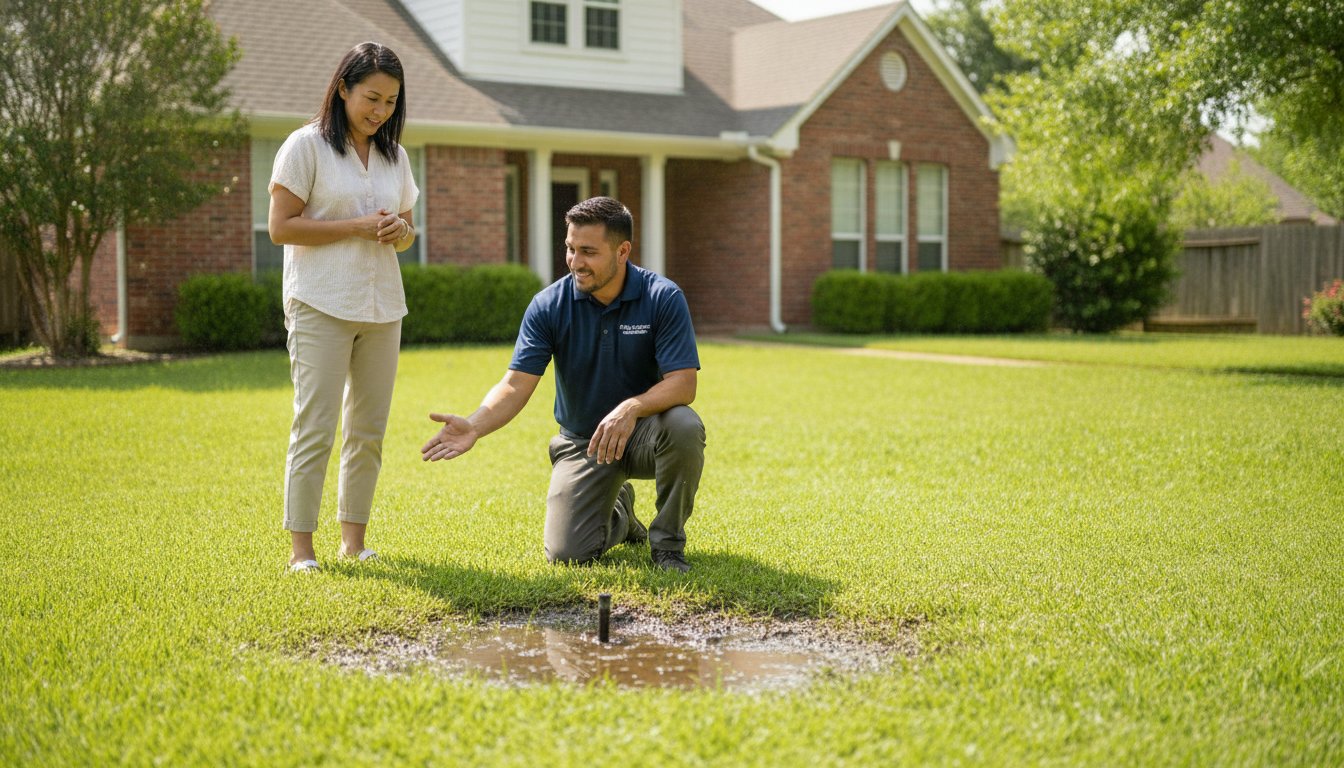
The most obvious red flag is often found in your mailbox. A sudden, unexplained spike in your monthly water bill suggests that water is escaping somewhere in the line, even when the system isn’t running. You might also notice “swampy” patches or standing water in specific zones. These saturated areas often attract mosquitoes and create a slip hazard on your lawn. To better understand how to address these visible failures, watch this helpful video:
Look for localized areas of dark green, overgrown grass that seem to thrive more than the rest of your lawn. While it looks healthy, this “super-growth” is a sign of a constant underground water source. Additionally, pay attention to the performance of your spray heads. Low water pressure, or heads that “weep” water and fail to retract fully, indicates a loss of pressure within the lateral lines. Gaining a basic understanding of how sprinkler systems work helps you realize that these symptoms are often connected to a single breached pipe or a failing valve.
Hidden Symptoms of Underground Leaks
Not all leaks create a puddle. You can confirm an irrigation-side leak by checking your water meter when all indoor faucets are off; if the low-flow indicator is spinning, you have a problem. Listen closely near your valve boxes or backflow preventer for faint hissing sounds, which often signal a cracked housing. In our dry seasons, keep an eye out for unusual cracks in the soil or heaving pavement near your lateral lines. If you suspect an issue, scheduling professional irrigation repair is the most reliable way to pinpoint the break without digging up your entire yard.
The Sachse Water Bill Reality
Sachse maintains strict watering schedules, typically limited to two days per week during the summer. A leaking system can quickly put you in a state of non-compliance, leading to potential fines alongside high utility costs. The volume of waste is staggering. A pinhole leak measuring only 1/32 of an inch can waste more than 6,000 gallons of water in a single month. Addressing these leaks promptly ensures you stay within local regulations and protects your wallet from the high cost of treated North Texas water.
Why Irrigation Leaks Occur in North Texas Clay Soil
Sachse sits atop the Blackland Prairie. This isn’t just a geographic label; it describes a specific type of highly expansive clay soil that defines our region. This soil behaves like a geological sponge. When it rains, the clay swells with immense force. During a typical North Texas drought, it shrinks and creates deep fissures. This constant mechanical movement acts like a slow-motion vice on your underground infrastructure. Eventually, rigid PVC pipes reach their breaking point and snap. If you need to fix sprinkler system leak Sachse issues, understanding this geological pressure is the first step toward a permanent solution.
Our climate is equally brutal on synthetic materials. While plastic sprinkler components might last fifteen years in milder regions, the extreme UV exposure and high temperatures in the Dallas-Fort Worth area cause plastic to become brittle. Research indicates that components here often fail within five to seven years. This heat stress, combined with the high municipal water pressure found in newer Sachse subdivisions, creates a “perfect storm” for component failure. Native Texas trees like Oaks and Pecans also play a role. During dry spells, their aggressive root systems seek out the moisture inside your lines, exerting enough force to crush pipes or infiltrate joints.
Soil Shifting and Pipe Stress
Seasonal drought cycles do more than just turn your grass brown. They create ground movement that physically pulls lateral lines apart. Swing joints and head connections are particularly vulnerable because they sit closer to the surface where soil movement is most violent. Leaks occurring near your home’s perimeter are the most dangerous. Saturated clay can heave against your slab, leading to foundation shifting that costs far more than a simple pipe repair. If you notice dampness near your walls, it’s time to consult an expert in irrigation repair to protect your home’s structural integrity.
Material Fatigue and Aging Systems
Most irrigation components in the Dallas-Fort Worth climate reach their functional limit after a decade of service. If your valves are constantly sticking or failing to close, the internal diaphragms have likely succumbed to material fatigue. Older systems using poly-pipe are also susceptible to chemical degradation from treated city water. This process slowly weakens the pipe walls until they burst under the high pressure required to maintain a healthy landscape in our heat.

DIY vs. Professional Sprinkler Repair: What Homeowners Should Know
A quick online tutorial might make a pipe repair look simple. However, the reality of trying to fix sprinkler system leak Sachse issues without professional training often leads to compounding failures. While a homeowner can easily swap out a clogged nozzle or clear debris from a spray head, digging into the main line or the valve manifold is a different level of complexity. One small mistake in pipe priming or a mismatched fitting can cause a secondary burst that ruins your yard and doubles your repair costs. Professional intervention ensures that the hydraulic pressure is balanced and the structural integrity of the system remains intact.
In the state of Texas, the law is clear about who can work on these systems. Anyone who installs, maintains, or repairs an irrigation system for a fee must be licensed by the Texas Commission on Environmental Quality (TCEQ). This certification isn’t just a piece of paper; it’s your guarantee that the technician understands water conservation, backflow prevention, and the local codes specific to our region. Hiring a licensed professional also provides access to commercial-grade parts and warranties that big-box retail stores simply don’t offer. You gain peace of mind knowing the components used are designed to withstand the high-pressure demands of a North Texas summer.
When to Call a Licensed Irrigator
Complex issues require specialized diagnostic tools that the average homeowner doesn’t have in their garage. You should always call a professional for:
- Valve Manifold Repairs: Managing the intricate “brain” of your system where multiple zones connect.
- Wiring Faults: Diagnosing electrical shorts between the controller and the solenoid valves.
- Backflow Testing: Ensuring your irrigation water never contaminates your home’s clean drinking supply, which requires state-mandated annual testing.
- Hard-to-Reach Leaks: Pinpointing breaks located beneath driveways, sidewalks, or mature tree roots without causing unnecessary property damage.
The Danger of ‘Band-Aid’ Fixes
Duct tape, improper clamps, or low-grade glue have no place in a high-pressure irrigation trench. These “Band-Aid” fixes might stop a leak for a few hours, but they inevitably fail under the weight of shifting clay soil. Professionals use pressure-rated PVC, specific primers, and solvent cements designed to create a chemical bond that is stronger than the pipe itself. Investing in professional irrigation repair saves money in the long run by eliminating the need for repetitive, failed DIY attempts and protecting your landscape from the damage of a sudden, high-volume blowout.
The Aquamax Process: How We Fix Sprinkler Leaks in Sachse
Professional repair is a methodical process that eliminates the guesswork associated with DIY attempts. When our team arrives to fix sprinkler system leak Sachse issues, we don’t start by digging aimlessly. We begin with a systematic, zone-by-zone pressure test. By attaching specialized gauges to the system, we observe real-time pressure drops that confirm which lateral line is breached. This data-driven approach allows us to isolate the failure point without disturbing healthy sections of your landscape, ensuring our work is as non-invasive as possible.
For leaks that aren’t immediately visible on the surface, we utilize electronic leak detection equipment. These high-frequency acoustic tools allow us to hear the specific sound of water escaping a pressurized pipe deep underground. This level of precision is essential in North Texas, where water often travels along clay fissures and surfaces far from the actual break. By pinpointing the exact location of the rupture, we keep our excavation footprint small and efficient, which protects your yard and speeds up the restoration process.
Diagnostic Phase and Pressure Testing
Our diagnostic phase goes beyond simply finding a hole in a pipe. We perform a comprehensive sprinkler system tune-up to evaluate the health of your entire irrigation network. This includes testing the electrical continuity of your controller and solenoids to ensure the electronic “brain” of your system is communicating correctly with the valves. We often find that a leak is merely a symptom of a larger pressure imbalance that needs adjustment to prevent future bursts in other zones.
Precision Repair and Restoration
Once the leak is isolated, we perform a surgical excavation. We carefully remove the grass and set it aside to preserve the root structure. After exposing the damaged section, we use industrial-grade solvent welds to install new, pressure-rated PVC piping that meets or exceeds original manufacturer specifications. If the issue stems from an outdated valve, we replace it with a modern, high-efficiency model that offers superior flow control. Final restoration is just as critical; we utilize professional sod installation techniques to return your lawn to its original condition, tamping the soil to prevent future settling.
If you want to stop the water waste and protect your property with a permanent fix, contact our licensed specialists today for a professional evaluation.
Protecting Your Sachse Property with Expert Irrigation Care
Maintaining a functional irrigation system is about more than just keeping your grass green. In North Texas, the primary role of a sprinkler system is often foundation protection. When you fix sprinkler system leak Sachse issues, you aren’t just stopping a puddle; you’re ensuring that the moisture levels around your home remain consistent. Uneven moisture is the leading cause of slab failure in our region. By keeping the clay soil hydrated but not saturated, you prevent the dramatic shifting that leads to interior wall cracks and stuck doors. A well-tuned system acts as a shield for your largest financial investment.
Beyond structural safety, professional care directly impacts your monthly overhead. Efficient systems use less water to achieve better results, significantly lowering your utility bills over time. This efficiency also preserves the local water supply, which is critical given the increasing frequency of drought restrictions in Collin and Dallas counties. A lush, vibrant landscape significantly boosts your property’s curb appeal and market value. It creates a welcoming environment that reflects a well-maintained home, making regular irrigation maintenance one of the most cost-effective upgrades a homeowner can prioritize.
Long-Term Prevention Strategies
Proactive upgrades are the best defense against future system failures. We recommend installing rain and freeze sensors to automatically shut down your system during inclement weather, preventing both water waste and pipe damage from ice expansion. For those concerned about foundation health, a drip irrigation system installation provides a slow, steady release of water directly to the soil near your slab. This targeted approach is far more effective than surface spraying for stabilizing the ground. Scheduling seasonal check-ups allows our technicians to catch small leaks before they escalate into major underground breaks.
Why Choose Aquamax for Your Sachse Home?
Aquamax has been the trusted name in DFW irrigation since 1998, providing reliable solutions to thousands of local families. We refuse to cut corners, using only high-grade commercial parts and fully licensed technicians for every job. Our team understands the specific environmental pressures of the Sachse area and tailors every repair to meet those needs. This deep-rooted local expertise ensures that your system doesn’t just work today, but continues to perform for years to come. Since 1998, Aquamax has provided the Dallas-Fort Worth area with premier irrigation solutions backed by over 25 years of specialized local expertise.
Don’t let a hidden leak compromise your home’s foundation or your peace of mind. You can read our customer reviews to see why your Sachse neighbors have relied on us for decades. We take pride in our reputation for honesty, speed, and technical excellence. Contact us today for a professional leak evaluation and take the first step toward a more resilient, efficient landscape.
Protect Your Home and Landscape with Professional Precision
Ignoring a damaged irrigation line does more than inflate your water bill; it puts your home’s foundation at risk. You now understand how the shifting clay soil of the Blackland Prairie can snap rigid PVC and why localized swampy patches are urgent warning signs. Choosing to fix sprinkler system leak Sachse issues with professional help ensures your repairs meet Texas licensing standards and withstand our extreme climate cycles. It’s the most reliable way to prevent the costly structural damage and water waste that often follows a failed DIY attempt.
Since 1998, our team has served as the premier choice for North Texas homeowners seeking reliable, long-term results. Our licensed and insured technicians are specialists in foundation-saving irrigation, using commercial-grade components that outperform retail alternatives. We bring the calm confidence of decades of local expertise to every property, handling the burden of maintenance so you can enjoy a lush, healthy lawn without the stress of hidden leaks.
Stop the waste and save your lawn—Schedule your Sachse sprinkler repair today!
Take the proactive step toward a more efficient and stable property. We look forward to helping you restore the vitality of your Texas landscape.
Frequently Asked Questions
How much does it usually cost to fix a sprinkler leak in Sachse?
The total investment for a repair varies based on the complexity of the break and the specific parts required for a permanent fix. Simple head replacements are less intensive than excavating a main line buried deep in heavy clay soil. We focus on providing a transparent assessment of your system’s condition. This ensures you only pay for the necessary components and labor required to restore your system to peak efficiency.
Can a sprinkler leak cause my foundation to crack?
Yes, a constant underground leak can lead to foundation cracks and significant structural shifting. The heavy clay soil in Sachse expands when saturated, creating “heave” that exerts thousands of pounds of pressure against your slab. Consistent moisture levels are vital for foundation stability. Addressing these leaks immediately prevents the soil from swelling unevenly and compromising your home’s integrity.
How do I find a sprinkler leak underground?
You can locate a hidden leak by looking for localized swampy patches, unusually green grass, or checking your water meter’s low-flow indicator while the system is off. Professionals use electronic acoustic equipment to fix sprinkler system leak Sachse issues by listening for the specific sound of pressurized water escaping. This technology pinpoints the break without the need for extensive, destructive trenching across your entire lawn.
Is a leaking sprinkler head a big deal?
A single leaking head may seem minor, but it can waste thousands of gallons of water over a single season. This constant “weeping” often signals a failing valve diaphragm that isn’t closing completely. Beyond the high utility bills, the persistent moisture can rot the surrounding turf and create a breeding ground for pests like mosquitoes. It’s an efficiency problem that requires a quick professional fix.
Why is my sprinkler valve box full of water?
Water in a valve box usually indicates a loose fitting, a cracked valve body, or a worn-out internal diaphragm. Because the valve box is a low point in the system, water naturally collects there when a component fails to seal properly. You should have a licensed technician inspect the manifold to identify which specific valve is leaking before the standing water causes electrical shorts in the wiring.
Does homeowner’s insurance cover sprinkler system leaks?
Most standard homeowner’s insurance policies don’t cover the repair of the sprinkler system itself, as it’s considered routine maintenance. However, if a sudden pipe burst causes significant water damage to your home’s structure or foundation, you might have a claim for the resulting damage. You should review your specific policy or speak with your agent to understand your coverage limits regarding outdoor irrigation failures.
How long does a typical sprinkler repair take?
Most common repairs, such as replacing a single valve or fixing a lateral line break, are completed within two to four hours. More complex projects involving multiple zones or electronic leak detection may require a full day of work. Our goal is to fix sprinkler system leak Sachse problems efficiently so your watering schedule remains uninterrupted and your landscape stays hydrated during the peak summer heat.
Can I fix a broken sprinkler pipe myself?
While a homeowner can technically patch a pipe, improper DIY repairs often lead to secondary bursts due to incorrect primer usage or mismatched pressure ratings. Texas law requires anyone performing irrigation repairs for a fee to be licensed by the TCEQ. Hiring a professional ensures the repair is hydraulically sound and compliant with local codes. It protects your property from the risks of recurring failures.