


Article by
Robert Maxvill
Owner of Aquamax Sprinkler Systems, American Sprinkler Repair and Dallas Drainage Systems.
Did you know that outdoor watering can account for more than 50% of your total residential water use during a North Texas summer? With 89% of the state in a state of drought as of March 2026, keeping a lawn green in Dallas is a serious challenge. It’s frustrating to watch your yard turn brown or struggle in the deep shade of an oak tree, especially when you’re trying to choose between different types of grass while facing strict twice-weekly watering limits.
You deserve a landscape that remains vital and resilient without causing your utility bills to skyrocket. We understand the unique challenges of the DFW climate and the pressure to maintain a beautiful property despite environmental restrictions. Use this guide to identify the most durable turf varieties for our region and learn how to keep them healthy with efficient irrigation. We’ll break down the best options for sun and shade so you can make an informed decision that ensures your lawn survives the heat and thrives for years to come.
Key Takeaways
- Learn why warm-season grasses are the essential standard for surviving the intense Dallas and Plano heat.
- Identify the specific performance traits of different types of grass. This ensures you select a variety that matches your yard’s sun and shade levels.
- Discover how adjusting your mowing height and irrigation schedule based on your specific turf type can significantly lower your water bill.
- Map your yard’s unique sun exposure and lifestyle needs to ensure you choose a variety that stands up to kids, pets, and oak tree shade.
- Understand why professional soil preparation and nutrient enrichment are the most critical steps before installing new sod.
Understanding Warm-Season vs. Cool-Season Grass in North Texas
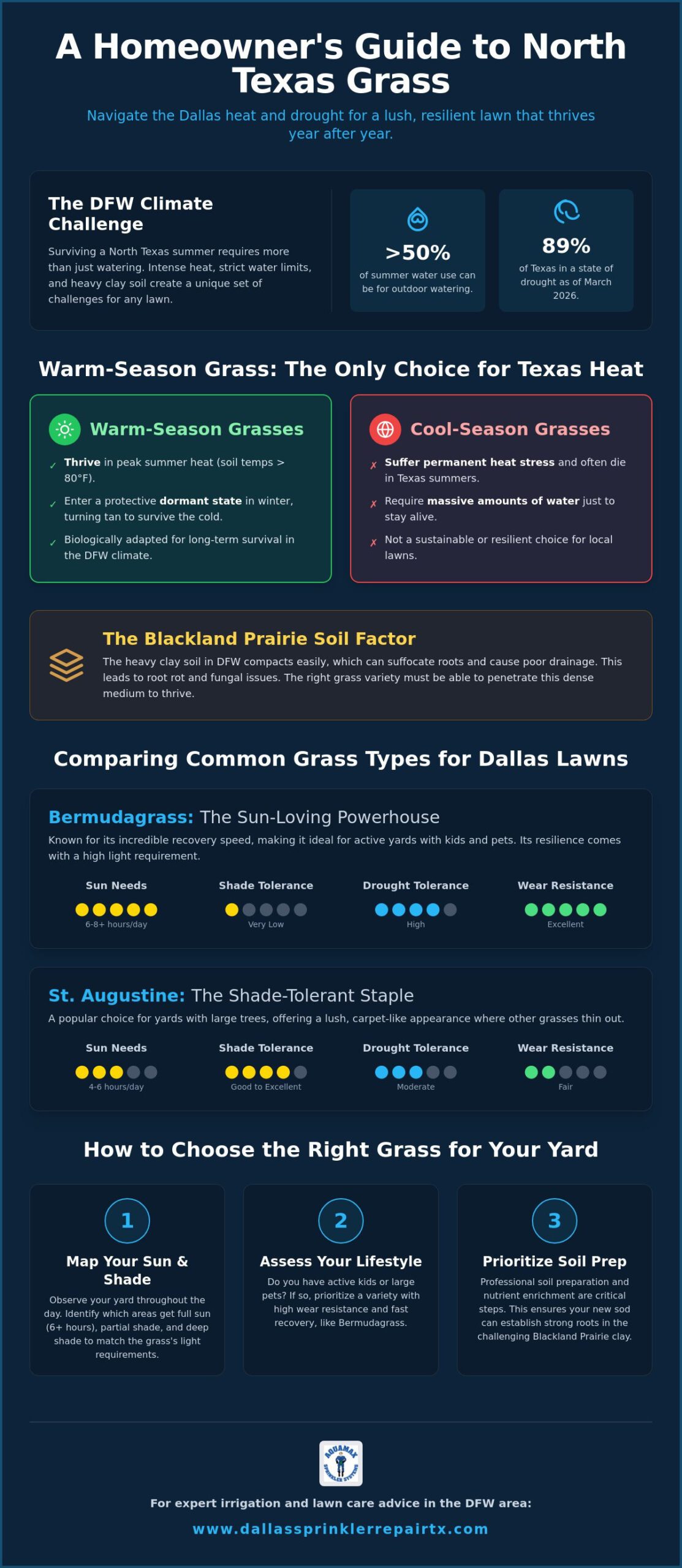
Choosing the right turf for a Dallas yard isn’t just about color. It’s about biology. Warm-season grasses are the standard for Dallas, Plano, and Frisco lawns because they thrive when the mercury hits triple digits. Unlike cool-season varieties that peak in spring, these grasses reach their full potential during the peak of summer and enter a protective dormant state when winter arrives. This natural cycle is what allows them to survive the intense Texas sun year after year.
To better understand how these different types of grass perform in our climate, watch this helpful video:
In the DFW transition zone, air temperature is only half the story. Soil temperature actually dictates root health and nutrient uptake. Cool-season grasses like Fescue or Kentucky Bluegrass often struggle here because they require massive amounts of water just to stay alive during a Texas July. They don’t just go dormant like their warm-season counterparts; they often suffer permanent heat stress and die. For a truly resilient yard, you need species like St. Augustine grass or Bermudagrass that can handle soil temperatures exceeding 80 degrees without failing.
The 2026 Outlook for Texas Lawns
As we move through 2026, rising summer temperatures are shifting how homeowners think about sod installation. The focus has moved from purely aesthetic choices to water-efficient varieties that prioritize long-term survival. Local homeowners are increasingly looking for turf that enters heat dormancy, a state where the grass turns tan to protect its root system, rather than varieties that simply perish during a dry spell. This shift is essential as 89% of Texas remains in a state of drought as of March 2026. Prioritizing these hardy varieties helps ensure your landscape remains a vital asset rather than a liability.
The Blackland Prairie Soil Factor
The heavy clay soil found in McKinney and Carrollton presents its own unique set of challenges for local turf. This “Blackland Prairie” soil compacts very easily, which can quickly suffocate root systems. When you’re evaluating different types of grass, you must consider how well each variety can penetrate this dense, heavy medium. Poor drainage can be just as damaging as a lack of water. Standing water trapped in clay soil often leads to root rot and fungal issues that can destroy a lawn in weeks. A healthy landscape requires a professional balance between a robust irrigation system and a yard designed for proper drainage.
The Most Common Grass Types for Dallas-Fort Worth Lawns
Selecting a turf variety requires more than just picking a shade of green. You must match the biological needs of the plant to the specific microclimate of your yard. In North Texas, homeowners typically choose between four primary species, each offering distinct advantages for different environmental conditions. According to the Texas A&M AgriLife Extension on Turfgrasses, selecting a variety adapted to our specific heat zone is the first step in ensuring a healthy landscape.
Understanding the strengths of these different types of grass allows you to invest your maintenance budget where it matters most. Whether you need a native, low-water option or a premium, carpet-like finish, the following varieties represent the best performers in the Dallas-Fort Worth area. Choosing the wrong species often leads to expensive repairs and wasted water, so precision at the start is vital.
Bermudagrass: Pros and Cons
Bermudagrass is a powerhouse in the Texas sun. It’s known for its incredible recovery speed, which makes it the ideal choice if you have large dogs or children playing outside. However, this resilience comes with a high light requirement. Bermuda needs at least 6 to 8 hours of direct sunlight to maintain its density. If it’s planted in too much shade, it will quickly thin out and allow weeds to take over. Bermudagrass is the most resilient option for DFW sports fields and active backyards. For homeowners looking to maximize drought resistance, newer cultivars like TifTuf are becoming the preferred choice for professional sod installation projects because they use significantly less water than older varieties.
St. Augustine: The Shade Contender
If your property is dominated by mature oak trees, St. Augustine is likely your best bet. Its wide, coarse blades create a lush, deep-green carpet that feels exceptionally soft underfoot. While it handles dappled shade better than Bermuda, it has higher water requirements and is more susceptible to pests like chinch bugs. In neighborhoods across Richardson and Garland, varieties such as Floratam and Palmetto are common. These cultivars offer improved cold hardiness, which is vital for surviving the occasional North Texas ice storm. You must monitor these lawns closely during dry spells, as they show signs of wilt much faster than other different types of grass.
Zoysia: The Best of Both Worlds
Zoysia grass is often considered the premium choice for luxury landscapes. It provides a dense, soft texture that rivals St. Augustine but offers durability closer to Bermudagrass. While it grows more slowly, meaning you’ll spend less time mowing, it also takes longer to recover from heavy damage. Its high drought tolerance makes it a perfect match for modern, water-efficient irrigation setups. When evaluating your options, Zoysia is frequently the top recommendation for its aesthetic appeal and long-term vitality. It maintains a deep green color longer into the fall and is remarkably resistant to many common lawn diseases found in the Blackland Prairie soil.
Buffalograss: The Native Alternative
For eco-conscious homeowners, Buffalograss offers a truly native solution. This grass is naturally adapted to the Texas climate and requires very little supplemental water once established. It has a thinner, blue-green appearance and doesn’t handle heavy foot traffic as well as Bermuda. However, for low-use areas of your property, it provides a sustainable way to maintain a green space without the high utility costs associated with traditional turf.
Comparing Maintenance and Irrigation Needs for Texas Turf
Every lawn has a unique “thirst” profile that dictates how you should manage your water resources. In North Texas, your maintenance schedule must adapt to the different types of grass you’ve planted to ensure long-term vitality. St. Augustine requires significantly more water than Bermudagrass to maintain its lush appearance, especially when temperatures soar. Zoysia sits in the middle, offering moderate drought tolerance but requiring consistent moisture to stay dense. Understanding these specific needs is the first step toward reducing your utility bills while keeping your yard green.
Mowing heights are equally critical for turf health. You should keep Bermudagrass short, typically between 1 and 2 inches, to encourage lateral growth and density. Conversely, St. Augustine thrives when left taller, around 3 to 4 inches, which helps shade its roots and retain soil moisture. Your fertilization schedule should follow the North Texas growing season, beginning in March and concluding in October. The specific variety you choose directly influences the calibration we perform during a sprinkler system tune up Dallas homeowners utilize to maximize irrigation efficiency.
Irrigation Zone Calibration
Efficiency starts with proper zoning. You shouldn’t mix Bermuda and St. Augustine on the same irrigation zone because their water requirements are fundamentally different. If you water for the needs of St. Augustine, you’ll likely over-saturate your Bermuda. Set your controller for “deep and infrequent” watering to encourage roots to reach further into the clay soil for moisture. This method builds a more resilient lawn that can survive the 2026 drought conditions. For flower beds adjacent to your turf, a drip irrigation system installation provides targeted hydration that protects your landscape and foundation without wasting water on the sidewalk.
Common Local Pests and Diseases
The thick humidity of a DFW spring can trigger Large Patch, also known as Brown Patch, in St. Augustine lawns. This fungal issue appears as circular discolored areas and is often exacerbated by poor drainage. Bermudagrass owners must stay vigilant against Grub worms and Armyworms, which can devastate a healthy yard in a matter of days. While Zoysia is remarkably hardy, its dense growth habit means proper drainage is essential to prevent moisture from becoming trapped at the soil level. Monitoring these different types of grass for early signs of stress allows for professional intervention before the damage becomes permanent.
How to Choose the Right Grass for Your Specific Yard Layout
Your property’s layout is the ultimate architect of your lawn’s success. Choosing between different types of grass requires a realistic assessment of your property’s daily sun exposure and how you intend to use the space. A yard dominated by a sprawling swimming pool and active dogs needs a completely different strategy than a quiet front yard framed by 50-year-old trees. You must map your yard into specific zones based on light levels and high-traffic areas before making a final selection.
Aesthetic preference also plays a major role in your decision. Some homeowners prefer the fine, needle-like texture of Bermudagrass, while others want the wide, coarse blades of St. Augustine for a more traditional look. Regardless of your visual preference, your choice must align with local watering restrictions. In Dallas, you are limited to twice-weekly watering with automatic systems, so your grass must be able to thrive within those parameters. Selecting a variety that doesn’t match your yard’s sun-to-shade ratio is the fastest way to end up with bare dirt and expensive repair bills.
The Shade Test for Dallas Homeowners
In neighborhoods like Highland Park and North Dallas, mature Live Oaks create significant challenges for turf. If your yard is under a heavy canopy, St. Augustine or certain Zoysia cultivars are your only viable options for long-term survival. Some homeowners in Highland Park have found success with “no-mow” fescue mixes for deep shade, though these require more water during the peak of summer. It’s a biological reality that no grass survives in 100% total darkness, regardless of the species. If you have areas where the sun never reaches the ground, consider alternative landscaping or thinning your tree canopy to allow dappled light through.
Durability vs. Maintenance
Bermudagrass is the undisputed champion for high-traffic zones. If you have a pool surround or a designated play area for children, Bermuda’s ability to self-repair makes it the most practical choice. It fills in bare spots quickly, though it does require more frequent mowing to stay dense. If you prioritize curb appeal with less weekly labor, Zoysia is often the “set it and forget it” choice for front yards. It grows slowly and maintains a manicured look for longer periods, providing a premium aesthetic without the constant maintenance. Balancing the cost of more frequent mowing with the benefit of a faster-healing lawn is a trade-off every homeowner must evaluate.
Once you’ve identified the best fit for your yard’s unique layout, the next step is ensuring the ground is ready for a successful transition. If you’re ready to transform your landscape with the right turf variety, contact us for professional sod installation to ensure your new lawn has the foundation it needs to thrive.
Professional Sod Installation: Transitioning to a Lush, Healthy Lawn
Timing is everything during a transition. We often coordinate fresh turf delivery with a new sprinkler system installation to ensure immediate hydration. Once the sod is laid, the first 14 days represent a critical window. During this period, the lawn requires frequent, light watering to keep the root zone moist without over-saturating the clay. Failure to manage this delicate balance can result in a failed investment before the first month is over. Our team monitors these early stages to ensure the grass knits into the soil properly.
Why DIY Sod Often Fails in Texas
Many homeowners attempt to lay their own sod to save on upfront costs, but the results often prove expensive in the long run. One of the most common issues is the formation of air pockets between the sod and the soil. These pockets prevent necessary root-to-soil contact, causing the grass to dry out and die from the bottom up. In the intense Dallas sun, this often manifests as “fried” edges where the seams of the sod pallets pull apart and turn brown. Hiring established sod installation companies Dallas residents trust provides a level of precision that DIY projects lack. Professional installation typically comes with a warranty-backed result, giving you peace of mind that your investment is protected.
The Aquamax Advantage
Our team provides a comprehensive approach that bridges the gap between turf selection and technical irrigation. We understand how different types of grass interact with specific watering schedules and local soil conditions. Beyond just laying the grass, we evaluate your property for potential water issues. We integrate yard drainage solutions Dallas homeowners need to prevent standing water from rotting new root systems. This dual focus on vitality and mechanical excellence ensures your lawn remains a lush, functional asset for your home. Contact us today for a thorough evaluation of your lawn and irrigation needs.
Secure the Future of Your Dallas Landscape
Choosing between different types of grass is the first step in creating a sustainable, beautiful yard. By matching your turf to your property’s specific light levels and your family’s lifestyle, you ensure your lawn survives the 2026 drought conditions. Remember that even the hardiest Bermudagrass or shade-tolerant St. Augustine requires precision irrigation and proper drainage to truly thrive in our heavy clay soil. Professional installation ensures that your new sod establishes deep roots quickly, protecting your investment from the intense summer heat.
Since 1998, our team has helped DFW homeowners navigate these challenges with custom drainage and irrigation integration. Our licensed and insured technicians understand the local environment better than anyone else in the region. We don’t just lay sod; we build a foundation for long-term vitality that respects local watering limits and enhances your property’s value. Get a Professional Sod and Irrigation Quote from Aquamax today to transform your yard into a resilient, lush oasis. You can have the greenest lawn on the block without the stress of failing turf or high water bills.
Frequently Asked Questions
What is the best grass for shade in Dallas?
St. Augustine is the most reliable option for shaded North Texas yards. It handles the dappled light under mature oak trees better than most different types of grass available in our region. Specifically, varieties like Palmetto offer improved shade tolerance and cold hardiness. If St. Augustine isn’t your preference, certain Zoysia cultivars also perform well in moderate shade while requiring slightly less water than traditional varieties.
Can I mix different types of grass in my yard?
We advise against mixing grass species within the same irrigation zone. Different varieties have conflicting requirements for water, fertilizer, and mowing heights. Mixing Bermuda with St. Augustine often results in a patchy, uneven landscape where one species eventually outcompetes the other. For a uniform and healthy appearance, stick to a single variety that matches your yard’s primary environmental conditions and sun exposure levels.
How often should I water new sod in North Texas?
New sod requires multiple light watering sessions per day for the first 10 to 14 days. You must keep the soil and the root mat consistently moist to prevent the edges from drying out and shrinking in the Texas sun. Once the roots begin to knit into the soil, you can transition to a deep and infrequent watering schedule. This encourages deeper root growth and helps your lawn comply with local Dallas watering restrictions.
What is the most drought-tolerant grass for the DFW area?
Bermudagrass is the champion of drought tolerance in the North Texas region. Cultivars like TifTuf are specifically bred to remain green with significantly less water than traditional varieties. Native Buffalograss is another excellent low-water alternative, though it doesn’t handle heavy foot traffic as well as Bermuda. These different types of grass are essential choices for homeowners looking to maintain a green yard while reducing their summer utility bills.
Why is my Bermuda grass turning brown in the winter?
Your Bermuda grass is simply entering its natural state of dormancy. As a warm-season grass, it stops active growth and turns tan when soil temperatures drop to protect its root system from freezing. This is a vital survival mechanism, not a sign of death. The lawn will recover its green color once temperatures consistently rise in the spring. Avoid over-watering dormant grass, as this can lead to fungal issues.
When is the best time of year to install new sod in Texas?
Spring and early fall are the optimal windows for sod installation in Dallas and Fort Worth. Planting in late March through May allows the grass to establish a robust root system before the extreme July heat arrives. Alternatively, September and October offer milder temperatures that promote root growth without the high evaporation rates of mid-summer. We recommend avoiding installation during the deepest winter months when the grass cannot actively root.
Is Zoysia grass worth the extra cost for a Dallas home?
Zoysia is a worthwhile investment for homeowners seeking a premium, low-maintenance landscape. While the initial cost of the sod is higher, its slow growth rate means you’ll spend less time mowing throughout the season. It provides a dense, carpet-like texture that is highly resistant to weeds and handles the Texas heat with remarkable efficiency. This variety offers a perfect balance of luxury aesthetics and functional durability for modern DFW properties.
How do I identify what kind of grass I currently have?
You can identify your turf by examining the blade width and growth pattern. St. Augustine has wide, coarse blades and thick above-ground runners called stolons. Bermudagrass features much thinner, needle-like blades and grows via both stolons and underground rhizomes. If your grass is fine-textured but very dense and soft, it is likely a Zoysia variety. Observing how the grass performs in shaded areas versus full sun also provides a clear indication of the species.