What These Guides Cover
North Texas is hard on irrigation systems. Clay soil expands and contracts through the year, summer heat pushes water demand to its peak, and winter freezes find every shallow line and unprotected backflow device. The articles below come out of what our crews see in the field across the Dallas-Fort Worth Metroplex, written for homeowners who want to understand their system rather than guess at it.
You will find practical walkthroughs on diagnosing weak or uneven zones, protecting a foundation with correct watering habits, choosing sod that suits shade and sun exposure, and moving water away from a house with proper drainage. Seasonal articles cover spring startup checks, summer cycle-and-soak scheduling, fall adjustments as growth slows, and winter freeze preparation.
When to Call Instead of Read
If an article points to something you would rather have looked at in person, our technicians work under Texas Irrigator License LI0008514 and cover the full Metroplex. You can browse our sprinkler repair service, review drainage system options, or book a service visit.
How to Use the Irrigation and Lawn Care Library
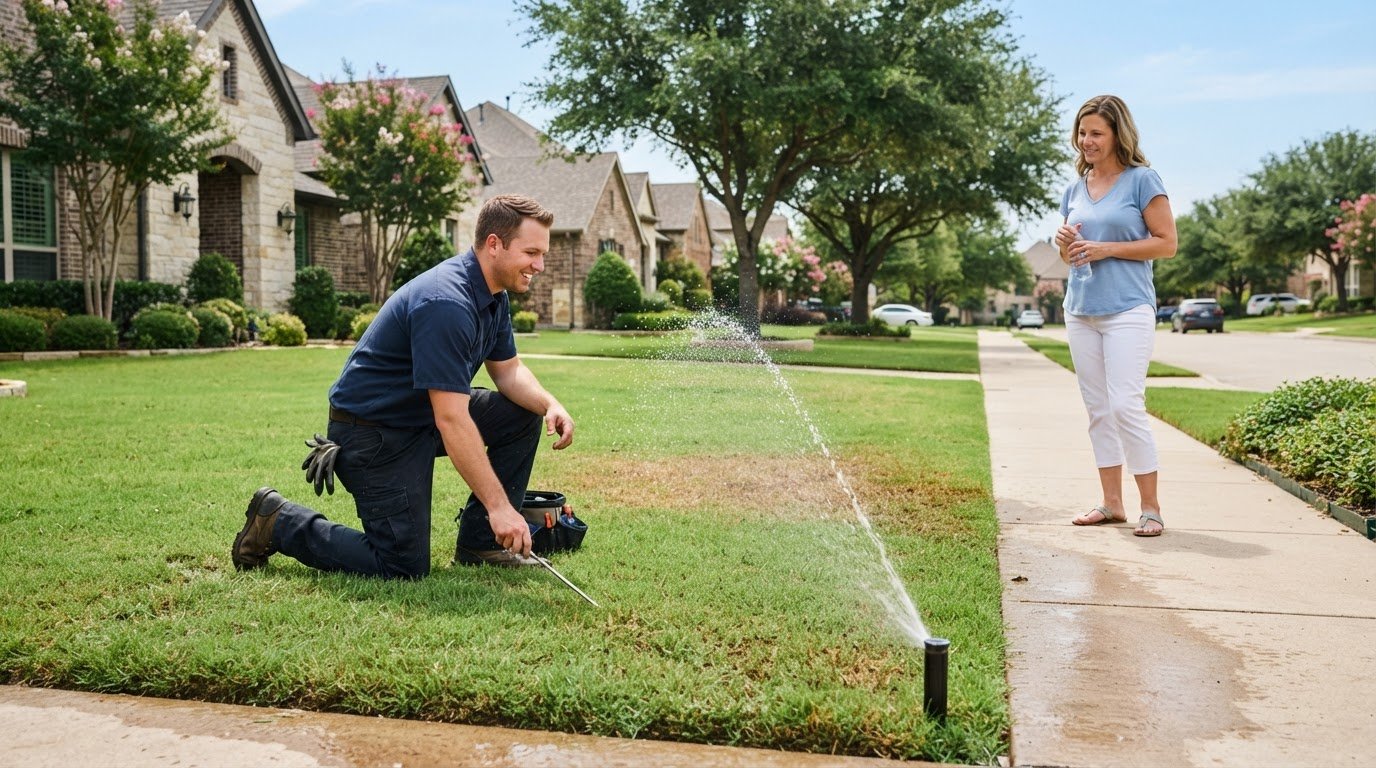
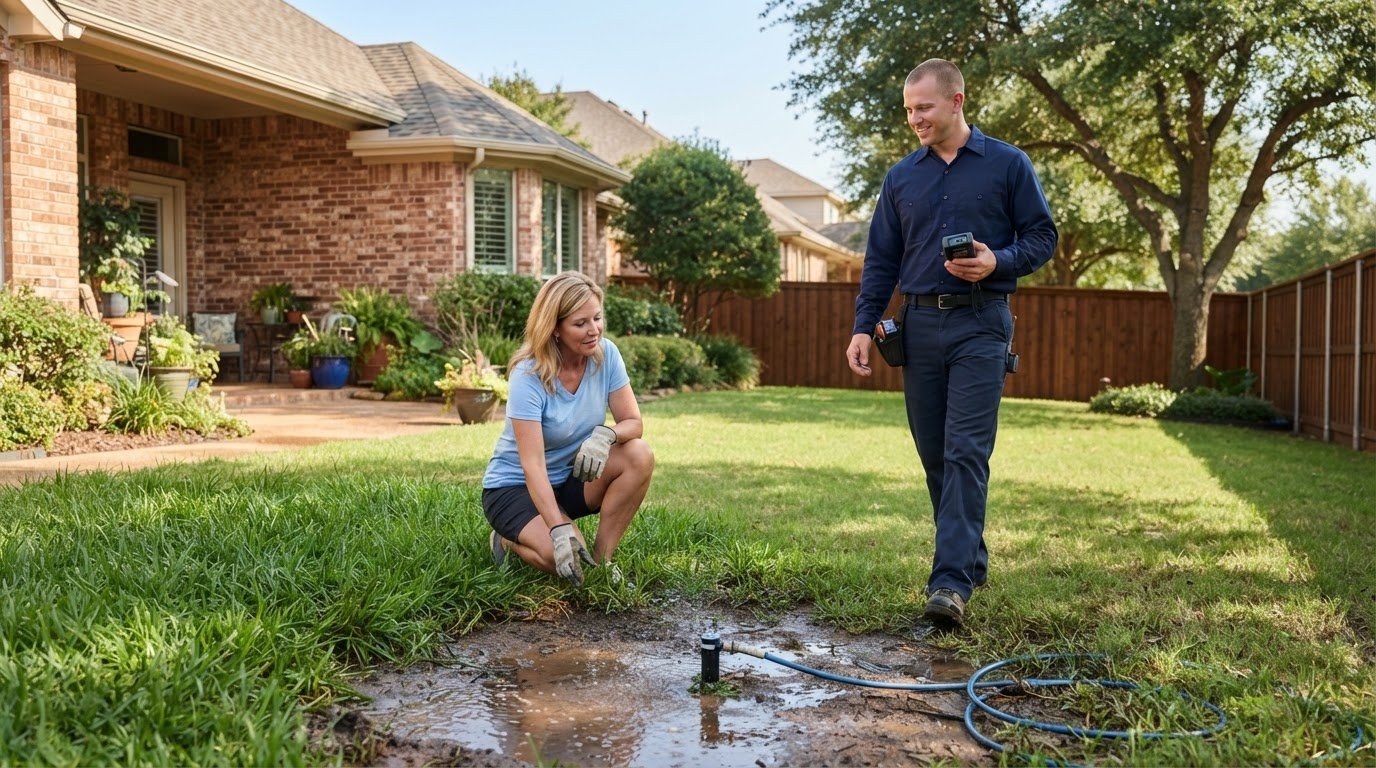
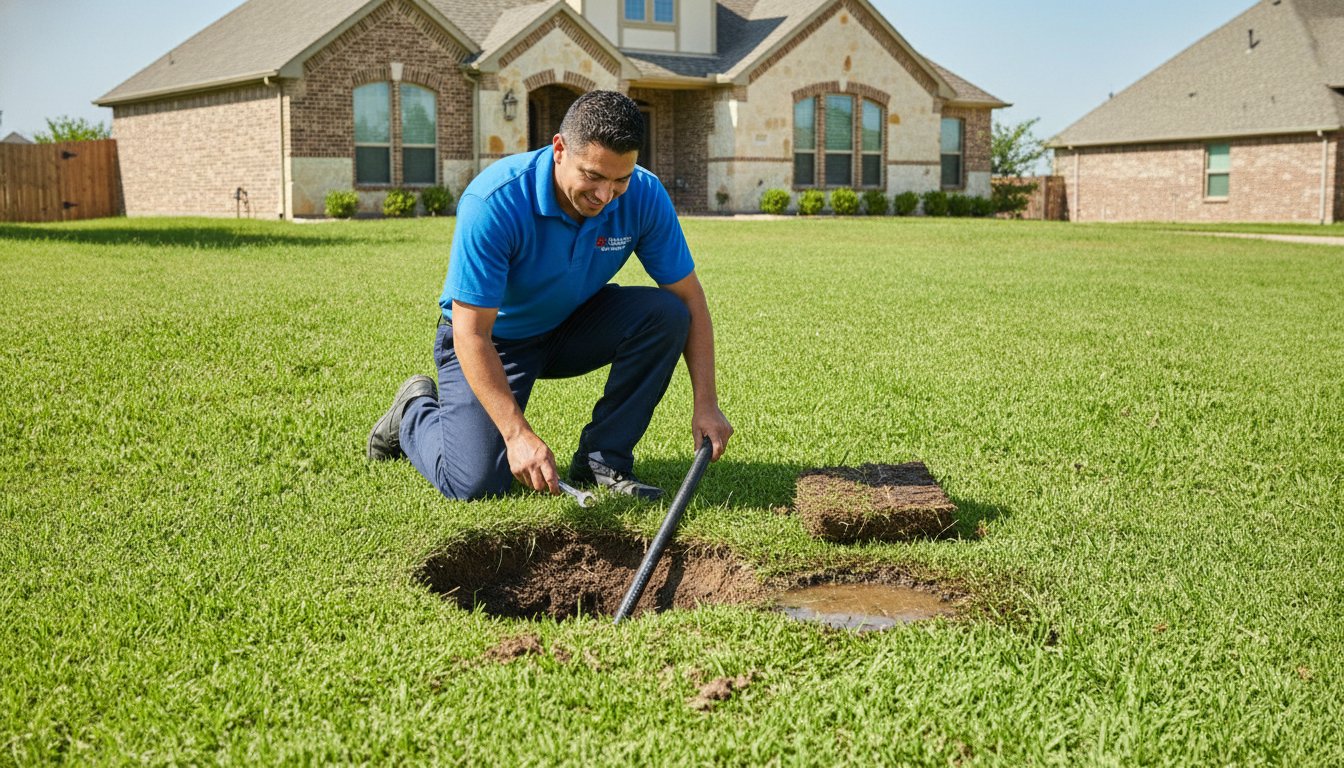
Start with the symptom you can see. A dry strip may point to a clogged nozzle, a tilted head, low pressure, or a zone that is not running long enough. A soggy area may come from a line leak, a valve that does not close, poor grading, or storm water with no clear outlet. The guides explain those differences so you can gather useful observations before a visit.
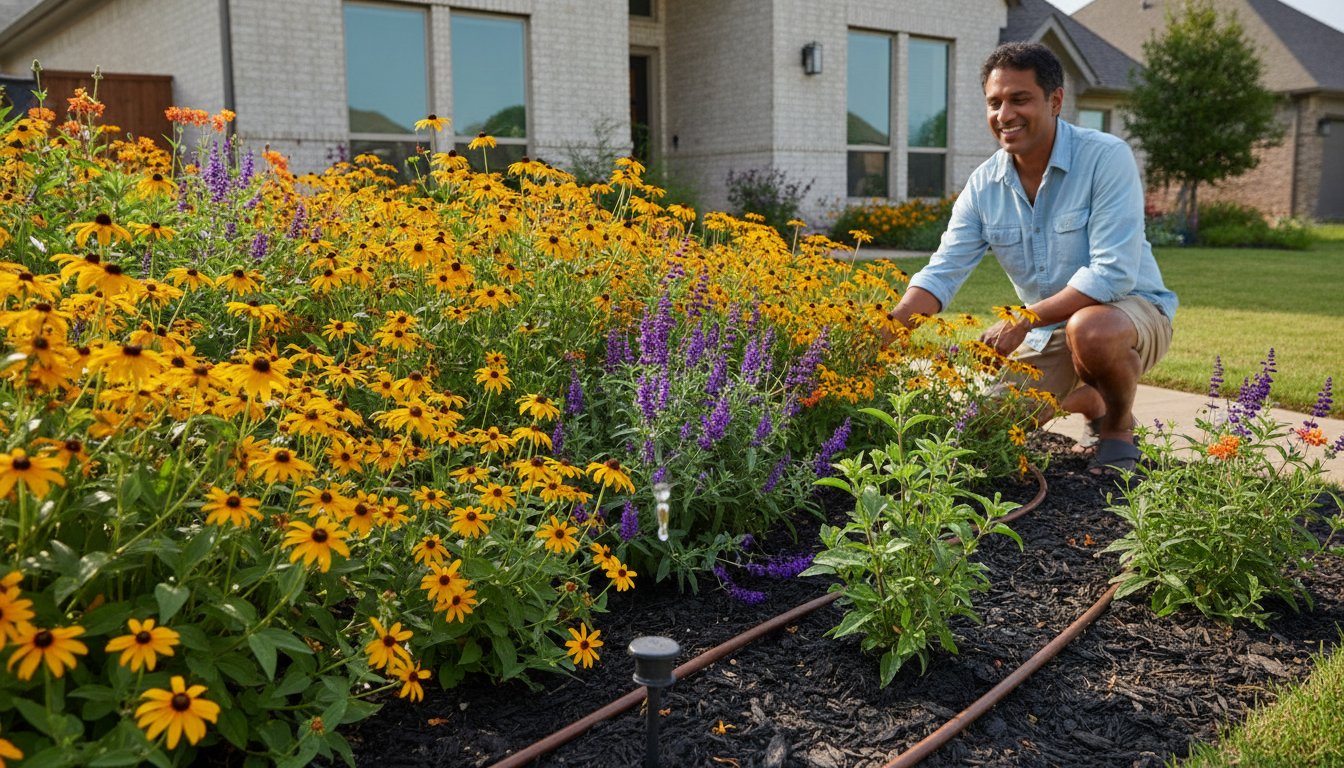
Installation articles focus on planning complete systems, including pressure, flow, zoning, plant needs, and head-to-head coverage. Drainage guides cover standing water, French drains, catch basins, downspout routing, and discharge planning. Sod articles cover preparation, turf selection, irrigation coverage, and establishment watering after the grass is laid.
Advice Written for North Texas Conditions
Recommendations that work in another climate may fail in Dallas-Fort Worth. Expansive clay soil, watering restrictions, intense summer heat, sudden freezes, and uneven shade all affect how irrigation and drainage should be evaluated. Our articles keep those conditions in view and distinguish homeowner checks from work that requires diagnosis on the property.
Article guidance is educational and cannot identify a buried leak or electrical fault from a description alone. Repair work is billed by time and material with a minimum hourly labor rate. Free estimates apply only to complete new sprinkler installations and drainage installations.