
Article by
Robert Maxvill
Owner of Aquamax Sprinkler Systems, American Sprinkler Repair and Dallas Drainage Systems.
What if your sprinkler system isn’t just about keeping the grass green, but is actually the primary defense for your home’s foundation? In North Texas, the intense heat and shifting clay soil make water management a necessity rather than a luxury. You’ve likely felt the frustration of rising water bills or the stress of seeing deep cracks open up near your slab during a July heatwave. It’s common to feel overwhelmed by conflicting contractor quotes when you’re simply trying to protect your biggest investment. Understanding the true irrigation system cost involves looking past the initial sticker price to the long-term value of your property.
This guide breaks down the real-world factors that determine installation and maintenance expenses in Dallas and Plano. You’ll learn how to budget for a landscape that thrives in the local climate while avoiding the pitfalls of inefficient systems. We will cover everything from municipal permit requirements to the essential role of annual backflow testing in keeping your water supply safe. By the end, you’ll have a clear roadmap for achieving a lush, green lawn that protects your foundation and boosts your home’s resale value.
Key Takeaways
- Learn how North Texas clay soil and property size directly impact the labor required for a reliable installation.
- Compare the long-term water savings of drip irrigation against traditional spray heads to find the best fit for your budget.
- Understand how municipal permits and mandatory backflow testing fees influence your total irrigation system cost in Dallas and Plano.
- Discover the specific signs that indicate a professional tune-up is more cost-effective than a full system replacement.
- See why a well-designed system is a critical investment for protecting your home’s foundation and increasing overall property value.
Factors Influencing Irrigation System Cost in Dallas-Fort Worth
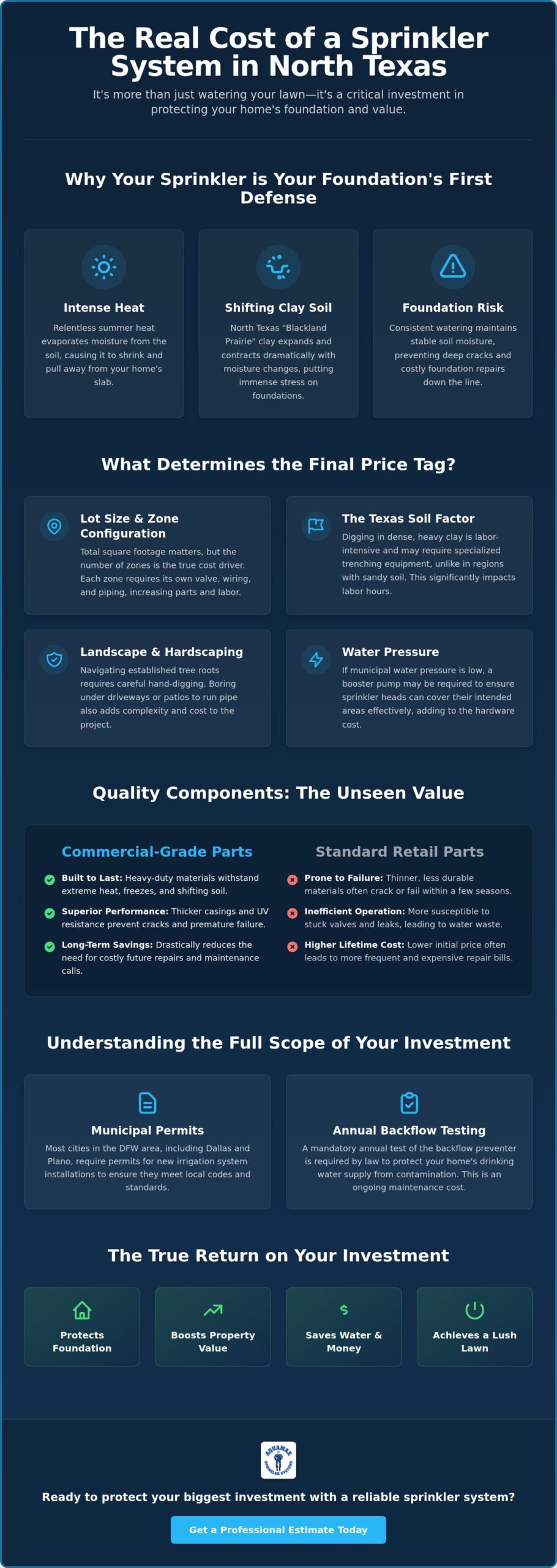
Calculating your irrigation system cost isn’t a one-size-fits-all process because every property in Dallas-Fort Worth presents unique challenges. A system designed for a small lot in a newer Plano subdivision won’t require the same resources as a sprawling estate in Frisco or a heavily wooded lot in North Dallas. Local variables like soil density, terrain, and even municipal water pressure play a massive role in the final estimate. Professionals must account for these elements to ensure your lawn stays green without wasting water or money.
To better understand the variables involved in professional pricing, watch this helpful video:
Lot Size and Zone Configuration
The total square footage of your yard is the most obvious factor, but the number of zones is what truly drives the budget. A standard quarter-acre lot in Plano might only need six to eight zones, while a larger property requires significantly more. Zoning ensures that every corner of your landscape receives adequate moisture without overwatering specific areas. Each additional zone adds to the total project estimate because it requires more valves, wiring, and piping. If you’re starting from scratch, a professional sprinkler installation must account for these configurations to ensure long-term efficiency and foundation protection.
The Texas Soil Factor: Clay vs. Sandy Loam
Many national cost guides fail to mention the impact of North Texas “Blackland Prairie” clay. Digging in this dense, heavy soil is labor-intensive and often requires specialized trenching equipment that isn’t necessary in regions with sandier soil. For a comprehensive overview of irrigation and how it adapts to different environments, it’s clear that soil type influences the depth and durability of underground piping. In areas like Rockwall, installers may even encounter rocky terrain that slows down progress and increases labor hours. This soil also expands and contracts with moisture levels, meaning the pipes must be installed with precision to avoid future breaks.
Beyond the dirt, your existing landscaping adds another layer of complexity. Established trees with thick root systems require careful navigation to avoid damage, often necessitating hand-digging instead of machine trenching. Hardscaping features like patios, sidewalks, and driveways also impact the irrigation system cost. If a line needs to run under a concrete driveway, installers must use boring equipment to create a path without cracking the surface. Finally, if your suburb has low water pressure, you might need a booster pump to ensure your spray heads reach their intended targets. These technical requirements ensure your system remains a vital contribution to your property’s value and health.
Breaking Down the Installation Price Tag: Parts, Labor, and Design
While lot size and soil type set the stage, the specific hardware and professional expertise determine the final irrigation system cost. It’s easy to look at individual part prices at a local hardware store and assume the total should be lower. However, professional installers use components that aren’t found on retail shelves. These commercial-grade parts are built to withstand the extreme North Texas climate, where summer sun and winter freezes can quickly degrade inferior materials. Investing in the right components from the start prevents costly failures later.
Commercial-Grade Components
Quality matters when your system is buried underground. Aquamax Sprinkler Systems prioritizes heavy-duty sprinkler heads and valves because they offer superior UV resistance and thicker casing. Standard retail parts often fail within a few seasons due to the intense heat and shifting clay soil found in Dallas and Plano. Choosing professional-grade materials significantly extends the lifespan of your system. You won’t have to worry about cracked housings or stuck valves nearly as often. This choice translates to lower maintenance bills and fewer repairs over the next decade.
Smart Controllers and Water Efficiency
Modern technology has transformed how we manage water in DFW. The initial price of a smart controller is higher than a basic manual timer, but the reduction in monthly utility bills is substantial. These units use rain sensors and real-time evapotranspiration data to prevent overwatering. If a storm is rolling through our area, your system knows to stay off automatically. Mobile app integration also allows you to manage everything from your phone. You’ll have total control over your landscape’s health even when you’re away from home.
Labor and design make up a significant portion of your total irrigation system cost. You aren’t just paying for someone to dig a hole; you’re paying for a licensed technician who understands hydraulics and local codes. Every professional system must adhere to Texas irrigation regulations, which protect the public water supply through proper backflow prevention. A specialized crew ensures the trenching is done at the correct depth and that the layout provides 100% head-to-head coverage. This precision prevents dry spots and keeps your foundation stable. If you’re ready to upgrade your property, a professional sprinkler system installation ensures your investment is protected from the start.
Drip Irrigation vs. Traditional Sprinklers: A Cost-Benefit Analysis
Choosing the right method for delivering water to your landscape is a decision that balances your initial irrigation system cost against long-term utility savings. While traditional spray heads are the most common sight in North Texas neighborhoods, drip irrigation has become a critical component for modern property maintenance. Each method serves a specific purpose. Understanding where to use them ensures you aren’t wasting money on water that simply evaporates before it reaches the roots.
Protecting Your Foundation with Drip Lines
In Dallas and Plano, foundation watering is a non-negotiable expense. The heavy clay soil we discussed earlier expands when wet and shrinks when dry, creating immense pressure on your home’s slab. A professional Drip Irrigation Installation around the perimeter of your house maintains consistent moisture levels. This prevents the soil from pulling away from the foundation, which is the primary cause of expensive structural cracks. When you compare the price of a drip system to the thousands of dollars required for foundation piering, the investment pays for itself quickly.
Drip lines are also the most efficient way to water flower beds and densely planted areas. They deliver water directly to the soil, eliminating the 30% to 50% water loss often caused by wind and evaporation. By targeting the root zone specifically, you reduce weed growth and keep your plants vibrant even during the peak of the Texas summer. This targeted approach is a cornerstone of Professional Drip Irrigation System Installation in Dallas, providing a level of precision that traditional spray heads cannot match.
Traditional Spray Systems for Large Lawns
For open turf areas, traditional spray systems remain the most cost-effective choice for achieving full coverage. However, the technology has evolved significantly to meet strict local water restrictions. High-efficiency nozzles are now the standard for professional designs. These components produce larger water droplets that are less likely to be carried away by the wind, ensuring more water actually hits the grass. Balancing these spray zones with your drip zones requires a sophisticated multi-zone design to prevent overwatering in some areas while leaving others dry.
Maintenance requirements also differ between the two systems. Spray heads are prone to mechanical damage from lawnmowers or foot traffic, while drip lines are buried and protected but require periodic flushing to prevent clogging. To manage these complexities efficiently, many homeowners opt for a WaterSense labeled irrigation controller. These smart devices adjust watering schedules based on local weather data, further reducing your monthly bills. Whether you’re installing a new system or upgrading an old one, choosing the right mix of drip and spray technology is essential for a landscape that thrives in the Dallas heat.
Beyond the Quote: Permits, Backflow Testing, and Long-Term ROI
Evaluating your total irrigation system cost requires looking past the initial installation quote. Many homeowners overlook the essential regulatory fees and recurring maintenance tasks that keep a system legal and safe. These are not optional expenses. They are critical investments in the longevity of your property and the safety of your community. In the Dallas-Fort Worth area, municipal compliance is strictly enforced to protect the public water supply and ensure structural safety. Failing to account for these requirements can lead to complications during a home sale or result in municipal fines.
Regulatory and Safety Compliance
Texas law mandates that a licensed irrigator must oversee the installation of any new system. This professional oversight ensures that your setup adheres to the safety standards set by the Texas Commission on Environmental Quality. A major part of this compliance is the backflow prevention assembly. This device prevents contaminated water from your lawn from flowing back into your home’s drinking water supply. According to the City of Dallas Development Services Permit Fee Schedule, the city charges a flat fee of $167 for most residential irrigation projects. Plano also requires specific permits and annual contractor registration to ensure all work meets local building codes. Beyond the initial setup, you must budget for mandatory annual backflow testing conducted by a licensed professional to remain in compliance with state regulations.
Calculating Your Return on Investment
A professionally installed system is one of the most effective ways to boost your property’s market value. Industry research indicates that a lawn sprinkler system in Dallas can offer an estimated 86% return on investment. This value stems from the enhanced curb appeal and the vital protection provided to your home’s foundation through consistent moisture management. When you utilize a smart system, you also realize significant water savings over a 5-year period compared to manual watering methods or outdated equipment. You avoid the high costs associated with common DIY errors, such as poor drainage or improper head placement that leads to foundation issues. To maintain this value and keep your system running efficiently, scheduling a regular Sprinkler System Tune-Up in Dallas is the best way to protect your long-term investment.
If you want to ensure your property meets all local safety codes while maximizing your home’s resale value, contact our expert team today for a professional consultation and system evaluation.
Repair vs. New Installation: Maximizing Your Budget with Aquamax Sprinkler Systems
Determining whether to patch an aging setup or invest in a full replacement is a critical financial decision for any property owner. While individual repairs are common, there comes a point where the cumulative irrigation system cost of frequent service calls exceeds the value of a new, high-efficiency system. Most residential setups in North Texas have a functional lifespan of 10 to 15 years. If your equipment has reached this age, you’re likely dealing with declining pressure, brittle piping, and outdated technology that wastes water. Aquamax Sprinkler Systems helps you identify that tipping point where a new installation becomes the more fiscally responsible choice for your home.
Common issues like misaligned heads or clogged nozzles are often resolved through routine maintenance. However, if you’re experiencing repeated underground leaks or electrical failures across multiple zones, the infrastructure itself may be compromised. The shifting clay soil in our region is particularly hard on older PVC pipes that have become brittle over time. Evaluating the long-term reliability of your current system is essential to avoid the frustration of a brown lawn during a record-breaking heatwave. We provide a thorough analysis of your existing hardware to ensure you aren’t just throwing money at a failing asset.
While irrigation leaks are a major concern, indoor plumbing emergencies require even faster response times; to see how experts manage such crises, you can explore 24/7 Emergency Plumbing Services from Miami 305 Plumbing.
Extending the Life of an Existing System
Not every struggling system requires a total overhaul. If the main lines and zone valves are in good condition, targeted Expert Sprinkler Repair in Dallas can significantly extend the life of your equipment. A professional tune-up can identify hidden pressure issues and seal leaks that are driving up your utility bills. By replacing worn-out spray heads with modern, high-efficiency versions, you can improve coverage without the expense of a full replacement. This approach allows you to maximize your current budget while still achieving the lush results you expect from a professional irrigation service.
The Aquamax Sprinkler Systems Advantage in DFW
Our team brings over 25 years of local expertise to every project, ensuring that your irrigation system cost is a transparent and predictable investment. We utilize project-based pricing for all our DFW clients, which eliminates the uncertainty of hourly labor rates and hidden fees. Whether we are serving families in Frisco, McKinney, or Rockwall, our licensed technicians prioritize the use of high-grade commercial components that are built to last. This commitment to quality means your system will be durable enough to handle the expansion and contraction of North Texas soil for years to come.
Choosing a partner with deep roots in the community provides peace of mind that the job will be done right the first time. We focus on functional excellence and water conservation, positioning your irrigation setup as a vital contributor to your property’s overall health and value. If you’re tired of constant repairs and high water bills, contact Aquamax Sprinkler Systems for a custom irrigation installation quote today. We’ll help you build a landscape that thrives in the Dallas sun.
Secure Your Landscape and Foundation Today
Managing your landscape in North Texas requires a balance of technical precision and local knowledge. You now understand how soil density, smart technology, and municipal regulations shape the total irrigation system cost for your property. By prioritizing high-grade components and foundation-specific drip lines, you protect your home from the region’s volatile environment while significantly reducing monthly water waste. Investing in a professional design ensures your lawn stays vibrant and your foundation remains stable throughout the harshest summer months.
Aquamax has provided A+ rated local expertise to the Dallas-Fort Worth area since 1998. Our licensed and insured technicians ensure every installation meets strict safety standards and delivers peak performance. Don’t leave your property’s health to chance or inefficient systems. Take the first step toward a lush, worry-free lawn and a stable home foundation by partnering with a specialist who understands the unique needs of North Texas. We’re here to help you achieve a landscape that adds lasting value to your home.
Get a Professional Irrigation Installation Quote today and enjoy the peace of mind that comes with professional water management. Your thriving landscape is just a click away.
Frequently Asked Questions
How much does a new sprinkler system cost on average in Dallas?
Homeowners in the Dallas-Fort Worth area typically spend around $3,191 for a professional installation based on current industry averages. While the typical range falls between $2,251 and $4,213, your specific irrigation system cost depends on factors like lot size and the number of zones required. Larger properties or those with complex landscaping require more materials and labor, which will influence the final project estimate.
Is a smart sprinkler controller worth the extra cost?
Yes, a smart controller is a highly effective investment that pays for itself through significantly lower monthly water bills. These devices utilize real-time weather data and rain sensors to prevent watering during storms or freeze events. By optimizing your schedule based on actual local conditions, you avoid wasting water and ensure your landscape stays healthy without the need for manual adjustments.
Do I need a permit to install an irrigation system in Plano or Dallas?
You must obtain a permit for any new irrigation installation in both Dallas and Plano to comply with municipal safety codes. The City of Dallas charges a flat fee of $167 for most residential projects, which covers the necessary permits for the project. Plano also requires a permit and mandates that all irrigation contractors pay an annual registration fee of $100 to operate within the city.
How many zones does a typical North Texas yard require?
A standard residential lot in North Texas usually requires between six and eight zones to achieve optimal water distribution. This zoning allows you to separate turf areas from flower beds and foundation drip lines, which have different moisture requirements. Dividing the yard into specific zones ensures that every plant receives the right amount of water without over-saturating shaded areas or underwatering high-sun spots.
Can a new irrigation system help protect my home’s foundation?
A professionally designed system is a critical tool for maintaining foundation stability in the volatile Texas climate. By installing dedicated drip lines around the perimeter of your home, you keep the heavy clay soil consistently moist. This prevents the soil from shrinking and pulling away from the slab during intense summer heat, which is the primary cause of expensive foundation cracks in our region.
Is it cheaper to install a sprinkler system myself?
While DIY installation might seem to save money upfront, the long-term irrigation system cost is often higher due to inefficient design and potential code violations. Texas law requires a licensed irrigator for professional installations to protect the public water supply. Professionals also use commercial-grade components and specialized trenching equipment that are more durable than retail parts, preventing frequent and costly repairs in the future.
What is the most expensive part of an irrigation system installation?
Labor and specialized equipment for trenching through dense North Texas clay soil typically represent the largest portion of the installation budget. Beyond labor, the backflow prevention assembly is a significant material expense. This component is required by the Texas Commission on Environmental Quality to prevent lawn chemicals and contaminants from entering your home’s drinking water, making it an essential safety feature.
How much does annual backflow testing cost in the DFW area?
The cost for a mandatory annual backflow test typically ranges from $50 to $150 in the Dallas-Fort Worth area. This test must be performed by a licensed Backflow Prevention Assembly Tester (BPAT) to comply with state and local regulations. Staying current with this annual requirement is necessary to ensure your system remains in good standing with your local water utility and continues to operate safely.