
Article by
Robert Maxvill
Owner of Aquamax Sprinkler Systems, American Sprinkler Repair and Dallas Drainage Systems.
In North Texas, your irrigation system is more than a garden tool; it’s a structural insurance policy for your home. You’ve likely noticed your utility bills climbing while your lawn struggles to stay green under the 2026 TWDB Regional Water Plans. It’s frustrating to watch your soil pull away from the concrete slab despite regular watering. Choosing between drip irrigation vs sprinklers is no longer just about convenience. It’s about survival in a region where shifting clay soil and strict municipal regulations dictate the health and safety of your property.
We understand the pressure of maintaining a lush landscape while facing rising costs and foundation risks. This guide gives you the professional insight needed to optimize water efficiency and protect your home’s structural integrity. You’ll learn exactly where each system should be deployed to combat evaporation, how to satisfy the latest local restrictions, and how to maintain the consistent moisture levels necessary to prevent foundation cracking.
Key Takeaways
- Identify why overhead sprinklers lose significant water to evaporation and how drip systems eliminate waste by targeting the root zone directly.
- Learn how to stabilize North Texas clay soil around your home to prevent foundation cracking through consistent and precise moisture management.
- Master the strategic placement of drip irrigation vs sprinklers by using rotors for expansive turf and precision tubing for delicate flower beds.
- Discover common maintenance challenges, from repairing broken sprinkler heads to protecting underground drip lines from local pests and mineral deposits.
- Explore the benefits of a hybrid irrigation design that integrates both technologies into a single smart controller for a resilient landscape.
Understanding the Core Differences: Drip Irrigation vs Sprinklers
Choosing between drip irrigation vs sprinklers requires a clear understanding of how each system delivers water to your North Texas landscape. While both aim to keep your plants alive, they operate on entirely different physical principles. Sprinkler systems are designed for high-volume, overhead delivery. They distribute water in gallons per minute (GPM), spraying it through the air to cover large areas of turf. This method is effective for lawns but often results in significant evaporation during our intense summer heat.
In contrast, Drip irrigation focuses on precision and conservation. These systems measure water delivery in gallons per hour (GPH). By releasing water slowly at the base of the plant, drip systems ensure that every drop reaches the root zone without being carried away by the wind. The intent of a sprinkler is often to hydrate the entire environment, including the air and foliage, whereas drip irrigation is strictly about hydrating the soil itself. This fundamental difference in flow rate and delivery method determines how you should manage your watering schedule to comply with local 2026 water regulations.
How Drip Irrigation Works
A professional drip system consists of several specialized components, including poly tubing, pressure regulators, and emitters. These emitters release water at a controlled rate, allowing the soil to absorb moisture through capillary action. This process enables water to spread horizontally and vertically through the heavy clay common in Dallas, creating a consistent moisture bulb around the roots. Because these systems are highly efficient and minimize runoff, many North Texas municipalities often exempt them from the strictest drought-related watering day restrictions. If you need a more efficient setup for your flower beds, we provide professional drip irrigation installation tailored to your property’s specific needs.
How Sprinkler Systems Work
Traditional sprinkler systems utilize mechanical pop-up heads, rotors, and impact sprinklers to cast water across a wide radius. The key to a successful layout is head-to-head coverage. This means the spray from one head must reach the base of the next to ensure uniform hydration and prevent brown spots in your lawn. Modern advancements have introduced high-efficiency rotary nozzles, which deliver larger water droplets at a slower rate than older spray heads. This technology helps reduce misting and wind drift. For existing systems, a sprinkler system tune-up can often identify where these modern nozzles will improve your coverage and lower your monthly utility costs.
Efficiency and Performance: A Head-to-Head Comparison
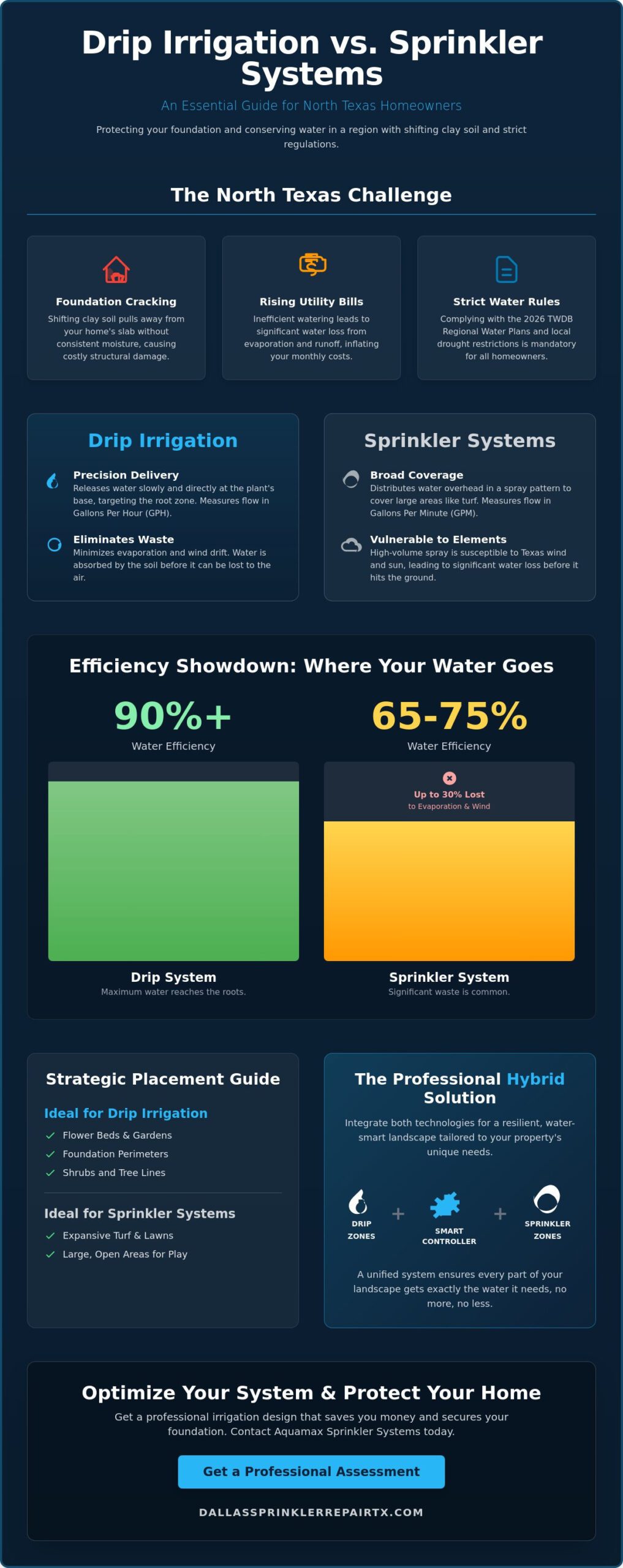
When evaluating drip irrigation vs sprinklers, performance is measured by how much water actually reaches the root zone. Traditional sprinklers generally operate at an efficiency of 65% to 75%. This means a significant portion of the water you pay for never benefits your plants. In contrast, drip systems achieve a 90% or higher efficiency rating by delivering moisture exactly where it’s needed. This precision is why many homeowners are shifting toward water-efficient irrigation methods to manage their utility costs and protect their landscapes.
Texas wind and sun are relentless. On a typical North Texas afternoon, overhead sprinklers can lose up to 30% of their output to evaporation before a single drop hits the ground. Our region’s heavy clay soil presents another challenge. Clay absorbs water slowly. High-volume sprinklers often overwhelm the soil surface, causing water to run off into the street rather than soaking in. Drip systems mitigate this by applying water at a rate the clay can actually handle, ensuring deep penetration without the waste.
Some homeowners prefer sprinklers because they can see the system working. It’s easy to spot a broken head or a geyser. Drip lines are often hidden under mulch, making leaks harder to detect without a professional irrigation repair specialist performing a pressure test. However, the lack of misting and overspray means your fences, windows, and sidewalks stay dry and free of hard water stains. You trade visual confirmation for superior conservation and structural protection.
Water Conservation Metrics
DFW residents often see a noticeable reduction in monthly water bills after converting flower beds to drip. By eliminating wind drift waste, you ensure your investment stays on your property. Evapotranspiration is the process by which water is transferred from the land to the atmosphere by evaporation from the soil and transpiration from plants, and understanding this cycle helps you time your watering for maximum absorption. Precise delivery ensures your landscape survives even the strictest 2026 municipal restrictions.
Soil Health and Nutrient Retention
Overhead watering often creates a breeding ground for fungal diseases. When water sits on foliage in the humid North Texas heat, it invites pathogens that can kill expensive landscaping. Drip systems keep leaves dry. They also prevent soil erosion in sloped yards by delivering water at a slow, manageable pace. This deep-root hydration encourages plants to grow stronger, more resilient root systems that can survive a harsh July heatwave. By keeping the surface soil dry, you also reduce the germination of weed seeds in your garden beds.
Maintenance, Longevity, and Repair Challenges
Maintaining the balance between drip irrigation vs sprinklers requires a proactive approach to the unique environmental stressors in North Texas. While sprinklers offer immediate visual feedback, drip systems often hide their failures until a plant begins to wilt. Understanding these maintenance profiles is essential for long-term property value. High-grade professional components typically last 10 to 15 years, whereas retail-grade parts from big-box stores often fail within three seasons due to our intense UV exposure and soil movement.
Traditional sprinkler systems face mechanical wear and tear. Pop-up heads frequently break from mower strikes or heavy foot traffic. Nozzles can clog with fine North Texas silt, and valves may fail due to electrical surges or worn diaphragms. These issues are usually easy to spot. A “geyser” in the front yard is a clear signal for immediate action. However, low-pressure zones caused by underground pipe cracks are more subtle. These leaks waste thousands of gallons while starving your lawn of necessary hydration.
Drip systems present a different set of challenges. Because the lines are often buried under mulch or soil, they are vulnerable to local wildlife. During dry spells, squirrels and gophers may chew through poly tubing to reach the water inside. Additionally, the hard water in the DFW Metroplex leads to mineral buildup. Calcium and magnesium deposits can slowly choke off emitters, reducing flow without any outward signs of trouble. You won’t see a geyser; you’ll only see a dying shrub. Regular pressure testing is the only way to ensure these subsurface lines remain intact.
Servicing Your Sprinkler System
Our heavy clay soil expands and contracts with moisture changes, which can physically shift underground pipes and sprinkler heads. This movement makes professional sprinkler repair in Dallas a seasonal necessity. A comprehensive sprinkler system tune-up ensures that heads remain vertical and coverage stays uniform. We check for “blowouts” and adjust spray patterns to prevent water from hitting your home’s siding or windows.
Drip Irrigation Upkeep
Flushing the lines is a critical maintenance step that many homeowners skip. At least twice a year, you should open the flush valves to clear out accumulated sediment and mineral flakes. This prevents clogs before they start. You must also inspect emitters for signs of salt crusting. For winter protection, ensure the system is drained or insulated. While drip lines are more resilient to freezing than rigid PVC, the valves and pressure regulators still require protection from the harsh North Texas freeze-thaw cycles.
Strategic Implementation: Where to Use Each System
Successfully managing a North Texas landscape requires a tactical approach to water placement. Every property has unique zones that demand different delivery methods. For expansive lawn areas, rotors and spray heads remain the most effective solution. Turf grass requires uniform, high-volume coverage that only an overhead system can provide. These systems are designed to cast water across wide radii, ensuring that every square inch of your sod receives the hydration necessary to survive a July heatwave.
Vegetable gardens and delicate flower beds require a more surgical strategy. Overhead watering in these areas often leads to blight and fungal issues by keeping foliage damp for extended periods. Drip lines deliver water directly to the soil, keeping the leaves dry and reducing the risk of disease. This targeted approach also minimizes weed growth, as you are only watering the root zones of your desired plants rather than the entire garden bed. A balanced approach to drip irrigation vs sprinklers ensures that your turf stays green while your ornamental plants thrive without the stress of fungal pathogens.
The Foundation Watering Rule
In the Dallas-Fort Worth area, the relationship between soil moisture and structural integrity is critical. When North Texas clay dries out, it shrinks and pulls away from your slab, creating voids that lead to settling and expensive cracks. Many homeowners rely on the common “soaker hose” myth, but these retail hoses often provide uneven pressure and fail within a single season. Before trusting a cheap hardware store hose with your home’s structural health, it’s worth understanding the truth about drip irrigation for foundation care and the myths that put Dallas homes at risk. Professional drip irrigation for foundations is the only reliable way to maintain consistent moisture levels. We install these lines approximately 12 to 18 inches from the slab to create a stable moisture barrier that prevents the clay from contracting. If you are concerned about uneven moisture around your home, contact us for a professional drip irrigation installation to secure your perimeter.
Optimizing Flower Beds and Trees
For large ornamental trees, we often implement bubblers that provide deep, concentrated saturation. This is more effective than standard drip lines for established trees that need significant water volume during droughts. In contrast, smaller groundcovers and shrubs benefit from a grid of poly tubing hidden beneath the mulch. This placement protects the system from UV damage and keeps your landscape looking pristine. Hydrozoning is the foundation of a smart landscape design because it groups plants with identical water requirements to maximize efficiency and plant health. By choosing the right tool for each zone, you can navigate the drip irrigation vs sprinklers debate with the confidence of a professional designer.
Professional Irrigation Design: The Hybrid Solution
The most resilient properties in North Texas don’t treat the choice between drip irrigation vs sprinklers as a binary one. Instead, they utilize hybrid systems that leverage the strengths of both technologies. A professional design partitions your landscape into specific zones based on water demand and soil type. While your expansive turf areas require the high-volume reach of rotors, your foundation and flower beds demand the slow, steady saturation that only drip can provide. This layered approach ensures every gallon of water is used effectively without compromising the health of your landscape or the stability of your home.
Managing a hybrid system requires precise pressure regulation. This is a technical hurdle where many DIY projects fail. Traditional sprinkler zones operate at high pressure to throw water across large distances, but drip lines will burst or blow out emitters if subjected to those same levels. We integrate specialized regulators into each zone to ensure the water pressure matches the delivery method. This protects your investment and prevents the underground leaks that often go unnoticed until a utility bill arrives. At Aquamax, we design custom solutions specifically for the 2026 North Texas climate, balancing structural protection with aesthetic vitality.
Smart Controllers and Automation
The brain of a modern hybrid system is the smart controller. These devices manage the vast difference between sprinkler run times, which are measured in minutes, and drip cycles, which often run for an hour or more. A smart controller uses local weather data and rain sensors to skip watering during our frequent North Texas spring storms. By integrating soil moisture probes, the system can detect exactly when your clay soil is beginning to contract, triggering a foundation-soaking cycle before cracks can form. This automation removes the guesswork and ensures compliance with ever-changing municipal water restrictions.
Why Professional Installation Matters
Installing a hybrid system involves more than just burying pipes. It requires a deep understanding of hydraulics and local building codes. Every new sprinkler system installation in the Dallas-Fort Worth area must meet strict backflow prevention requirements to protect the city’s clean water supply. Our licensed technicians ensure your system is legally compliant and hydraulically balanced. We eliminate common pitfalls like “zone robbing,” where one area of the yard loses pressure because another was poorly planned. Don’t leave your property’s health to chance. Contact Aquamax for a custom irrigation evaluation to see how a hybrid system can lower your bills and protect your foundation.
Secure Your Property With Smarter Irrigation
Navigating the 2026 North Texas water regulations requires a strategic balance between overhead coverage and root-zone precision. You’ve seen how professional drip systems protect your slab from clay contraction while high-efficiency rotors keep your turf vibrant. A hybrid approach ensures maximum water conservation without sacrificing the health of your landscape. The choice between drip irrigation vs sprinklers doesn’t have to be an all-or-nothing decision; it’s about deploying the right technology in the right zone.
Our team has served the DFW Metroplex since 1998. We provide licensed and insured technicians who specialize in foundation moisture management and high-efficiency system design. Whether you need to repair a broken line or install a modern hybrid setup, we have the local expertise to handle the job correctly. Don’t wait for a high utility bill or a foundation crack to take action. Schedule Your Professional Irrigation Assessment Today to ensure your property remains resilient and efficient all year long. Your landscape is a vital investment; let’s work together to keep it thriving.
Frequently Asked Questions
Can I run drip irrigation and sprinklers on the same zone?
No, you cannot run both on the same zone because they operate at different pressure levels and flow rates. Sprinklers require high pressure to spray water through the air, while drip systems need low, regulated pressure to prevent emitters from popping off. Mixing them will lead to uneven watering and likely damage your drip components. Each delivery method must have its own dedicated valve and pressure regulator.
Is drip irrigation more expensive to install than a sprinkler system?
The installation cost depends on the size and complexity of the area you are covering. While drip components are often less expensive than high-end rotors, the labor involved in precise emitter placement can be higher. When comparing drip irrigation vs sprinklers, many homeowners find that drip pays for itself through lower water bills and reduced plant loss. It’s a highly efficient choice for garden beds and foundation perimeters.
How do I know if my underground drip irrigation is actually working?
Check for consistent moisture by feeling the soil under your mulch or using a simple soil moisture meter. Since you won’t see a spray, you can also install a pop-up indicator at the end of the line that rises when the system is pressurized. If the indicator stays down or you find dry spots, it’s a sign of a clog or a leak that requires professional attention.
Does drip irrigation really help prevent foundation cracks in Texas?
Yes, maintaining consistent moisture in our heavy clay soil is vital for structural health. When the ground dries out, it shrinks and pulls away from your home’s slab, causing it to settle and crack. A dedicated drip irrigation for foundation protection keeps the soil expanded and stable around your perimeter. This prevents the dramatic shifts that lead to the most common foundation failures seen across the DFW Metroplex.
How long should I run my drip irrigation compared to my sprinklers?
Drip zones require much longer run times than traditional sprinkler zones. Because drip emitters release water in gallons per hour rather than gallons per minute, a typical cycle might last 45 to 60 minutes. In contrast, a spray zone might only need 10 to 15 minutes to deliver the same volume of water. Always adjust your controller settings to account for this slower delivery rate.
What happens if a rodent chews through my drip irrigation line?
You will likely notice a large wet spot or a localized puddle where the line has been breached. Rodents sometimes chew through poly tubing to reach water during the hot North Texas summers. Repairing this involves cutting out the damaged section and installing a barbed coupling to reconnect the line. We use professional-grade tubing that’s more resilient to pest damage than standard retail products.
Are there specific DFW water restrictions for drip irrigation?
Most DFW cities allow more frequent watering with drip systems than with overhead sprinklers, even during Stage 2 or Stage 3 restrictions. Many municipalities exempt drip from specific day-of-the-week schedules because it eliminates wind drift and runoff. You should always verify the latest 2026 drought plan for your specific city to ensure you stay in compliance with local ordinances and avoid fines.
Can I convert my existing sprinkler heads to a drip system?
Yes, you can convert an existing spray zone to a drip zone using specialized conversion kits. This process involves capping off unnecessary heads and installing a pressure-regulating filter on the primary riser. It’s an excellent way to improve the efficiency of your flower beds without the need for extensive trenching. When evaluating drip irrigation vs sprinklers for an upgrade, conversion is often the most practical and cost-effective starting point.