


Article by
Robert Maxvill
Owner of Aquamax Sprinkler Systems, American Sprinkler Repair and Dallas Drainage Systems.
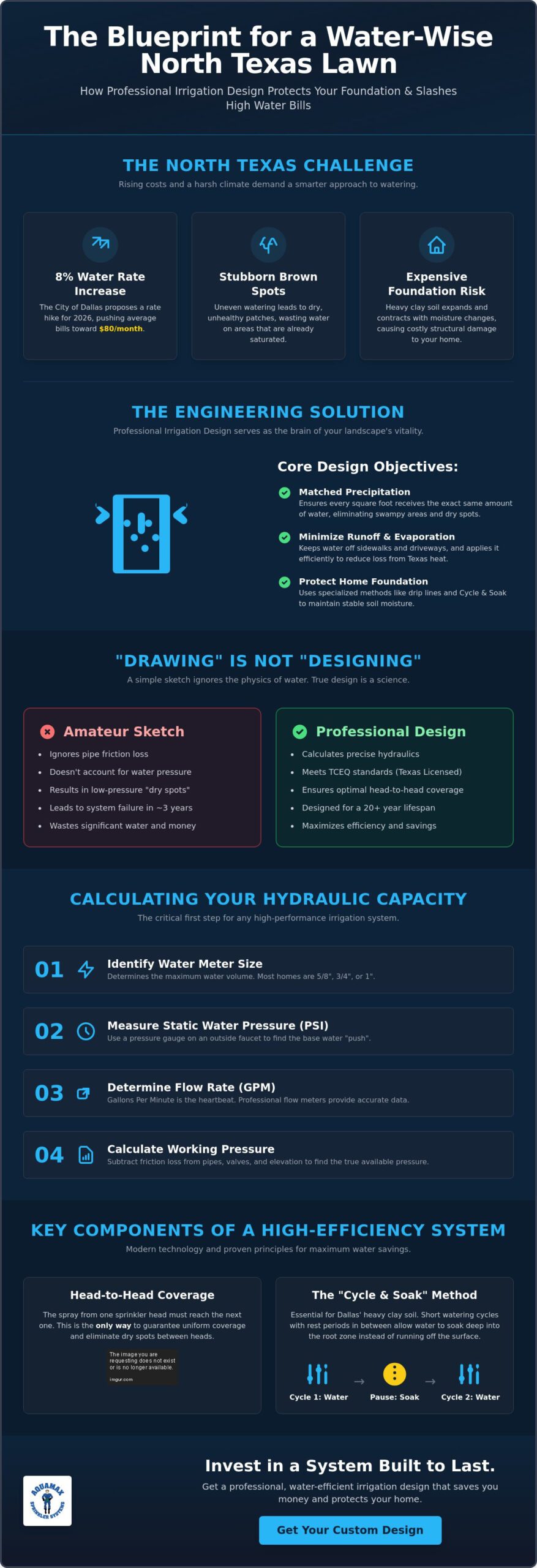
Did you know the City of Dallas has proposed an 8% water rate increase for 2026, which could push the average monthly bill to nearly $80? For many homeowners in Dallas and Plano, a high bill is only half the problem. You might also be battling stubborn brown spots or the soil moisture fluctuations that lead to expensive foundation cracks. Professional irrigation system design is no longer just about convenience; it’s a necessary engineering solution for the North Texas climate.
We understand that maintaining a healthy lawn shouldn’t come at the cost of your home’s structural integrity or your monthly budget. This article outlines how professional design principles ensure even water distribution while significantly lowering your utility overhead. We’ll preview the essential components of a high-efficiency system, from smart controllers to foundation drip lines, providing you with a clear blueprint for a thriving and resilient property. You’ll gain the peace of mind that comes from knowing your landscape is managed by licensed expertise and local knowledge.
Key Takeaways
- Understand why professional irrigation system design serves as the brain of your landscape, using hydraulics to ensure every plant receives the exact water it needs.
- Learn how to accurately measure your property’s hydraulic capacity by identifying meter sizes and testing static water pressure for optimal performance.
- Discover how to combat North Texas heat and heavy clay soils using the “Cycle and Soak” method to prevent runoff and foundation issues.
- Identify the critical components of a high-efficiency layout, including the necessity of head-to-head coverage to eliminate dry spots.
- Compare the long-term value of a professionally calibrated system against the hidden costs and common failures of DIY installations.
What is Professional Irrigation System Design?
Professional irrigation system design is the meticulous process of mapping water distribution through a landscape based on complex hydraulic calculations and specific plant requirements. It serves as the “brain” of your property’s vitality. Without a proper design, a sprinkler system is just a collection of pipes and heads that may actually do more harm than good. A high-quality plan ensures that every square foot of your lawn receives the precise amount of moisture needed to thrive without wasting a drop.
Modern standards in 2026 have shifted toward total water management. With the City of Dallas implementing rate increases and new billing systems like “DallasGo!”, an engineered design is your first line of defense against skyrocketing utility costs. It integrates smart technology with physical layout to create a sustainable environment that protects your landscape and your home foundation. A professional new sprinkler system installation begins with this scientific approach to ensure long-term reliability.
To better understand how these principles come together, watch this helpful overview of the design process:
The Core Objectives of a Custom Plan
A custom design focuses on achieving matched precipitation across every zone. This means that whether a zone uses rotors or spray heads, the amount of water delivered per square inch remains consistent. This prevents the common North Texas problem where one area is swampy while another is bone-dry. We also prioritize minimizing runoff and evaporation. In our intense summer heat, water that hits the sidewalk or evaporates in the air is money wasted. By incorporating the most water-efficient method of irrigation for flower beds and shrubs, we ensure moisture reaches the roots directly. This precision keeps plants healthy while respecting local water conservation efforts.
Why “Drawing” is Not “Designing”
Many people mistake a simple sketch of sprinkler head locations for a design. However, “drawing” ignores the physics of water movement. True irrigation system design accounts for pipe friction loss, which is the decrease in pressure as water travels through your lines. If your plan doesn’t calculate this, you’ll end up with low-pressure “dry spots” where heads fail to pop up or spray correctly. In Texas, a licensed irrigator must sign off on these plans to ensure they meet TCEQ standards. This validation confirms that the hydraulics are sound and the system is feasible for your specific water meter size and pressure levels. It’s the difference between a system that fails in three years and one that lasts for twenty.
Step-by-Step: Calculating Your Property’s Hydraulic Capacity
Before you pick up a shovel, you must calculate your property’s hydraulic capacity. This is the most critical phase of irrigation system design. It defines how much water is actually available to move through your pipes at any given time. Start by checking your water meter. Most residential meters in Plano and Dallas are 5/8″, 3/4″, or 1″ in size. This physical limitation dictates the maximum volume of water your system can handle without causing a massive drop in pressure throughout your home.
Next, you need to measure your static water pressure. Attach a standard pressure gauge to an outside faucet, ensuring no other water is running in the house. This reading tells you the “push” behind your water. However, the static pressure isn’t what your sprinklers will actually use. You must also calculate the “Working Pressure” by subtracting the friction loss caused by pipes, valves, and elevation changes. If your property has significant slopes, which are common in parts of North Texas, gravity will either assist or resist your water flow. Mapping these elevation changes on a scaled drawing is non-negotiable for a professional result.
Finding Your Flow Rate (GPM)
Gallons Per Minute (GPM) is the heartbeat of your system. You can estimate this with a “bucket test” by timing how long it takes to fill a five-gallon container, but professional flow meter readings are far more accurate. Exceeding your flow capacity is a recipe for system failure. If you design a zone that requires 12 GPM but your meter only provides 10, the heads won’t pop up fully. This leads to weak spray patterns and uneven coverage. Don’t forget to account for household water usage. If your family runs the dishwasher while the sprinklers are on, your available flow drops significantly. If you notice your current heads are struggling to pop up, it might be time for professional irrigation repair to recalibrate your zones.
Mapping Zones Based on Water Demand
We use a philosophy called “Hydrozoning” to maximize every drop. This involves grouping plants with similar water needs into the same zone. Turf grass has vastly different requirements than a bed of drought-resistant shrubs. According to the Texas A&M AgriLife Extension, understanding your soil’s intake rate is vital for selecting the right irrigation method. North-facing zones often stay damp longer because they receive less direct sun, while south-facing areas bake in the Texas heat. A professional design separates these areas into distinct zones with tailored run times. This prevents the wasteful practice of overwatering a shaded flower bed just to keep the sunny front lawn green.
Designing for the Dallas Climate: Soil and Heat Factors
North Texas is built on Blackland Prairie clay. This heavy soil is notorious for its low absorption rate and its tendency to shrink and swell violently with moisture changes. When you approach irrigation system design in Dallas or Plano, you’re managing a geological challenge as much as a horticultural one. If your system applies water faster than the clay can take it, you’re simply paying for runoff that ends up in the street. A professional plan must account for this limited intake rate to be effective.
DFW summers bring extreme evapotranspiration (ET) rates. This is the combined amount of water lost through soil evaporation and plant transpiration. A design that works in the mild spring will fail in the triple-digit heat of August if it doesn’t account for these peaks. We also utilize high-efficiency, wind-resistant nozzles to combat the constant breeze across the open North Texas plains. This ensures water actually hits the turf rather than drifting onto your driveway. Yards in Plano or Frisco often feature subtle elevation changes that can lead to soggy spots at the bottom of slopes. We address this by using check valves in the sprinkler heads, which prevent water from leaking out of the lowest head once the zone shuts off.
The Clay Soil Challenge
Slow-application rates are essential to prevent Dallas yard runoff. We utilize the “Cycle and Soak” method in our designs. This technique breaks a single long watering cycle into several shorter periods with rest intervals in between. It allows the stubborn clay to absorb moisture deeply into the root zone without pooling on the surface. Improper design does more than just kill your grass; it contributes to foundation shifting. When the soil around your home dries out unevenly, the clay contracts and pulls away from the concrete. Maintaining consistent moisture levels through a targeted layout is a vital part of protecting your home’s structural integrity. If your property already suffers from standing water, a drainage system installation may be necessary to complement your irrigation plan.
Local Regulations and Backflow Safety
Every professional system in Dallas and Collin County requires a specific permit. These regulations ensure that your system meets local water conservation standards and safety codes. A critical component of any design is the backflow preventer. This device stops contaminated irrigation water from siphoning back into your clean drinking supply. Licensed irrigators must ensure these are installed and tested according to TCEQ standards. For more information on maintaining these systems, you can learn about irrigation backflow testing Dallas. This step is mandatory for a safe, legal, and functional property.
Essential Components of a High-Efficiency Layout
A professional irrigation system design is only as good as the hardware used to execute it. The most fundamental rule we follow is “head-to-head coverage.” This means the spray from one sprinkler head must reach the base of the next one. Many DIY layouts fail because they assume the water distribution is uniform across the entire throw. In reality, the volume of water tapers off as it travels away from the nozzle. Without this calculated overlap, you’ll inevitably see dry, yellowing rings in your turf during a hot Plano July. We eliminate these gaps during the planning phase to ensure a lush, even landscape.
In 2026, the industry has fully embraced weather-based smart controllers as a standard. These devices use local DFW weather data to adjust watering schedules automatically. If a sudden thunderstorm rolls through Dallas, the system shuts down; if a heatwave spikes evapotranspiration rates, it compensates. This type of intelligent technology, championed by automation specialists like J3 Automated Systems, ensures you aren’t that neighbor watering the lawn during a downpour. It’s a proactive way to manage your utility budget while adhering to local water conservation mandates.
Rotors vs. Sprays: When to Use Which
We select hardware based on the specific size and shape of each zone. Rotors are the workhorses for large turf areas. They typically cover distances of 25 feet or more and apply water slowly, which is ideal for the low absorption rates of our local clay. Fixed or variable spray heads are reserved for tight corners, narrow strips, or smaller garden beds. It’s vital never to mix rotors and sprays in the same zone. Because they have different precipitation rates, mixing them results in one area being flooded while another remains thirsty. Selecting the right nozzle for the right space is a key part of an engineered layout.
The Foundation Drip Line
In North Texas, a foundation drip line is a non-negotiable component of a complete property plan. Our volatile clay soil contracts as it dries, which can pull away from your home’s slab and lead to catastrophic structural failure. Integrating these lines into your overall irrigation system design provides a dual benefit of landscape health and home safety. We design these zones to provide a slow, consistent “curtain” of moisture around the perimeter of the house. This stabilizes the soil and protects your investment. You can find more detail on this process in our guide to drip irrigation system installation. If you want to ensure your property is protected from the ground up, contact us for a new sprinkler system installation tailored to your home’s specific needs.
Executing the Plan: Professional vs. DIY Design
The transition from a blueprint to a functional system is where many DIY attempts falter. A mistake in your irrigation system design during the installation phase can lead to underground leaks that go unnoticed until your yard becomes a swamp. Professional calibration ensures that every valve and zone operates at peak efficiency, which is why a professionally installed system can easily last two decades. We focus on the physical execution of the plan to ensure that the hydraulics calculated on paper translate perfectly to the pressure at the sprinkler head.
In Texas, a licensed irrigator’s seal on a plan is a mark of technical validation. This certification guarantees that your layout adheres to stringent water conservation and safety codes. It moves the project from a weekend hobby to a verified engineering solution that protects your local water supply and your property’s future. Moving forward with a professional team means you won’t have to worry about the technical nuances of pipe sizing or friction loss. You’ll have a system that is legally compliant and functionally superior from the first day it’s turned on.
Long-Term ROI of a Custom System
Investing in a custom layout pays dividends through lower monthly overhead and increased marketability. A lush, well-watered lawn is a primary driver of curb appeal in the competitive DFW real estate market. Efficiency is the most effective way to combat rising utility costs while maintaining a premium landscape. If your current grass is beyond saving due to previous system failures or poor coverage, you can consult sod installation companies Dallas to refresh your yard before the new design is implemented. This combined approach ensures your new turf has the hydration foundation it needs to thrive.
Why Aquamax Sprinkler Systems Leads in North Texas Design
With over 25 years of specialized experience in the unique DFW environment, we understand the nuances of local terrain and climate cycles. We combine high-grade components with rigorous hydraulic engineering to deliver results that exceed standard expectations. We don’t just fix symptoms; we build high-performance assets that contribute to the environmental well-being of your property. Our team remains proactive and committed to functional excellence in every project we handle. Contact Aquamax Sprinkler Systems for a professional irrigation design consultation to ensure your landscape thrives for years to come.
Secure Your Landscape’s Future and Structural Integrity
A high-performing yard starts with a scientific approach to water management. You’ve seen how professional engineering prevents dry spots and how foundation drip lines stabilize the volatile North Texas clay. Implementing a professional irrigation system design ensures that every gallon of water is used effectively. This keeps your landscape lush while keeping your utility bills under control despite rising municipal rates. It is the most reliable way to protect your home’s structural foundation from the ground up.
Since 1998, we’ve served the DFW area with a commitment to reliability and deep local expertise. Our licensed and insured technicians are A+ rated specialists who know exactly how to handle the specific environmental needs of Dallas and Plano. Don’t leave your property’s health to guesswork or inefficient layouts that lead to foundation issues. Get a Custom Irrigation Design Quote from Aquamax Sprinkler Systems today to ensure your system is built for maximum longevity. We’re ready to help you achieve a vibrant, worry-free landscape that stands the test of time.
Frequently Asked Questions
How much does a professional irrigation system design cost?
Costs for a professional irrigation system design typically depend on the total acreage and the complexity of the landscape’s elevation. While industry professionals don’t offer a single flat rate, the expense is an investment in long-term efficiency. A precise engineering plan prevents the high costs of water waste and the potential for foundation damage caused by improper drainage or uneven moisture levels around your property.
Do I really need head-to-head coverage?
Head-to-head coverage is a non-negotiable requirement for any professional layout. This principle dictates that every sprinkler head must spray water all the way to the base of the adjacent head. Because water distribution naturally thins out at the edge of a spray pattern, this overlap is the only way to achieve matched precipitation. Skipping this step leads to brown rings and stressed turf during the peak of summer.
Can I use my existing system design for a new sod installation?
You should always evaluate your current irrigation system design before investing in a new sod installation. New grass requires intense, uniform moisture to establish roots in our stubborn clay soil. If your existing system has clogged nozzles or poor head placement, your expensive new sod may fail to thrive. A quick tune-up or zone adjustment ensures your new landscape has the hydration it needs to survive the transition.
What is the best type of sprinkler head for Dallas clay soil?
Rotary nozzles are generally the most effective choice for the heavy clay soil found in Dallas and Plano. These nozzles deliver water in multiple slow-moving streams rather than a high-volume mist. This slower application rate is crucial because it gives the clay time to absorb moisture deeply. Using high-flow spray heads often leads to immediate runoff, wasting water and leaving the roots of your plants thirsty.
How many zones should my irrigation system have?
Your property’s specific water pressure and the diversity of your plants determine the necessary number of zones. Most standard residential lots in North Texas require at least 6 to 10 zones to operate efficiently. By separating your lawn into distinct zones, you can tailor watering schedules for sun-scorched front yards and shaded backyard gardens. This prevents overwatering and ensures each plant group receives its ideal moisture level.
Is a smart sprinkler controller worth the investment in 2026?
Investing in a smart sprinkler controller is highly beneficial in 2026, especially with rising local water rates. These controllers use local weather stations to automatically skip watering cycles when rain is detected or increase them during drought conditions. This proactive management can reduce outdoor water use by a significant margin. It provides peace of mind by handling the technical adjustments so you don’t have to monitor the weather daily.
Do I need a permit for a new irrigation system design in Dallas?
A permit is mandatory for any new irrigation installation in both Dallas and Plano. Local ordinances require that a licensed irrigator submits a plan that includes a certified backflow prevention device. This process protects the public water supply from siphoning irrigation chemicals or fertilizers back into the drinking water. Following these legal requirements ensures your system is safe, efficient, and compliant with all North Texas environmental regulations.
How does irrigation design affect my home foundation?
The irrigation system design directly impacts the stability of your home’s foundation by managing soil moisture levels. The clay in our region is volatile; it shrinks when dry and swells when wet, which puts immense pressure on concrete slabs. A professional design incorporates foundation drip lines to keep the soil moisture consistent. This prevents the soil from pulling away from the foundation, which is a leading cause of structural cracks and expensive repairs.