
Article by
Robert Maxvill
Owner of Aquamax Sprinkler Systems, American Sprinkler Repair and Dallas Drainage Systems.
If you time your sod installation based solely on the calendar, you might as well be burying your hard-earned investment in heavy North Texas clay. Most homeowners assume spring is the only viable window, but the unpredictable DFW freeze and thaw cycles often prove otherwise. You’ve likely felt the frustration of watching a brand-new lawn struggle against the heat or sudden frosts while trying to navigate strict local watering restrictions.
Finding the best time to install sod in Texas is about more than just picking a month; it’s about matching soil temperature with irrigation readiness. This guide provides the optimal windows for sod installation in North Texas to ensure deep rooting and long-term health. We’ll examine the specific seasonal needs of Bermuda and Zoysia varieties while explaining how the 2026 Regional Water Plans affect your establishment schedule. You’ll gain the confidence to time your project perfectly, resulting in a lush, green landscape that thrives through the first year and beyond.
Key Takeaways
- Target the 65°F to 85°F soil temperature range to ensure your new turf knits into the ground before the peak summer heat arrives.
- Determine the best time to install sod in Texas by aligning your project with the natural growth surges of Bermuda, St. Augustine, or Zoysia varieties.
- Ensure your sprinkler system is 100% operational before the pallets arrive to meet the critical irrigation demands of the first ten days.
- Learn how professional installation techniques allow for year-round lawn replacement while navigating DFW’s strict local watering restrictions.
- Prepare your property with specific soil amendments designed to help new roots penetrate the dense clay common throughout North Texas.
The Golden Windows: Spring and Fall in North Texas
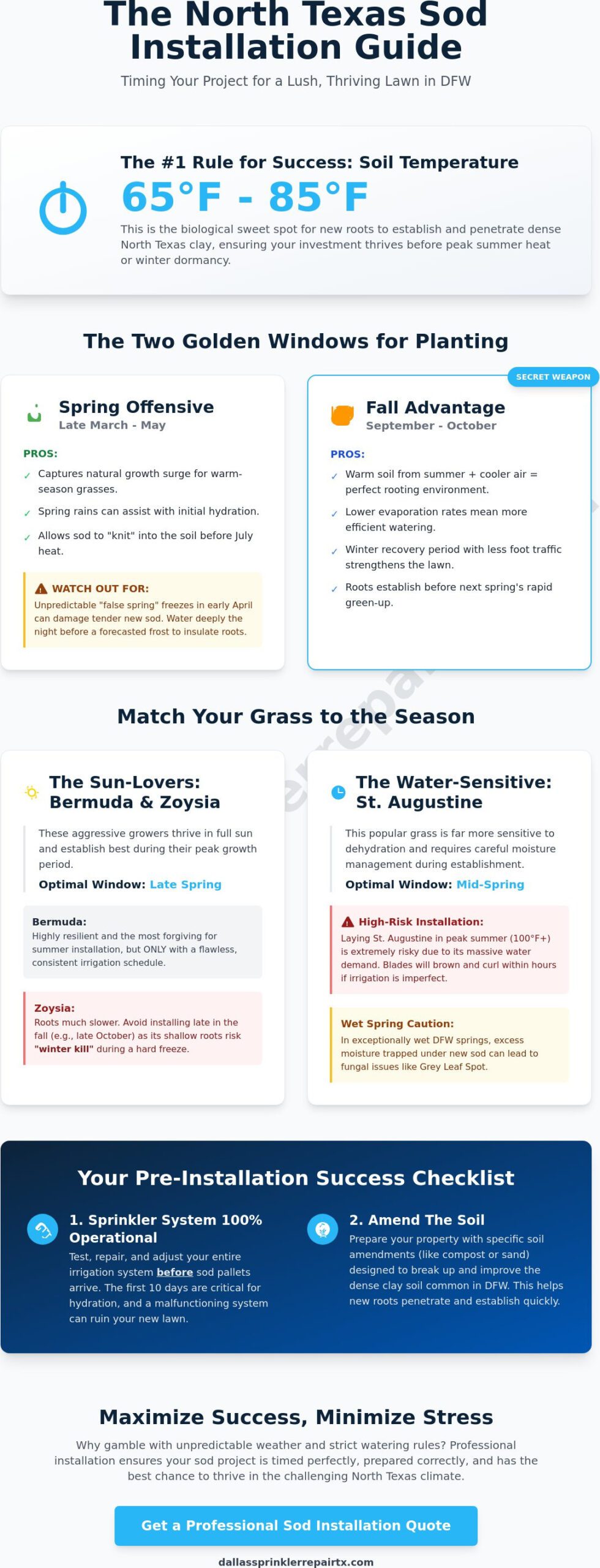
Success starts with the soil. In the Dallas-Fort Worth corridor, the best time to install sod in Texas is defined by a specific temperature range: 65°F to 85°F. This isn’t just a suggestion. It’s a biological requirement for root establishment. When the ground is too cold, roots remain dormant. When it’s too hot, the plant enters survival mode. This diverts energy away from the soil-to-root bond and toward heat management. Timing your project within these windows ensures the grass has the vitality to survive its first year. The heavy clay soil in North Texas requires this specific temperature balance to allow for proper nutrient absorption and root penetration.
The Case for Spring Installation
Most homeowners target late March through May. This window captures the natural surge of warm-season varieties like Bermuda grass (Cynodon dactylon). Spring rains often assist with initial hydration. However, you shouldn’t rely on them entirely. DFW residents must watch for the “false spring” freezes common in early April. A sudden drop below freezing can damage the tender blades of freshly laid turf. If a late frost is forecasted, a deep watering the night before helps insulate the roots. This surge in spring growth allows the grass to “knit” into the clay before the July heat arrives.
Why Fall is a Secret Weapon for DFW Homeowners
September and October represent a strategic advantage. Air temperatures begin to drop, but the heavy clay soil retains summer’s warmth. This creates a perfect environment for rooting before dormancy. Lower evaporation rates mean the water you apply stays in the root zone longer. This efficiency is critical under the 2026 Regional Water Plans developed by the Texas Water Development Board. These plans emphasize strict conservation and smarter irrigation schedules. Fall installations also benefit from a winter recovery period. With reduced foot traffic during the cooler months, the lawn has time to strengthen. By the time spring returns, the root system is already established and ready for rapid green-up. Professional sod installation during this window maximizes water efficiency. It provides peace of mind that your investment is protected from the harshest Texas elements. Choosing this window allows you to work with the environment rather than fighting against it. It’s the most reliable way to achieve a lush result without the stress of constant mid-summer monitoring.
Timing by Turf Type: Bermuda, St. Augustine, and Zoysia
Not all grass is created equal. While the general temperature windows are important, the best time to install sod in Texas depends heavily on the specific biology of your chosen turf. Warm-season varieties require active growth to “knit” into the ground. This process involves the roots physically anchoring into the soil surface to create a stable, living carpet. If you lay these grasses while they are dormant, you’re essentially placing a rug on top of the dirt. Without active metabolism, the sod cannot bond with your yard’s specific soil profile.
Bermuda and Zoysia: The Sun-Lovers
Late spring represents the sweet spot for these aggressive growers. Bermuda grass is particularly resilient. It’s the most forgiving variety for summer projects, but only if your irrigation is flawless. Zoysia requires more patience. It roots significantly slower than Bermuda and needs more time to establish its foundation. If you wait until late October to lay Zoysia in the DFW area, you risk “winter kill.” The shallow root system won’t be deep enough to survive a sudden North Texas hard freeze. Establishing these sun-loving types before the July heat peaks ensures they have the strength to handle the inevitable drought conditions of late summer. Understanding which variety performs best in your specific yard conditions is essential; our guide to the best sod for North Texas breaks down the top four grass varieties proven to thrive in DFW’s clay soil and strict watering limits.
St. Augustine: Managing the Shade and Water Balance
St. Augustine is a different beast. It lacks the deep rhizomes found in Bermuda, making it far more sensitive to dehydration during the establishment phase. Laying St. Augustine in the peak of a 100-degree August is a high-risk gamble. The water demand is massive. If your watering schedule is off by even a few hours, the blades will curl and brown quickly. Mid-spring is a much safer window. However, you must be cautious during exceptionally wet DFW springs. Excess moisture trapped under the new sod can lead to fungal issues like Grey Leaf Spot before the roots even take hold.
Consulting a Texas A&M sod installation guide can provide deeper scientific insights into the metabolic needs of these species. Each variety has a unique growth rate that dictates how quickly it will bond with your property. If you’re struggling to choose the right variety for your shade levels or water budget, professional sod installation services can help you select and time the perfect turf for your specific micro-climate. Proper selection ensures your lawn doesn’t just survive its first year but thrives for decades.
The Summer and Winter Myth: Can You Lay Sod Year-Round?
Many homeowners believe that the best time to install sod in Texas is strictly limited to the spring. While that window is ideal, modern irrigation technology allows for year-round installation. The real question is whether you’re prepared for the increased risk and maintenance. Off-season projects require a higher level of vigilance to protect your financial investment. In July, you’re fighting evaporation. In January, you’re fighting desiccation. Both can lead to a total loss if handled incorrectly.
Surviving the July Heat: The Irrigation Factor
Installing sod during a North Texas summer isn’t impossible, but it’s labor-intensive. You must follow the “keep it swampy” rule for the first 14 days. This means multiple watering cycles daily to ensure the soil under the sod never dries out. If the ground dries, the heavy clay soil common in DFW will shrink. This creates gaps between the sod pieces, exposing the delicate edges of the root system to 100-degree air. Before you commit to a summer install, schedule a professional sprinkler system tune-up. A single clogged nozzle or a broken zone can result in dead patches within 48 hours.
Winter Installation and the Risk of Desiccation
The most common question we hear is whether sod will freeze if laid in November. The answer is usually no. Most warm-season grasses are already dormant by late autumn. The real threat isn’t the cold; it’s the lack of moisture. Dormant sod still requires water to keep the roots alive. Without a functional root-to-soil bond, the grass is highly susceptible to desiccation during dry DFW winters. Ice storms pose an additional threat. If ice forms on unrooted sod, it can crush the crown of the plant. Consider this checklist before a winter install:
- Irrigation Access: Is your system winterized or can you still run it during dry spells?
- Soil Prep: Has the clay been tilled and amended to prevent pooling?
- Traffic Control: Can you keep pets and people off the dormant grass until spring?
- Budget: Are you prepared for the potential cost of replacing pieces that don’t “wake up” in April?
Winter installation is a gamble in North Texas. If you can wait for the moderate temperatures of spring, the success rate increases dramatically. However, if erosion or HOA requirements force your hand, professional oversight is your best defense against a failed establishment. Each season presents a different set of challenges that require specific adjustments to your maintenance routine.
Preparing Your Infrastructure for New Sod Success
The perfect window on the calendar means nothing if your property isn’t ready for the arrival of new turf. You might identify the best time to install sod in Texas, but if your irrigation system fails on day three, your investment is gone. Infrastructure is the true backbone of your landscape. Before the first pallet arrives, you must ensure your watering system is 100% functional. North Texas clay is notoriously dense and unforgiving. It requires specific soil amendments like compost or expanded shale to break up compaction before installation. In 2026, the trend has shifted toward using smart controllers to manage the complex 3-phase watering cycle required for establishment. These systems ensure you stay within the 2026 Regional Water Plan guidelines while providing the saturation new roots demand. For a complete breakdown of every step, refer to the ultimate North Texas preparation checklist before starting your project.
The Critical Sprinkler Audit
A single clogged nozzle or a misaligned head can kill a $500 patch of new sod in 48 hours. You can’t afford dry spots during the first ten days of establishment. Check for head-to-head coverage to ensure every square inch of the new turf receives uniform saturation. This isn’t just about the grass surviving; it’s about the roots knitting into the clay consistently. We strongly encourage homeowners to schedule a professional irrigation audit to verify pressure and zone efficiency before the sod delivery truck arrives.
Soil Preparation and Drainage
DFW clay soil compaction is the primary reason new lawns fail. If the soil is as hard as a brick, roots will grow sideways instead of down. This leads to poor heat resistance and higher water bills. Proper drainage system installation is equally vital to prevent water from pooling and rotting the new root mats. To ensure optimal North Texas root growth, till the soil to a depth of 4 to 6 inches before adding organic amendments. This creates a soft, nutrient-rich bed that allows the grass to establish deep, drought-resistant roots quickly. If your yard currently has standing water issues, address them now so your new investment doesn’t drown during the next DFW spring storm.
Don’t leave your lawn’s survival to chance. If your system needs attention, a sprinkler system tune-up is the most cost-effective way to protect your new sod. Ensuring your infrastructure is ready is the only way to guarantee the long-term health and vitality of your property.
Why Professional Sod Installation Outperforms DIY in DFW
Laying a new lawn involves more than just placing green rectangles on the dirt. A single pallet of sod covers 400 to 500 square feet and can weigh up to 4,500 pounds. Moving this volume across your property in the 2026 Texas heat is a grueling logistical challenge. If the process takes too long, the grass begins to cook from the inside out while still on the pallet. Professional teams ensure rapid, uniform placement that protects the vitality of the turf. Even if you choose the best time to install sod in Texas, a slow DIY installation can lead to high mortality rates for the grass blades. Licensed technicians understand the specific DFW micro-climates, ensuring that shade-tolerant varieties are placed exactly where they’ll thrive.
The long-term ROI of your property depends on successful establishment. A professionally installed lawn can see a return on investment between 100% and 150% in the Dallas market. This value is only realized if the grass survives its first year. By hiring experts, you avoid the high cost of replacement and the frustration of a patchy, failing landscape. A professional installation ensures the soil is properly prepped and the irrigation is calibrated to the specific needs of the new root system. It’s the difference between a temporary fix and a permanent landscape improvement.
The Aquamax Sprinkler Systems Approach: Beyond Just Laying Grass
We believe that sod installation and irrigation health are inseparable. Since 1998, Aquamax Sprinkler Systems has served homeowners in Dallas, Plano, and McKinney with a focus on total system reliability. Our approach integrates a comprehensive sprinkler audit with the installation process. We don’t just lay grass; we ensure the infrastructure is capable of supporting it. This provides the peace of mind that comes from working with licensed and insured specialists who have seen every soil condition the region has to offer. We eliminate the guesswork, allowing you to enjoy a thriving landscape without the physical burden of the labor.
Your Next Steps for a Lush 2026 Lawn
Don’t wait until the summer heat makes establishment a high-risk gamble. Contact us today for a professional system evaluation and a free estimate for your project. Timing is everything when you want to find the best time to install sod in Texas for your specific property. You can also check our current specials for seasonal maintenance packages that protect your new investment. Visit our customer reviews to see how we’ve helped your neighbors achieve functional excellence in their own yards. Take the first step toward a healthier, more beautiful property by scheduling your consultation now.
Secure Your Landscape for 2026
Achieving a resilient lawn in the Dallas-Fort Worth area requires a strategic approach that goes beyond the calendar. Identifying the best time to install sod in Texas is the first step toward a resilient property, but success depends on the synergy between soil temperature and irrigation health. You’ve learned that while spring and fall offer the most forgiving windows, your infrastructure must be ready to support new growth from day one. Proper soil preparation in our local clay is essential for deep rooting and long-term vitality.
Since 1998, we’ve provided specialized DFW clay soil solutions to ensure local landscapes thrive. Our team consists of licensed and insured irrigation specialists who understand how to balance seasonal timing with the strict 2026 water regulations. We handle the heavy logistics and technical calibration so you can enjoy the peace of mind that comes with a professionally established lawn. Don’t leave your investment to chance. Get a Professional Sod Installation Quote for Your DFW Home today. We’re ready to help you transform your yard into a lush, sustainable environment that lasts for years.
Frequently Asked Questions
Is it better to lay sod in the spring or fall in Dallas?
Spring is the primary window for most homeowners because it aligns with the natural growth surge of warm-season grasses. However, early fall is often considered the best time to install sod in Texas by professionals. Planting in September or October allows the root system to establish in warm soil without the intense stress of the July sun, leading to a more resilient lawn by the following summer.
How much should I water new sod in the Texas summer?
You must maintain a “swampy” soil consistency for the first 7 to 10 days after installation. This typically requires two to four short watering cycles per day to prevent the heavy North Texas clay from shrinking. If the soil pulls away from the sod edges, the roots will dry out and die. After the initial establishment phase, scale back to deeper, less frequent watering to encourage root penetration.
Can I install sod myself or should I hire a professional in DFW?
Professional installation is highly recommended due to the extreme weight of sod pallets and the speed required to prevent turf loss. A single pallet covers roughly 450 square feet and can weigh up to 4,500 pounds. Professionals have the equipment to till dense clay and the expertise to calibrate your irrigation system immediately, which is vital for survival in the DFW climate.
What happens if it freezes right after I lay new sod?
A sudden freeze can cause desiccation, which kills the roots of unestablished sod. If a North Texas frost is forecasted, water your new lawn deeply the evening before. This moisture acts as an insulator for the root zone and the crown of the plant. While the blades may turn brown and go dormant, the hydrated roots are much more likely to survive the temperature drop.
How long does it take for sod to root in North Texas clay soil?
It typically takes 14 to 21 days for the root system to begin anchoring into the soil. You can check the progress by gently lifting a corner of a sod piece. If you feel firm resistance, the roots are successfully knitting into the clay. While the initial bond happens quickly, a full, deep-rooted establishment that can withstand a Texas drought often takes an entire growing season.
What is the best type of sod for high-heat areas like Frisco and Plano?
Bermuda and Zoysia varieties are the top choices for the high-heat, full-sun environments common in Frisco and Plano. TifTuf Bermuda is specifically known for its exceptional drought tolerance and rapid recovery. Zoysia varieties like Palisades provide a lush, carpet-like feel while maintaining high heat resistance. Both types require a fully functional sprinkler system to survive the transition from the farm to your yard. For a detailed comparison of which specific cultivars perform best in DFW conditions, see our full breakdown of the best sod for North Texas grass varieties for 2026.
Do I need to fix my sprinklers before or after the sod is installed?
You must repair and tune up your irrigation system before the sod arrives on your property. New turf requires immediate and uniform saturation to survive the first 48 hours. If you discover a broken head or a dry zone after the grass is laid, you risk losing a significant portion of your investment. A pre-installation audit ensures every square inch of your new lawn receives water.
How soon can I mow my new Texas lawn after installation?
Wait at least 14 to 21 days before your first mow to ensure the roots have anchored. Perform a “tug test” by pulling on the grass; if the sod doesn’t lift, it’s safe to mow. Use the highest setting on your mower to avoid scalping the young blades. Always ensure your mower blades are sharp to prevent tearing the grass, which can invite disease during the establishment phase.