

Article by
Robert Maxvill
Owner of Aquamax Sprinkler Systems, American Sprinkler Repair and Dallas Drainage Systems.
If you live in Dallas, you aren’t just managing a lawn; you’re managing a structural threat. You’ve likely watched your backyard turn into a marsh after a single spring storm, or noticed the telltale cracks in your drywall that signal a shifting foundation. It’s a common frustration to face these issues while trying to decipher the yard drainage system cost from a stack of inconsistent contractor quotes. You deserve a dry, usable backyard and the peace of mind that comes with protecting your home from foundation repairs that often exceed $10,000.
This guide provides the clarity you need to budget effectively for 2026. We will break down the variables that influence pricing and show you how professional water management protects your property’s long-term value. You’ll discover how to navigate the specific challenges of North Texas clay soil and choose a system that keeps your foundation stable and your landscape thriving. It is time to stop the swamp and start investing in a permanent solution for your home.
Key Takeaways
- Establish a realistic 2026 budget by understanding the standard market range for residential drainage projects across the Dallas-Fort Worth Metroplex.
- Determine whether your property requires surface or subsurface drainage hardware to effectively manage North Texas runoff and prevent soil saturation.
- Evaluate how local clay soil and “hard pan” conditions influence your total yard drainage system cost and the specialized equipment required for installation.
- Identify the specific landscape variables, such as existing trees or fences, that explain price differences between professional contractor quotes.
- Protect your home’s value by weighing the cost of a proactive drainage system against the significantly higher expense of foundation piering and slab repair.
Budgeting for Yard Drainage Systems in Dallas-Fort Worth
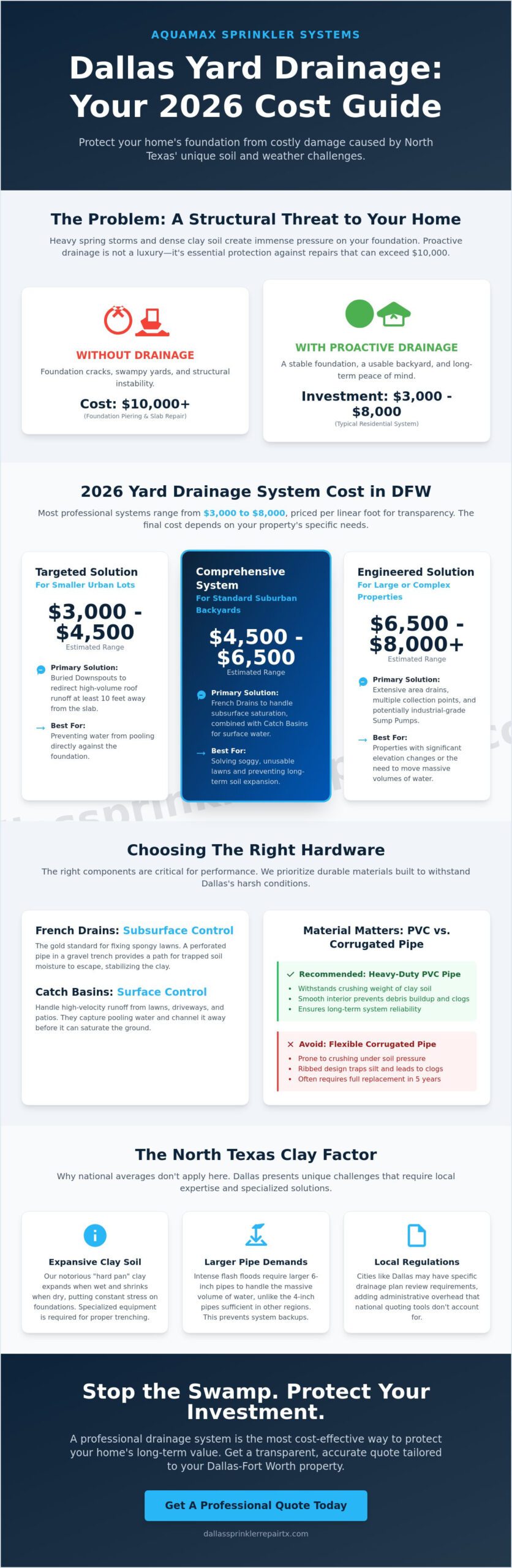
Yard drainage isn’t just a collection of pipes and gravel. It’s a custom-engineered solution designed to capture, redirect, and discharge runoff before it saturates your soil or compromises your slab. In the North Texas market, homeowners often find that the 2026 yard drainage system cost for residential properties typically ranges between $3,000 and $8,000. This range reflects the complexity of the Dallas-Fort Worth landscape, where simple fixes rarely suffice. Most reputable local contractors use a “per linear foot” pricing model. This method provides transparency and ensures you only pay for the exact distance of trenching and materials required for your specific lot. It eliminates the guesswork found in flat-fee quotes that don’t account for the actual scope of work.
A basic project might involve burying downspouts to move roof runoff away from the foundation. More complex systems integrate multiple components like catch basins, solid PVC lines, and French drains to handle both surface water and subsurface saturation. The difference in investment often comes down to the volume of water your land must process during a typical North Texas spring storm. A single heavy downpour can drop thousands of gallons of water on your roof. If that water isn’t moved at least ten feet from your slab, it begins to erode the soil and exert pressure on your home’s structural integrity.
Average Price Ranges for Common DFW Scenarios
For smaller urban lots, a targeted downspout redirection system is often the entry-point for professional water management. This setup focuses on the highest volume of water coming off your roof. If you have a standard suburban backyard with standing water issues, a mid-range budget usually covers a comprehensive French drain installation. Large estate-level properties or those with significant elevation changes may require high-end engineering. These projects often include industrial-grade sump pumps or extensive area drains to move massive volumes of water across hundreds of feet of terrain.
Why National Averages Often Miss the Mark for Texas
Relying on national home improvement sites can lead to budgeting errors. Dallas faces unique environmental factors like high humidity and intense flash flood patterns that require larger pipe diameters than other regions. Standard four-inch pipes might work in the Midwest, but North Texas often demands six-inch lines to prevent system backups during torrential rain. Municipal regulations also play a role. For example, the City of Dallas may require specific drainage plan reviews for major alterations, which adds to the administrative overhead. Local material availability also fluctuates. The cost of high-quality gravel and schedule 40 PVC in North Texas is influenced by regional supply chains, making local expertise essential for an accurate quote.
Cost Breakdown by Drainage Solution Type
Selecting the right hardware is the most significant factor in your total yard drainage system cost. While many homeowners focus on the price per foot, the performance-to-price ratio depends on whether you are fighting surface runoff or subsurface saturation. Surface water is visible pooling on lawns or driveways after a storm. Subsurface water is the invisible moisture trapped in the soil that keeps your grass soggy for days. Combining different hardware types often lowers the cost per component because a single trench can sometimes house multiple lines. This efficiency allows for a more robust defense without doubling the labor costs.
Choose quality materials. We prioritize heavy-duty PVC over flexible corrugated pipe. Corrugated lines are prone to crushing under the weight of Dallas clay and often clog with silt. NDS-grade PVC provides a smooth interior that prevents debris buildup and withstands the shifting pressure of expansive soil. Investing in higher-quality materials now prevents the need for a full system replacement in five years.
French Drains: Subsurface Water Control
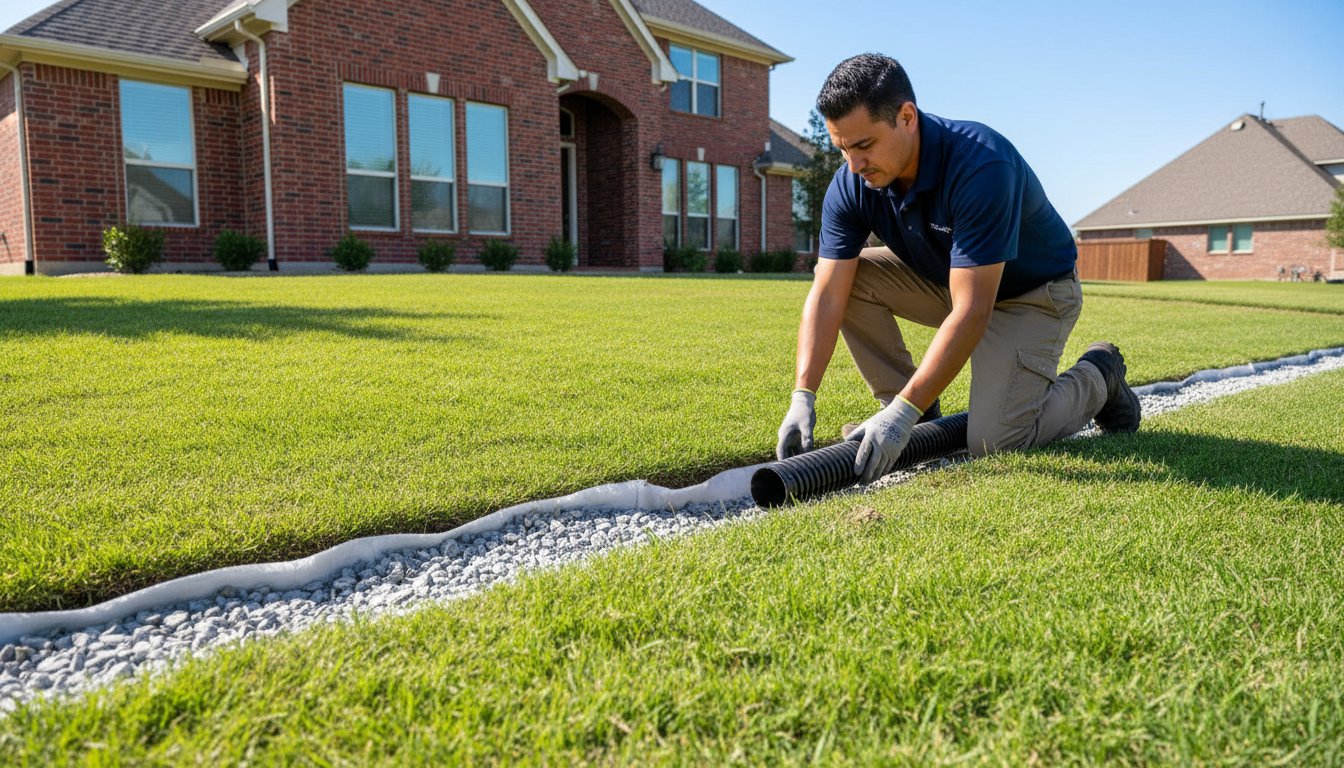
French drains are the gold standard for subsurface water control. These systems include a perforated pipe buried in a trench filled with drainage aggregate and wrapped in filter fabric. This configuration is essential for improving North Texas’ clay soil performance by providing a path of least resistance for trapped moisture. While it adds to the initial yard drainage system cost, it is your most cost-effective solution for long-term soil stability. If your lawn stays spongy long after the rain stops, this is the hardware you need.
Surface Drainage: Catch Basins and Channel Drains
Catch basins and channel drains handle high-velocity runoff. A standard 12×12 catch basin is ideal for low spots where water naturally collects. For driveways, channel drains prevent garage flooding by intercepting water before it reaches the threshold. Your choice of grates affects the final quote. Standard plastic grates are functional and affordable, while decorative metal grates offer a premium aesthetic at a higher price point.
Sump Pumps and Discharge Lines
When your property lacks the natural slope required for gravity-fed drainage, a sump pump becomes necessary. These systems require a collection basin and a dedicated electrical connection. We often use pop-up emitters at the termination point. These are an affordable way to release water safely into the parkway without leaving an open pipe exposed to debris. If you’re dealing with complex elevation issues, a professional drainage system installation ensures the pump is sized correctly for your home’s needs.
The North Texas Clay Factor: Why Local Soil Drives Labor Costs
The soil beneath your feet in Dallas isn’t just dirt; it is a dense, expansive material known as Blackland Prairie clay. This specific geological makeup is the primary reason labor accounts for a significant portion of your yard drainage system cost. Unlike the sandy or loamy soils found in other parts of the country, Dallas clay exerts immense pressure on anything buried within it. It requires specialized equipment and a high level of physical effort to manage correctly. If a contractor provides a low-ball quote without mentioning the difficulty of digging in our local “black gumbo,” they likely lack the experience needed to install a system that lasts.
The physical properties of this soil change drastically with the weather. During the “hard pan” conditions of a Texas summer, the clay becomes as hard as concrete. This can double the time required for trenching if the right machinery isn’t used. Proper backfilling is equally important to the longevity of the project. We use robust drainage aggregate, such as large river rock or crushed stone, to fill the space around the pipe. This prevents the heavy clay from shifting and crushing the new lines as the seasons change. The machinery and specialized labor required to cut through this soil are the main drivers of the total yard drainage system cost in our region.
Trenching in Expansive Clay
Manual digging is rarely a viable option for professional drainage installation in North Texas. The density of the clay makes hand-trenching slow and inefficient, often leading to shallow pipes that fail prematurely. We utilize heavy machinery like dedicated trenchers and mini-excavators to ensure every line is set at the precise depth and grade. These equipment costs are reflected in the labor bid, but they guarantee the structural integrity of the installation. Additionally, clay expands when wet and shrinks when dry, which means we must haul away excess soil and replace it with stable aggregate. This debris hauling is a critical line item that ensures your lawn doesn’t end up with unsightly mounds of displaced dirt.
Foundation Safety and Soil Moisture Balance
Effective drainage isn’t just about removing water; it’s about maintaining a stable moisture balance to protect your home’s foundation. The “heave and shrink” cycle common in DFW causes foundations to crack as the clay soil underneath shifts violently. A well-designed system prevents hydrostatic pressure from building up against your slab while ensuring the soil doesn’t become dangerously desiccated. In some cases, we recommend integrating drip irrigation for foundation alongside your drainage lines. This dual approach keeps the soil moisture consistent year-round, preventing the extreme contraction that leads to costly structural damage. A “cheap” drainage system that dries out the soil too aggressively can be just as damaging as a flood, making professional calibration essential.
Hidden Variables: What Drives a Drainage Quote Up or Down?
It’s common to receive two bids for the same property that differ by $2,000 or more. This discrepancy usually isn’t a matter of arbitrary pricing. It’s a reflection of how a contractor plans to navigate the specific obstacles on your land. Your total yard drainage system cost is heavily influenced by what stands in the way of a straight trench. Fences, swimming pools, and established garden beds require careful navigation. A professional quote accounts for the time needed to work around these features without causing collateral damage to your property.
Utilities present another major variable. Every professional installation begins with “Utility Locates” to identify gas, water, and electrical lines. However, private irrigation lines aren’t always marked by the city. Digging in a yard with an existing system carries the risk of severing pipes or control wires. If a crew isn’t careful, you might end up needing sprinkler repair Dallas services to restore your lawn’s hydration. A higher bid often includes the labor and materials to proactively move or repair these lines as the drainage work progresses.
Finally, consider the state of your yard once the pipes are in the ground. Site restoration is a critical component of a complete bid. This includes the cost of high-quality sod, mulch, and replacement plants to hide the evidence of the construction. A “cheap” quote might leave you with an open dirt scar across your lawn, while a professional proposal ensures your landscape looks better than when the project started. This methodical approach to restoration is what separates a long-term solution from a temporary fix.
Site Accessibility and Hardscape Penetration
Access is everything. In neighborhoods like Highland Park, narrow gated entries can prevent the use of standard machinery, forcing crews to use smaller, less efficient equipment or perform manual labor. Tunneling under a concrete sidewalk or driveway to reach a discharge point is more expensive than routing a pipe through an open flowerbed. Hand-digging near the root zones of mature oak trees is also a premium service. It protects the health of your trees but adds significant man-hours to the project.
Permits and Municipal Compliance
North Texas suburbs like Frisco, Plano, and McKinney have strict ordinances regarding water runoff. You cannot simply dump your yard’s water onto a neighbor’s property or into the street without following specific rules. Many municipalities require detailed engineering plans before you can connect to a city storm sewer. These permit fees and the administrative time to secure them are non-negotiable parts of a professional bid. They ensure your system is legal and won’t result in city fines later on. For a system that meets all local standards, contact us for a professional drainage system installation today.
The Real ROI: Drainage Cost vs. Foundation Repair
Viewing a professional drainage system as an expense is a mistake; it’s a calculated investment in your home’s structural longevity. In the Dallas-Fort Worth market, a comprehensive yard drainage system cost typically ranges between $3,000 and $7,000. While this is a significant upfront commitment, it pales in comparison to the alternative. Foundation repairs for pier-and-beam or slab homes in North Texas frequently average between $15,000 and $30,000. By addressing water management now, you effectively avoid a five-figure restoration project later.
Aquamax Sprinkler Systems stands out as a specialist because we understand the intersection of irrigation and drainage. A yard is a living ecosystem where water must be both delivered and removed with precision. Our background in sprinkler systems allows us to design drainage that works in harmony with your existing landscape, ensuring your soil remains stable without becoming a desert. We don’t just move water; we manage it to protect your most valuable asset.
Preventing Structural Damage
Look for the warning signs that your property is already at risk. These symptoms suggest your soil is moving more than it should:
- Doors or windows that stick in their frames.
- Hairline cracks appearing in exterior brick or interior drywall.
- Soil pulling away from the edge of the concrete slab.
- Visible pooling that lasts more than 24 hours after a storm.
A properly installed drainage system installation acts as a moisture barrier for your home’s perimeter. It intercepts water before it can infiltrate the soil near your slab. Consider the volume of water at play: 1 inch of rain on a 2,000 sq ft roof creates 1,200 gallons of runoff. Without a plan to move that water, your foundation is essentially sitting in a high-pressure bath. If you are currently dealing with drainage for standing water in yard areas around your home, addressing it promptly with an engineered solution is the most effective way to protect your slab from long-term damage.
Choosing a Licensed and Insured Dallas Specialist
The Dallas market is full of contractors who don’t understand the nuances of slope and grade. A poorly designed system can actually make your problems worse by trapping water in new, unexpected areas. Aquamax Sprinkler Systems has been serving the North Texas community since 1998. This long-term presence is your guarantee of reliability and technical expertise. We don’t just dig trenches; we engineer solutions that stand the test of time. Get a custom drainage assessment and fixed-price quote from Aquamax Sprinkler Systems today.
Secure Your Home Against the Next North Texas Storm
Protecting your property in the DFW Metroplex requires more than just surface-level fixes. You now understand how the yard drainage system cost reflects a specialized engineering process tailored to our dense Blackland Prairie clay. From selecting high-grade PVC over corrugated pipe to navigating the hidden variables of local utilities and landscape obstacles, every choice you make today prevents a much larger financial burden tomorrow. A dry, stable foundation is the most critical asset for any North Texas homeowner.
Aquamax Sprinkler Systems has been a trusted partner in the community since 1998. Our licensed and insured technicians provide custom-engineered solutions that go beyond simple trenching. We balance soil moisture to keep your foundation stable while ensuring your backyard remains a dry, usable space for your family. Schedule Your Professional Drainage Consultation to receive a fixed-price quote and a comprehensive assessment of your property’s needs. Take the final step toward a thriving, protected landscape today.
Frequently Asked Questions
How much does a French drain cost per foot in Dallas?
Exterior French drains typically cost between $10 and $15 per linear foot for parts and labor in the Dallas area. If you are calculating the total yard drainage system cost, the average range for a fully installed system usually falls between $25 and $35 per linear foot. These prices fluctuate based on the depth of the trench and the type of drainage aggregate required to handle the local soil density.
Will homeowners insurance cover the cost of a yard drainage system?
How long does it take to install a typical residential drainage system?
A typical residential project usually takes between one and three days to complete. Smaller tasks, such as burying a few downspouts, can often be finished in a single afternoon. Larger systems that require extensive trenching through heavy clay and the installation of multiple catch basins will take longer. We prioritize efficiency to ensure your landscape is restored and functional as quickly as possible.
Do I need a permit to install a French drain in McKinney or Frisco?
You generally need a permit if your drainage system connects to the municipal storm sewer or involves significant regrading of your lot. While the City of Dallas exempts minor leak repairs, suburbs like McKinney and Frisco have strict ordinances regarding how water is discharged. It’s essential to verify local requirements before digging to ensure your system complies with municipal codes and doesn’t negatively impact neighboring properties.
Can I install a yard drainage system myself to save on labor?
You can attempt a DIY installation, but it often leads to system failure in North Texas clay. Improper grading is the most common mistake; if the pitch isn’t exactly right, water will pool in the pipe and saturate the soil near your foundation. Professionals use transit levels and specialized trenching machinery to guarantee the water moves away from your home. Saving on labor now can lead to much higher costs later.
What is the most effective drainage system for Dallas clay soil?
A hybrid system that uses both surface catch basins and subsurface French drains is the most effective solution for our region. Catch basins handle the immediate runoff from heavy Texas downpours, while French drains manage the deep-soil moisture that causes clay to expand. We always recommend using smooth-wall PVC rather than corrugated pipe. This prevents the silt buildup and crushing that frequently occur in our dense, shifting soil.
How often does a yard drainage system need maintenance?
You should inspect your drainage system at least twice a year, specifically before the heavy rain seasons in the spring and fall. Maintenance involves clearing debris from catch basin grates and ensuring that discharge points like pop-up emitters aren’t blocked by mulch or overgrown grass. Regular checks prevent small clogs from turning into major backups that could threaten your foundation during a flash flood.
Will a drainage system increase my home value in North Texas?
A professional drainage system significantly increases your home’s marketability and value in the DFW Metroplex. Local buyers are well aware of the foundation risks associated with clay soil and often look for homes that have proactive water management in place. Providing documentation of a custom-engineered system offers the structural peace of mind that can lead to faster sales and higher offers during the inspection process.