
Article by
Robert Maxvill
Owner of Aquamax Sprinkler Systems, American Sprinkler Repair and Dallas Drainage Systems.
In the volatile climate of North Texas, a professional irrigation system is far more than a convenience; it’s a structural insurance policy for your home’s foundation. While many homeowners focus on curb appeal, the real value lies in stabilizing the aggressive clay soils that shift and crack during our brutal summer heat. You’re likely asking is a sprinkler system a good investment in Texas as municipal water rates climb and drought restrictions tighten. The answer is found in the data. 2026 reports show an estimated 86% return on investment for properties in the Dallas-Fort Worth area.
We know the stress of managing the cycle of soggy yards and bone-dry earth. This guide explores how professional installation protects your property from expensive foundation repairs while automating your lawn’s health. You’ll discover the financial impact of smart technology, which can reduce outdoor water use by 30% to 50%, and learn about the latest TCEQ regulations and local rebate programs. We’ve compiled the essential facts on costs and long-term value to help you make a professional decision for your property.
Key Takeaways
- Learn how zone counts and local soil density dictate your total installation costs, ensuring you don’t rely on inaccurate national averages.
- Discover why asking is a sprinkler system a good investment in Texas reveals a strategic advantage for protecting your home’s foundation from shifting clay.
- Compare commercial-grade components with retail-grade parts to understand how professional-grade hardware extends the lifespan of your irrigation system.
- Explore how smart technology and freeze sensors safeguard your lawn against Texas “blue northers” while strictly adhering to local water ordinances.
- Identify the critical components of a professional hydraulic audit so you can evaluate quotes with the confidence of a seasoned property owner.
The Texas Reality: Is a Sprinkler System a Good Investment?
Determining whether is a sprinkler system a good investment in Texas requires looking past generic national averages. Many online sources suggest a system costs roughly $2,500; however, these figures often ignore the reality of trenching in North Texas Blackland Prairie clay. The high density and rocky composition of our soil demand heavier equipment and significantly more labor hours than the sandy regions found in other states. In 2026, the investment for a professional New Sprinkler System Installation reflects these local geological challenges. When you ask is a sprinkler system a good investment in Texas, you must view it as a hedge against the rising cost of labor and the 86% return on investment typically seen in Dallas and Austin markets.
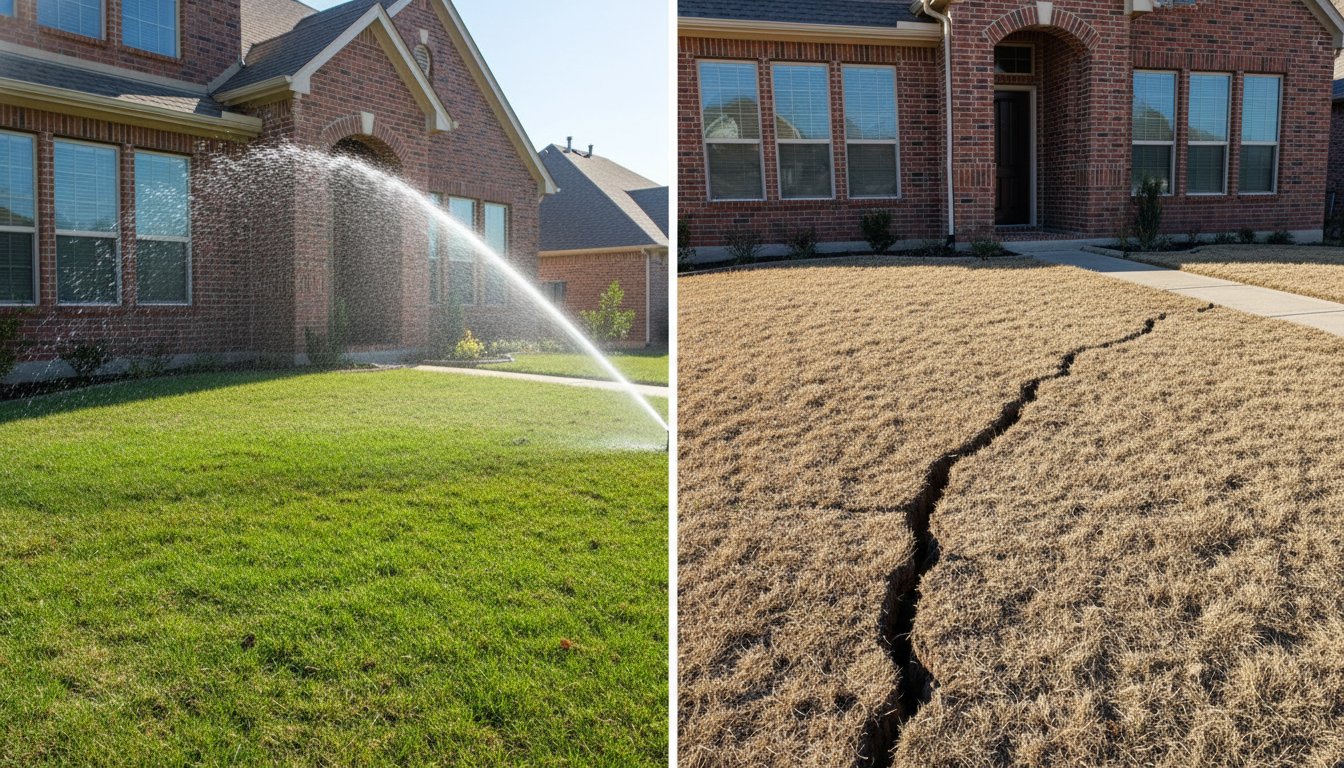
Modern irrigation sprinkler systems are no longer just about convenience. They serve as a critical tool for structural preservation. In North Texas, the soil expands and contracts violently based on moisture levels. A professionally designed system keeps the moisture perimeter around your home consistent. This prevents the soil from pulling away and causing catastrophic foundation failure. It’s a proactive solution that addresses the environmental volatility of the region while maintaining a thriving landscape.
Property Value and Buyer Expectations in DFW
In the competitive DFW real estate market, an automated system is often viewed as a standard requirement rather than an upgrade. Buyers expect “listing-ready” curb appeal the moment they pull into the driveway. A lush, green lawn suggests the property has been maintained with care, providing psychological peace of mind. For many buyers, the prospect of managing a large yard without automation is a dealbreaker. It reduces the perceived burden of homeownership, making your property move-in ready from day one and supporting a higher resale price.
The Cost of Inaction: Manual Watering vs. Automation
Dragging hoses in 100-degree heat is a grueling task that most homeowners eventually abandon. This inconsistency leads to a “death and replacement” cycle for your lawn. Replacing dead turf with new Sod Installation is an expensive recurring cost that far exceeds the price of a well-maintained irrigation system. Manual sprinklers also suffer from a massive efficiency gap. They often waste water by over-saturating some areas while leaving others bone-dry. Automation ensures a precise hydraulic design that delivers the exact amount of water needed. This protects your landscape and your wallet from the waste associated with poor head-to-head coverage.
Key Variables Driving the Cost of a New Sprinkler System
While square footage provides a baseline, it’s rarely the final word on pricing. When evaluating is a sprinkler system a good investment in Texas, you must account for the specific technical requirements of your property. The primary cost driver is the number of zones required to manage your landscape’s hydraulic needs. Each zone adds to the complexity of the manifold and the capacity of the controller. In North Texas, digging these zones comes with a labor premium due to our heavily compacted clay. Unlike softer soils, this terrain requires specialized trenching equipment and more physical labor to reach the appropriate depth for pipe safety.
Landscape features like swimming pools, retaining walls, and established trees also complicate the design. These obstacles require careful routing and often necessitate boring under driveways or sidewalks to ensure full head-to-head coverage. Additionally, the size of your water meter and your home’s static water pressure dictate how many heads can run simultaneously. If pressure is low, more zones are needed to maintain efficiency, which increases the total investment. Following official guidelines for water conservation in Texas can help you design a system that maximizes every drop while staying within municipal limits.
Zone Complexity and Hydraulic Design
A professional system separates turf, shaded areas, and flower beds into distinct zones. This customization prevents over-watering your St. Augustine grass while leaving your flower beds parched. Matching the system’s pressure to the specific needs of North Texas suburbs ensures your hardware lasts longer and performs better. If you are starting from scratch, a professional New Sprinkler System Installation will account for these variables during the initial hydraulic audit.
Foundation Drip Lines: The Ultimate Texas Add-On
A drip irrigation system installation is perhaps the most critical component for DFW homeowners. Our clay soil undergoes a “shrink-swell” cycle that can crack concrete slabs. By maintaining consistent moisture levels around your perimeter, you prevent the soil from pulling away during droughts. The cost of adding foundation drip lines is a fraction of the average price for foundation piering and repair. This structural protection is a major reason why an automated system is such a high-value asset in this region.
Permits, Codes, and Backflow Testing
Compliance is not optional in cities like Dallas, Plano, or Frisco. You must budget for municipal permits and the mandatory installation of a backflow prevention device. This device protects the city’s drinking water from cross-contamination. Every new system requires testing by a licensed professional to meet state regulations. Hiring a licensed irrigator ensures your system is code-compliant, preventing future fines and ensuring your investment is fully documented for any future home sale.

Professional Installation vs. Budget Shortcuts
Choosing between a licensed professional and a budget handyman often determines whether is a sprinkler system a good investment in Texas or a recurring financial drain. While some online forums suggest that DIY installs can save up to 50% on initial costs, these estimates fail to account for the specialized hydraulic engineering required for the Texas Blackland Prairie. Retail-grade parts from big-box stores are manufactured for general consumer use; they lack the reinforced housings and high-grade seals found in commercial components. In our region, where surface temperatures regularly exceed 100 degrees, these cheaper plastics become brittle and fail within a few seasons, leading to expensive system-wide overhauls.
The quality of your underground sprinkler installation also directly impacts your home’s structural integrity. A professional installer ensures that mainlines and lateral pipes are trenched to a consistent depth, protecting them from the soil’s thermal expansion and contraction. Budget shortcuts often result in shallow lines that are prone to cracking. These silent underground leaks saturate the area near your slab, potentially leading to foundation upheaval. Investing in a system designed by a licensed specialist provides the peace of mind that your property is protected by a durable, high-performance asset rather than a temporary fix.
The Value of Commercial-Grade Components
Professional-grade valves and heads utilize heavy-duty springs and debris-resistant seals that thrive in the harsh North Texas environment. We prioritize the installation of master valves, which act as a secondary fail-safe to shut off water at the source if a zone valve fails. This prevents catastrophic water loss and property damage. To achieve maximum landscape irrigation efficiency, we focus on head-to-head coverage. Head-to-head coverage refers to a design where the spray from one sprinkler head reaches the base of the next, ensuring no dry spots exist and preventing the “hidden” cost of water waste.
Long-Term Ownership Costs
Low-quality systems require more frequent sprinkler repair in Dallas, often due to poor hydraulic design or subpar materials. Research indicates that poorly built systems can waste 20% of the water they use, which significantly inflates your monthly utility bills. Over time, these inefficiencies create “wet spots” that rot expensive sod and attract pests like mosquitoes and termites. A system designed by a licensed Texas irrigator avoids these pitfalls by balancing pressure and flow, ensuring your landscape remains vibrant without the burden of constant maintenance or structural risk.
Maximizing ROI with Smart Technology and Efficiency
Protection from “blue northers” is essential for system longevity and property safety. Rain and freeze sensors automatically pause cycles when temperatures drop or precipitation starts, preventing hazardous ice accumulation on sidewalks and protecting pipes from burst-related damage. Many North Texas municipalities incentivize these upgrades through financial programs. For example, the Lower Colorado River Authority (LCRA) offers WaterSmart Rebates covering 50% of the cost, up to $3,000, for equipment upgrades as of June 2026. Austin and Georgetown also provide significant rebates, often reaching $1,000 for irrigation system improvements. High-efficiency nozzles further maximize this ROI by delivering larger water droplets that resist wind drift and reduce the wasteful runoff often seen on sloped North Texas yards.
Smart Sprinkler Controllers and Remote Management
A professional smart sprinkler controller installation provides more than just convenience; it offers advanced leak detection. You’ll receive smartphone alerts if the system detects unusual flow rates, allowing you to shut off the water remotely before a minor leak causes foundation issues or massive water bills. Weather-based scheduling ensures you never waste money on excessive irrigation, especially during the baseline “Conservation Stages” implemented by cities like Austin and Fort Worth. This proactive management keeps your utility costs predictable even during the hottest months.
Lawn Health as a Financial Asset
Maintaining lawn health is a strategic financial move that protects your property’s value. The cost of a professional system is a fraction of what you’ll pay for repeated sod installation after a severe drought cycle. Beyond the grass, consistent hydration protects your mature trees. These are your property’s most expensive landscape assets and take decades to replace. When you evaluate if is a sprinkler system a good investment in Texas, consider that a thriving landscape increases the “green days” your property enjoys while maintaining the curb appeal necessary for a high-value resale. Consistent moisture also prevents the soil from pulling away from your slab, providing a vital layer of structural protection.
Ensure your system is operating at peak efficiency by scheduling a professional Sprinkler System Tune-Up to calibrate your sensors and nozzles for the upcoming season.
Securing a Reliable Quote for Your DFW Property
Securing a professional quote is the final step in determining if is a sprinkler system a good investment in Texas for your specific property. A legitimate on-site consultation should always include a full hydraulic audit. This process measures your home’s static water pressure and meter capacity to ensure the system operates efficiently without damaging your plumbing. A reliable estimator provides a detailed, written proposal that specifies zone counts and part brands. This level of detail allows you to compare bids accurately and ensures you aren’t paying for a system that cuts corners on coverage or durability. Ask your estimator how they plan to handle boring under walkways or if they include a master valve for leak prevention. These technical questions reveal the difference between a high-performance installation and a budget shortcut.
When you evaluate if is a sprinkler system a good investment in Texas, the quality of the technical design is just as important as the price. A well-designed system prevents the “shrink-swell” clay cycle from damaging your slab while maintaining the curb appeal necessary for a high-value resale. We recommend reviewing every proposal for specific hardware choices and layout strategies that prioritize water conservation and structural safety.
Comparing Proposals Beyond the Bottom Line
Price is only one factor in a professional irrigation bid. Verify that your quote includes the cost of municipal permits and mandatory backflow testing required by Texas law. Many low-cost contractors omit these items to lower their initial price, leaving the homeowner liable for city fines. Look for name-brand components like Rain Bird or Hunter in the technical specifications. These manufacturers provide the durability needed for North Texas summers. If a bid seems unusually low, it likely excludes critical features like foundation drip lines or uses fewer zones than necessary. This leads to the water waste and dry spots that ultimately devalue your investment.
The Aquamax Advantage in North Texas
Aquamax Sprinkler Systems has been the trusted choice for DFW families since 1998. We understand the unique challenges of the North Texas Blackland Prairie and design every system with commercial-grade hydraulics. Our team serves Dallas, Plano, Frisco, and McKinney with local, licensed expertise. We offer a 100% satisfaction guarantee, ensuring your system performs exactly as promised. Our sprinkler installation process is methodical and clean. We respect your existing landscape and minimize disruption to your yard during the trenching process. We position ourselves as your partner in property maintenance, providing the reliability you need to protect your home’s structural and aesthetic value.
Get a Professional Sprinkler Installation Quote Today
Protecting Your Property’s Future
Deciding if is a sprinkler system a good investment in Texas requires balancing upfront costs against long-term structural and financial security. A professionally designed system acts as a vital insurance policy for your foundation by stabilizing aggressive North Texas clay. It also delivers a substantial return on investment through increased property value and reduced water waste. By choosing commercial-grade components and smart technology, you move from a cycle of manual labor to a proactive property management strategy.
Aquamax has served DFW homeowners since 1998. Our licensed and insured technicians are specialists in North Texas clay soil conditions; we ensure your system is built for longevity and efficiency. Don’t leave your landscape’s health to chance. Request Your Professional Installation Quote from Aquamax today. We look forward to helping you achieve a thriving, low-maintenance landscape that protects your home for years to come.
Frequently Asked Questions
How much does a new sprinkler system cost per zone in Dallas?
The cost per zone varies based on the total number of zones and the complexity of your property’s hydraulic needs. Larger systems often have a lower cost per zone because the price of the main controller and manifold is spread across more areas. In Dallas, the investment reflects the specialized labor required to trench through compacted clay soil and the use of commercial-grade components.
Is it cheaper to install a sprinkler system myself in Texas?
DIY installation might save on initial labor, but it often leads to higher long-term costs due to hydraulic failures and water waste. Texas law requires a licensed irrigator for most installations to ensure the system meets state backflow prevention standards. Professional design prevents expensive foundation damage and ensures your system complies with municipal codes, which protects you from future city fines.
Does a new sprinkler system increase my home’s value in DFW?
Yes, a professional irrigation system is a significant asset that enhances property resale value in the DFW market. Research indicates that when homeowners ask is a sprinkler system a good investment in Texas, they find an average return on investment of 86%. It serves as a standard feature that signals to buyers that the property’s landscape and foundation have been professionally maintained.
How long does it take to install a professional irrigation system?
Most residential installations are completed within one to three days. The exact timeframe depends on the size of the yard, the number of zones, and obstacles like retaining walls or driveways that require boring. A professional crew works to minimize the time your lawn is under construction while ensuring all pipes are buried at the correct depth for long-term safety.
What is the best time of year to install a sprinkler system in North Texas?
Late fall, winter, and early spring are the ideal times for installation in North Texas. During these cooler months, the soil is easier to work with, and the reduced heat puts less stress on your existing turf. Installing your system during the off-season ensures it’s fully calibrated and ready to protect your landscape before the brutal summer drought cycles begin.
Do I really need a permit for a sprinkler system in Plano or Dallas?
Yes, municipal permits are mandatory for all new in-ground irrigation systems in Plano, Dallas, and surrounding suburbs. These permits are required to ensure the installation of a certified backflow prevention device. This device is a legal requirement by the TCEQ to protect the city’s drinking water supply from potential contamination caused by irrigation runoff.
How much will my water bill increase with a new sprinkler system?
A professional system often reduces your total water bill by eliminating the waste associated with manual watering. Modern smart controllers can reduce outdoor water usage by 30% to 50% through weather-based scheduling. By delivering precise hydration only when needed, you avoid the runoff and over-saturation that typically drive up utility costs during Texas summers.
What is the average lifespan of a professional sprinkler system in Texas?
A system built with commercial-grade components typically lasts between 15 and 20 years with proper care. Regular maintenance, such as annual tune-ups and seasonal adjustments, is critical to reaching this lifespan in the extreme Texas climate. High-quality hardware from manufacturers like Rain Bird and Hunter is specifically designed to handle the thermal expansion and contraction of our local soils.