

Article by
Robert Maxvill
Owner of Aquamax Sprinkler Systems, American Sprinkler Repair and Dallas Drainage Systems.
Did you know that traditional sprinklers can lose up to 50% of their water to evaporation before a single drop reaches the soil? In the 100-degree Dallas summer, watching your flower beds wither while your water bill climbs is a frustrating reality. You likely already know that our heavy clay soil is a constant threat to your home’s foundation, shifting and cracking as it dries out. Professional drip irrigation system installation provides a high-performance engineering solution that stabilizes soil moisture and keeps your landscape thriving without wasting water.
You’ll discover why this targeted approach is the most efficient way to maintain a vibrant North Texas property while shielding your foundation from costly structural damage. We’ll also cover how these systems help you stay compliant with current Dallas watering restrictions and how you can take advantage of local utility rebate programs. This guide outlines everything you need to know about transitioning to a more reliable, automatic way to protect your home’s most valuable assets.
Key Takeaways
- See how low-pressure systems deliver water with over 90% efficiency, far exceeding the performance of traditional spray heads in the Texas heat.
- Protect your home from structural damage by maintaining stable moisture levels in the expansive clay soils unique to the Dallas-Fort Worth area.
- Learn the essential technical components of a professional drip irrigation system installation, from mainline pressure regulation to custom lateral layouts.
- Identify why specific zones like garden beds and foundation perimeters require a different watering strategy than your standard turf areas.
- Gain peace of mind by understanding the rigorous site analysis and pressure testing required to ensure a long-lasting, maintenance-free irrigation solution.
What is Drip Irrigation and Why is it Vital for North Texas?
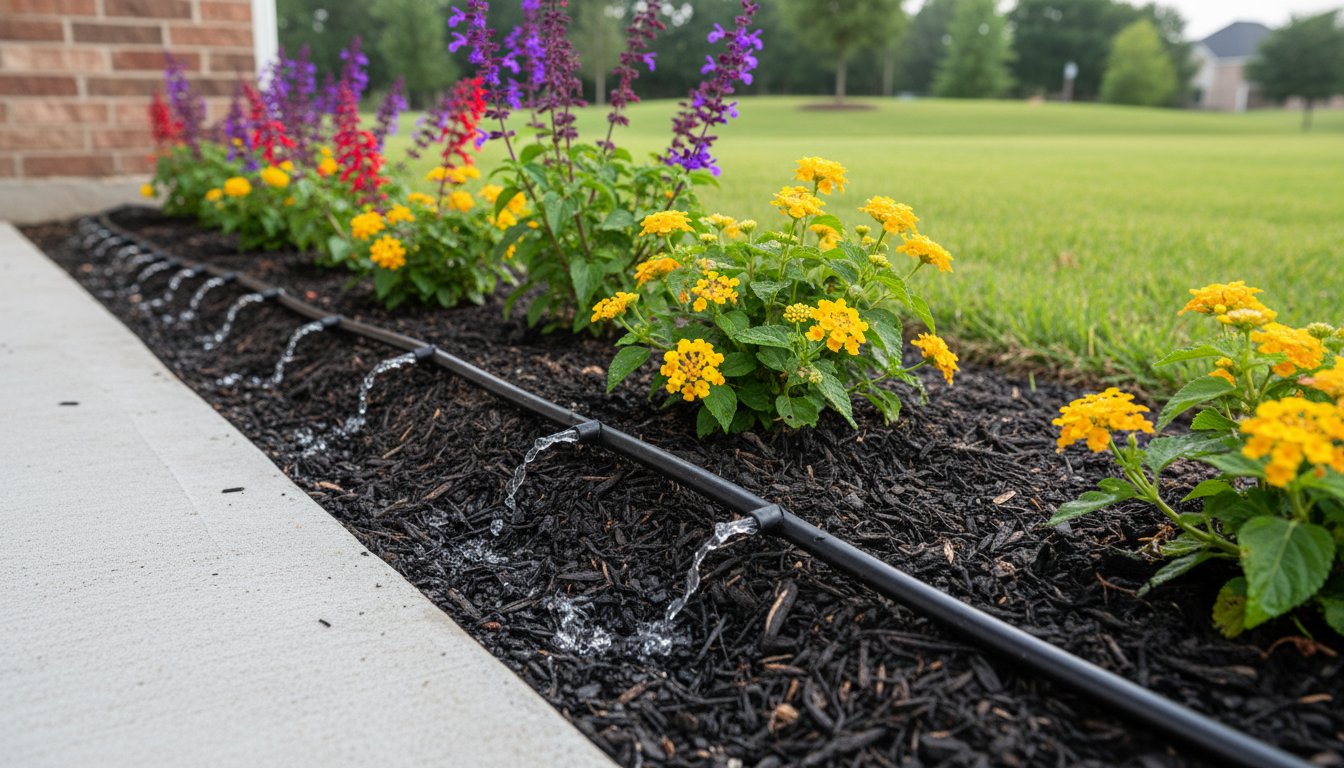
To understand the local necessity of this technology, we must first look at the basic mechanics of What is Drip Irrigation. It is a low-pressure, low-volume watering system that delivers water directly to the soil surface or the root zone through a network of valves, pipes, and emitters. In the Dallas-Fort Worth area, this isn’t just an alternative to sprinklers; it’s a vital tool for property preservation. Traditional spray heads are notoriously inefficient in our climate, often losing 40% of their output to wind drift and evaporation before the water even touches the ground. A professional drip irrigation system installation ensures that every drop is utilized where it matters most.
North Texas is famous for its expansive clay soil, which acts like a sponge that shrinks and swells with moisture levels. When this soil dries out during a July heatwave, it pulls away from your home, leading to catastrophic foundation shifts. Drip lines provide the consistent, slow-release hydration necessary to keep these soil levels stable. Unlike high-volume sprinklers that cause water to pool and run off the hard clay surface, drip systems allow for deep, effective penetration. Furthermore, these systems offer a significant regulatory advantage. While Dallas implements year-round watering restrictions, drip irrigation is currently exempt from the specific day-of-week limitations, allowing you to maintain your property’s health even during strict conservation periods. Many homeowners are surprised to learn how many common assumptions about drip irrigation for foundation care are actually myths that can lead to costly structural damage.
The Science of Root-Zone Watering
Precision is the primary benefit of root-zone watering. By using slow-release emitters, the system prevents the soil erosion and nutrient runoff common with heavy spray. This targeted delivery also discourages weed growth, as water isn’t being wasted on the open spaces between your plants. For Texas shrubs and perennials, deep saturation is far superior to frequent surface spraying. It encourages roots to grow deeper into the cooler layers of the soil, making your landscape significantly more drought-tolerant and resilient against the 100-degree heat.
Water Conservation in the DFW Metroplex
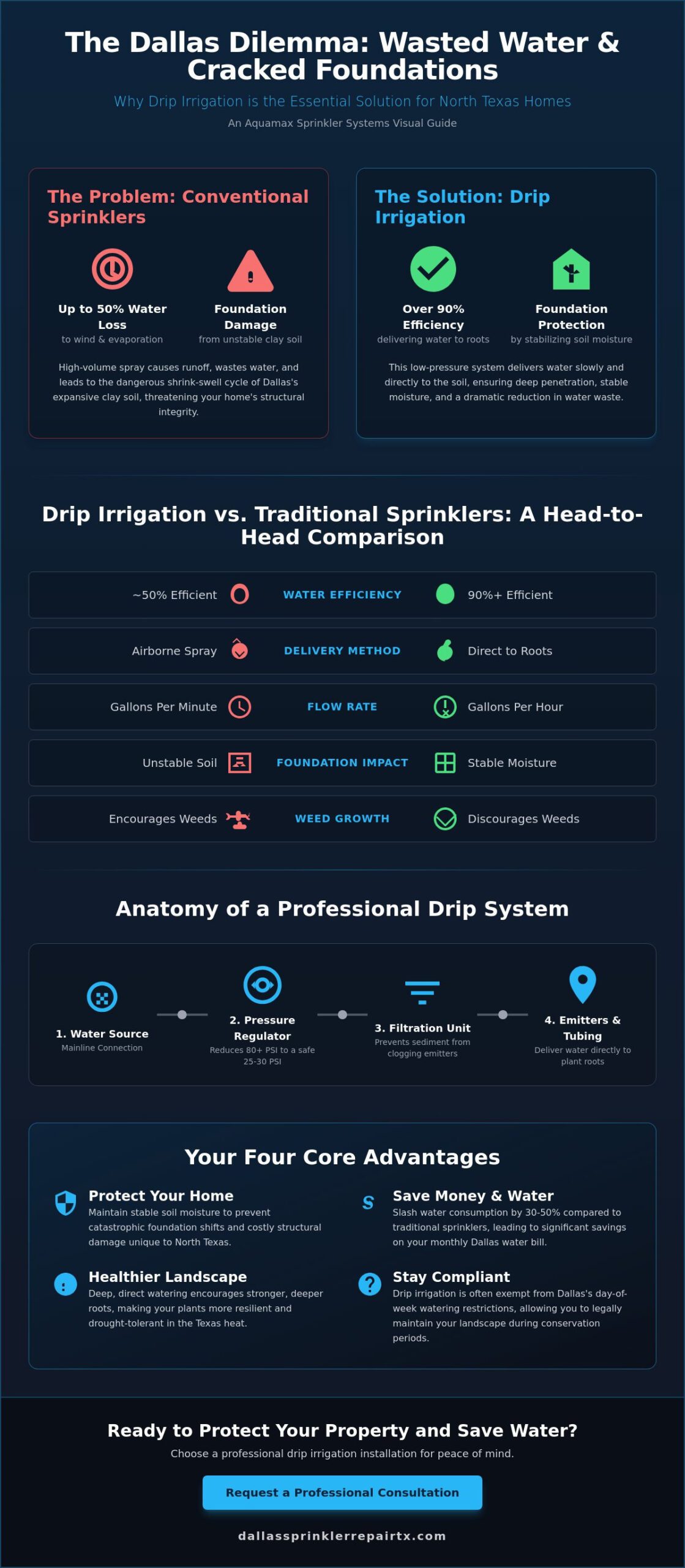
The efficiency gap between traditional methods and drip technology is staggering. Standard spray heads are measured in Gallons Per Minute (GPM), often discharging water faster than our clay soil can absorb it. In contrast, drip emitters are measured in Gallons Per Hour (GPH). This controlled flow can reduce total water consumption by 30% to 50%. This efficiency reflects directly on your monthly Dallas water bill, especially during the peak summer months. Beyond the financial savings, reducing water waste supports the long-term environmental stability of the North Texas region, ensuring our local reservoirs remain at functional levels during recurring droughts.
The Anatomy of a Professional Drip Irrigation System
A reliable drip irrigation system installation relies on a precise balance of hydraulic components designed to work in harmony. It is not simply a matter of laying a hose with holes in it. We utilize a dedicated mainline to carry water from the source to various zones, where lateral lines then distribute it to specific plants. This hierarchy ensures that water pressure remains consistent across your entire property, whether the zone is right next to the meter or at the far edge of the backyard. Without this structured layout, the plants at the end of the line often receive significantly less water than those at the beginning.
Pressure regulation is the most critical element often overlooked in DIY projects. Dallas municipal water pressure frequently exceeds 60 or 80 PSI, which is far too high for delicate drip components. A professional installation includes high-quality regulators that bring this pressure down to a stable 25-30 PSI. High pressure causes emitters to “blow out” or tubing to burst, leading to hidden leaks that can saturate your foundation. To keep the system running efficiently, we also install specialized filtration units. These filters are essential for preventing the fine sediment and minerals found in North Texas water from clogging the tiny emitter openings. The EPA highlights the water-saving benefits of microirrigation as a primary reason for its rising popularity in drought-prone regions.
Emitters and Delivery Methods
We select delivery methods based on the specific needs of your flora. Point-source emitters are ideal for individual shrubs or large trees, providing a dedicated water source to each root ball. For dense flower beds or groundcover, we use in-line drip tubing. This tubing features emitters factory-installed inside the pipe at regular intervals, creating a uniform “wetted strip” of soil. Occasionally, we integrate micro-sprays for delicate surface-rooting plants that require a broader moisture pattern than a standard drip line provides.
Smart Controllers and Automation
Modern systems thrive when integrated into a smart sprinkler controller. These devices allow us to program distinct schedules for foundation zones versus landscape zones, ensuring each area gets exactly what it needs. We incorporate rain sensors and soil moisture probes to prevent watering during rain events or when the ground is already saturated. This level of automation provides peace of mind, knowing your property is protected even when you are away. If you are unsure if your current setup can handle these upgrades, scheduling a sprinkler system tune-up is the best first step.
Drip Irrigation vs. Traditional Sprinklers: A Comparison
Choosing the right delivery method is a matter of matching technology to the specific needs of your landscape. Traditional spray heads are designed for large, open areas of turf. However, they are notoriously inefficient in the North Texas climate. Most conventional spray systems operate at 50% to 70% efficiency, with a significant portion of water lost to wind drift or runoff. In contrast, a professional drip irrigation system installation operates at over 90% efficiency. By delivering water directly to the soil, it eliminates the waste associated with aerial spraying. This precision is why experts recommend drip irrigation for Texas gardens and foundation perimeters. For a deeper look at how these two systems stack up against each other in our specific region, our detailed guide on drip irrigation vs sprinklers for North Texas landscapes covers the latest water regulations and clay soil considerations in full.
Maintenance requirements also differ significantly between these two methods. Sprinkler heads are mechanical devices with moving parts that frequently break, clog, or get damaged by lawnmowers. Drip systems are largely static and protected under a layer of mulch or soil. While they require periodic line flushing to remove sediment, they lack the fragile plastic components that often fail in traditional systems. Although the initial investment for drip can be higher than a standard spray zone, the long-term savings are substantial. You will see lower monthly water bills and fewer costs associated with replacing heat-stressed shrubs or repairing foundation cracks caused by uneven moisture.
When to Choose Drip Over Spray
The Hybrid Approach for Dallas Lawns
Most successful properties in the DFW Metroplex utilize a hybrid irrigation strategy. We typically install spray zones for expansive lawn areas where grass requires uniform surface coverage. For flower beds, trees, and foundation perimeters, we transition to drip. If your home currently relies entirely on spray, we can often convert those existing zones using specialized conversion kits. This allows us to utilize your current valves and piping while upgrading the delivery method to a more efficient standard. Proper zoning ensures that your thirsty turf and drought-tolerant shrubs each receive the correct volume of water without over-saturating either area. When establishing new turf, working with reputable sod installation companies in Dallas who understand irrigation requirements from the start can make the difference between a lawn that thrives and one that struggles through the summer heat.
Our Professional Installation Process: From Design to Foundation Protection
A successful drip irrigation system installation begins long before the first line is laid. We start with a comprehensive site analysis and rigorous pressure testing of your Dallas water source. This step is non-negotiable. As established in earlier sections, high municipal pressure can destroy a system that isn’t properly regulated. Once we understand your property’s specific hydraulics, we develop a custom design layout. This blueprint ensures 100% coverage across your landscape, eliminating the “dead zones” that often plague generic DIY setups.
Physical installation follows a methodical, five-step protocol to ensure safety and performance:
- Step 1: Site Analysis. We verify flow rates and static pressure to determine the correct regulator settings.
- Step 2: Custom Layout. We map the property to provide targeted hydration for specific plant species and foundation zones.
- Step 3: Secure Placement. Our technicians use professional trenching and secure line placement. This prevents tripping hazards and protects the system from lawnmower damage.
- Step 4: Safety Integration. We install high-quality backflow preventers and master valves. These components protect your home’s potable water and provide an emergency shut-off point.
- Step 5: Final Handover. We conduct a complete system test and pressure adjustment followed by a thorough homeowner walkthrough.
Specialized Foundation Drip Line Installation
In North Texas, foundation care is a necessity rather than a luxury. We utilize what many call the “Dallas Foundation Secret.” This involves placing dedicated drip lines exactly 12 to 18 inches from your home’s slab. This specific distance allows water to migrate through the clay soil evenly, preventing the shrinking and swelling that leads to foundation shifting. Maintaining consistent moisture levels around the perimeter is a mandatory investment for any homeowner living on the expansive clay common in the DFW Metroplex. It’s a proactive defense against structural repairs that can cost tens of thousands of dollars. Before investing in a foundation watering system, it’s worth reviewing the facts about drip irrigation for foundation care in North Texas to ensure your approach is based on proven methods rather than common misconceptions.
Ensuring System Longevity
Building a system that lasts decades requires attention to detail during the final stages. We use professional-grade staples to secure tubing before covering it with a thick layer of mulch. This protection is vital for shielding the polyethylene from harsh Texas UV rays. At the end of every run, we install flush valves. These allow for easy maintenance and winterization, preventing sediment buildup over time. A professional installation includes a multi-point inspection to ensure every emitter delivers the exact GPH specified in the design. To secure your property’s future, contact us today for a drip irrigation system installation that meets the highest local standards.
Why Choose Aquamax Sprinkler Systems for Your Drip Irrigation in Dallas?
Experience is the foundation of reliable service. Aquamax Sprinkler Systems has served the Dallas-Fort Worth area since 1998, providing over 25 years of hands-on expertise with our region’s unique environmental challenges. Our licensed and insured technicians understand the specific relationship between local clay soil and structural stability. We don’t rely on generic big-box store kits that often fail under Texas conditions. Instead, we provide custom-engineered solutions tailored to your property’s topography and plant life. Every drip irrigation system installation we perform comes with a comprehensive warranty on both parts and labor. This commitment ensures your investment remains protected long after the initial setup is complete.
The Aquamax Sprinkler Systems Difference: Quality and Reliability
We exclusively use commercial-grade components from industry leaders like Rain Bird and Hunter. These parts are designed for maximum longevity and precision, ensuring your system operates at peak efficiency for years. Our designs eliminate the overspray and water waste that common spray systems produce, focusing moisture exactly where it’s needed. If you have an older system that’s struggling to keep up with the heat, we also specialize in sprinkler repair Dallas to bring your current irrigation up to modern standards. We can evaluate your existing zones and recommend the most effective upgrades for your specific landscape. For homeowners also planning to refresh their turf, pairing your irrigation upgrade with a trusted sod installation company in Dallas ensures your new grass receives the precise watering schedule it needs to establish strong roots in our challenging clay soil.
Ready to Protect Your Landscape?
Taking the next step is straightforward and purposeful. Schedule a professional consultation to receive a detailed estimate based on your property’s specific needs. During our first site visit, we evaluate your water pressure, soil type, and the perimeter of your foundation. We’ll identify the best layout to keep your landscape lush and your foundation stable throughout the year. Our team respects your time and provides clear, organized information so you can make an informed decision about your property’s maintenance. Contact Aquamax Sprinkler Systems today for a professional drip irrigation quote.
Secure Your Property’s Future with Precision Irrigation
Maintaining a healthy property in Dallas requires more than just surface-level watering. By choosing a professional drip irrigation system installation, you address the two most critical threats to your home: excessive water waste and structural instability. You now understand how targeted hydration prevents clay soil from pulling away from your slab and how precision emitters bypass the evaporation that ruins traditional spray efficiency. These systems offer a reliable, automatic way to preserve your landscape’s vitality even during the peak of a North Texas summer.
Aquamax Sprinkler Systems has been serving the DFW Metroplex since 1998. Our licensed and insured technicians are recognized specialists in foundation protection. We don’t just install lines; we engineer solutions that stand up to our local climate. Don’t wait for foundation cracks to appear or for your garden to succumb to the heat. Take a proactive step toward long-term property maintenance today. Schedule Your Professional Drip Irrigation Consultation and give your home the protection it deserves. Your landscape will thrive for years to come.
Frequently Asked Questions
How much does professional drip irrigation installation cost in Dallas?
The total investment for a drip irrigation system installation depends on several local factors. These include the total linear footage of your home’s foundation, the number of landscape zones required, and whether you are integrating the system into an existing smart controller. While we don’t provide flat-rate pricing without a site visit, we focus on engineering a solution that prevents the far more expensive costs of foundation repair and plant replacement.
Can I convert my existing sprinkler system to drip irrigation?
Yes, we frequently perform these conversions for flower beds and foundation zones. We replace your existing spray heads with specialized conversion manifolds that include built-in pressure regulation and filtration. This allows you to utilize your current underground piping and valves while gaining the high-efficiency benefits of a drip system without a full landscape excavation.
How often should I run my drip irrigation for my foundation in North Texas?
Most Dallas properties require foundation watering two to three times per week during the peak summer months. The goal is to maintain stable moisture levels in the clay soil rather than creating a muddy perimeter. Because drip systems are often exempt from specific day-of-week watering restrictions in the DFW Metroplex, you have more flexibility to adjust your schedule based on current soil conditions.
Will drip irrigation work for my vegetable garden and flower beds?
Drip technology is the superior choice for gardens because it delivers water directly to the root zone. This method keeps foliage dry, which significantly reduces the risk of fungal diseases and powdery mildew common in the Texas humidity. It also ensures that your water reaches the plants instead of evaporating in the wind or feeding weeds in the open spaces between your rows.
Does drip irrigation require a backflow preventer?
Every professional system in Texas must include a backflow preventer by law. This device ensures that water from your irrigation lines cannot flow back into your home’s clean drinking water supply. We install and test these components to ensure your system remains compliant with local Dallas plumbing codes and health safety standards.
How long does a professional drip irrigation system last?
A well-maintained system can last 10 to 15 years or more. Longevity depends heavily on protecting the tubing from UV rays with a consistent layer of mulch and using high-quality filtration to prevent emitter clogs. We use commercial-grade polyethylene and pressure-compensating emitters designed to withstand the thermal expansion and contraction cycles typical of North Texas weather.
What happens to drip irrigation in the winter? Do I need to blow it out?
Dallas winters are generally mild, but winterization is still a vital maintenance step. We typically flush the lines to remove sediment and drain the main valves to prevent freeze damage. While we don’t usually require the intensive compressed-air “blowouts” seen in northern states, protecting your backflow preventer and clearing the lines ensures the system is ready for spring.
Can drip irrigation be used on hills or sloped yards in Dallas?
Slopes are not a problem when using pressure-compensating (PC) emitters. These specialized components ensure that the plant at the top of the hill receives the exact same amount of water as the plant at the bottom. This technology prevents the water pooling and erosion issues that often occur when using traditional sprinklers on uneven terrain.