

Article by
Robert Maxvill
Owner of Aquamax Sprinkler Systems, American Sprinkler Repair and Dallas Drainage Systems.
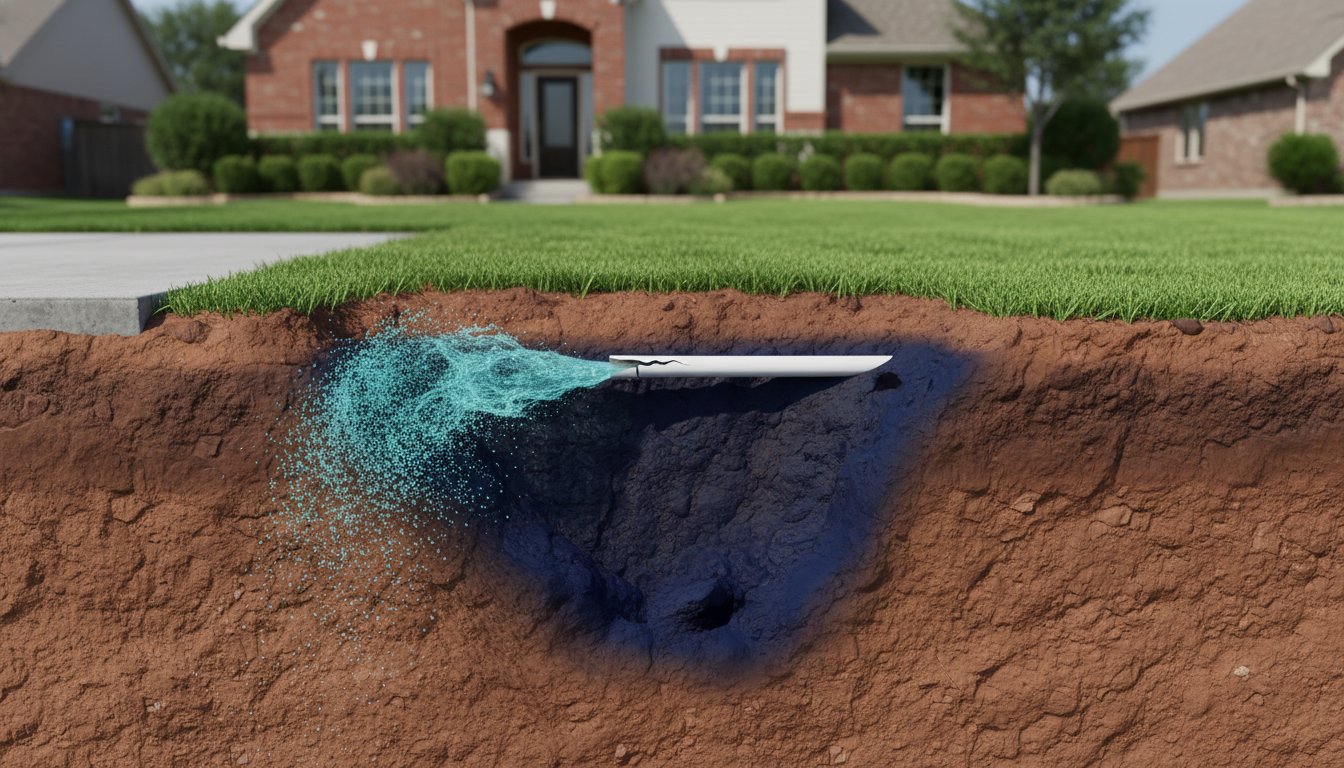
Could a hidden break in your irrigation line be the silent catalyst for a massive foundation repair bill? Many Dallas homeowners assume a pipe failure will announce itself with a dramatic geyser, but the most destructive issues often remain invisible. If you’ve noticed a sudden spike in your water bills or a persistent soggy patch in the turf, you’re likely dealing with a sprinkler system leaking underground. It’s a stressful situation that leaves many feeling confused about where their pipes actually run and fearful of what that excess moisture is doing to the volatile clay soil beneath their home.
You deserve the peace of mind that comes from a stable foundation and a healthy, vibrant landscape. This guide will help you confirm a leak’s location without unnecessary digging and explain why ignoring these hidden risks is a gamble you shouldn’t take in North Texas. We will walk through the specific signs of subsurface failure, the connection between irrigation and foundation shifting, and how professional diagnostics restore your system pressure while stopping water waste.
Key Takeaways
- Learn why a sprinkler system leaking underground can still waste thousands of gallons even when your controller is turned off.
- Identify the subtle warning signs of subsurface failure, from localized pressure drops to unexpected surges in your monthly water bill.
- Understand the dangerous relationship between North Texas clay soil and irrigation leaks, which can lead to costly foundation heaving.
- Discover how to isolate a suspected leak to a specific zone using manual overrides and the “Dry Run” troubleshooting technique.
- See why licensed professionals use high-grade PVC and commercial fittings to ensure your repairs meet strict Dallas water conservation codes.
Myth vs. Reality: Common Misconceptions About Underground Sprinkler Leaks
An underground leak is a breach in the main or lateral irrigation lines that allows water to escape beneath the soil surface. In most residential sprinkler systems, these pipes are buried 8 to 12 inches deep. This depth makes failures difficult to detect until the damage is extensive. The presence of a sprinkler system leaking underground often remains undetected because of our unique regional geology and common misunderstandings about how irrigation pressure works.
Homeowners often fall victim to several dangerous misconceptions that delay necessary irrigation repair. Addressing these myths is the first step in protecting your property:
- Myth: “If the system is turned off at the controller, it cannot be leaking.”
- Reality: Your main irrigation line is under constant pressure from the city water supply. If that pipe fails, you have a sprinkler system leaking underground 24 hours a day, regardless of your watering schedule.
- Myth: “A leak will always create a visible puddle or geyser on the lawn.”
- Reality: In the heavy clay soil common across Dallas and Plano, water often follows the path of least resistance. It travels horizontally through soil fissures or sinks deeper into the ground. Your foundation could be absorbing hundreds of gallons of water while your turf looks perfectly dry.
The Difference Between Main Line and Lateral Line Leaks
Understanding the location of the break is critical for prioritizing your response. Main line leaks occur between your backflow preventer and the zone valves. Because this section stays pressurized at all times, a leak here is an irrigation emergency that can waste thousands of gallons in a single week. Check your water meter while the system is off. If the low-flow indicator is spinning, you have a pressurized leak. Conversely, lateral line leaks only occur when a specific zone is running. If water only appears during your scheduled watering time, the issue is likely in a lateral pipe or a failing sprinkler head.
Why Small Leaks Are More Dangerous Than Large Ones
Large geysers are easy to spot and fix quickly. Small, pinhole leaks are far more insidious because they often hide in plain sight. These “slow drips” cause localized soil saturation that may initially appear as a “lush green spot” in your lawn. Over time, this constant moisture erodes the bedding material surrounding the pipe, leading to larger structural failures. In North Texas, these small leaks are particularly hazardous. They provide the consistent moisture that causes clay soil to expand and shift against your home’s foundation, potentially leading to thousands of dollars in structural damage.
Identifying the Hidden Signs of a Subsurface Irrigation Failure
Dallas residents often discover an irrigation problem only when the monthly utility statement arrives. Because outdoor water usage can account for more than 50% of total summer water use in North Texas, a high water bill sprinkler leak is the most reliable diagnostic tool available. If your costs jump significantly without a change in weather or watering habits, you likely have a sprinkler system leaking underground. These failures are often silent, but they leave distinct signatures if you know where to look.
Beyond the financial impact, pay close attention to your system’s performance. If one zone has noticeably lower pressure than the others, or if the heads fail to pop up fully, water is escaping before it reaches the nozzles. You can also perform a “Sponge Test” by walking your yard 24 hours after a cycle. If you find soft, squishy spots that never dry out, even in the 100 degree Texas heat, a pipe has likely breached. In some cases, you might even hear the audible hiss of running water near your valve box or backflow preventer when the system should be idle. The EPA WaterSense program emphasizes that early detection is the only way to prevent massive water waste and property damage.
The Water Meter Test: A Step-by-Step Diagnostic
You can confirm a leak in minutes using your city water meter. First, locate the concrete meter box near the curb and remove the lid. Ensure all water inside the house is turned off. Look at the meter face for a small red or blue triangle or a digital flow indicator. If this dial is spinning while the house is quiet, water is moving. To isolate the issue, turn off the main shut-off valve to the irrigation system. If the meter stops moving, the leak is officially in your sprinkler lines. If these signs appear, scheduling a professional sprinkler system repair can pinpoint the exact failure point before foundation damage occurs.
Visual Clues in Your Landscape
Your lawn often acts as a map for a sprinkler system leaking underground. Look for “over-performing” grass that appears darker or grows faster than the rest of the yard. This occurs because the turf has constant, localized access to moisture. Conversely, look for physical changes in the ground like small sinkholes or depressions along the path where pipes are buried. Fungal growth or mushrooms are another red flag. These organisms thrive in anaerobic, waterlogged soil that never has a chance to breathe, signaling a persistent subsurface moisture problem that requires immediate attention.

The North Texas Danger: Why Underground Leaks Threaten Your Foundation
Dallas, Plano, and Frisco sit atop expansive clay soil. This material acts like a powerful sponge. When it absorbs water, it expands with enough force to lift massive concrete slabs. When it dries, it shrinks, leaving dangerous voids beneath your home. A sprinkler system leaking underground creates a localized zone of extreme moisture that disrupts the uniform support your foundation requires. While many homeowners worry about drought causing settlement, excessive water from a broken pipe causes “heaving,” which is the uneven upward movement of the slab. This localized pressure is often far more destructive than gradual, uniform settling because it twists the structural frame of the building.
Clay Soil and the “Sponge Effect”
The clay soil in North Texas is notorious for its high plasticity. During a typical summer, the ground develops deep fissures as it loses moisture. If a pipe fails beneath the surface, that water doesn’t just drain away. It is trapped by the surrounding dense clay, which holds onto water with incredible tenacity. This creates a permanent wet spot that remains saturated even when the rest of your yard is bone dry. This localized saturation causes the soil to swell significantly, exerting thousands of pounds of pressure against your home’s perimeter. Maintaining consistent moisture levels is the single most critical factor in preserving foundation health in North Texas. Without this consistency, your home is at the mercy of the soil’s violent expansion and contraction cycles.
Preventing Foundation Shifts with Proper Irrigation
Protecting your property requires a shift from accidental watering to intentional moisture management. Many local homeowners utilize drip irrigation system installation specifically to keep the soil around their foundation at a stable, controlled moisture level. However, a sprinkler system leaking underground near the house perimeter negates these benefits entirely. You must identify these foundation-adjacent leaks before they manifest as cracks in your drywall or doors that no longer latch. Look for soil that stays muddy near the brick line or standing water in flower beds long after the system has finished its cycle. Controlled foundation watering is a maintenance necessity, but an uncontrolled leak is a structural liability. Addressing these subsurface breaks immediately ensures that your foundation remains level and your repair costs stay manageable. If you suspect a leak near your slab, it is no longer just a lawn problem; it is a high-priority structural risk.
Troubleshooting the Source: How to Find a Sprinkler Leak Without Digging Up Your Yard
Finding a sprinkler system leaking underground is a challenge because most DFW homeowners don’t have an accurate map of their irrigation lines. You don’t need to turn your lawn into a series of unsightly trenches to find the failure. Start by using your controller’s manual override to run each zone for two minutes. This simple step helps you isolate the issue to a specific section of your property. If your water meter only spins during one specific zone, you know the breach is in a lateral line. If it runs constantly while the system is off, the main line is the culprit.
Utilize the “Dry Run” method during your inspection. Watch the heads as they attempt to pressurize. If one zone features heads that barely clear the grass or produce a weak, bubbling spray, you’ve identified the leak’s location. The water is taking the path of least resistance through a cracked pipe instead of reaching the nozzle. To narrow it down further, use a long screwdriver or soil probe to check the ground between heads. Saturated soil offers significantly less resistance, allowing the probe to slide in easily. This indicates a “hot spot” where water is pooling beneath the turf. For a comprehensive zone-by-zone approach, the DFW homeowner’s checklist for high water bill sprinkler leaks provides a systematic framework for isolating the problem before calling a professional.
Tracing Irrigation Lines for DFW Homeowners
Estimating pipe paths requires a logical approach. Most residential systems follow a grid or loop layout. Pipes usually run in straight lines from the valve box to the first head, then connect subsequent heads in that zone. If you can’t find your valves, look for green circular or rectangular plastic lids. Over time, these often become buried under thatch or soil. Finding these boxes is essential because manifold leaks are a common source of persistent wet spots. A sprinkler system leaking underground at the manifold can waste water even when the system is off. For a broader look at diagnosing mechanical failures and controller issues alongside hidden leaks, our guide to irrigation system troubleshooting covers the full range of common repairs DFW homeowners encounter.
Advanced Detection: Beyond the Shovel
Professional irrigators rely on technology rather than guesswork. We use ultrasonic leak detection equipment to “hear” the sound of escaping water through the soil. This precision prevents the need for destructive digging. We also utilize compressed air to clear lines and watch for bubbles or soil movement, which clearly marks the break. Digging blindly is risky. You could easily sever a communication wire or another water line, turning a simple fix into a major project. If your DIY efforts don’t yield a clear answer, it is time to call for professional sprinkler repair Dallas. Our team uses specialized tools to find the exact breach, saving your landscape and your budget.
Professional Restoration: Why Licensed Irrigation Experts Are Essential
Repairing a sprinkler system leaking underground requires more than just a quick patch. It demands an understanding of hydraulic pressure and local soil dynamics. In Texas, operating as an irrigator without a valid license from the TCEQ is a Class C misdemeanor. This regulation exists to protect homeowners from substandard work that leads to water waste and property damage. At Aquamax, we’ve served North Texas since 1998, bringing licensed expertise to every project. We use only high-grade, commercial-quality PVC and fittings that withstand the intense pressure of the main line. Substandard parts often fail within months under the stress of our shifting clay soil, leading to a repeat of the same expensive problem.
Compliance with local Dallas water conservation and backflow codes is non-negotiable. Every repair must ensure that your system remains efficient and safe for the city’s water supply. Once we complete a repair, our technicians perform a comprehensive system stress test. This process verifies that the initial breach is sealed and ensures no secondary leaks exist further down the line. We don’t just fix the break; we restore the integrity of the entire irrigation network to provide you with long-term peace of mind.
The Aquamax Difference in Irrigation Repair
Our “project-based” approach differentiates us from contractors who prioritize speed over quality. We treat every sprinkler system leaking underground as a unique diagnostic challenge. Our team works methodically to identify the root cause, whether it’s root intrusion, soil movement, or material fatigue. We take pride in our reputation, which is reflected in our many positive reviews from neighbors across the DFW metroplex. We also understand that your landscape is an investment. Our technicians use precise excavation techniques to minimize turf disruption, ensuring that your yard returns to its pristine state as quickly as possible.
Next Steps: Restoring Your Lawn’s Vitality
Fixing the leak is only the first step toward a healthy landscape. After the repair, we recommend a full sprinkler system tune up to recalibrate your zones and ensure optimal coverage. If a significant leak caused soil erosion or turf death, you might need professional sod installation to patch the affected area. Don’t let a hidden leak compromise your home’s foundation or your summer water budget. Take action now to protect your property’s value and aesthetic. Contact Aquamax Sprinkler Systems today for a professional diagnostic and permanent repair solution.
Secure Your Property Against Hidden Irrigation Risks
A sprinkler system leaking underground is a silent threat that demands a professional response. You now know how to spot the subtle warning signs and why the expansive clay soil in North Texas makes these repairs a high priority for foundation health. Addressing these issues today prevents the costly structural heaving and massive water waste that occur when subsurface breaks are ignored. Don’t wait for cracks to appear in your walls or slab.
Aquamax Sprinkler Systems provides the licensed and insured expertise necessary to handle these complex repairs. Serving Dallas-Fort Worth since 1998, our specialists understand the specific challenges of our local environment. We combine advanced detection technology with commercial-grade parts to ensure your system performs at its peak. Your landscape is an investment that deserves the highest level of care.
Schedule Your Professional Leak Detection with Aquamax today. Restore your peace of mind and the vitality of your landscape with a team that prioritizes long-term excellence.
Frequently Asked Questions
Is a sprinkler system leaking underground an emergency?
A main line leak is considered an immediate priority because it remains under constant pressure 24 hours a day. These breaches can waste thousands of gallons in a single week and quickly saturate the soil surrounding your home’s slab. While lateral line leaks only discharge water during active cycles, they still pose a significant long term risk to your foundation and should be addressed by a licensed professional promptly.
How much does it cost to fix an underground sprinkler leak in Dallas?
Repair costs vary based on the leak’s depth, the location of the breach, and the specific components required for restoration. A simple lateral line fix is generally less complex than a main line failure or a manifold replacement. Because the dense clay soil in North Texas is labor intensive to excavate, professional diagnostics are the most efficient way to receive an accurate assessment for your specific system.
Can tree roots cause my sprinkler pipes to leak?
Tree roots are a frequent cause of irrigation failure in North Texas landscapes. As roots expand, they exert massive pressure on PVC pipes or grow directly into fittings and valve connections. This leads to a sprinkler system leaking underground that is often difficult to detect until the root has completely crushed or separated the line, requiring specialized equipment to locate and clear the obstruction.
Will my homeowners insurance cover an underground irrigation leak?
Standard homeowners insurance policies typically do not cover the repair of irrigation lines as they are classified as routine maintenance items. However, if the leak results in significant structural damage to your home, you should consult your provider regarding specific foundation riders. It is always more cost effective to repair the leak early rather than attempting to file a claim after structural shifting occurs.
How do I find the main shut-off valve for my sprinkler system?
The main shut-off is usually located in a green plastic valve box near your water meter or adjacent to the backflow preventer assembly. In most Dallas homes, this is a ball valve or gate valve that requires a quarter or multi-turn to stop the flow of water. Knowing this location is essential for stopping water waste immediately during a pressurized main line emergency.
What happens if I ignore a small leak in my lateral line?
Ignoring even a minor leak leads to localized soil saturation, which is the primary catalyst for foundation heaving in North Texas. Over time, the constant moisture erodes the bedding material supporting the pipe, which can lead to a total line collapse. Small leaks also create anaerobic soil conditions that kill your turf and encourage the growth of invasive fungi.
Can I fix an underground sprinkler leak myself?
While homeowners can handle minor surface adjustments, underground repairs often require specialized tools and an understanding of local plumbing codes. In Texas, many irrigation repairs must be performed by a licensed professional to ensure backflow prevention and water conservation standards are maintained. Professional repairs also provide the peace of mind that comes with high grade parts and a service warranty.
How do I know if my high water bill is from the sprinklers or a house leak?
You can use your city water meter to isolate the source of the waste. Turn off all water inside the house and observe the meter’s leak indicator dial. If it is moving, turn off the dedicated irrigation shut-off valve. If the meter stops, you have confirmed a sprinkler system leaking underground. This simple test ensures you call the right specialist and avoid unnecessary service fees.