
Article by
Robert Maxvill
Owner of Aquamax Sprinkler Systems, American Sprinkler Repair and Dallas Drainage Systems.
A vibrant, green lawn in North Texas is a feat of engineering, not just a simple plumbing task. You’ve likely dealt with the frustration of rising water bills or the stress of watching your foundation shift as the local clay soil dries out. It’s common to see cheap retail components fail after just one season in the heat, leaving you with a patchy yard and a headache. Investing in a professional underground sprinkler installation is the only way to ensure your landscape thrives without constant manual intervention or wasted resources.
You want a beautiful property that complies with North Texas water restrictions, such as the standard prohibition on watering between 10:00 a.m. and 6:00 p.m., while protecting your home’s structural integrity. This resource guide will help you master the complexities of irrigation by detailing professional-grade components and soil-specific design strategies. We’ll examine how smart controllers reduce waste and how precision watering prevents foundation damage. This overview provides the technical foundation you need to achieve a thriving landscape that practically maintains itself.
Key Takeaways
- Learn how hydrozoning and head-to-head coverage eliminate dry spots while maximizing water efficiency across your landscape.
- Discover why professional-grade components and master valves are essential for preventing catastrophic leaks and surviving the North Texas heat.
- Understand the technical steps required for a successful underground sprinkler installation, from utility marking to specialized trenching techniques.
- Identify how to protect your home’s foundation using precision watering strategies designed specifically for heavy Dallas-area clay soils.
- Compare the long-term reliability and warranty benefits of a professional system against the hidden costs of DIY projects.
Designing Your Underground Sprinkler Layout for Maximum Efficiency
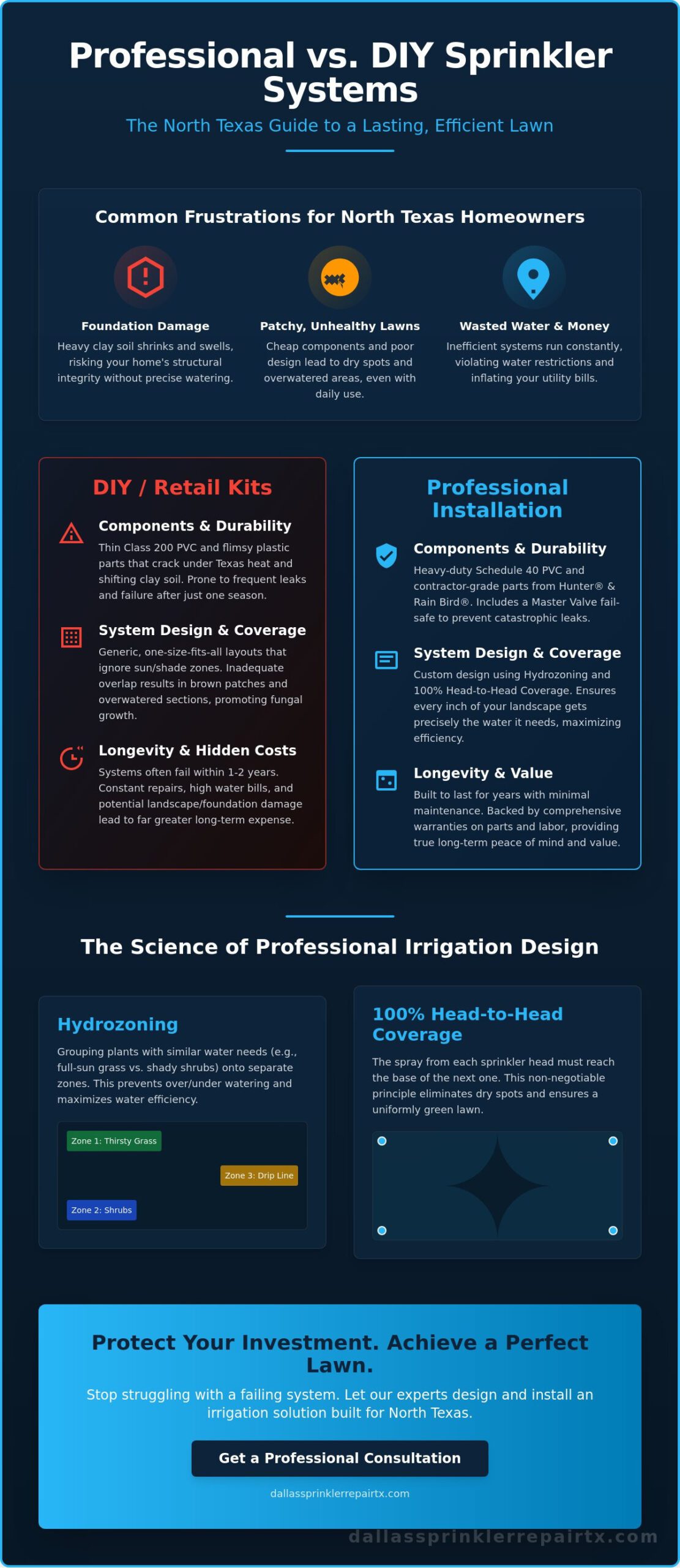
Designing a high-performance irrigation system requires more than just digging trenches. It’s a precise engineering task that balances water pressure, flow rates, and plant biology. A successful underground sprinkler installation starts with a layout that accounts for the specific microclimates of your North Texas property. Generic designs often lead to overwatered flower beds and scorched turf. Professional design avoids these pitfalls through the science of hydrozoning.
Hydrozoning involves grouping plants with similar water requirements into the same zone. Your thirsty St. Augustine grass shouldn’t be on the same valve as your drought-tolerant shrubs. This approach maximizes efficiency and prevents the fungal issues common in North Texas clay soils. Understanding how irrigation sprinklers work helps illustrate why zoning is critical. Each head is designed for a specific flow rate and radius; mixing them haphazardly leads to uneven saturation and wasted water.
Head-to-head coverage is equally vital for a healthy lawn. This means the spray from one head must reach the base of every adjacent head. Many homeowners assume 50% overlap is enough, but 100% overlap is non-negotiable to prevent dry spots during a July heatwave. Without this precision, you’ll end up with brown patches even if the system runs daily.
Mapping Zones and Sprinkler Head Placement
Start by identifying sun and shade areas. Turf in full sun needs significantly more water than grass under a canopy of oak trees. Create independent zones for these areas to ensure precision. You should also plan for specialized zones, such as foundation drip lines or flower bed bubblers. These systems provide targeted moisture that protects your home’s structural integrity. Plotting these locations on a digital tool or physical map ensures your underground sprinkler installation covers every square inch without wasting a drop. Check our sprinkler installation services for more on how we customize these layouts for local homes.
Hydraulic Calculations: The Foundation of Pressure
Hydraulics determine if your system will actually function. You must measure both static pressure, when water is off, and working pressure, when water is flowing. Use a pressure gauge on an outdoor faucet to find your home’s PSI. If your working pressure is too low, the heads won’t pop up or rotate properly. Calculating Gallons Per Minute (GPM) is the next step. Your total zone demand cannot exceed your water meter’s capacity. We typically recommend 1-inch PVC piping for residential properties to minimize friction loss. Friction loss occurs as water travels through the pipe; it reduces the pressure available at the last head in the row. Always design for the worst-case zone, which is usually the one furthest from the water source, to ensure reliable performance across the entire system.
Essential Components of a Professional-Grade Irrigation System
Retail stores often sell “all-in-one” kits, but these consumer-grade parts rarely survive the fluctuating temperatures and shifting soils of North Texas. A professional underground sprinkler installation relies on contractor-grade components engineered for hydraulic precision and longevity. While retail parts often use thinner plastics, professional brands like Hunter and Rain Bird utilize heavy-duty materials designed to withstand high PSI and intense UV exposure over many years.
The backbone of a durable system is Schedule 40 PVC. Unlike the thinner Class 200 pipe sometimes found in budget installs, Schedule 40 provides the wall thickness necessary to handle the expansion and contraction of Dallas-area clay. Another critical safety feature is the Master Valve. This component acts as a primary fail-safe; it remains closed unless a zone is actively running. If a lateral pipe breaks underground, the Master Valve prevents thousands of gallons of water from flooding your property while the system is idle. To keep these components in top shape, regular maintenance is essential to prevent long-term wear.
Modern systems also incorporate weather-sensing technology to automate conservation. Rain and freeze sensors are now standard for any high-quality underground sprinkler installation. These sensors automatically pause watering cycles during North Texas thunderstorms or when temperatures drop below freezing, protecting your pipes from bursting and preventing ice from forming on sidewalks. Property managers overseeing larger sites should explore how commercial irrigation installation in Dallas scales these same sensor technologies to meet 2026 municipal compliance requirements across multi-zone properties.
High-Efficiency Sprinkler Heads and Rotors
Standard spray heads often create “misting,” where water turns into a fine fog that evaporates before it hits the turf. Professional-grade heads feature built-in pressure regulation to keep water droplets large and heavy. We often recommend rotary nozzles, which deliver multiple rotating streams of water at a slower rate. This slower application reduces runoff on heavy clay soils and offers superior wind resistance. Additionally, heads equipped with check valves stop “low-head drainage,” preventing water from leaking out of the lowest head in a zone after the cycle ends.
Smart Controllers and Digital Management
The modern controller is the brain of your irrigation system. Investing in Professional Smart Sprinkler Controller Installation allows your system to adjust in real-time based on actual environmental conditions. These Wi-Fi-enabled devices pull data from local weather stations to skip cycles during DFW rain events. Research indicates that smart controllers can reduce outdoor water usage by an average of 32%. When paired with a digital flow meter, these controllers can detect an underground leak instantly and send a notification to your smartphone. If you want to ensure your current system meets these modern standards, a professional sprinkler system tune-up can identify where upgrades will provide the most value.
The Step-by-Step Underground Sprinkler Installation Process
Before breaking ground on an underground sprinkler installation, safety must be the first priority. Contact 811 to have all underground utility lines marked. This step is mandatory. Striking a gas or electric line is dangerous and results in expensive repairs. Once the utilities are flagged, use marking paint to plot the design layout you established in the planning phase. Clear markings ensure the trenching remains accurate and efficient.
Choosing the right machinery depends on the current state of your landscape. Traditional trenchers are effective for new builds where the soil is bare. However, for established lawns, a vibratory plow is often the superior choice. This tool pulls the pipe through the earth with minimal surface disruption. It avoids the large dirt mounds created by traditional digging, allowing your turf to recover much faster. Regardless of the tool, the goal is a clean path that respects the layout of your property.
The reliability of your system depends on the quality of your PVC joints. Solvent welding is a technical process, not just a simple gluing task. You must clean the pipe ends, apply purple primer to chemically soften the plastic, and then apply the cement. Hold the joint firmly for 30 seconds to allow the bond to set. Skipping the primer or rushing the cure time often leads to catastrophic blowouts once the system is pressurized. Every joint must be perfect to handle the high-pressure demands of a North Texas irrigation schedule.
Trenching and Pipe Installation
Protect your investment by burying pipes at a depth of 8 to 12 inches. This depth provides a buffer against core aeration equipment and the occasional hard freeze. Organize your main lines and lateral lines to minimize the total length of the trench. This reduces material costs and limits soil disturbance. We utilize the “swing pipe” method to connect heads to the lateral lines. These flexible assemblies allow the sprinkler head to shift slightly if a heavy lawnmower rolls over it. This flexibility prevents the rigid PVC from cracking under the weight of maintenance equipment.
Valve Box Assembly and Wiring
Install your valve box in a well-drained area and ensure it sits level with the surrounding grade. Inside the box, use waterproof grease caps for every wire connection. Standard wire nuts will corrode quickly in the damp environment of a valve box, leading to solenoid failure. Label every zone clearly on the underside of the box lid. This organization is vital for future sprinkler repair or troubleshooting. Before finishing, flush the entire system. Run each zone without nozzles to push out any dirt or PVC shavings. Once the lines are clear, install the final nozzles and adjust the spray patterns for precision coverage.
Navigating North Texas Soil and Foundation Requirements
The “Blackland Prairie” soil in North Texas presents a unique challenge for any underground sprinkler installation. This heavy clay is notorious for its high expansive potential. It swells significantly during rainy seasons and contracts sharply during summer droughts. This constant movement, known as “heaving,” can easily snap rigid PVC pipes if they aren’t installed with the proper techniques. Understanding the local geology is not just a landscaping concern; it’s a structural necessity for your entire property.
When the soil dries out, it pulls away from your home’s slab, leading to foundation cracks and expensive structural repairs. A professional system addresses this by maintaining consistent moisture levels year-round. Unlike generic setups, a system designed for North Texas uses the irrigation layout to stabilize the earth surrounding your foundation. This proactive approach prevents the soil from shrinking to dangerous levels, protecting your home’s value and structural integrity.
Trenching in Dallas Clay Soil
Timing is everything when digging in North Texas. You should avoid trenching during the rock-hard soil conditions of August, as the clay becomes nearly impenetrable and can damage equipment. Once the pipes are laid, backfilling and tamping are critical steps. Because clay is so dense, it leaves large air pockets if simply tossed back into the trench. These pockets lead to “trench settling” after the first heavy rain, creating dangerous trip hazards and unsightly ruts. Proper compaction ensures a level surface and protects the pipes from shifting. After the installation is complete, you may need professional sod installation to fully restore the vitality of your lawn and hide the trench lines.
Foundation Watering and Drip Line Integration
Standard spray heads are often insufficient for foundation protection. They typically throw water onto the lawn or the side of the house, causing surface runoff rather than deep moisture penetration. To solve this, we integrate specialized drip irrigation zones. We recommend sub-surface drip lines placed 12 to 18 inches from the foundation. This placement delivers water directly to the root zone and the soil near the slab, where it is needed most. This targeted delivery minimizes evaporation and ensures the clay stays hydrated without wasting water. For a more detailed look at these systems, you can explore our guide on professional sprinkler installation to see how we customize these zones for local properties. If you’re ready to protect your home, contact us today for a professional underground sprinkler installation tailored to your landscape.
Professional Installation vs. DIY: Making the Right Choice
Retail stores often market underground sprinkler installation as a simple weekend task, but this underestimates the technical precision required for a lasting system. The physical labor of trenching through North Texas clay is only the beginning. DIY projects frequently incur hidden costs, such as renting heavy machinery or purchasing replacement parts when retail-grade valves fail. A single mistake in hydraulic calculation or solvent welding can lead to underground leaks that remain undetected until your water bill arrives. Professional installation eliminates these risks through expert design and high-grade materials.
The long-term ROI of a professional system is significantly higher than a DIY alternative. A well-engineered irrigation system increases property value and ensures your landscape thrives with zero manual effort. Most professional installs include a multi-year guarantee, providing peace of mind that a retail kit simply can’t offer. Investing in professional expertise ensures your system complies with all local regulations while protecting your home’s foundation and your wallet.
Compliance with DFW Backflow Regulations
Keeping your drinking water safe is a top priority for Dallas-area municipalities. Every underground sprinkler installation must include a backflow preventer to stop irrigation water from siphoning back into the city’s main lines. Texas law is very clear: only licensed professionals may install or test these devices. This regulation ensures that fertilizers or lawn chemicals never contaminate your home’s water supply. Annual testing is often a mandatory requirement for DFW homeowners. Check our Aquamax reviews to see how our licensed team handles these critical compliance standards for local residents.
Longevity and Maintenance Considerations
Durability is the primary differentiator between professional and consumer systems. A professionally installed system has an expected lifespan of 15 to 20 years. In contrast, retail kits often require major repairs or full replacement within 3 to 5 years. Professional systems are also easier to maintain. As your trees grow and your garden beds evolve, you can schedule a sprinkler system tune-up to adjust the zones and head placements. This adaptability ensures your system remains efficient for decades. Ready for a worry-free lawn? Get a professional installation estimate from Aquamax to start your project the right way.
Secure Your Landscape’s Future with Precision Irrigation
A thriving lawn in the Dallas-Fort Worth area requires a system that balances hydraulic precision with local environmental demands. You’ve learned how hydrozoning and high-efficiency nozzles maximize every drop of water while staying compliant with municipal restrictions. By prioritizing customized foundation protection designs, you safeguard your home against the shifting clay soils of the Blackland Prairie. A professional underground sprinkler installation is a vital investment that pays for itself through reduced utility costs and increased property value. It transforms the burden of maintenance into a source of lasting property vitality.
Our team has been serving DFW since 1998 with licensed and insured technicians who understand the specific complexities of North Texas landscapes. We focus on reliability and longevity to ensure your system performs at its peak for decades. Don’t leave your property’s health to chance or retail-grade components that fail under the intense Texas sun. Schedule Your Professional Sprinkler Installation Consultation Today. You deserve the peace of mind that comes with a perfectly watered lawn and a protected home foundation. We’re ready to help you achieve a landscape that remains lush and resilient year after year.
Frequently Asked Questions
How long does a typical underground sprinkler installation take?
A professional residential installation usually takes one to three days to complete. Smaller lots might be finished in a single day; however, larger properties with complex zoning and foundation drip lines require more time for trenching and hydraulic calibration. The specific timeline depends on your yard’s size and the density of the North Texas clay soil at the time of the project.
Do I need a permit for sprinkler installation in Dallas or Plano?
Yes, most North Texas municipalities require a permit for any new irrigation work. This process ensures the system meets local safety codes and includes a certified backflow preventer to protect the city’s drinking water. You should check with your specific city’s building inspection department to verify current permit fees and inspection requirements before the work begins.
Will an underground sprinkler system help protect my home’s foundation?
A properly designed system is a critical tool for foundation protection in the Dallas-Fort Worth area. By maintaining consistent moisture levels in the expansive clay soil, the system prevents the earth from shrinking away from your slab during drought cycles. This stability helps prevent the structural shifting and cracking that often lead to expensive foundation repairs.
What is the best time of year to install a new irrigation system in Texas?
Fall and early spring are the optimal seasons for an underground sprinkler installation in Texas. These windows provide milder temperatures that are easier on the installation crew and allow your turf to recover quickly. Trenching in the rock-hard clay of late summer is significantly more difficult; it often results in more surface disruption and higher labor intensity.
How deep should sprinkler lines be buried in North Texas clay?
Main and lateral lines should be buried at a depth of 8 to 12 inches. This depth provides a necessary buffer against core aeration equipment and prevents pipes from being damaged by heavy lawnmowers. It also offers a vital layer of insulation against the occasional hard freezes that occur during North Texas winter months.
Can I add a drip irrigation zone to my existing underground system?
You can absolutely add a drip irrigation zone to an existing system. This is a common upgrade for homeowners who want to improve water efficiency in flower beds or provide targeted moisture for their foundation. The process involves installing a specialized pressure regulator and a filter to ensure the emitters don’t clog or blow out under high pressure.
How much does a professional underground sprinkler installation cost in DFW?
The total investment for an underground sprinkler installation varies based on the number of zones, the size of your property, and the specific components used. Factors such as municipal permit fees and the complexity of your landscape’s microclimates also influence the final price. You should request a detailed, on-site estimate to ensure the design meets your property’s unique hydraulic needs.
What happens if a pipe leaks underground after the installation?
If you notice a leak, it requires immediate professional attention to prevent soil erosion or foundation issues. Most reputable installers provide a multi-year warranty that covers material defects and labor. Promptly identifying and addressing leaks through a professional repair service ensures the long-term vitality of your landscape and protects your home’s structural integrity.