

Article by
Robert Maxvill
Owner of Aquamax Sprinkler Systems, American Sprinkler Repair and Dallas Drainage Systems.
Did you know that the expansive clay soil beneath your feet can change its volume by as much as 75 percent depending on its moisture content? In North Texas, this “gumbo soil” exerts incredible pressure on your home, making professional yard drainage solutions Dallas homeowners can trust a necessity rather than a luxury. You’ve likely felt the frustration of a lawn that stays soggy for days after a storm or the anxiety of seeing water pool dangerously close to your foundation. It’s exhausting to deal with mosquito breeding grounds and the constant fear that the next heavy rain might lead to expensive structural damage.
We understand that your home is your most significant investment, and you deserve to feel confident in its structural integrity. This guide provides the clarity you need to eliminate standing water and safeguard your property against the volatile nature of local soil. We’ll explore the most effective drainage methods available in 2026, including specialized French drains and surface collection systems. By the end of this article, you’ll know exactly which setup fits your specific landscape needs to ensure a dry yard and a stable foundation for years to come.
Key Takeaways
- Understand why the unique “Blackland Prairie” clay soil in North Texas creates a volatile environment for your home’s foundation.
- Learn why selecting high-quality PVC over common corrugated piping is essential for effective yard drainage solutions Dallas homeowners can rely on for years.
- Identify whether your property requires a French drain or a surface drain by analyzing the source of your water accumulation.
- Discover how managing runoff prevents differential settlement, a leading cause of expensive foundation cracks and structural shifts.
- Explore the benefits of a custom-engineered approach to drainage that prioritizes long-term property health and aesthetic value.
The Science of Dallas Drainage: Why Our Clay Soil Creates Problems
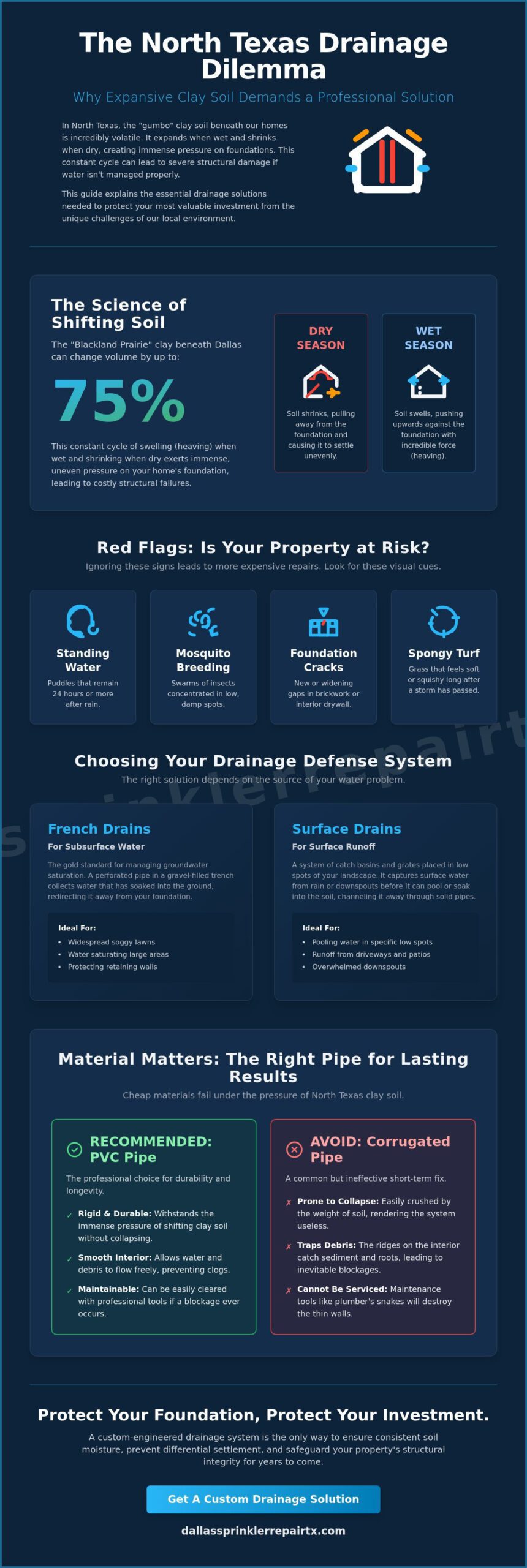
Yard drainage is the strategic management of runoff to prevent water from pooling against your home’s foundation or within your landscape. In North Texas, this isn’t just about avoiding a muddy lawn; it’s a critical defense mechanism for your property. Implementing professional yard drainage solutions Dallas residents can rely on requires a deep understanding of the region’s unique geography. Our properties sit on the “Blackland Prairie,” a belt of soil characterized by high-shrink, expansive clay. This “gumbo soil” is some of the most volatile in the world, often consisting of over 60 percent clay content.
When this soil absorbs water, it swells significantly, a process known as heaving. Conversely, during our intense summer droughts, it shrinks and pulls away from concrete structures. This constant cycle of expansion and contraction puts immense pressure on your home. Without a plan to direct water away, you’re essentially allowing the earth to hammer against your foundation every time it rains. Proper drainage ensures that the soil moisture levels around your home remain consistent, preventing the uneven shifts that lead to structural failure.
Understanding the Role of North Texas Clay
Clay soil acts like a dense sponge. Unlike sandy or loamy soils that allow water to pass through quickly, clay particles are tightly packed and hold moisture for extended periods. During heavy Dallas spring thunderstorms, the ground becomes saturated almost instantly, leaving nowhere for additional rainwater to go. This lack of natural absorption leads to surface runoff that can quickly overwhelm a flat yard. Hydrostatic pressure is the force exerted by this stagnant water against your foundation or crawlspace walls, which can lead to cracks and water intrusion. To mitigate this, many homeowners investigate What is a French Drain? as a way to capture and redirect subsurface water before it causes damage.
Signs Your Yard Has a Drainage Emergency
Ignoring drainage issues only leads to more expensive repairs later. You should look for these specific visual cues in your landscape:
- Standing water: Puddles that remain 24 hours or more after a rainstorm.
- Spongy turf: Grass that feels soft or “bouncy” underfoot long after the weather has cleared.
- Foundation cracks: New or widening gaps in your exterior brickwork or interior drywall.
- Mosquito breeding: Swarms of insects concentrated around low spots in your lawn.
Standing water in Dallas summers creates the perfect habitat for mosquitoes, turning your outdoor space into a health hazard. If you notice these signs, it’s time to evaluate your drainage for standing water in yard options. Addressing these symptoms early protects your property’s value and your peace of mind.
Essential Yard Drainage Solutions for North Texas Properties
Effective yard drainage solutions Dallas properties require are divided into three primary categories: surface systems, subsurface systems, and slope modification. Each serves a distinct purpose in managing the North Texas environment. A professional installation prioritizes the use of high-quality, smooth-walled PVC piping over cheap corrugated alternatives. Corrugated pipe is prone to collapsing under the weight of shifting clay and often traps debris in its ridges. Using rigid PVC ensures your system maintains its integrity and flow capacity for decades. Rigid PVC also allows for easier maintenance, as it can be cleared with a plumber’s snake or high-pressure water jet if a blockage ever occurs. Corrugated pipe is often destroyed by these maintenance tools.
Slope modification, or grading, is the third pillar of drainage. It involves reshaping the land to ensure water naturally flows away from the house. When combined with mechanical drains, it creates a comprehensive shield for your foundation. Properly designed systems integrate with your landscape rather than detracting from it. If you’re concerned about pooling water, exploring professional drainage systems is the first step toward a dry, stable property.
Subsurface Solutions: The French Drain
Subsurface solutions address water that has already penetrated the soil. The French drain is the gold standard for managing groundwater saturation. It utilizes a perforated pipe buried in a trench, surrounded by clean gravel, and fully encased in professional-grade filter fabric. This setup is specifically designed to lower the water table in areas where the lawn remains perpetually soggy. You must be careful with DIY installations; skipping the filter fabric wrap is a common error that leads to the system clogging with silt and failing prematurely. This system is ideal for scenarios where groundwater seeps into crawlspaces or keeps the yard wet for days after the rain stops.
Surface Solutions: Catch Basins and Channel Drains
Surface drainage focuses on capturing runoff before it enters the ground. Catch basins are essential for specific low-lying areas where water naturally collects. These basins use a grate to collect water and move it through solid pipes. For driveways, patios, or pool decks, channel drains provide a continuous line of defense to intercept sheets of water before they reach your home’s exterior walls. These systems often end with a pop-up emitter. This component sits flush with the turf and stays closed to keep out debris and pests, only opening to discharge water when the system is active during a storm. This ensures your yard drainage solutions Dallas homeowners invest in remain functional and aesthetic.
French Drains vs. Surface Drains: Which One Does Your Yard Need?
Selecting the right setup for your property depends entirely on the source of your water problem. You must determine if you are battling surface runoff from intense storms or subsurface groundwater that refuses to dissipate. In North Texas, these two issues require fundamentally different yard drainage solutions Dallas homeowners use to protect their foundations. While both systems utilize a network of pipes to move water, their intake methods and placement within the landscape serve distinct roles. Understanding this distinction saves you from investing in a system that doesn’t address the root cause of your soggy lawn.
Hardware longevity is another factor to consider. Surface components like catch basin grates are exposed to UV rays and lawn equipment, while subsurface pipes must withstand the immense crushing pressure of shifting clay. Using professional-grade materials ensures your investment remains functional for decades. If you are planning a project this year, consult our yard drainage system cost guide to see how these different options fit your budget.
When to Choose a French Drain
A French drain is the superior choice for properties dealing with groundwater saturation. If your lawn stays spongy for days after the clouds have cleared, or if you see water seeping into your crawlspace, the problem is likely a high water table. This system works around the clock to “wick” moisture out of the soil. Once the installation is complete and the sod is restored, the system is virtually invisible. It provides a permanent, hidden defense against the constant expansion of clay soil. This solution is ideal for protecting foundations from the “heaving” cycles mentioned earlier, as it maintains a more consistent moisture level deep in the ground.
When to Choose a Surface Drain System
Surface drains, including catch basins and channel drains, are designed for “flash flooding” scenarios. Dallas is known for intense downpours that drop several inches of rain in a single hour. When your yard is too flat to shed this volume naturally, surface drains intercept the water before it can soak in. These systems clear large volumes of water quickly, preventing it from pooling against your home’s exterior. However, these systems require more active maintenance. You must regularly clear grass clippings, leaves, and debris from the grates to ensure the intake remains unobstructed. For many DFW landscapes, a hybrid approach combining both surface and subsurface elements provides the most comprehensive protection.
The Critical Link Between Proper Drainage and Foundation Health
Foundation stability in North Texas is inextricably linked to moisture management. When excess water pools around your perimeter, it softens the load-bearing capacity of the clay soil. This leads to differential settlement, a condition where one part of your home sinks faster than the rest. The resulting stress causes brick frieze cracks, sticking doors, and uneven floors. While many homeowners believe gutters are a complete solution, they only solve half the problem. If your downspouts discharge water directly at the base of your home, you are essentially injecting moisture into the most vulnerable area of your property. Investing in professional yard drainage solutions Dallas homeowners rely on is a proactive strategy to avoid foundation repair bills that often exceed $40,000. Proper drainage ensures that the ground supporting your home remains as stable as possible throughout the year.
Managing Downspout Runoff
Dumping thousands of gallons of rainwater at your foundation’s edge is a recipe for structural disaster. Every inch of rain on a 2,000 square foot roof generates over 1,200 gallons of runoff. Underground downspout extensions are the most effective way to handle this volume. These extensions should move water at least 10 feet away from the foundation to prevent it from seeping back toward the concrete slab. We always recommend using solid-wall PVC piping for these lines. Unlike flexible, corrugated tubing, solid-wall pipe won’t leak or collapse under the weight of the soil. This ensures that every drop of roof runoff reaches its intended exit point without saturating the ground near your home.
Grading and Swales: Natural Water Diversion
Before installing mechanical drains, we evaluate the positive grade of your lot. A positive grade means the land slopes away from your home at a rate of at least six inches every ten feet. When the natural slope is insufficient, we may create a swale. This shallow, grassy valley acts as a natural canal to redirect water around your home rather than toward it. However, in the tight confines of many DFW neighborhoods, grading alone is rarely enough to protect against heavy storms. In these cases, we combine natural diversion with mechanical yard drainage solutions Dallas experts design to ensure total protection. If you suspect your yard’s slope is contributing to foundation issues, contact our team for a professional site evaluation.
Designing Your Custom Drainage System with Aquamax Sprinkler Systems
Effective yard drainage solutions Dallas homeowners invest in must work in harmony with their existing irrigation. At Aquamax Sprinkler Systems, we don’t just dig trenches; we engineer solutions that respect the complex network of pipes already beneath your turf. Many general contractors overlook the placement of sprinkler lines, often leading to broken heads or severed drip lines during the installation process. As licensed irrigation specialists, we ensure your new drainage system and your existing sprinkler system coexist perfectly. Our approach begins with a comprehensive site evaluation to identify the specific hydraulics of your property. We look at the “big picture” of your landscape to ensure that solving a drainage issue in the backyard doesn’t inadvertently create a new problem for your neighbor or your front walkway.
One of the biggest concerns for homeowners is the state of their lawn after a major excavation. We eliminate this stress by including professional sod installation as part of our restoration process. Once the pipes are buried and the soil is compacted, we lay fresh, high-quality sod to match your existing grass. This means you won’t be left with unsightly dirt patches or a yard that takes months to recover. You get a functional drainage system and a beautiful, usable landscape immediately upon completion. This seamless transition from construction to restoration is what defines our commitment to excellence.
The Aquamax Installation Process
Precision is the foundation of every project we undertake. We utilize professional laser levels to calculate the exact pitch required for water to move efficiently toward its exit point. In the flat terrain common to many DFW neighborhoods, even a fraction of an inch can be the difference between a dry yard and a stagnant pool. We only use high-density, smooth-wall PVC to ensure your system remains root-resistant and flow-efficient for decades. Unlike the cheap, corrugated piping used by many competitors, our materials won’t collapse under the pressure of North Texas clay. Our crews maintain a clean job site and work with a brisk, purposeful rhythm to minimize the disruption to your daily life. We leave your property as clean as we found it, but with the added security of a dry foundation. Because your sprinkler system plays an equally important role in maintaining consistent soil moisture around your foundation, understanding the differences between DIY vs professional sprinkler installation Dallas homeowners face can help you make the most informed decision for your property’s long-term health.
Ready to Fix Your Yard? Contact Our Dallas Experts
If you’re tired of seeing your lawn underwater after every storm, it’s time to take a proactive step. Since 1998, we’ve built a reputation for excellence across the DFW Metroplex by providing reliable, long-term yard drainage solutions Dallas residents trust. You can read our reviews to see how we’ve helped your neighbors protect their foundations and reclaim their outdoor spaces. We understand the urgency of foundation protection and the value of your peace of mind. Don’t wait for the next heavy rain to discover a problem. Visit our contact page today to schedule your professional drainage evaluation and secure the future of your home.
Secure Your Home’s Future with Professional Drainage
Protecting your property from the volatile North Texas soil is a long-term commitment that starts with professional water management. You now understand that ignoring standing water leads to more than just a muddy lawn; it directly threatens the structural integrity of your home. By choosing custom-engineered yard drainage solutions Dallas homeowners can ensure their investment remains stable regardless of the unpredictable weather patterns we face. Our team has provided A+ rated local expertise to residents in Dallas, Plano, and Frisco since 1998. We utilize high-grade PVC and precision engineering to create systems that stand the test of time. Don’t let another heavy rainstorm cause unnecessary stress or lead to five-figure foundation repairs. Our licensed and insured technicians are ready to design a system tailored to your property’s unique hydraulics and landscape needs. Take control of your landscape today and gain the lasting peace of mind that comes with a dry, protected home. We look forward to helping you reclaim your yard.
Get a Professional Yard Drainage Evaluation in Dallas
Frequently Asked Questions
How much do yard drainage solutions cost in Dallas?
The cost of implementing yard drainage solutions Dallas homeowners require depends on the complexity of the landscape and the linear footage of the system. Factors such as the depth of the trench, the type of pipe used, and the amount of sod restoration needed will influence the final investment. A simple downspout extension is a minor project, while a full perimeter French drain designed to protect a large foundation involves more extensive labor and materials.
Will a French drain ruin my existing landscaping or sprinkler system?
A professional installation is designed to protect your existing landscape and irrigation network. Licensed specialists identify and map out sprinkler lines before excavation begins to avoid severed pipes or broken heads. After the drainage hardware is installed, we use professional sod installation to restore the turf. This ensures that the only evidence of the project is a dry, healthy lawn and a stable foundation.
How long does it take to install a professional drainage system?
Most residential drainage projects in the DFW area are completed within one to three days. The specific timeline depends on the total length of the pipe runs and whether the project requires mechanical excavation or manual digging in tight spaces. Our crews work with a purposeful rhythm to ensure the job is finished quickly without compromising the precision required for proper water flow.
Can I install a yard drainage system myself or should I hire a pro?
Hiring a professional is highly recommended because of the technical precision required to move water across flat North Texas lots. DIY attempts often fail because the pipe lacks the necessary pitch or the installer skips critical components like filter fabric. A professional installation ensures the system is engineered to handle the specific hydraulics of your property while avoiding damage to underground utility lines.
Do French drains work in the heavy clay soil of North Texas?
French drains are exceptionally effective in North Texas when they are specifically engineered for our “Blackland Prairie” clay. The system must use a generous amount of clean gravel and professional-grade filter fabric to prevent fine clay particles from clogging the pipe. These yard drainage solutions Dallas experts install are the gold standard for managing the groundwater saturation that leads to foundation heaving.
What is the best way to stop water from pooling near my foundation?
The most effective strategy is to move roof runoff far away from the house using underground downspout extensions. Moving this water at least 10 feet from the slab prevents the soil from becoming over-saturated and exerting pressure on the concrete. Combining these extensions with a positive grade ensures that surface water naturally flows away from the structure rather than collecting in low spots.
How often do yard drainage systems need maintenance?
You should perform a basic inspection of your system twice a year, ideally before the heavy spring rains and after the leaves fall in autumn. Maintenance primarily involves clearing debris, grass clippings, and leaves from surface grates and pop-up emitters. Systems built with high-quality, smooth-wall PVC are resistant to root intrusion and rarely require internal cleaning if the intake points are kept clear.
Does a drainage system increase my home value in Dallas?
A professionally installed drainage system is a significant selling point in the Dallas real estate market because it addresses the city’s primary structural concern: foundation health. It provides potential buyers with peace of mind that the home has been proactively protected against the shrink-swell cycles of clay soil. Additionally, a dry and usable backyard increases the functional square footage of the property, enhancing its overall appeal.