
Article by
Robert Maxvill
Owner of Aquamax Sprinkler Systems, American Sprinkler Repair and Dallas Drainage Systems.
In the North Texas heat, a sprinkler system is far more than a convenience; it is a vital tool for protecting your home’s foundation from the volatile expansion of local clay soil. You likely already recognize that a lush lawn requires consistent hydration, yet the fear of hidden fees or confusing technical jargon often makes the initial planning phase feel overwhelming. Navigating sprinkler system costs shouldn’t feel like a guessing game where the final invoice is a surprise.
We understand the specific challenges of the Dallas landscape, from the density of our earth to the strict local watering restrictions that carry heavy fines. This 2026 pricing guide offers a clear, realistic breakdown of irrigation installation and repair requirements tailored specifically for our region. You will learn exactly how different zones and components affect your total investment. We’ll preview everything from water-efficient drip irrigation to the long-term value of smart controllers, giving you the peace of mind that your property is in capable, licensed hands.
Key Takeaways
- Learn why calculating sprinkler system costs by the number of zones provides a much more accurate budget than simple square footage estimates.
- Understand how the dense North Texas clay soil directly impacts installation labor and why proper trenching is critical for system longevity.
- Identify the 15-to-20-year “age threshold” to determine if your current irrigation setup is a candidate for repair or if a full replacement is more cost-effective.
- Discover how a professionally installed drip irrigation system acts as an insurance policy for your home’s foundation by maintaining consistent moisture levels.
- See why hiring licensed specialists prevents the long-term financial risks associated with uncertified labor and poor system design.
Ballpark Estimates for Sprinkler System Costs in 2026
Estimating sprinkler system costs for a North Texas property involves balancing raw material prices with the specialized labor required for our unique environment. In 2026, homeowners should view “per square foot” estimates as a rough starting point rather than a final budget. Local variables like water pressure and municipal requirements significantly shift the total investment. Quality parts save money. Selecting professional-grade components over budget-grade alternatives ensures your system survives the intense Dallas summer without frequent, costly repairs.
City-mandated permits and inspections are non-negotiable costs in the DFW area. As of June 2026, permit fees typically range from $100 to $450 depending on the total valuation of the project. These fees cover the necessary oversight to ensure your backflow prevention device is installed correctly, protecting the city’s main water supply from contamination. Skipping these steps might save money upfront, but it exposes you to significant fines and potential legal issues with local water authorities. It’s a risk that rarely pays off.
Average Cost Breakdown by Property Size
Small residential lots under 4,000 square feet usually require fewer zones; however, the initial setup of the controller and backflow device remains a fixed necessity. For standard suburban yards between 5,000 and 8,000 square feet, the complexity increases as we account for different sun exposures and plant types. Large estate properties often see costs scale faster than their acreage. These systems require high-capacity manifolds and sophisticated pressure regulation to maintain consistent coverage across expansive turf areas, often necessitating more robust Irrigation sprinkler systems.
Cost per Zone: The Industry Standard
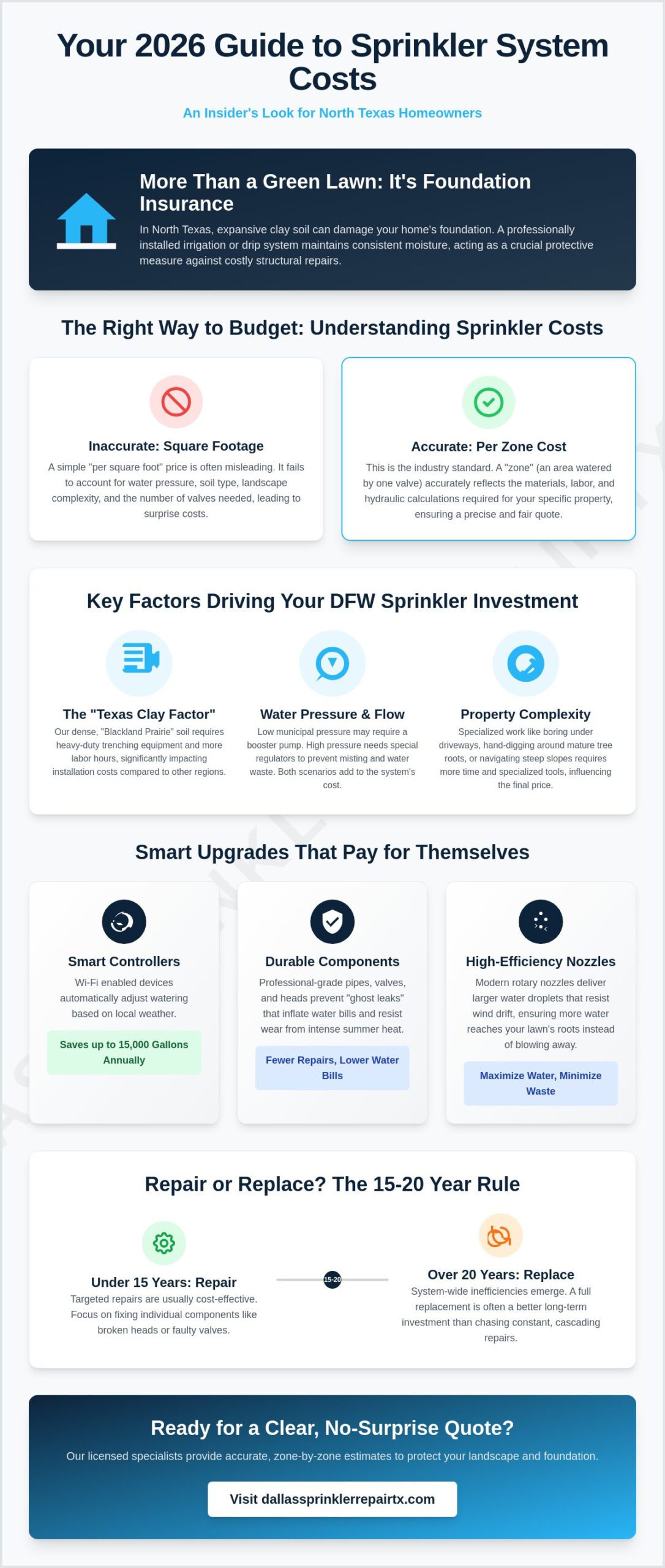
A zone is defined by a group of heads within an irrigation layout that operate simultaneously under one valve. This is the most accurate way to measure sprinkler system costs because it accounts for the specific hydraulic needs of your landscape. Adding a single zone to an existing system involves more than just extra pipe; it requires available capacity on your controller and space in the valve box. High-quality sprinkler installation ensures that each zone provides head-to-head coverage, preventing the dry spots that often plague systems designed with too few zones to save on initial costs. Your final quote will reflect the number of valves and the complexity of the manifold required to manage your property’s specific layout.
Key Factors Driving Your Irrigation Investment
The dense, expansive clay found throughout North Texas is the single most significant variable in your final quote. Unlike the sandy soils of the coast or the loamy earth of the Midwest, our “Blackland Prairie” soil requires heavy-duty trenching equipment and significantly more labor hours to penetrate. This “Texas Clay Factor” means that labor accounts for a larger portion of sprinkler system costs here than in almost any other region. When a contractor encounters rock-hard clay, the wear on machinery and the physical toll on the crew increase. This is why local expertise is vital for an accurate estimate.
Water pressure also dictates your investment level. If your neighborhood has low municipal pressure, your system might require a booster pump to ensure heads pop up and provide adequate coverage. Conversely, high pressure requires specialized regulation valves to prevent “misting,” where water turns into a fine fog and blows away before hitting the grass. Complexity adds up quickly when we have to bore under established concrete driveways or navigate mature oak root systems. These obstacles require specialized tools and careful hand-digging to avoid damaging your home’s infrastructure. Every physical hurdle on your property directly influences the total sprinkler system costs.
Material Quality vs. Long-Term Expense
Choosing high-durability piping and professional-grade valves prevents “ghost leaks” that quietly inflate your water bill. High-efficiency rotary nozzles are another smart upgrade. They deliver larger water droplets that resist wind drift, ensuring moisture actually reaches the roots. Modern smart controllers are perhaps the best example of technology improving ROI. These Wi-Fi-enabled devices use local weather data to adjust schedules automatically, helping typical households save up to 15,000 gallons of water annually. If you’re unsure if your current setup is wasting resources, a professional sprinkler installation review can identify where better materials would lower your monthly bills.
Permits and Backflow Prevention in DFW
DFW municipalities like Dallas, Plano, Frisco, and McKinney take water safety seriously. Every new installation requires a permit and a certified backflow preventer to ensure irrigation water never siphons back into your drinking supply. Permit fees vary by city, but the cost of skipping this step is much higher. Unlicensed work often results in “red tags” from city inspectors. This leads to massive fines and the potential requirement to tear out the entire system. Protecting your investment starts with following local code and hiring licensed hands.
Repairing vs. Replacing: Which Is More Cost-Effective?
Every mechanical system has a lifecycle. In North Texas, the 15-to-20-year mark is the critical “Age Threshold” for residential irrigation. Beyond this point, brittle PVC and outdated valve designs often lead to a cycle of endless, frustrating repairs. You might replace a spray head today only to find a lateral line split tomorrow. This isn’t just bad luck; it’s systemic failure. When your annual sprinkler system costs for maintenance begin to rival the price of a modern zone installation, it’s time to evaluate the total cost of ownership. Tech saves money. A modern system is an investment, not just an expense.
Underground leaks are the most deceptive drain on your finances. A small crack in a pipe can waste thousands of gallons before surfacing as a visible wet spot in the lawn. These leaks often hide until you receive a staggering water bill from the city. Frequent head replacements might seem like a minor expense, but they don’t address the underlying issue of an inefficient, aging layout. If you’re constantly patching a failing system, you’re merely subsidizing its eventual collapse. Identifying the difference between an isolated mechanical issue and a system-wide breakdown is the first step toward long-term savings.
Common Repair Costs in 2026
Standard repairs in 2026 focus on restoring immediate functionality to your yard. Replacing a single broken head or a malfunctioning valve is a routine fix that keeps your grass alive. However, the labor involved in locating a sprinkler system leaking underground requires specialized diagnostic equipment and expert time. If your controller is an old mechanical “clock” style, swapping it for a smart Wi-Fi system is often the most impactful repair you can make. It transforms a reactive system into a proactive one, allowing for precision adjustments based on real-time weather data.
The ROI of a Full System Overhaul
A full overhaul offers more than just new pipes. Modern irrigation technology can reduce monthly water bills by 30% to 50% through precision timing and weather-sensing automation. This efficiency pays for itself over several seasons. A certified, functional system also serves as a major selling point for Dallas properties, adding tangible value to your home. While a sprinkler system tune-up is excellent for maintaining a mid-life system, a full replacement provides the long-term security of a comprehensive warranty. You trade the stress of constant fixes for the confidence of a thriving, water-efficient landscape.
The Hidden Value: Protecting Your DFW Foundation and Landscape
In North Texas, the value of an irrigation system extends far beneath the surface of your lawn. While we’ve discussed the initial sprinkler system costs for installation, it’s vital to view this investment as a shield for your home’s foundation. Our local clay soil is notorious for shifting. It expands when wet and shrinks during the brutal summer droughts. This cycle of movement is the primary cause of foundation cracks and structural instability. Maintaining consistent moisture levels around your slab isn’t just about aesthetics; it’s a preventative measure against repairs that can cost tens of thousands of dollars. A well-designed system keeps the soil stable and your home secure.
Drip irrigation is the most efficient tool for this specific job. By delivering water slowly and directly to the soil near the foundation, it prevents the earth from pulling away from the concrete. Unlike standard spray heads, drip lines are often exempt from the strict twice-weekly watering schedules enforced in Dallas and surrounding suburbs. This allows for the daily, light hydration that foundations require during peak heat. The maintenance costs for these systems are also lower, as there are no pop-up heads to be run over by lawnmowers or clogged by debris. It’s a small upfront cost that functions as a massive insurance policy.
Drip Irrigation vs. Traditional Sprinklers
Installing drip lines for foundation zones and flower beds typically adds a manageable amount to your total sprinkler system costs. These lines use flexible tubing with built-in emitters, making them ideal for the irregular shapes of North Texas landscapes. While traditional rotors are best for wide turf areas, drip irrigation excels in target-rich environments where runoff must be avoided. This targeted approach ensures you aren’t wasting money on water that simply evaporates or runs down the gutter. It’s the gold standard for foundation care and garden health.
Integrating Drainage Solutions
Water management is a two-way street. A high-performance sprinkler system ensures your plants get enough water, but you must also have a plan for when there is too much. Standing water near a foundation is just as dangerous as drought. Integrating a drainage system alongside your irrigation is essential for protecting your property. A French drain or surface drain prevents “boggy” spots that can drown your grass and compromise your sod installation investment. This integrated approach ensures your landscape remains a thriving asset rather than a liability. Correct drainage protects your investment from North Texas flash flooding and ensures your lawn stays healthy year-round.
Protect your home and your landscape today by scheduling a professional sprinkler installation that prioritizes both beauty and structural integrity.
Why Professional Installation with Aquamax Saves You Money
Hiring uncertified labor might seem like a shortcut to lower your initial sprinkler system costs, but it’s a gamble that rarely pays off. These “sprinkler cowboys” often operate without the necessary Texas Commission on Environmental Quality (TCEQ) licensing required by law. Without this certification, there’s no guarantee your system meets safety or water conservation codes. Aquamax has been deeply rooted in the DFW community since 1998. We’ve seen every possible scenario in North Texas yards. Our localized expertise ensures your system is built to last, saving you from the “DIY disaster” that often costs double to fix later. A local company provides the warranty and support that an independent, unlicensed laborer simply cannot match.
Precision engineering is the foundation of our work. We don’t just dig trenches; we calculate the specific water needs of your turf and flower beds to avoid the waste of over-watering. A custom-designed system ensures that every drop of water is used efficiently. This methodical approach protects your investment and keeps your monthly utility bills manageable. When you choose a professional partner, you’re buying peace of mind and long-term reliability. Our technicians understand the specific layouts of DFW neighborhoods, allowing us to design systems that work with your landscape rather than against it.
The “Aquamax Difference” in Design
Our design process involves rigorous hydraulic calculations to ensure even pressure across every zone. If pressure is too high, your heads will mist and water will evaporate before hitting the ground; if it’s too low, they won’t pop up correctly. We exclusively use high-grade parts specifically engineered to survive 100°F+ Texas summers. These components resist UV damage and the mechanical stress of our heavy clay soil. Our commitment to professional sprinkler installation standards means your system will be a functional asset for decades, not just a few seasons.
Next Steps: Getting Your Custom Quote
A professional on-site evaluation is the first step toward a thriving lawn and a protected foundation. During this visit, we assess your property’s topography, sun exposure, and existing water pressure. You’ll receive a detailed bid that breaks down the project without confusing technical jargon. Reading a professional irrigation bid shouldn’t be difficult. It should clearly outline the number of zones, the type of controller, and the specific components used. This transparency ensures there are no hidden sprinkler system costs after the physical labor begins. Ready to protect your property? Contact Aquamax Sprinkler Systems for a professional estimate today.
Secure Your Landscape and Foundation for the Future
Investing in a high-efficiency irrigation system is the most effective way to stabilize your home’s foundation and maintain a vibrant lawn throughout the year. We have explored how sprinkler system costs are influenced by the density of North Texas clay and why professional-grade components provide superior long-term ROI compared to budget alternatives. A licensed installation protects your property from water waste and municipal fines while ensuring your landscape thrives in the summer heat. Relying on expert design means you aren’t just watering grass; you’re protecting your largest financial asset from the volatile Texas soil.
Since 1998, Aquamax has provided the DFW area with custom-designed solutions engineered for our specific regional challenges. Our licensed and insured technicians specialize in creating water-efficient layouts that stand up to the local environment. Don’t leave your property’s health to chance or unlicensed labor. Request a Professional Sprinkler Quote from Aquamax today to see the difference that expert engineering makes. We look forward to helping you achieve a lush, sustainable, and worry-free landscape for years to come.
Frequently Asked Questions
How much does a sprinkler system cost for a 1/4 acre lot in Dallas?
Total sprinkler system costs for a 1/4 acre lot depend on the number of zones needed to provide head-to-head coverage across your turf and flower beds. This property size is standard for Dallas suburbs and usually requires a multi-zone layout to manage varying sun exposure. Professional design ensures consistent moisture without wasting water on hardscapes. Factors like existing landscaping and soil density will ultimately determine the total investment required for a reliable system.
Is a smart sprinkler controller worth the extra cost?
Investing in a smart controller is highly cost-effective because it can reduce your outdoor water usage by 30% to 50%. These devices use local weather data to skip watering cycles when rain is forecast, helping you avoid fines for watering during precipitation. They also ensure your lawn stays healthy without manual adjustments. The long-term savings on your monthly utility bills often offset the initial purchase price within a few seasons.
How much does it cost to add a zone to an existing sprinkler system?
Adding a single zone involves installing a new valve, extending lateral lines, and ensuring your current controller has an open terminal. The price depends on how far the new zone is from your main manifold and whether trenching through established concrete or roots is required. It is a more involved process than simply adding a head; it requires proper hydraulic balancing to maintain adequate pressure across the entire irrigation system.
Does a new sprinkler system increase my home value in Texas?
What is the average cost of a backflow preventer installation?
A backflow preventer is a mandatory safety device that protects the city’s potable water supply from contamination. The installation cost covers the device, specialized labor, and the required testing by a certified professional. Prices vary based on your main water line size and specific codes in suburbs like Plano or Frisco. It is a critical component required by the TCEQ to ensure your irrigation system remains safe, legal, and functional.
Can I save money by installing my own sprinkler system?
Most homeowners find that the specialized equipment rental and the high risk of errors lead to greater expenses than hiring a professional. In Texas, a TCEQ license is legally required to install or service an irrigation system. Unlicensed installations often result in city fines, poor water distribution, and potential foundation damage. Professional installation ensures the system is engineered correctly for our dense clay soil and unique local climate.
How much should I budget for annual sprinkler maintenance in DFW?
Budget for a professional tune-up every spring and a basic system check before the winter freeze. These visits identify small leaks and clogged nozzles that quietly increase your sprinkler system costs through wasted water and plant loss. Testing your rain and freeze sensors ensures you remain compliant with local Dallas ordinances. Proactive maintenance is the best way to extend the life of your irrigation components and prevent expensive emergency repairs.
Why are permit fees required for sprinkler installation?
Permit fees are required to fund the municipal inspections that ensure your system complies with safety and water conservation codes. In Dallas, these fees typically range from $100 to $450 depending on the project’s valuation. These inspections verify that your backflow preventer is installed correctly to protect the public water supply. Following the legal permit process prevents “red tags” from city inspectors and protects you from fines that can reach $2,000 per incident.