
Article by
Robert Maxvill
Owner of Aquamax Sprinkler Systems, American Sprinkler Repair and Dallas Drainage Systems.
Buying a new lawn in North Texas is often a gamble against the triple-digit heat, but the biggest risk isn’t the weather; it’s an invisible budget leak. You want a lush, green yard that enhances your property’s value, yet the fear of watching expensive Zoysia or Bermuda wither away under the Dallas sun is a legitimate concern. It’s common to feel overwhelmed by conflicting quotes or uncertain if your existing sprinkler system is actually up to the task of supporting new growth.
This guide provides a transparent breakdown of the new sod installation cost across the Metroplex, helping you budget for more than just the grass itself. You’ll learn which varieties offer the best return on investment for our specific clay soil and how professional site preparation prevents costly failures. We will examine the regional factors that drive pricing, compare the long-term survival of popular North Texas turf, and outline the essential irrigation requirements that keep your landscape vibrant. This methodical approach ensures you understand the total project scope and have the confidence to transform your outdoor space into a thriving, resilient environment.
Key Takeaways
- Distinguish between raw material prices and full-service labor to understand the total scope of your project investment.
- Identify how North Texas soil conditions and yard accessibility directly influence your new sod installation cost.
- Evaluate the hidden expenses of DIY projects, such as equipment rentals and debris disposal, to find the most efficient installation path.
- Ensure long-term turf survival by prioritizing an irrigation audit and drainage check before laying a single pallet of grass.
- Learn why a holistic approach to soil and water management is essential for a resilient lawn in the Dallas-Fort Worth climate.
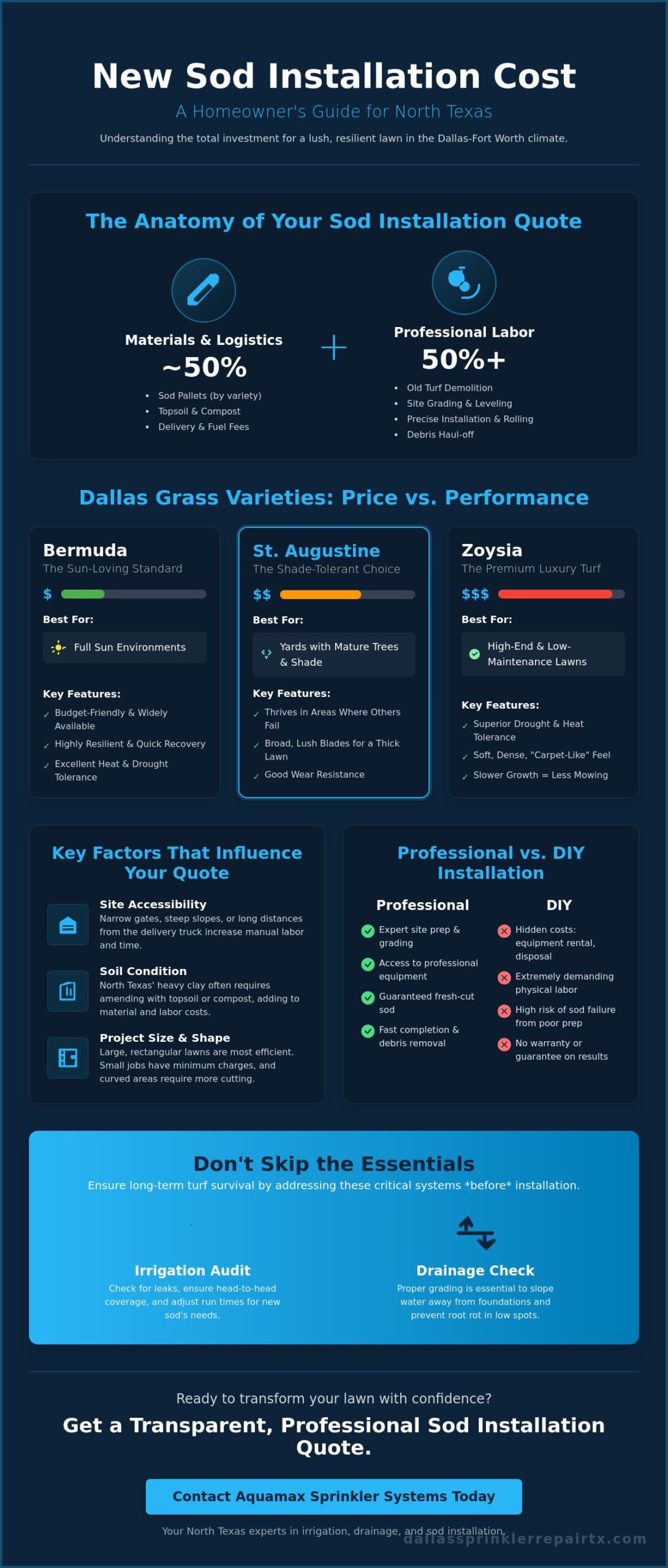
Breaking Down the Components of New Sod Installation Cost
Logistics play a significant role in your bottom line. For smaller residential lots, delivery fees can become a budget trap. Suppliers typically charge a flat rate per truckload regardless of whether you order one pallet or ten. This means a small patch of grass can have a disproportionately high cost per square foot compared to a full-yard replacement. Conversely, larger properties often benefit from bulk discount potential. When a crew can mobilize for an entire day on a single site, the efficiency gains are usually passed down to the property owner.
Material Costs: Pallets, Rolls, and Grass Varieties
In North Texas, a standard pallet of sod typically covers between 400 and 500 square feet. To truly understand what sod is and why it varies in price, you must look at the cultivation process. Specialized hybrids, such as certain Zoysia or high-end Bermuda varieties, command a premium because they require more time and specialized care at the farm. Always prioritize fresh-cut delivery over big-box store inventory. Sod is a living product; grass that has been sitting on a hot asphalt parking lot for days has a significantly lower survival rate than turf harvested within 24 hours of installation.
Labor Costs: From Demolition to Final Rolling
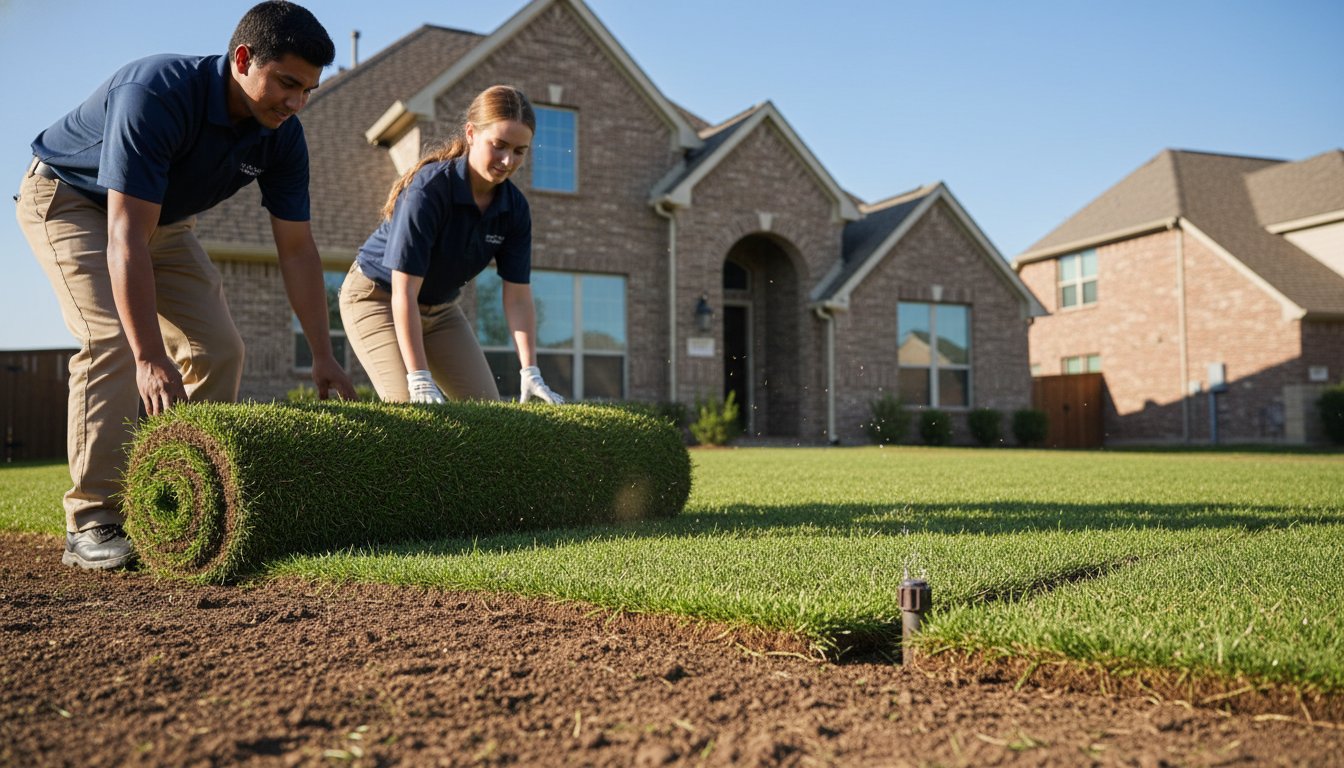
The heaviest portion of your investment goes toward site preparation. Professional crews begin with the demolition of your existing, dead turf and any underlying weed mats. This is a grueling process that involves more than just a mower. In our region’s clay-heavy soil, grading and leveling are the most critical labor steps. We use specialized equipment to ensure the ground slopes away from your foundation and prevents future drainage issues. Finally, don’t overlook the precision required for hand-cutting. Fitting sod around curved flower beds, stone walkways, and irrigation heads takes time and a steady hand. This attention to detail ensures a seamless look and prevents the gaps where weeds often take root.
Key Factors That Influence Your Final Sod Quote
Every property in North Texas presents unique logistical constraints that dictate the final new sod installation cost. While the average cost of renovating a lawn provides a helpful baseline, your specific Dallas property will have variables that move the needle. Site accessibility is a primary driver of labor hours. If a yard has narrow gates that prevent a forklift or skid steer from entering, or steep slopes that require manual hauling, the project timeline expands. Similarly, the condition of the soil matters. Dallas is notorious for heavy clay that lacks essential nutrients. Incorporating topsoil or compost before laying sod isn’t an optional “extra”; it’s a requirement for the grass to take root and survive its first summer. Understanding how to prepare your yard for sod with the right soil amendments and grading steps can make the difference between a thriving lawn and a costly replacement.
Seasonal timing and project scale also affect your estimate. High demand in spring and fall can lead to tighter schedules and fluctuating material prices at the farm. For homeowners needing only a small patch-and-repair job, be aware of “minimum charges.” Contractors must cover the fixed costs of mobilization, equipment cleaning, and delivery. This means a 200-square-foot patch won’t cost exactly 10% of a 2,000-square-foot job. Efficiency is found in larger, continuous areas where a crew can maintain a steady rhythm.
Dallas Grass Varieties: Price vs. Performance
Bermuda grass is the budget-friendly, sun-loving standard for DFW, known for its resilience and quick recovery. St. Augustine serves as the mid-range choice, specifically favored for shaded North Texas lawns where other varieties fail. Zoysia represents the premium “luxury” grass. While its initial cost is higher, Zoysia justifies the investment through superior drought tolerance, a soft texture, and slower growth that requires less frequent mowing. Choosing the right variety is a balance between your yard’s light exposure and your long-term maintenance budget.
Size and Shape: Why Rectangle Lawns Cost Less Than Curves
Rectangular lawns are the most efficient to sod because they minimize waste and cutting time. Irregular shapes and curved flower beds create a “waste factor,” typically requiring 5% to 10% more material to cover the gaps created by trimming. Large, open acreages often benefit from “big roll” machine installation, which reduces manual labor. Conversely, intricate landscaping requires extensive “cutting-in” around edges and stones. To ensure your new investment thrives, consider a sprinkler system tune-up to verify your coverage reaches every newly installed edge.
Professional vs. DIY Sod Installation: A Cost-Benefit Analysis
Many homeowners assume a DIY approach is the most effective way to lower the new sod installation cost, but this often overlooks the logistical reality of North Texas. Installing 2,000 square feet of turf is a massive undertaking. Based on industry data, a single pallet of sod weighs between 1,500 and 4,500 pounds. For a standard yard, you’ll likely move five pallets. This means lifting and placing nearly 10,000 pounds of living material. Without a professional crew, this process can take an inexperienced individual several days, during which the uninstalled sod is actively dying on the pallet in the Dallas heat.
Professional installation offers a level of precision that DIY projects rarely achieve. Proper site preparation is the foundation of a long-term landscape. A professional team ensures the ground is graded correctly to prevent water from pooling against your foundation. They also provide a warranty on the survival of the grass, which is a critical safety net when investing thousands of dollars. Following the Texas A&M guide on turfgrass establishment, experts focus on the critical window immediately following harvest to ensure the highest success rate.
Equipment and Material Logistics for the DIYer
The hidden expenses of a DIY job accumulate quickly. You’ll need to factor in the daily rental rate for a heavy-duty sod cutter and a motorized tiller, both of which require a truck and ramps for transport. Buying soil amendments by the bag at a local home improvement store is significantly more expensive than the bulk truckloads used by professionals. Additionally, don’t forget the disposal fees. Local DFW landfills charge by weight for the removal of old, heavy clay and dead grass. These logistical costs often bridge the gap between a DIY budget and a professional quote.
The Risk of Failure: Why ‘Cheap’ Sod Can Become Expensive
Improper installation techniques lead to “lumps and bumps” that make mowing difficult and ruin the aesthetic of your property. If the seams between the sod pieces aren’t tight, they will dry out and create gaps where invasive weeds take root. Poorly rolled sod fails to establish because air pockets prevent the roots from reaching the soil. Professional installation utilizes commercial rollers and precise soil preparation to ensure consistent root-to-soil contact for immediate, aggressive growth. If the grass doesn’t take, the new sod installation cost effectively doubles when you have to pay for a second round of materials and labor to fix the mistakes. Before committing to a contractor, reviewing a comprehensive guide to sod installation companies in Dallas can help you identify the right partner who prioritizes soil health and long-term turf survival.
The Hidden Essentials: Irrigation and Drainage Costs
Laying a new lawn without first verifying your water delivery system is a recipe for an expensive failure. In the harsh North Texas climate, the new sod installation cost must include a comprehensive irrigation evaluation to protect your investment. Most homeowners realize too late that their existing system has coverage gaps or broken heads that only become obvious once the grass starts turning brown. Scheduling a sprinkler repair Dallas audit before the first pallet arrives is the most effective way to mitigate this financial risk.
When we install fresh sod, we often add several inches of topsoil and organic matter. This raises the overall grade of your yard. If your sprinkler heads aren’t adjusted to this new, higher turf level, they will spray directly into the side of the grass rather than over the top. This leads to uneven saturation and localized dry spots. Budgeting for these mechanical adjustments ensures your system remains functional and efficient from day one. Additionally, consider upgrading to a smart controller. These units automate the frequent, short watering cycles required during the first two weeks of establishment, taking the guesswork out of preservation.
Pre-Installation Irrigation Audits
A pre-installation audit identifies more than just broken pipes. It ensures your water pressure is sufficient for uniform saturation across the entire property. If you’ve chosen a high-maintenance grass variety, you might need to add a dedicated zone to handle its specific hydration needs. Our technicians check for coverage gaps that will kill new sod patches before they can take root. This step is vital for ensuring every square foot of your new investment receives the exact amount of water it needs to thrive in the Dallas sun.
Drainage Integration: Protecting Your Foundation and Turf
Drainage is equally critical to the longevity of your lawn. Sod won’t fix a swampy yard; it will only rot in it. Standing water can destroy new root systems within 48 to 72 hours. Integrating surface drains during the grading phase is often more cost-effective than trying to retrofit them after the grass is laid. This is particularly important near house foundations, where a drip irrigation system installation can maintain consistent moisture levels without the risks associated with overspray. Proper drainage prevents the “sponge” effect that occurs when heavy rains meet new turf in our regional clay soil.
Protect your investment by ensuring your water system is ready for the task. Schedule a sprinkler system tune-up to verify your coverage before your new sod arrives.
Maximizing ROI: Why Aquamax is the Choice for Dallas Sod Installation
Choosing a contractor involves more than just comparing bottom-line numbers. Since our founding in 1998, Aquamax Sprinkler Systems has refined a holistic approach that treats your lawn as a living system rather than a one-time product. We understand that the true new sod installation cost is measured by the longevity of the grass, not just the price of the pallet. Our deep roots in the North Texas environment allow us to navigate the specific challenges of our regional soil and climate with the confidence of a seasoned specialist. We don’t just lay grass; we engineer a landscape designed to thrive for years.
We integrate professional irrigation checks into every project because a beautiful lawn is worthless without a reliable water source. Our technicians verify that your coverage is uniform and your water pressure is optimized before the first piece of turf is placed. This proactive strategy prevents the common “dry spots” that plague DIY projects and inexperienced installers. By addressing potential irrigation failures early, we protect your financial investment and ensure your property maintains its vitality through the peak of the Texas summer.
Transparency is the cornerstone of our quoting process. You won’t face surprise charges for grading or disposal after the work begins. We provide a clear, comprehensive breakdown that accounts for every aspect of the project scope. This direct communication eliminates the “hidden fee” trap and provides you with the peace of mind that comes from working with a dependable partner. Our goal is to deliver functional excellence without the stress of unexpected budget shifts.
A Seamless Process from Design to Lush Lawn
Our methodology for site preparation includes deep soil enrichment and mechanical grading to ensure your new turf has the best possible foundation for growth. Local homeowners trust us because we manage both the irrigation and the turf installation, creating a unified system that works in harmony. Precision matters. Every member of our team is a professional who respects your property and your time. The result is a seamless transition from a failing yard to a lush, healthy lawn. Because we are fully licensed and insured, you can rest easy knowing your property is in capable hands.
Get Your Custom Quote Today
We provide accurate estimates based on the unique geometry and environmental needs of your specific yard. A correctly installed, water-efficient lawn offers significant long-term savings by reducing water waste and preventing the need for costly replacements. Our expertise ensures your grass takes root quickly and stays resilient against the elements. Don’t leave your property’s health to chance. Take the first step toward a vibrant, sustainable landscape by partnering with a local authority that understands the Dallas-Fort Worth region. Schedule your Dallas sod installation consultation today and secure the future of your outdoor space.
Secure Your Investment with Professional Installation
Transforming your property starts with a clear understanding of the variables that drive your new sod installation cost. Success in the North Texas climate depends on more than just high-quality turf; it requires a foundation of enriched soil and a precise water management strategy. Our team has served the Dallas-Fort Worth area since 1998, providing the expertise needed to navigate our unique environmental challenges. With licensed and insured technicians, we ensure that your irrigation and sod work together as a single, thriving system. This integrated approach removes the burden of maintenance from your shoulders and provides the long-term reliability you deserve.
Don’t leave the health of your landscape to chance. Partner with a specialist who understands that a vibrant lawn is the result of functional excellence and proactive care. Get a Professional Sod Installation Quote for Your Dallas Home today. We look forward to helping you create a lush, resilient environment that enhances your home for years to come.
Frequently Asked Questions
How much does a pallet of sod cost in Dallas in 2026?
Prices for a pallet of sod in Dallas vary based on the grass variety. Bermuda typically ranges from $270 to $285 per pallet, while premium Zoysia varieties can cost between $330 and $350. A single pallet covers approximately 400 to 500 square feet. These material costs are just one part of the total investment. Delivery fees and professional labor will influence your final project quote.
Is it cheaper to seed or sod a lawn in North Texas?
Seeding has a lower initial material cost than sodding, but it’s often more expensive in the long run due to high failure rates in North Texas. Our regional clay soil and intense heat make it difficult for seeds to germinate and establish before weeds take over. Sod provides an instant, weed-free lawn and a much higher survival rate, making it the more cost-effective choice for most Dallas properties.
What is the best time of year to install new sod in Dallas?
Spring is the ideal time for installation as the mild temperatures allow roots to establish before the summer heat arrives. Fall is a strong secondary option because the soil remains warm while the air cools, reducing water evaporation. While you can install sod year-round in Texas, doing so during these peak windows maximizes your ROI and ensures your new sod installation cost results in a healthy, permanent lawn.
Does the cost of sod installation include removing my old grass?
Professional estimates usually list old grass removal as a separate line item. Removing dead turf and weeds is a labor-intensive process that requires specialized machinery and disposal fees. We recommend including this in your budget to ensure the new roots have direct contact with the soil. Skipping this step often leads to drainage issues and premature grass death.
How much extra should I budget for irrigation repairs before sodding?
Budgeting for a comprehensive irrigation audit and potential repairs is essential for protecting your new lawn. Most systems require head adjustments or nozzle replacements to account for the new, higher soil level of the turf. You should expect this to be a separate cost from the labor of laying the grass. Ensuring your sprinkler system provides 100% coverage is the only way to prevent your investment from drying out.
Can I install new sod over my existing dead grass to save money?
Installing new sod directly over dead grass is not recommended because it creates a physical barrier that prevents roots from reaching the soil. This layer of decaying organic matter traps heat and blocks moisture, effectively “cooking” the new roots. To ensure survival, the site must be cleared and the soil tilled. Proper preparation is the most critical factor in justifying your new sod installation cost and ensuring long-term health. Following a detailed yard preparation checklist for sod installation ensures every step from soil amendment to grading is completed correctly before the first pallet arrives.
How long does it take for new sod to become established in Texas?
New sod typically takes two to three weeks to establish its initial root system in North Texas. During this critical window, you must follow a strict watering schedule to keep the soil consistently moist. You’ll know it’s established when the grass can no longer be easily lifted from the ground. However, it takes a full growing season for the lawn to become resilient enough to handle heavy foot traffic or drought conditions.
Will new sod help with my yard’s drainage problems?
Sod alone cannot fix significant drainage problems or standing water. While a healthy lawn helps with minor erosion, underlying grading issues require mechanical correction before the grass is laid. We often integrate drainage system installation with sod projects to ensure water moves away from your foundation. Address these issues during the site preparation phase to prevent your new turf from rotting in oversaturated soil.